How Much Maintenance Does a Robotic Pool Cleaner Need?

Introduction
A robotic pool cleaner is designed to reduce the amount of manual work required to keep a swimming pool clean, but it still needs regular care to maintain reliable performance.
Many pool owners assume that a robotic cleaner can operate completely independently after each cleaning cycle. In reality, simple maintenance tasks such as cleaning the filter, checking brushes, and storing the unit properly can make a significant difference in cleaning efficiency and equipment lifespan.
The good news is that robotic pool cleaner maintenance is usually straightforward. Most routine tasks only take a few minutes and do not require professional tools or technical experience.
Understanding what maintenance a robotic pool cleaner needs can help owners avoid common problems, maintain cleaning performance, and get more value from their investment.
What Maintenance Does a Robotic Pool Cleaner Need?
The maintenance required for a robotic pool cleaner mainly focuses on keeping its cleaning components, filtration system, and moving parts in good condition.
Clean the Filter After Regular Use
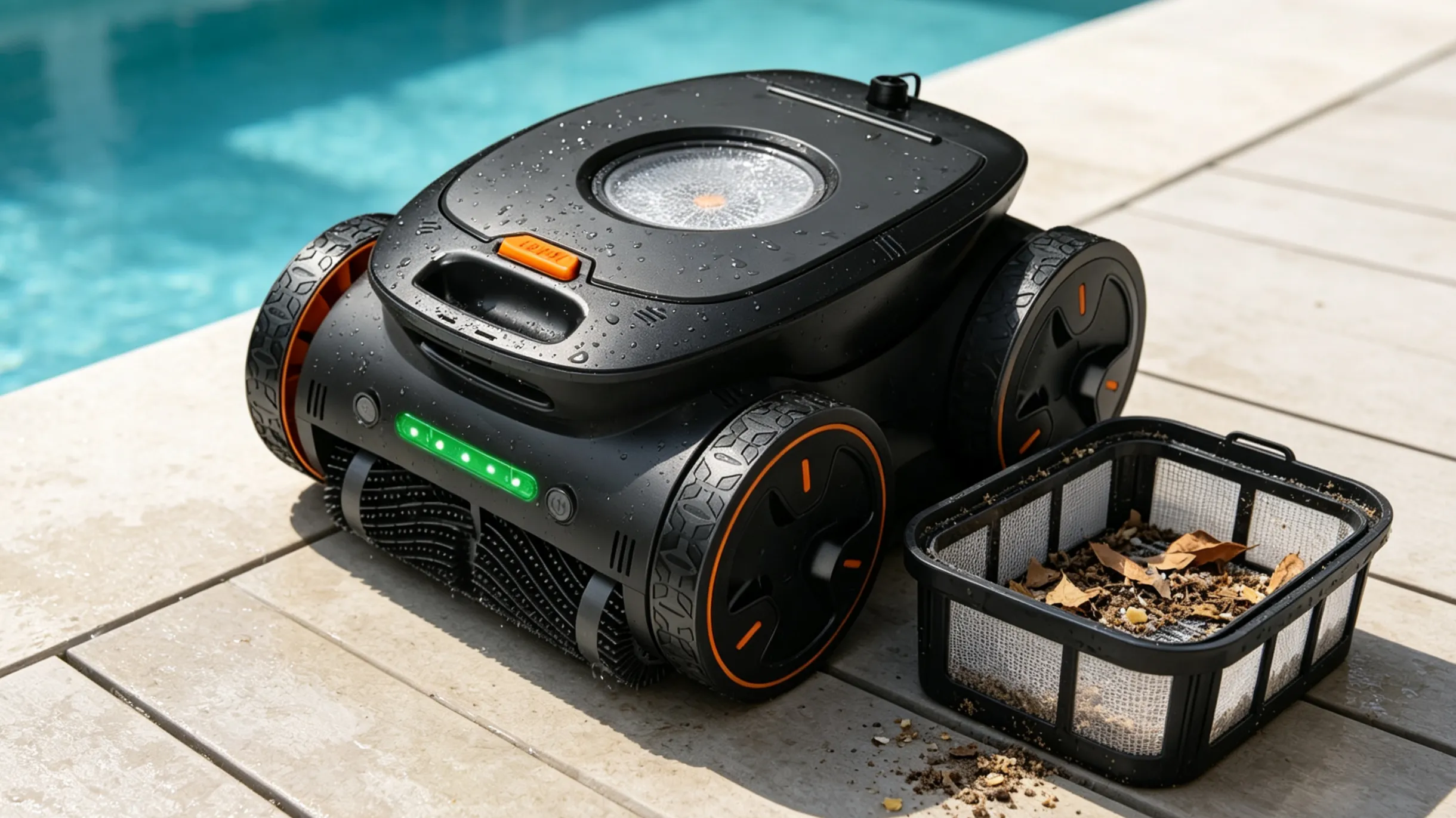
The filter is one of the most important components of a robotic pool cleaner because it collects dirt, leaves, sand, and other debris removed from the pool.
After each cleaning cycle, the filter basket or filter cartridge should be checked and cleaned when necessary. A full or dirty filter can reduce water flow and affect the cleaner’s ability to collect debris effectively.
For pools with heavy debris, such as leaves or fine particles, the filter may need to be cleaned more frequently.
Remove Debris From the Cleaner
Debris can accumulate around the cleaner’s intake area, brushes, wheels, or other moving components.
After removing the cleaner from the pool, check for trapped leaves, hair, sand, or other materials that may affect movement or cleaning performance.
Regular debris removal helps prevent unnecessary strain on the motor and moving parts.
How Often Should You Maintain a Robotic Pool Cleaner?
The ideal maintenance schedule depends on how often the cleaner is used and the condition of the pool.
After Every Cleaning Cycle
Some basic checks are recommended after each use:
Empty the debris container or filter
Rinse away dirt and small particles
Check for visible debris around brushes and wheels
Store the cleaner correctly after use
These small steps help keep the cleaner ready for the next cycle.
Weekly or Regular Inspection
Even with frequent cleaning after use, a more detailed inspection should be performed regularly.
Check the condition of:
Brushes
Wheels or tracks
Filter components
Power connections or charging parts
Outer housing
Regular inspection helps identify wear before it affects cleaning performance.
How to Maintain the Main Components of a Robotic Pool Cleaner?
Different parts of a robotic pool cleaner require different levels of attention.
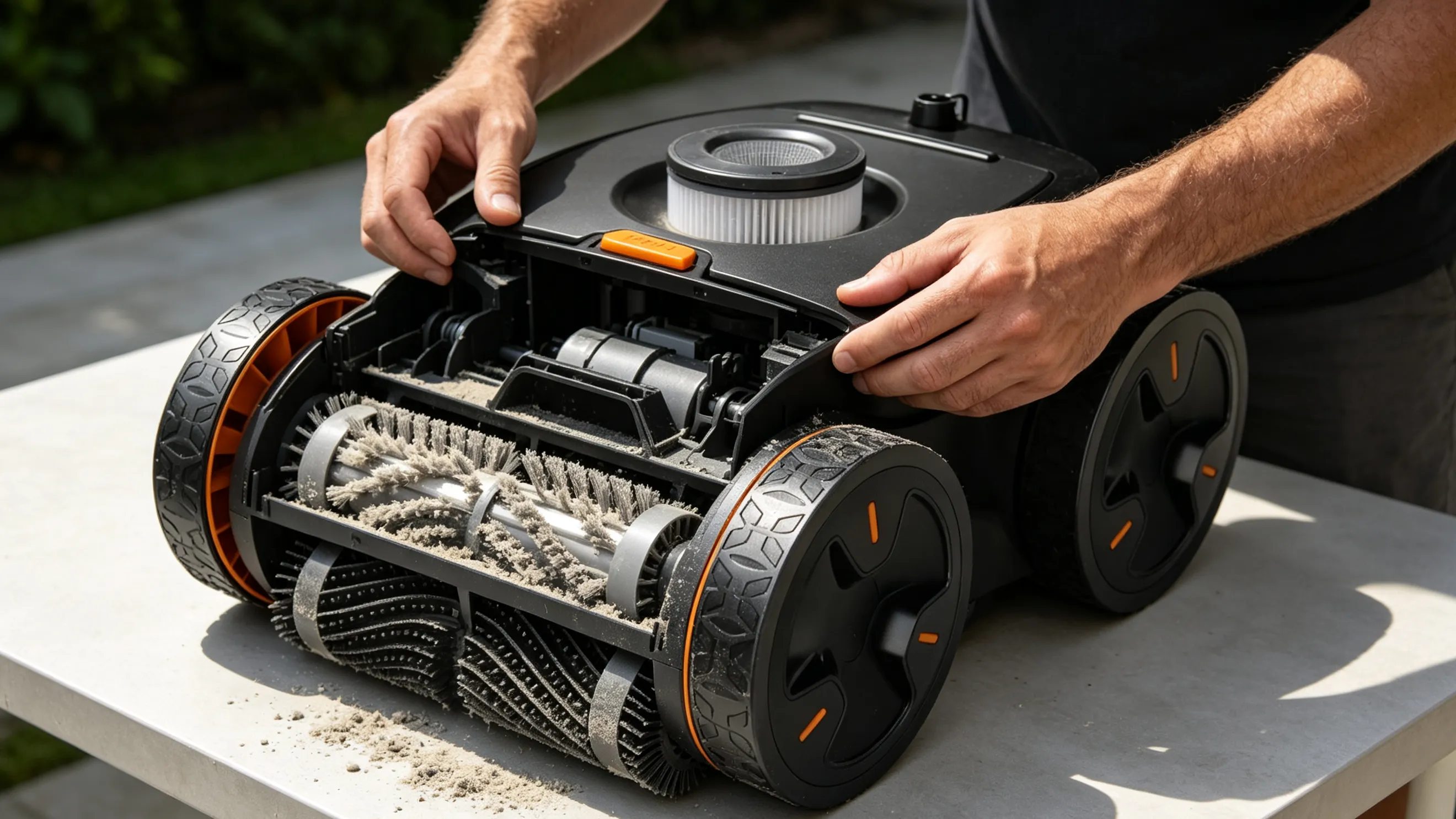
Brushes and Scrubbing Components
The brushes help remove dirt and algae from pool surfaces before debris is collected.
Over time, brushes can wear down, especially when the cleaner is used frequently or operates on rough pool surfaces.
Inspect the brushes regularly and replace them when they no longer make effective contact with the pool surface.
Wheels, Tracks, and Moving Parts
The movement system allows the cleaner to travel across the pool floor and other surfaces.
Check wheels or tracks for trapped debris and signs of wear. Keeping these components clean helps the robot move smoothly and maintain proper coverage during cleaning cycles.
How to Store a Robotic Pool Cleaner Properly
Proper storage is an important part of robotic pool cleaner maintenance, especially when the cleaner is not used for extended periods.
Keep the Cleaner Away From Direct Sunlight
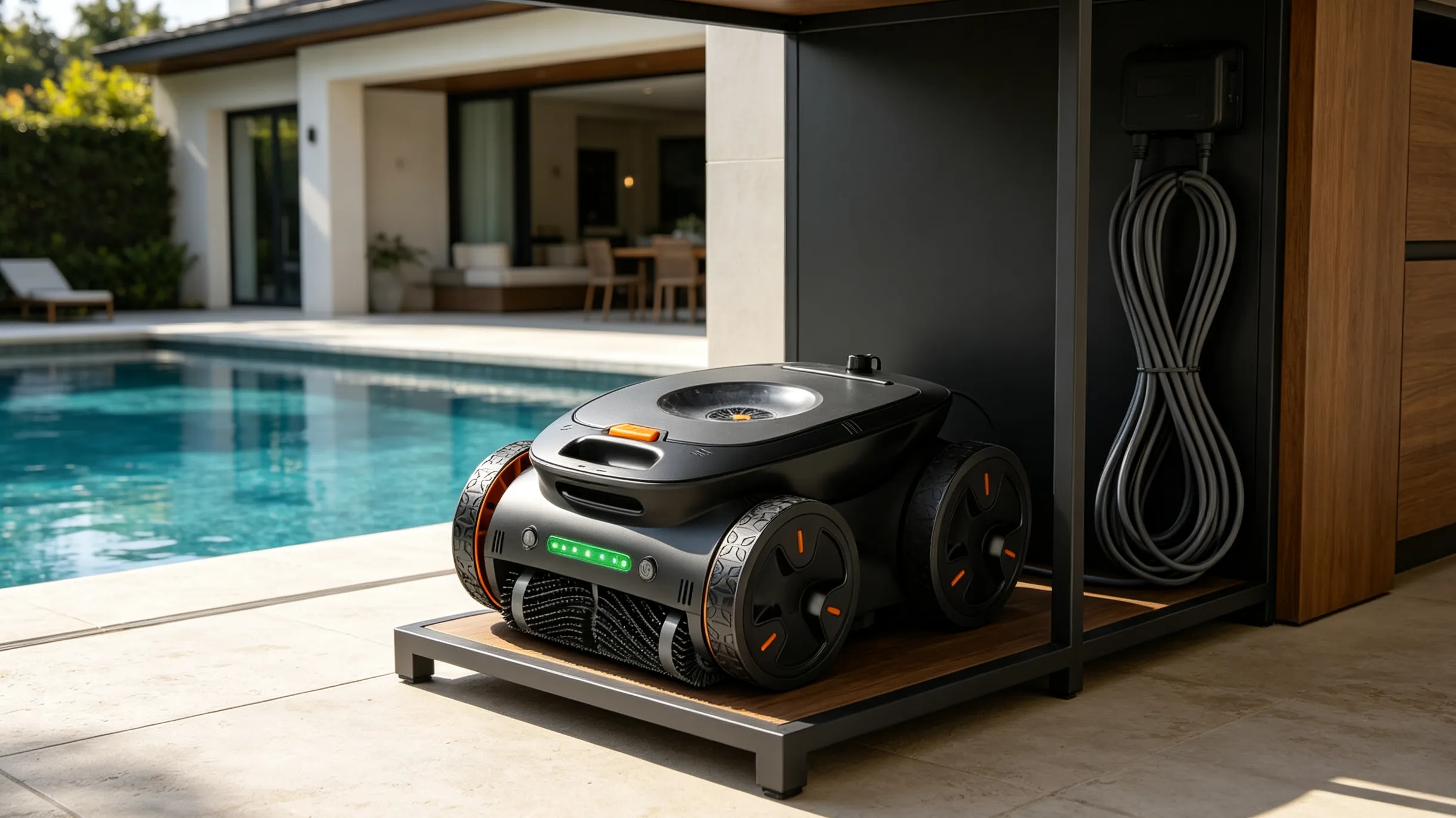
After removing the cleaner from the pool, avoid leaving it exposed to strong sunlight for long periods.
Continuous UV exposure and high temperatures may affect certain materials over time, including plastic components, cables, and external housing.
A shaded and dry storage area can help protect the cleaner between uses.
Store the Cleaner in a Dry and Safe Location
The cleaner should be rinsed if needed, dried properly, and stored in a suitable location after use.
Avoid placing heavy objects on top of the unit or storing it in areas where it may be exposed to impacts, moisture, or extreme temperatures.
For cordless models, following the recommended charging and storage instructions can also help maintain battery performance.
Common Robotic Pool Cleaner Maintenance Mistakes
Although robotic pool cleaners require relatively little maintenance, some common mistakes can reduce performance or shorten the equipment’s lifespan.
Leaving the Filter Full After Cleaning
A dirty or overloaded filter makes it harder for the cleaner to collect new debris effectively.
Some users only empty the filter when the cleaner appears to lose performance, but regular cleaning is a simpler way to maintain consistent operation.
Ignoring Brush and Wheel Wear
Cleaning performance depends on more than the motor and filter.
Worn brushes may reduce scrubbing ability, while damaged wheels or tracks may affect movement and pool coverage.
Checking these parts regularly helps prevent small issues from becoming larger problems.
Improper Storage Between Uses
Leaving a robotic pool cleaner outdoors, exposed to sunlight, or stored incorrectly can accelerate wear.
A proper storage routine requires little effort but can help protect the cleaner over time.
Can Regular Maintenance Extend a Robotic Pool Cleaner’s Lifespan?
Yes. While maintenance cannot prevent normal wear completely, consistent care can help a robotic pool cleaner maintain reliable performance for longer.
Better Cleaning Performance
A clean filter, functional brushes, and unobstructed moving parts allow the cleaner to operate more efficiently.
This means the robot can continue collecting debris effectively without unnecessary strain.
Fewer Unexpected Problems
Regular inspection makes it easier to notice issues such as reduced suction, unusual movement, damaged components, or charging problems.
Identifying these signs early may help avoid more complicated repairs.
How Much Maintenance Does a Robotic Pool Cleaner Really Need?
Compared with traditional manual pool cleaning methods, robotic pool cleaners generally require relatively low maintenance.
A typical routine may include:
Maintenance Task | Recommended Frequency |
|---|---|
Empty and rinse filter | After each cleaning cycle or when full |
Remove trapped debris | After use |
Check brushes and wheels | Weekly or regularly |
Inspect cables or charging components | Regularly |
Deep inspection and part replacement | Based on wear |
The exact schedule depends on the model, pool conditions, and how frequently the cleaner is used.
Pools with heavy debris, frequent swimmers, or outdoor exposure may require more frequent maintenance.
Frequently Asked Questions
Q1: How often should I clean my robotic pool cleaner filter?
A: The filter should usually be emptied and rinsed after each cleaning cycle, especially when the pool contains a large amount of debris. Cleaning frequency may vary depending on pool conditions and filter capacity.
Q2: Do robotic pool cleaners need regular maintenance?
A: Yes. Although robotic pool cleaners are designed to work automatically, they still need basic maintenance such as filter cleaning, debris removal, and component inspection.
Q3: How often should I replace robotic pool cleaner brushes?
A: Brush replacement depends on usage frequency, pool surface type, and brush condition. When brushes become visibly worn or lose contact with the pool surface, replacement may be needed.
Q4: Should I remove my robotic pool cleaner after every use?
A: Many owners remove the cleaner after each cycle to empty the filter, inspect the unit, and store it properly. Following the manufacturer's recommendations is the best approach.
Q5: Can poor maintenance damage a robotic pool cleaner?
A: Yes. A blocked filter, trapped debris, worn components, or improper storage can reduce performance and may contribute to premature wear.
Conclusion
A robotic pool cleaner does not require complicated maintenance, but regular care is still necessary to keep it working effectively.
Simple tasks such as cleaning the filter, removing debris, checking brushes and wheels, and storing the cleaner properly can help maintain cleaning performance and extend the equipment’s useful life.
By following a consistent maintenance routine, pool owners can enjoy the convenience of automated cleaning while reducing the risk of avoidable performance issues.