What Sensors Should You Look for in a Robotic Pool Cleaner?
Introduction
When choosing a robotic pool cleaner, many buyers focus mainly on cleaning power, battery life, and filtration performance. However, the technology that controls how a cleaner moves and responds to its environment is also an important factor.
Sensors play a key role in helping robotic pool cleaners operate more efficiently. They allow the robot to detect changes in the pool environment, adjust movement, and complete cleaning tasks more consistently.
While sensors are not the only factor that determines cleaning performance, understanding the role of different sensing technologies can help pool owners choose a robotic cleaner that better matches their pool conditions and maintenance needs.
Why Sensor Technology Matters When Choosing a Pool Robot
A robotic pool cleaner operates in a challenging environment. Unlike household robots that move on flat indoor surfaces, pool cleaners must operate underwater while dealing with changing surfaces, walls, corners, and different pool layouts.
A cleaner with suitable sensor technology can provide several advantages:
More controlled movement;
Fewer unnecessary movements;
More consistent cleaning cycles.
However, the right sensor features depend on the type of pool and how the cleaner will be used. A small residential pool may have different requirements compared with a large pool with complex structures.
Instead of choosing a robot based only on the number of sensors it has, users should consider how those sensors contribute to the overall cleaning system.
Important Sensor Features to Consider
Wall Detection Sensors
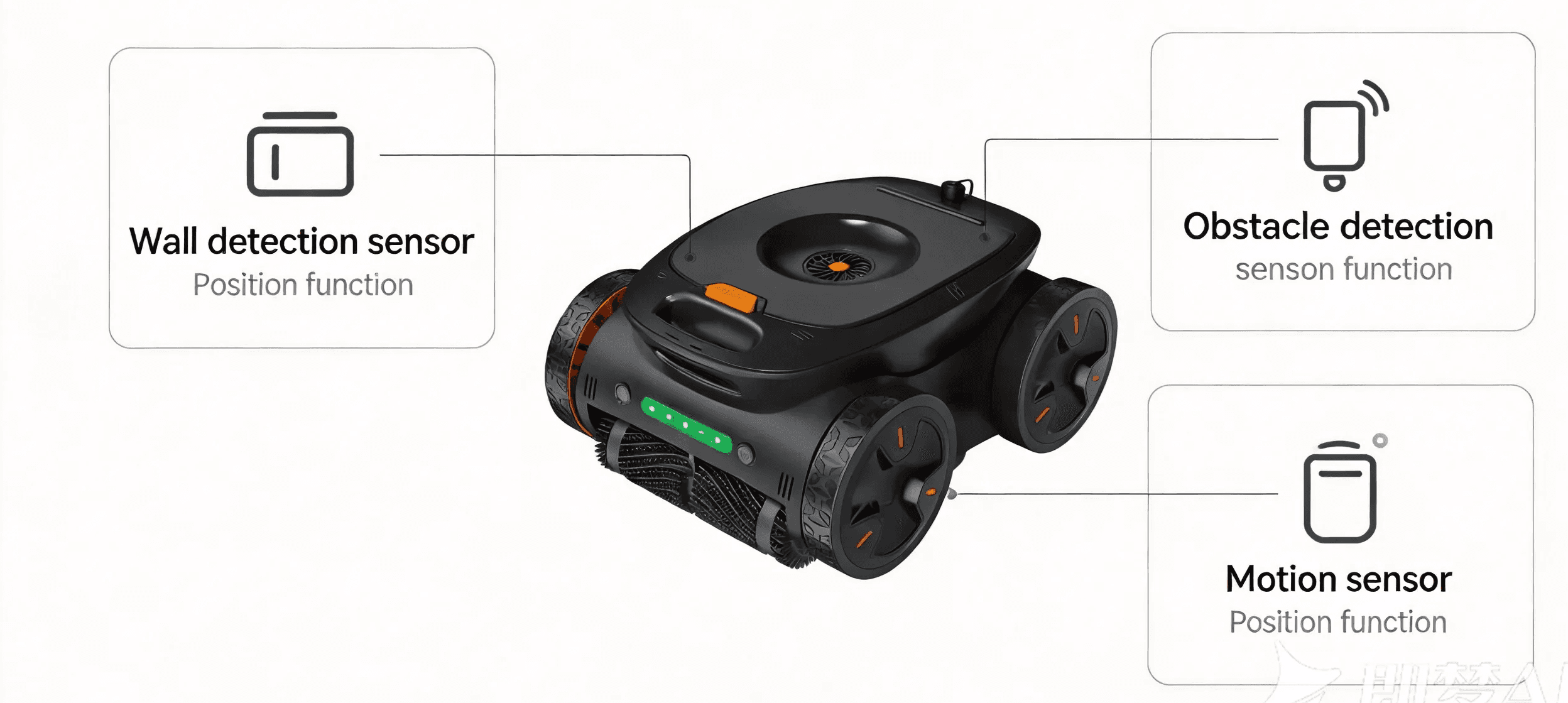
Wall detection is one of the most important capabilities for many robotic pool cleaners.
During cleaning, the robot needs to recognize when it reaches the edge of the pool and adjust its movement. Without effective wall detection, the cleaner may spend unnecessary time moving against boundaries or fail to maintain efficient coverage.
For pools that require wall cleaning, reliable detection can help the robot transition between different surfaces and continue operating smoothly.
When evaluating a robotic pool cleaner, users should consider whether its sensing system supports effective movement around pool boundaries and different cleaning areas.
Obstacle Detection Sensors
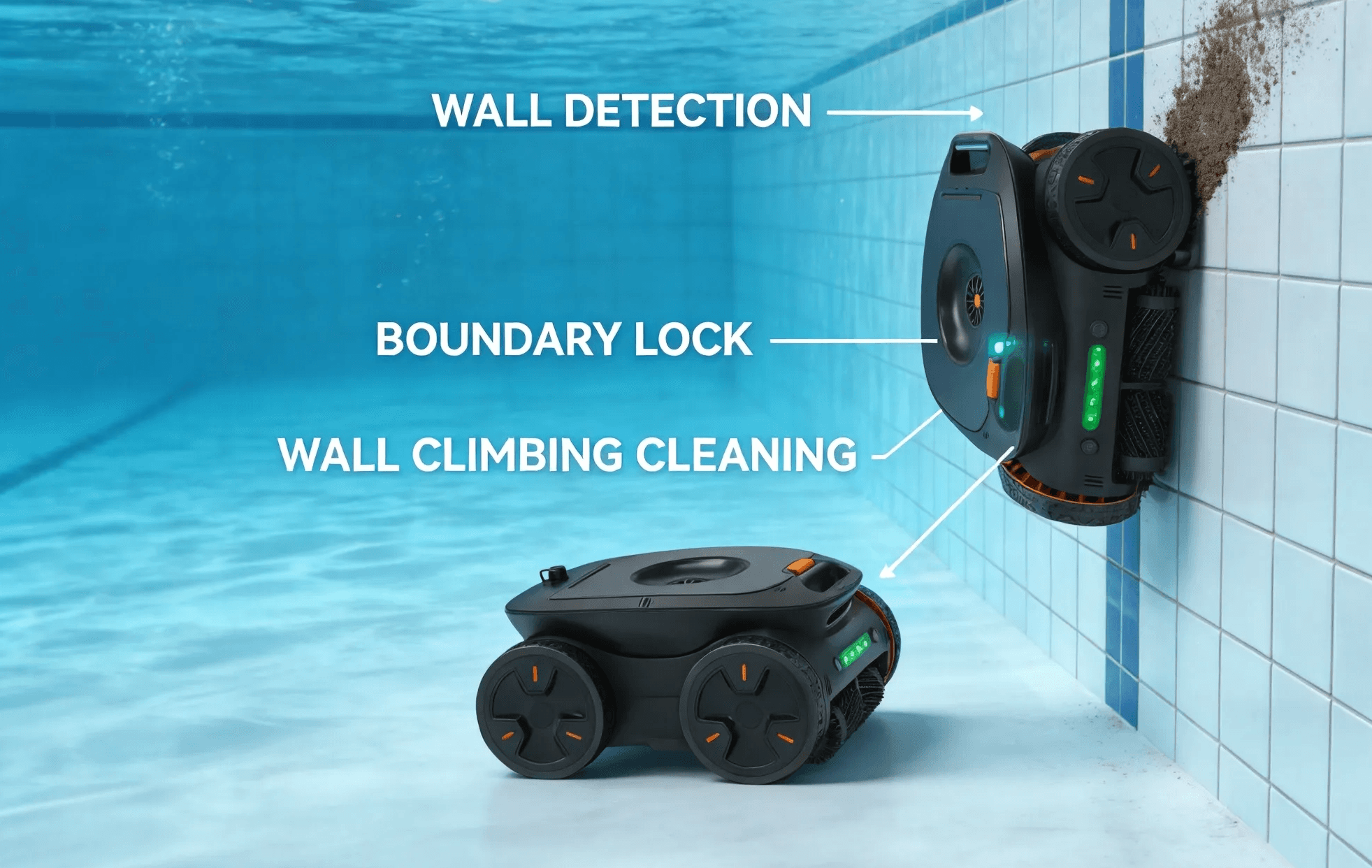
Different pools may contain features that affect robot movement, such as:
Steps;
Drain covers;
Corners;
Changes in pool structure.
Obstacle detection helps the cleaner respond to these situations instead of continuing inefficient movement.
This feature can be especially useful for pools with more complex designs. A cleaner that can better handle environmental changes may require fewer manual adjustments during operation.
However, obstacle detection should work together with good mechanical design. Sensors provide information, but the drive system determines how effectively the robot responds.
Motion and Orientation Sensors
Maintaining stable movement is important for consistent cleaning performance.
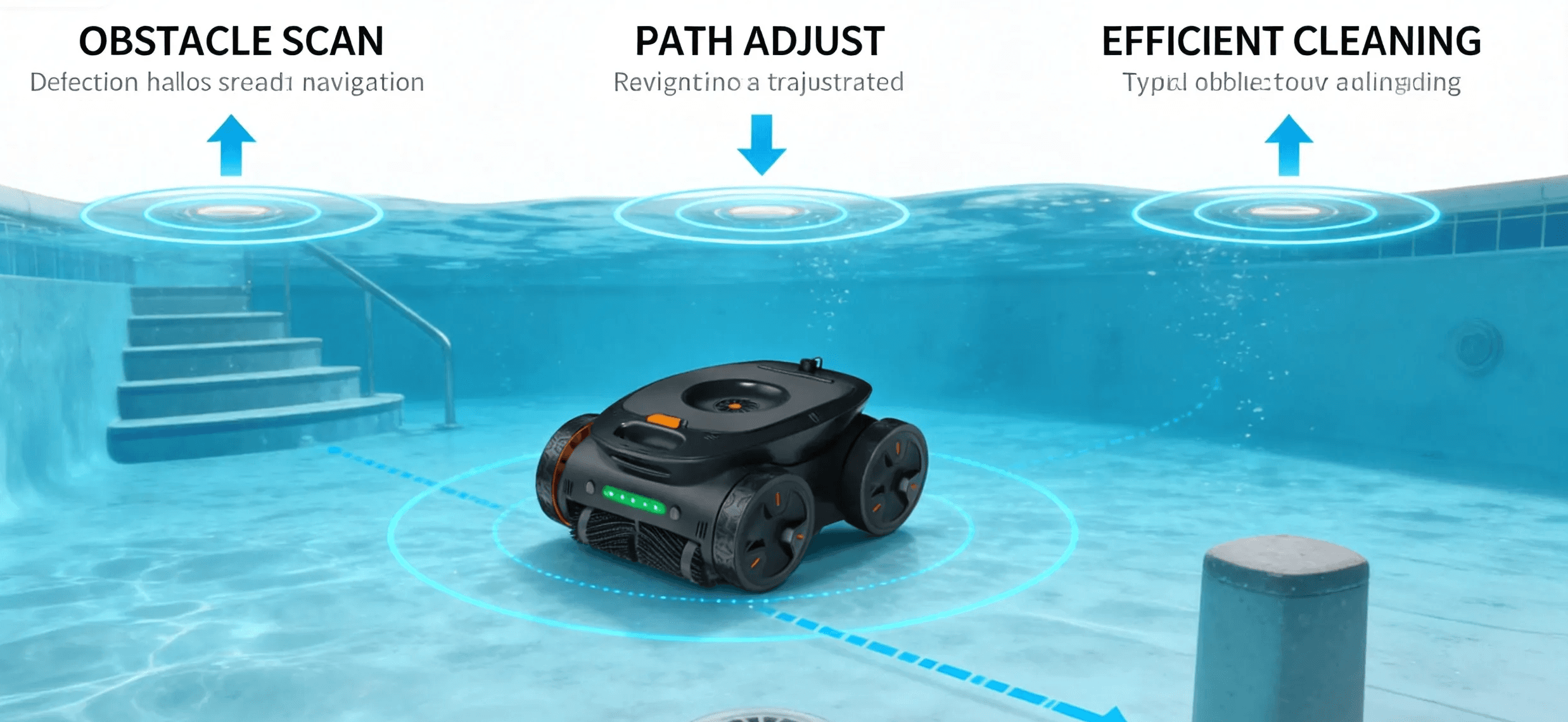
Motion and orientation sensors help the robotic cleaner understand changes in its movement and maintain better control while operating underwater.
These systems can support:
Direction adjustment;
Movement stability;
More organized cleaning cycles.
For larger pools or pools with irregular shapes, stable movement control can help improve overall cleaning consistency.
Sensors vs Other Important Pool Cleaner Features
Although sensor technology is valuable, it should not be considered separately from other parts of a robotic pool cleaner.
Cleaning Brushes
Sensors help the robot move efficiently, but brushes determine how effectively it removes dirt, algae, and buildup from pool surfaces.
A good balance between movement control and brush performance is important for achieving better cleaning results.
Filtration Capacity
The ability to collect debris is another important consideration.
A robotic cleaner with efficient movement but limited filtration capacity may require more frequent maintenance, especially in pools with heavy debris.
Users should consider:
Filter size;
Debris collection ability;
Ease of cleaning.
Drive System Performance
The drive system affects how well the cleaner can move across different pool surfaces.
Strong traction and reliable movement mechanisms allow the robot to respond effectively when sensors detect changes in the environment.
This is why sensor technology, drive systems, and cleaning components should be viewed as a complete system rather than separate features.
How to Choose the Right Sensor Features for Your Pool
The ideal sensor technology depends on your pool environment.
For smaller residential pools, users may prioritize:
Reliable movement;
Basic obstacle handling;
Easy operation.
For larger or more complex pools, features such as improved movement control and better environmental detection may become more important.
Before purchasing a robotic pool cleaner, consider:
Pool size and shape;
Surface material;
Cleaning frequency;
Types of debris;
Whether wall cleaning is required.
Choosing the right combination of features is often more important than selecting the model with the most advanced specifications.
FAQ
Q: Are sensors the most important feature in a robotic pool cleaner?
A: Sensors are an important part of a robotic pool cleaner, but they are only one factor affecting performance. Cleaning ability also depends on filtration, brushes, motor power, battery capacity, and overall design.
Q: Do robotic pool cleaners with more sensors cost more?
A: Additional sensing technology may affect the design and cost of a robotic cleaner, but price also depends on many other factors, including materials, cleaning features, battery technology, and brand positioning.
Q: Should I choose a pool robot with wall-climbing ability?
A: It depends on your pool requirements. If your pool frequently collects dirt along walls or requires more complete surface cleaning, wall-climbing capability may provide additional convenience.
Q: Can sensors help a robotic pool cleaner save battery power?
A: Sensors can help improve movement efficiency by reducing unnecessary operation. However, battery performance also depends on factors such as motor efficiency, cleaning mode, and pool conditions.
Q: What should I check besides sensor technology before buying a robotic pool cleaner?
A: Buyers should also consider pool compatibility, filtration capacity, cleaning coverage, operating time, maintenance requirements, and after-sales support before making a decision.
Conclusion
Sensors are an important part of modern robotic pool cleaner technology. They help cleaners detect changes in their surroundings, adjust movement, and complete cleaning cycles more efficiently.
When selecting a robotic pool cleaner, buyers should look beyond individual features and consider how sensors work together with drive systems, brushes, and filtration technology.
For users seeking a reliable automated cleaning solution, Purily robotic pool cleaners integrate intelligent movement control and practical cleaning features to support efficient pool maintenance. By combining smart sensing technology with effective cleaning systems, Purily helps pool owners reduce manual cleaning effort and maintain a cleaner swimming environment.