Best Way to Keep Your Pool Clean With Minimal Effort
Easy Pool Maintenance
Automated Pool Cleaning
Smart Pool Care
Introduction
Keeping a swimming pool clean shouldn’t feel like a second job. Yet for many pool owners, maintenance quickly becomes time-consuming, repetitive, and physically demanding. Skimming leaves, brushing walls, vacuuming debris, and balancing chemicals often take hours every week—especially during peak swimming season.
This guide explains the most effective way to keep your pool clean with less time, less effort, and better long-term results.
Why Traditional Pool Cleaning Feels Like So Much Work
Manual Cleaning Is Reactive, Not Preventive
Most traditional pool care routines are reactive. Pool owners clean only after debris becomes visible or water quality declines. By that time, dirt, leaves, and fine particles have already settled and begun affecting circulation and chemistry.
Manual tools also tend to disturb debris rather than remove it completely, especially fine sand and organic material.
Inconsistent Maintenance Leads to Bigger Problems
Skipping even a few cleaning sessions allows debris to break down into microscopic particles that cloud the water and feed algae growth. What starts as a small issue quickly turns into a chemical imbalance or filtration problem.
The more inconsistent the maintenance, the more effort is required later.
The Core Principle of Easy Pool Maintenance
Clean Continuously, Not Occasionally
The easiest way to keep a pool clean is to prevent dirt from accumulating in the first place. Continuous, automated cleaning removes debris before it can settle, decompose, or affect water chemistry.
This approach reduces:
Manual labor
Chemical usage
Stress on filtration systems
Instead of fighting problems, you eliminate them early.
How Automated Pool Cleaning Minimizes Effort
Autonomous Cleaning Covers the Entire Pool
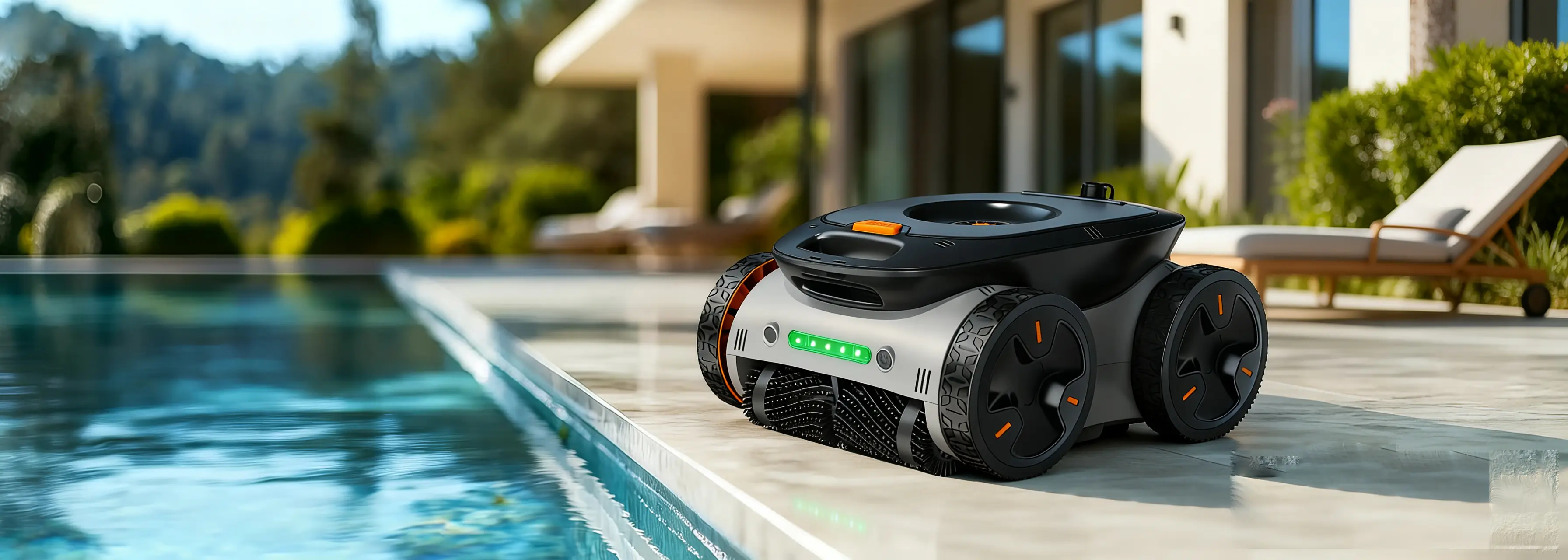
Unlike manual vacuums or basic suction cleaners, modern robotic pool cleaners move independently across:
Pool floors
Walls
Steps
Waterlines
This full coverage ensures no area becomes a debris hotspot.
To understand how this technology works in practice, the automated pool cleaning solutions section of our website explains how intelligent navigation and advanced filtration work together.
Built-In Filtration Removes Fine Debris
One major reason pools look clean but still feel dirty is fine debris. Sand, pollen, and dust are often too small for traditional filters to catch efficiently.
Robotic cleaners use multi-layer filtration systems that trap fine particles before they circulate through the pool. Cleaner water means less strain on the main pump and filter.
Reducing Daily Maintenance With Smart Pool Care
Less Skimming, Less Vacuuming
When debris is removed automatically, daily skimming becomes unnecessary. Leaves and insects are collected before they sink, while dust and sand are filtered out during cleaning cycles.
This allows pool owners to spend minutes—not hours—on upkeep.
Fewer Chemical Adjustments
Physical debris consumes chlorine and throws off water balance. By removing contaminants early, sanitizers work more effectively.
Many pool owners find that automated cleaning leads to:
More stable chlorine levels
Clearer water with fewer chemicals
Less frequent shock treatments
Designing a Low-Effort Pool Cleaning Routine
Step 1: Automate Debris Removal
Automated cleaners should form the foundation of any low-effort pool care routine. Scheduled cleaning ensures consistency regardless of weather, usage, or season.
You can explore how different systems support this approach on our pool maintenance technology page, where efficiency and ease of use are key focuses.
Step 2: Maintain Basic Water Balance Weekly
Even with automation, basic water testing is still necessary. A simple weekly test keeps pH and sanitizer levels within range and prevents long-term issues.
Because debris is already controlled, these adjustments are usually minor.
Step 3: Clean Filters, Not the Pool
With automation handling the heavy work, your primary task becomes rinsing cleaner filters periodically. This takes only a few minutes and ensures optimal performance.
Why Automated Pool Cleaning Is Ideal for Busy Owners
Perfect for Families and Rental Properties
Pools used by families or short-term renters experience higher debris and contamination levels. Automated cleaning maintains consistent water quality without relying on human intervention.
This makes it ideal for:
Vacation homes
Hotels
Property managers
Busy households
Energy-Efficient and Cost-Effective
Modern robotic cleaners operate independently from the pool’s main pump, consuming less energy while delivering better cleaning results.
Over time, reduced chemical use, fewer repairs, and lower labor costs add up.
Common Mistakes That Increase Pool Maintenance Effort
Relying Only on Chemicals
Chemicals sanitize water, but they do not remove debris. Without physical cleaning, contaminants remain in circulation and continue to affect water clarity.
Using the Wrong Cleaning Equipment
Not all cleaners are designed to handle fine debris or vertical surfaces. Choosing outdated or underpowered tools often leads to frustration and extra work.
The solution overview pages on our site explain how intelligent systems address these limitations.
Ignoring Dead Zones
Corners, steps, and waterlines are common problem areas. Automated systems are designed to reach these zones consistently, preventing buildup.
When to Upgrade Your Pool Cleaning Strategy
If you find yourself:
Spending hours cleaning every week
Frequently battling cloudy water or algae
Using excessive chemicals
It’s likely time to upgrade to a smarter, automated approach.
For personalized guidance, you can reach out through the contact section of our website to discuss pool-specific cleaning strategies.
FAQ: Easy Pool Maintenance
What is the easiest way to keep a pool clean?
Consistent automated cleaning combined with basic weekly water testing is the easiest and most reliable approach.
Do robotic pool cleaners really reduce maintenance time?
Yes. They eliminate most manual tasks, including vacuuming and brushing, significantly reducing hands-on effort.
Can automation replace traditional filtration?
No, but it complements filtration by removing debris before it reaches the main system.
Is automated pool cleaning suitable for all pool types?
Most modern robotic systems are designed for a wide range of pool sizes and surfaces.
How often should an automated cleaner run?
For most pools, running several times per week—or daily during heavy use—is sufficient.
Conclusion
The best way to keep your pool clean with minimal effort is to shift from reactive cleaning to continuous, automated maintenance. By removing debris early, improving circulation, and reducing chemical dependency, intelligent pool cleaning solutions make pool ownership easier and more enjoyable.
Instead of spending weekends cleaning, you can focus on what a pool is meant for—relaxation, enjoyment, and peace of mind.