What Makes a Robotic Pool Cleaner Powerful? Understanding Suction Performance

Introduction
A robotic pool cleaner’s cleaning ability depends on how different technologies work together. While smart navigation helps the robot move efficiently and filtration helps capture debris, suction performance determines how effectively the cleaner can pull unwanted particles into its cleaning system.
For modern pool cleaning robots, strong suction is not simply about using a more powerful motor. The overall design of the intake system, water flow, and debris collection process all influence cleaning results.
Understanding suction performance helps users evaluate robotic pool cleaners based on real cleaning capability rather than only looking at individual specifications.
Why Suction Power Matters in Robotic Pool Cleaners
Suction is one of the key factors that affects how a robotic pool cleaner removes debris from the pool environment. During operation, the cleaner needs to create enough water movement to collect materials from the pool surface and guide them into the filtration system.
For pools exposed to outdoor conditions, debris can vary significantly. Leaves, sand, dust, and other particles require consistent collection performance to prevent them from accumulating over time.
However, effective suction is not only about removing visible debris. A well-designed suction system also needs to maintain stable performance throughout the cleaning cycle while working together with other cleaning components.
How Suction Helps Remove Different Types of Pool Debris
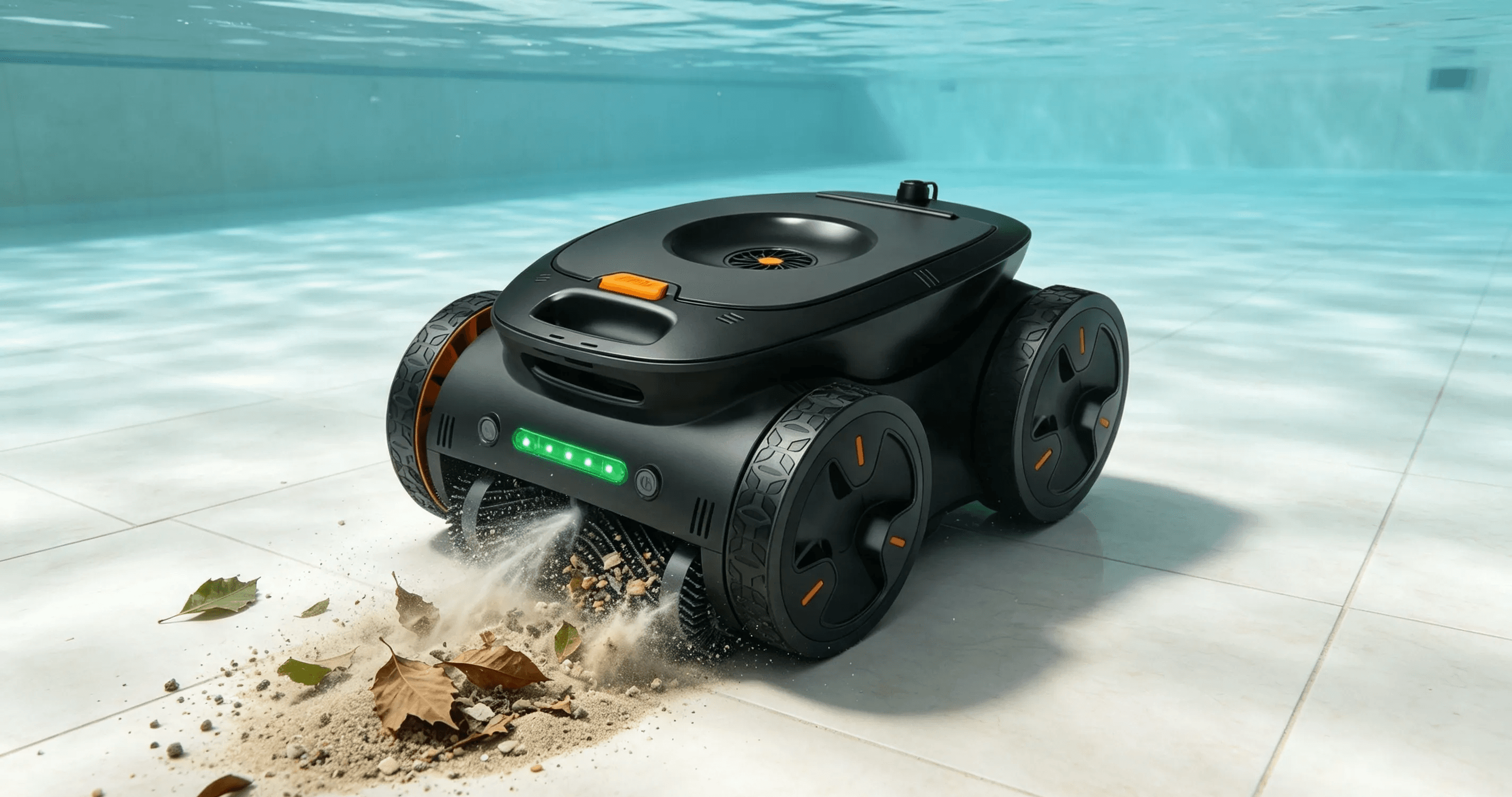
Different debris types create different cleaning challenges. Larger debris such as leaves requires sufficient intake capability, while smaller particles such as dust and sand require stable water flow and effective collection.
A robotic pool cleaner with optimized suction performance can improve debris removal by creating stronger movement of water around the intake area. This allows more particles to enter the cleaning system instead of remaining on pool surfaces.
For pools with fine particles or frequent debris accumulation, suction performance becomes an important factor when choosing a suitable robotic cleaning solution.
What Determines Robotic Pool Cleaner Suction Performance
The suction capability of a robotic pool cleaner depends on several parts working together. A powerful motor provides the energy needed to move water, but the final cleaning performance also depends on how efficiently the system transfers debris from the pool into the cleaner.
Modern robotic cleaners combine motor performance, intake design, and water flow control to create a more balanced cleaning process.
Motor Power and Water Flow
The motor plays an important role in maintaining consistent suction performance. By creating continuous water flow, the motor helps move debris from the pool environment into the cleaning system.
However, higher motor power alone does not always mean better cleaning. If the intake structure or filtration system cannot support the increased water flow, cleaning efficiency may not improve.
A balanced design allows the cleaner to maintain strong suction while operating efficiently during longer cleaning cycles.
Intake Design and Debris Collection
The intake structure determines how effectively a robotic pool cleaner collects debris. A well-designed intake allows water and unwanted particles to enter smoothly while reducing the possibility of debris being left behind.
Some advanced robotic pool cleaners use dual intake systems to improve debris collection. By creating multiple collection paths, these systems can support more consistent suction performance across different pool conditions.
Why Strong Suction Alone Is Not Enough
Suction performance is an important part of robotic pool cleaning, but it is not the only factor that determines the final cleaning result. A powerful suction system needs to work together with filtration, brushes, and movement technology to remove debris more effectively.
A cleaner that only focuses on suction may collect debris, but it may not achieve complete cleaning coverage or handle different pool conditions efficiently. This is why modern robotic pool cleaners are designed as integrated systems rather than relying on a single feature.
Combining Suction with Filtration
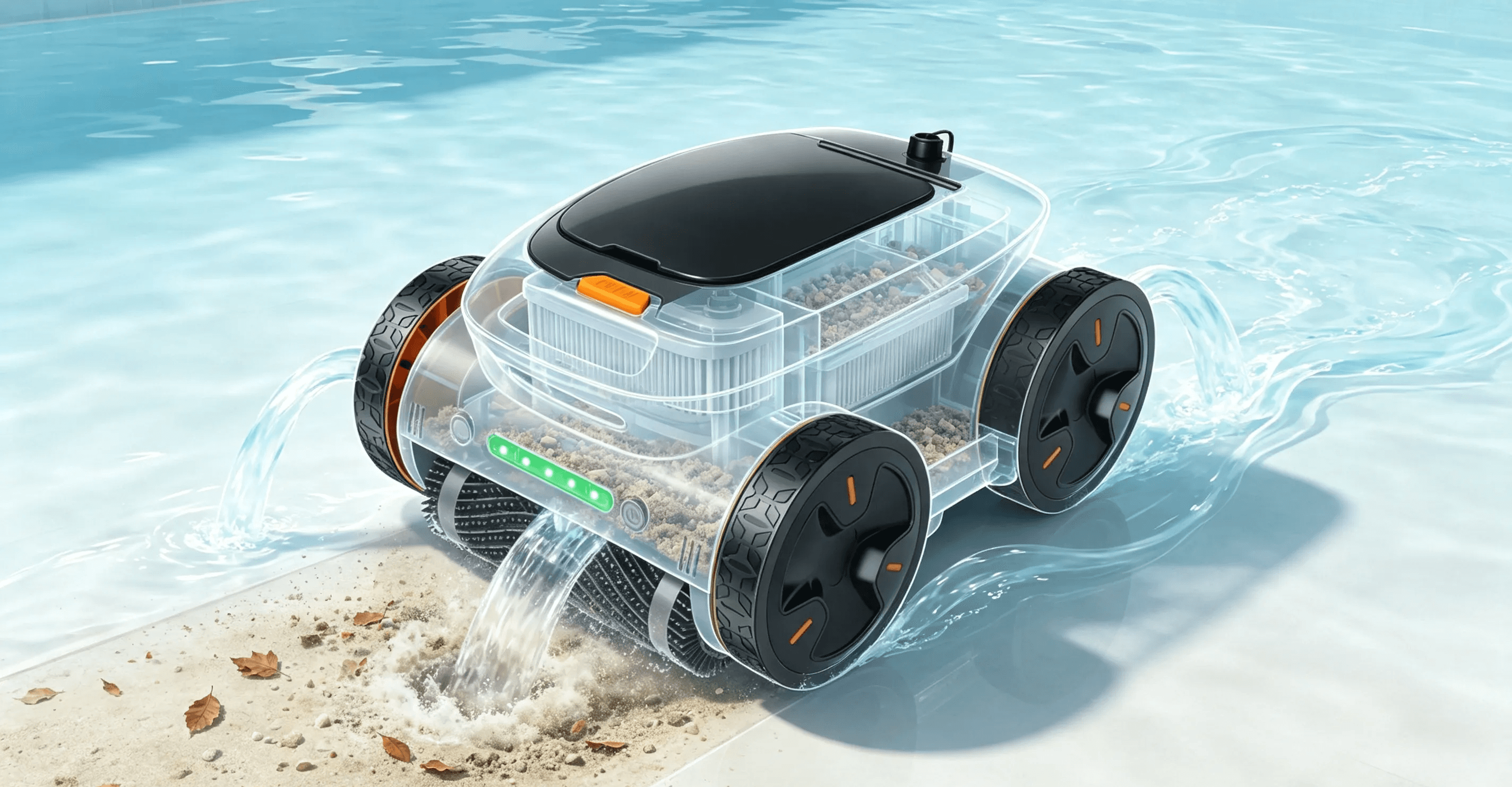
Suction and filtration work together throughout the cleaning process. While suction helps pull debris into the cleaner, the filtration system captures and stores those particles to prevent them from returning to the pool.
For example, fine dust and sand require both sufficient water flow and suitable filtration capability. Without proper filtration, collected particles may reduce cleaning efficiency or affect the cleaner’s performance over time.
A balanced cleaning system combines strong intake power with effective debris separation, allowing the robot to handle different types of pool contaminants more consistently.
Supporting Better Cleaning Coverage
Suction performance also needs to be supported by reliable movement. A robotic pool cleaner must reach different areas of the pool before it can collect debris effectively.
Features such as four-wheel drive systems, wall climbing capability, and intelligent movement control help the cleaner maintain contact with different pool surfaces. This allows suction technology to work where it is needed instead of only cleaning limited areas.
The combination of movement and suction is especially important for larger pools or pools with different shapes and surface conditions.
How Purily Hydro Uses High-Power Suction Technology
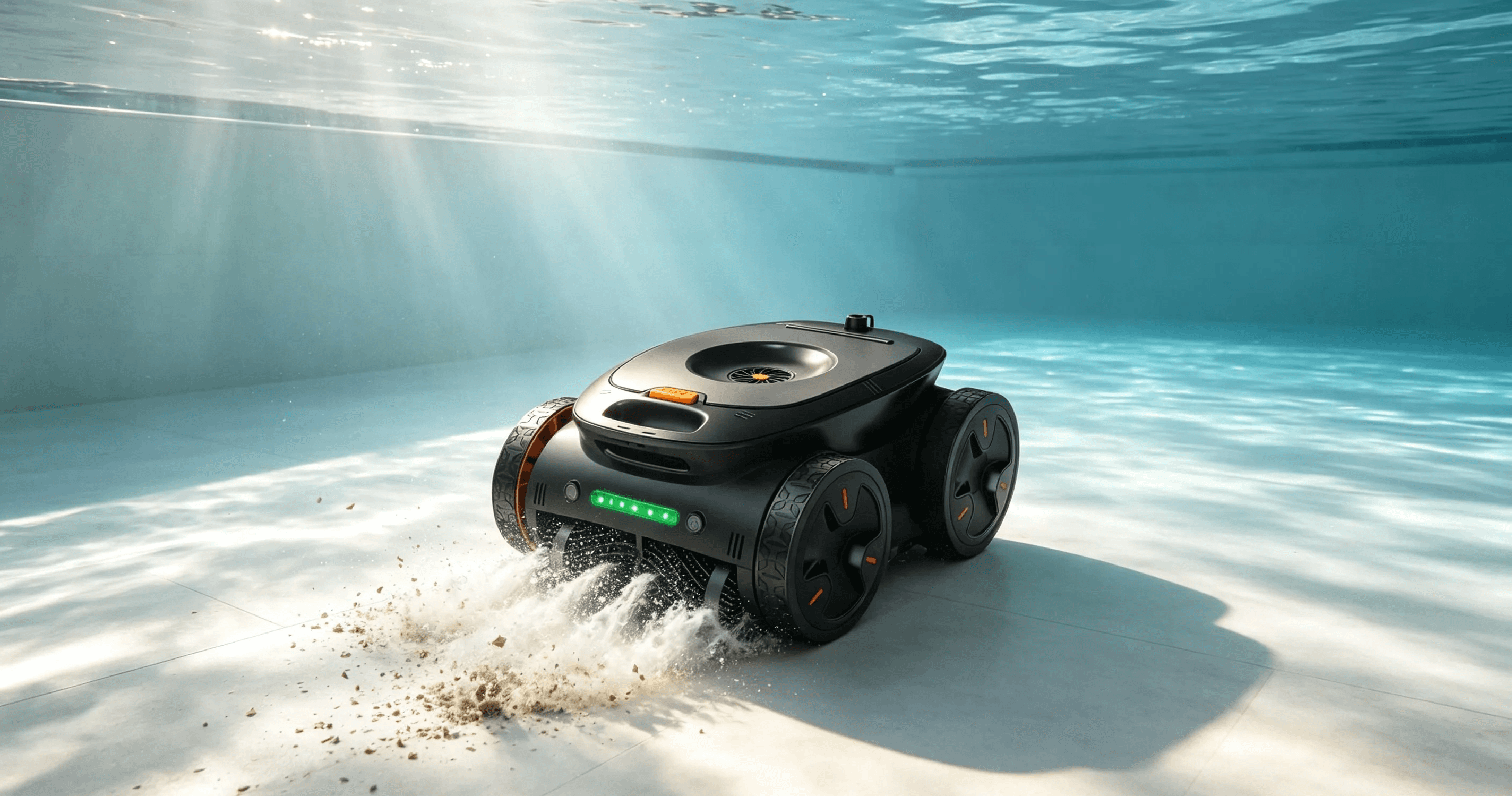
Purily Hydro robotic pool cleaners combine suction technology with multiple cleaning systems to improve overall cleaning performance. Instead of relying only on suction power, the Hydro series integrates high-flow suction, dual intake collection, filtration, and intelligent movement features.
With high-power motor suction reaching 5460 gallons per hour, Purily Hydro cleaners are designed to improve debris collection efficiency during cleaning cycles. The system helps remove common pool contaminants while supporting consistent performance across different pool environments.
High-Flow Suction and Dual Intake Collection
The Hydro series uses a dual intake trash collection system to improve the way debris enters the cleaner. Multiple intake paths help the robot collect materials such as dust, sand, and other particles more effectively.
Combined with double filtration, this design helps reduce the chance of debris being stirred back into the water while supporting a cleaner swimming environment.
Combining Multiple Technologies for Better Cleaning
Beyond suction performance, Purily Hydro cleaners combine other technologies to create a complete cleaning solution. Four-wheel drive improves movement stability, active scrubbing helps remove dirt from surfaces, and intelligent systems support more efficient operation.
For different pool requirements, features such as cordless operation, AC/DC power options, remote control, and app control provide users with more flexible cleaning options.
By combining suction, filtration, movement, and smart control technologies, Purily Hydro focuses on delivering a more complete and efficient robotic pool cleaning experience.
Frequently Asked Questions
Q: Is higher suction power always better for a robotic pool cleaner?
A: Not always. Strong suction can improve debris collection, but overall cleaning performance also depends on filtration efficiency, movement ability, and how well different systems work together.
Q: What does 5460 GPH mean for a robotic pool cleaner?
A: GPH means gallons per hour and refers to water flow volume. In robotic pool cleaners, it represents the amount of water the cleaning system can process during operation.
Q: Can a robotic pool cleaner remove fine dust and sand?
A: Yes. However, removing fine particles requires a combination of suitable suction performance and effective filtration rather than suction power alone.
Q: Why do robotic pool cleaners use dual intake systems?
A: Dual intake systems provide additional collection paths, helping the cleaner capture debris more efficiently and maintain more stable cleaning performance.
Q: Do brushes improve the cleaning ability of robotic pool cleaners?
A: Yes. Brushes help loosen dirt from pool surfaces, allowing suction and filtration systems to collect debris more effectively.
Conclusion
Suction performance is an important part of robotic pool cleaner technology, but the best cleaning results come from a combination of multiple systems working together.
By integrating high-flow suction, efficient filtration, intelligent movement, and advanced cleaning features, modern robotic pool cleaners can provide more consistent debris removal and reduce the effort required for regular pool maintenance.