Innovative Pool Cleaning and Maintenance Services in 2026

Introduction
Pool maintenance is becoming less dependent on manual cleaning alone. In 2026, robotic pool cleaners, smarter monitoring systems, and more structured maintenance services are changing how residential and commercial pools are cared for.
The goal is not simply to clean a pool faster. Modern pool maintenance focuses more on consistent cleaning, preventive care, equipment efficiency, and reducing unnecessary manual work.
For pool owners considering new cleaning equipment or professional maintenance services, understanding these changes can make it easier to decide which technologies and services are actually useful for their pool.
What Is Changing in Pool Cleaning and Maintenance in 2026?
Pool cleaning is gradually moving toward a more automated and preventive approach.
More Automation in Routine Pool Cleaning
Routine cleaning is one of the areas where automation can make the biggest difference.
Instead of manually vacuuming the pool every time debris accumulates, robotic pool cleaners can handle scheduled or regular cleaning cycles with limited user involvement.
This is particularly useful for pools that need frequent cleaning because of heavy use, nearby vegetation, or outdoor exposure.
Greater Use of Robotic Pool Cleaners
Robotic pool cleaners are becoming an increasingly practical option for routine pool maintenance.
Modern models can combine independent movement, brushing, suction, filtration, and different cleaning modes. Depending on the model, they may also support cleaning of walls, steps, or other pool surfaces.
Rather than replacing every aspect of pool maintenance, they are best viewed as a way to automate repetitive cleaning work.
More Efficient Maintenance Workflows
Technology can also improve how different maintenance tasks are organized.
Routine debris removal can be handled by a robotic cleaner, while water testing, chemical balancing, filter inspection, and equipment servicing can remain part of a professional maintenance schedule.
This approach allows each task to be handled by the most suitable method instead of relying on manual cleaning for everything.
Innovative Pool Cleaning Services to Consider in 2026
Innovation in pool maintenance is not limited to equipment. Service providers are also offering more structured and technology-supported maintenance options.
Robotic Pool Cleaning
Robotic cleaning can provide regular automated removal of dirt and debris from pool surfaces.
For homeowners, this can reduce the amount of time spent manually vacuuming the pool and make routine cleaning easier to maintain between professional visits.
Automated Pool Maintenance
Some modern pool systems combine automated cleaning with monitoring and control functions.
These systems can help users keep track of cleaning schedules, equipment operation, or certain water conditions without having to inspect everything manually each time.
Professional Deep Cleaning Services
Automation does not eliminate the need for professional cleaning.
Deep cleaning may still be required for heavily soiled pools, seasonal opening and closing, difficult-to-reach areas, or situations where the pool requires more intensive attention than routine robotic cleaning can provide.
Seasonal Pool Maintenance
Pool maintenance requirements can change throughout the year.
Professional services may include equipment checks, deep cleaning, water treatment, and preparation for periods of heavy or reduced pool use. A seasonal approach can help identify potential problems before they become more expensive maintenance issues.
How Technology Is Improving Pool Maintenance
Technology is changing pool maintenance by making routine tasks more automated and giving pool owners better control over how their equipment operates.
Smarter Cleaning and Navigation
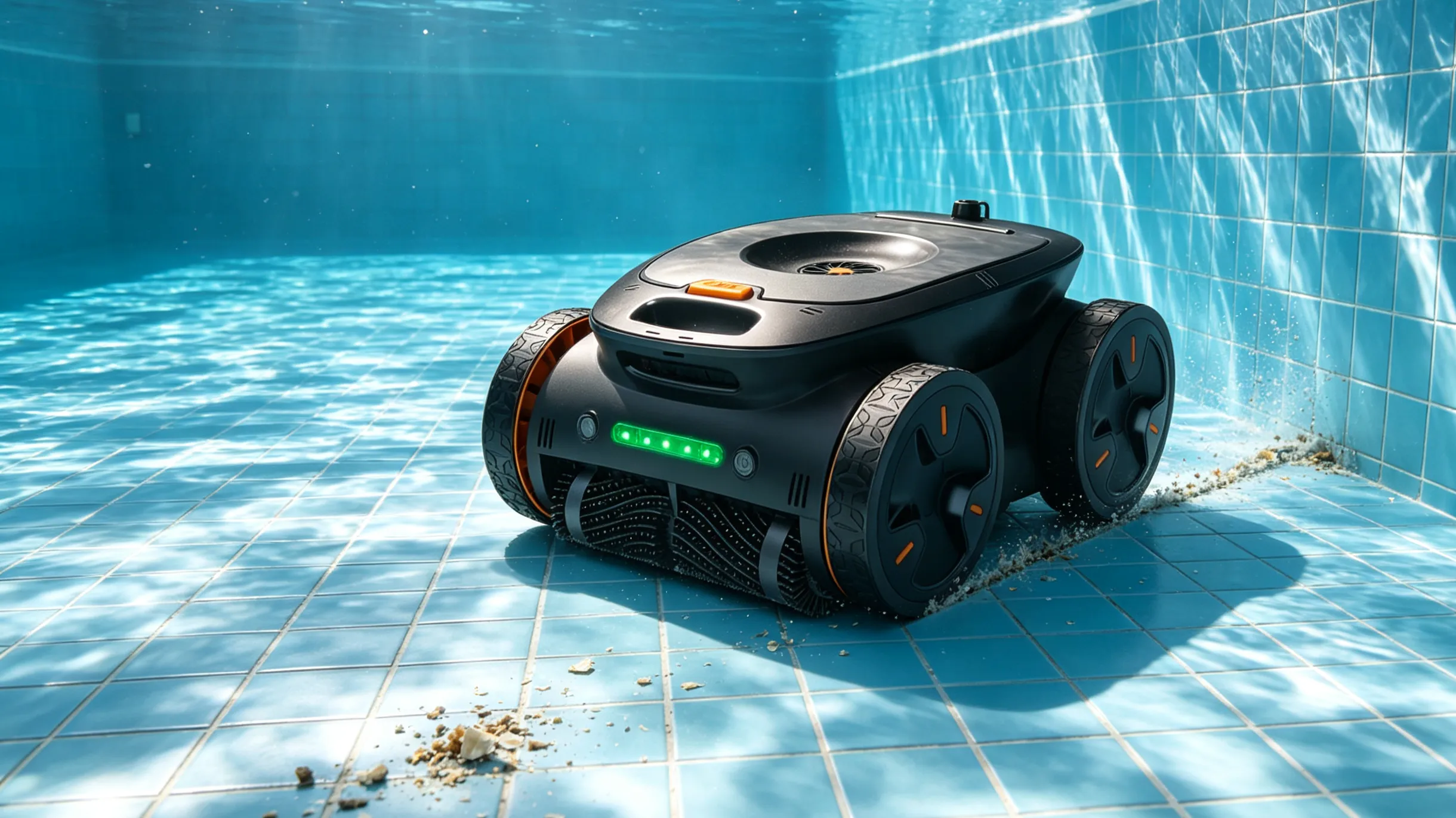
Modern robotic pool cleaners can use programmed movement patterns and navigation systems to cover pool surfaces more systematically.
Instead of relying entirely on random movement, advanced cleaners can adjust their path and respond to obstacles, helping improve cleaning coverage and reduce unnecessary movement.
Water Quality Monitoring
Water quality is another area where technology is becoming more useful.
Smart monitoring systems can track conditions such as pH, chlorine levels, temperature, or other water parameters, depending on the system. This gives pool owners and service providers more information when deciding when maintenance or chemical adjustments may be needed.
Monitoring does not replace proper water testing or professional maintenance, but it can make regular pool care more proactive.
Energy-Efficient Pool Equipment
Energy efficiency is also becoming an important part of modern pool maintenance.
Efficient pumps, filtration systems, lighting, and robotic cleaners can help reduce unnecessary energy consumption while maintaining normal pool operation.
For pool owners, looking at energy use as part of the overall maintenance system can be more useful than evaluating cleaning equipment in isolation.
Remote Monitoring and Control
Connected pool equipment can allow users to monitor or control certain functions remotely.
Depending on the system, this may include checking equipment status, adjusting settings, selecting cleaning modes, or receiving maintenance-related information.
Remote control is particularly useful for owners who want to manage pool equipment without being physically beside the pool.
What Does a Modern Pool Maintenance Service Include?
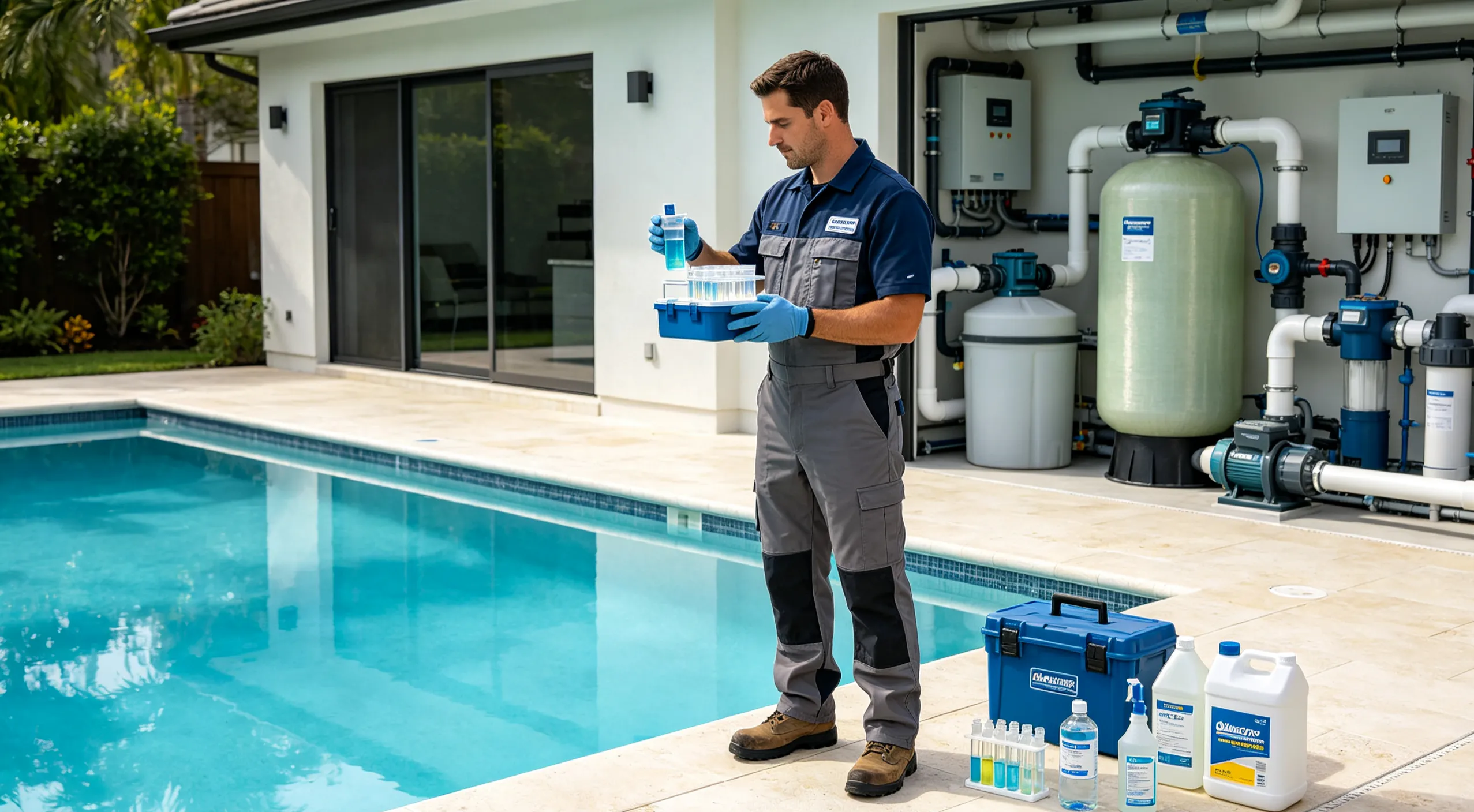
Technology can simplify routine cleaning, but a complete maintenance service still involves several different tasks.
Routine Cleaning and Debris Removal
Regular cleaning helps remove leaves, dirt, sand, and other debris before they accumulate.
Robotic pool cleaners can handle much of the routine surface cleaning, while professional cleaners can address areas or conditions that require additional attention.
Water Testing and Chemical Balance
Maintaining appropriate water chemistry is essential for keeping pool water clean and suitable for swimming.
Professional maintenance services may include checking water parameters and making necessary chemical adjustments based on the pool's condition.
Filter and Equipment Maintenance
Filters, pumps, and other circulation equipment require regular inspection and maintenance.
A pool can appear clean while equipment performance gradually declines, so checking these components is an important part of preventive maintenance.
Pool Inspection and Preventive Maintenance
A modern maintenance service should not focus only on visible dirt.
Regular inspections can help identify equipment problems, leaks, worn components, or other issues before they develop into larger repairs.
Robotic Pool Cleaners vs Traditional Pool Maintenance
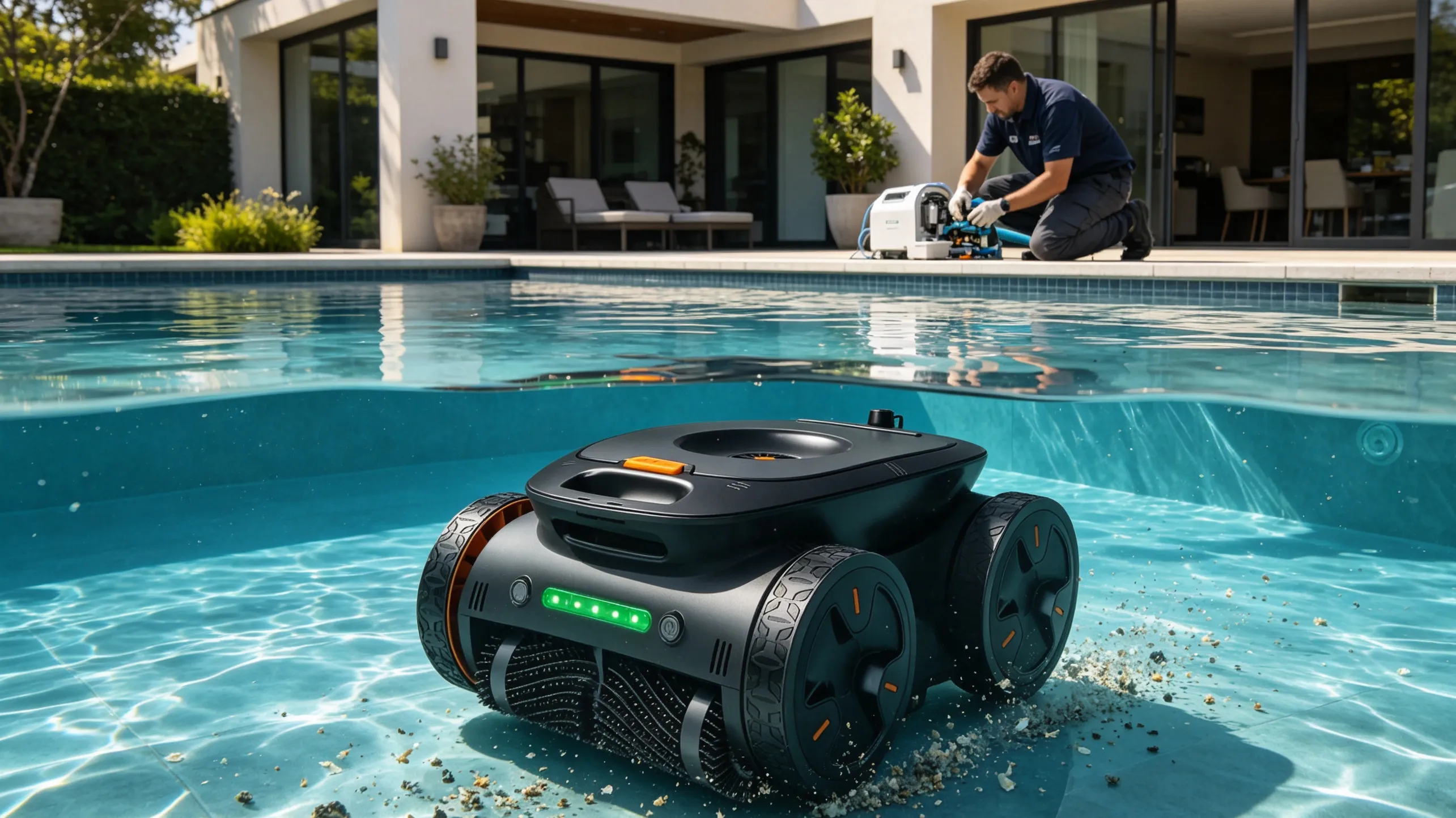
Robotic pool cleaners and professional pool services serve different purposes, so they are not necessarily alternatives.
Maintenance Task | Robotic Pool Cleaner | Professional Service |
|---|---|---|
Routine debris removal | ✓ | ✓ |
Pool floor cleaning | ✓ | ✓ |
Water testing | Depends on system | ✓ |
Chemical balancing | No | ✓ |
Filter maintenance | Limited | ✓ |
Equipment inspection | No | ✓ |
Deep cleaning | Limited | ✓ |
Preventive maintenance | Limited | ✓ |
Where Robotic Cleaners Can Help
Robotic cleaners are particularly useful for repetitive cleaning tasks.
They can operate regularly without requiring someone to manually guide a vacuum through the pool, making them a practical part of a modern maintenance routine.
Where Professional Maintenance Is Still Needed
Professional maintenance remains important for tasks involving water chemistry, filtration equipment, inspections, repairs, and deeper cleaning.
The most effective approach for many pools is therefore a combination of automated routine cleaning and professional maintenance.
How to Choose a Pool Cleaning and Maintenance Service in 2026
Not every service package offers the same level of care. Pool owners should look at what is actually included rather than choosing based only on price.
Check What Is Included in the Service
A service package may cover only cleaning, or it may include water testing, chemical treatment, equipment inspection, and preventive maintenance.
Understanding the scope of the service makes it easier to compare different providers.
Consider Your Pool Type and Usage
A private pool used occasionally may require a different maintenance schedule from a large pool used every day.
Pool size, usage, surrounding environment, and equipment should all be considered when determining the appropriate service frequency.
Look for Preventive Maintenance
A good maintenance plan should address potential problems before they become major repairs.
Regular filter checks, equipment inspections, and water-quality monitoring can help identify issues earlier.
Consider Technology and Automation
Robotic cleaners and smart monitoring systems can reduce repetitive work and provide more consistent maintenance between professional visits.
However, technology should support the maintenance plan rather than replace necessary professional care.
Frequently Asked Questions
Q1: What are the latest pool cleaning technologies in 2026?
A: Current pool maintenance technology includes robotic pool cleaners, smart water monitoring, remote equipment control, automated cleaning systems, and more energy-efficient pool equipment.
Q2: Are robotic pool cleaners worth using in 2026?
A: They can be worthwhile for pool owners who want to reduce manual cleaning and maintain a more consistent cleaning routine. The value depends on pool size, usage, debris levels, and the features of the specific cleaner.
Q3: How often should professional pool maintenance be scheduled?
A: The ideal schedule depends on pool usage, size, environment, and equipment. Regularly used or heavily exposed pools generally require more frequent attention than lightly used residential pools.
Q4: What does a professional pool maintenance service include?
A: Services may include debris removal, water testing, chemical balancing, filter maintenance, equipment inspection, deep cleaning, and preventive maintenance. The exact scope depends on the service provider.
Q5: Can robotic pool cleaners replace professional pool maintenance?
A: No. Robotic cleaners are useful for routine surface cleaning, but they do not replace water treatment, equipment inspection, repairs, or other professional maintenance tasks.
Q6: Are smart pool maintenance systems expensive?
A: Costs vary significantly depending on the equipment and functions included. Pool owners should consider the long-term convenience, energy use, and maintenance requirements rather than looking only at the initial price.
Q7: What is the most efficient way to maintain a swimming pool?
A: A combination of regular automated cleaning, appropriate water-quality monitoring, routine equipment checks, and professional maintenance can provide a practical and efficient approach for many pools.
Conclusion
Pool cleaning and maintenance in 2026 are increasingly focused on automation, preventive care, and more efficient use of equipment.
Robotic pool cleaners can handle repetitive cleaning tasks, while smart monitoring can provide more information about pool conditions. Professional services remain important for water treatment, equipment inspection, deep cleaning, and preventive maintenance.
Rather than choosing between technology and professional service, pool owners can combine both. A robotic cleaner can take care of routine cleaning while professional maintenance handles the tasks that require experience, testing, and specialized equipment.