Pool Robot vs Manual Pool Cleaning: Which Is Better?
Robotic Pool Cleaner Benefits
Pool Maintenance Comparison
Automated Pool Cleaning
Introduction
Keeping a swimming pool clean is essential for water quality, safety, and overall enjoyment. Yet one major question continues to divide pool owners: Is a pool robot really better than manual pool cleaning? While traditional methods have been used for decades, modern automation is rapidly changing expectations around pool maintenance.
Today, many pool owners are discovering that intelligent cleaning systems offer a smarter, more efficient alternative to manual labor. On the main platform where advanced pool cleaning technology is presented, you can see how automation is designed to reduce effort while delivering more consistent results.
In this article, we’ll compare pool robots vs manual pool cleaning in detail—covering performance, time investment, cost, effectiveness, and long-term value—to help you decide which option is truly better.
What Is Manual Pool Cleaning?
Manual pool cleaning relies entirely on human effort and basic tools. Common tasks include:
Skimming leaves and debris from the surface
Brushing pool walls and steps
Vacuuming the pool floor
Cleaning filters manually
While effective in theory, manual cleaning depends heavily on consistency and technique.
Pros of Manual Pool Cleaning
Lower upfront cost
No electronic components
Familiar and straightforward
For small pools or occasional use, manual cleaning may seem sufficient at first.
Limitations of Manual Pool Cleaning
Manual cleaning is time-consuming and often incomplete. Fine debris is easily missed, and dead zones like corners, steps, and waterlines are difficult to clean thoroughly.
Over time, inconsistent manual maintenance leads to cloudy water, algae growth, and increased chemical usage.
What Is a Pool Robot?
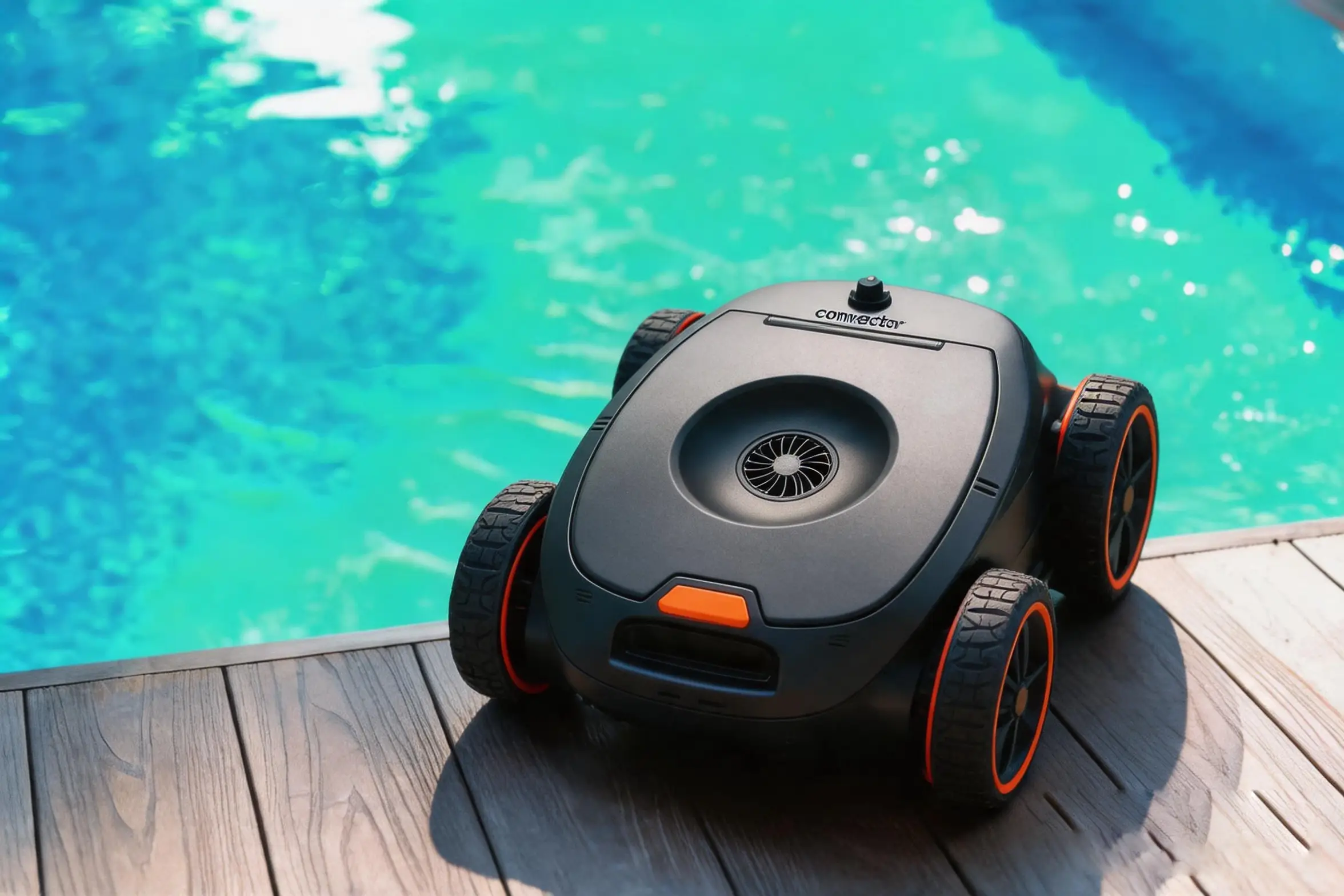
A pool robot—also known as a robotic pool cleaner—is a self-contained, automated device that independently cleans pool floors, walls, and sometimes waterlines. Unlike manual tools, robotic cleaners use onboard motors, smart navigation, and internal filtration systems.
You can explore how this technology works in more detail on our automated pool cleaning solutions section, where intelligent design is focused on efficiency and ease of use.
Key Features of Pool Robots
Independent movement and navigation
Built-in filtration for fine debris
Full pool coverage
Minimal user involvement
Pool robots are designed to work consistently, regardless of weather or pool usage.
Pool Robot vs Manual Cleaning: A Detailed Comparison
1. Cleaning Effectiveness
Manual Cleaning:
Effectiveness depends entirely on time, effort, and technique. Fine sand, pollen, and dust are often stirred up rather than removed.
Pool Robot:
Robotic cleaners actively scrub surfaces and capture debris before it breaks down. Multi-layer filtration ensures even microscopic particles are removed.
Winner: Pool Robot
2. Time and Effort Required
Manual Cleaning:
Typically requires 1–3 hours per session, multiple times per week. Skipping sessions quickly leads to visible issues.
Pool Robot:
Once scheduled, cleaning happens automatically. The only regular task is rinsing the filter, which takes minutes.
Winner: Pool Robot
3. Consistency of Results
Manual Cleaning:
Results vary depending on how often and how thoroughly cleaning is done.
Pool Robot:
Delivers consistent, repeatable cleaning cycles regardless of user availability.
Winner: Pool Robot
4. Coverage and Hard-to-Reach Areas
Manual tools struggle with:
Corners
Steps
Sloped areas
Waterlines
Robotic cleaners are designed to navigate these areas autonomously, reducing debris buildup over time.
For examples of coverage-focused designs, the pool cleaning technology overview on our site explains how intelligent navigation solves these challenges.
5. Impact on Water Chemistry
Manual Cleaning:
Debris often remains in circulation, consuming chlorine and destabilizing water balance.
Pool Robot:
By removing contaminants early, automated cleaning reduces chemical demand and helps maintain stable water conditions.
Winner: Pool Robot
Cost Comparison: Short-Term vs Long-Term
Upfront Costs
Manual cleaning tools are inexpensive initially. Pool robots require a higher upfront investment.
However, upfront cost alone does not reflect total ownership cost.
Long-Term Expenses
Manual cleaning often leads to:
Higher chemical consumption
Increased wear on filtration systems
More frequent professional servicing
Pool robots reduce these costs by handling debris independently and efficiently.
Over time, many pool owners find automation to be more cost-effective.
Why Pool Robots Are Better for Modern Pool Owners
Designed for Busy Lifestyles
Today’s pool owners value convenience. Automated cleaning fits seamlessly into busy schedules without compromising water quality.
This is especially valuable for:
Families
Rental properties
Commercial or shared pools
Energy Efficiency
Robotic pool cleaners operate independently from the pool’s main pump, using less electricity while improving overall filtration efficiency.
This reduces energy consumption and extends equipment lifespan.
Smarter Maintenance, Not Harder Work
Instead of reacting to dirty water, robotic cleaning prevents problems before they start.
The solution-focused pages highlight how intelligent systems simplify long-term pool care.
When Manual Cleaning Still Makes Sense
Manual cleaning may still be appropriate if:
The pool is very small
Usage is infrequent
Budget is extremely limited
However, even in these cases, automation can significantly improve water clarity and reduce effort.
Choosing the Right Pool Cleaning Approach
If you’re deciding between manual cleaning and a robotic solution, consider:
How much time you want to spend on maintenance
How consistent you want results to be
Long-term operating costs
Desired water quality
For personalized advice based on your pool type and usage, you can reach out through the contact section to explore suitable options.
FAQ: Pool Robot vs Manual Pool Cleaning
Is a pool robot really worth it?
For most pool owners, yes. The reduction in time, effort, and chemical use makes robotic cleaning a strong long-term investment.
Can a pool robot fully replace manual cleaning?
In most cases, yes. Occasional spot checks may still be needed, but routine manual vacuuming and brushing are largely eliminated.
Do robotic pool cleaners work on all pool surfaces?
Most modern robots are designed to handle a wide range of pool materials, including tile, concrete, and vinyl.
How often should a pool robot run?
Depending on usage and environment, 2–5 cleaning cycles per week are typical.
Are robotic pool cleaners difficult to maintain?
No. Basic maintenance usually involves rinsing filters and occasional inspections.
Conclusion
When comparing pool robots vs manual pool cleaning, the difference is clear. Manual cleaning requires constant effort, inconsistent results, and long-term frustration. Pool robots, on the other hand, offer efficient, consistent, and intelligent cleaning with minimal involvement.
For pool owners seeking cleaner water, less work, and better long-term value, automated pool cleaning is no longer a luxury—it’s a practical solution for modern pool care.