Can Robotic Pool Cleaners Pick Up Leaves and Large Debris?

Introduction
One of the most common questions pool owners ask before buying a robotic pool cleaner is whether it can handle more than just fine dirt and dust.
While robotic pool cleaners are known for removing everyday debris such as sand, small particles, and surface dirt, many users also want to know if they can pick up larger debris like leaves, insects, and other materials that often collect at the bottom of a pool.
The answer depends on several factors, including the cleaner’s filtration system, debris container capacity, brush design, and the size of the debris. Some robotic pool cleaners are designed to handle a wider range of debris, while others are better suited for regular maintenance with smaller particles.
Understanding what a robotic pool cleaner can and cannot collect can help pool owners choose the right cleaning solution and avoid unrealistic expectations.
What Types of Debris Can a Robotic Pool Cleaner Handle?
Robotic pool cleaners are designed to automate routine pool cleaning, including collecting many common types of debris found in residential pools.
Small Dirt and Fine Particles
Fine debris is one of the main types of dirt that robotic pool cleaners are designed to remove.
This includes:
Dust
Sand
Small dirt particles
Pollen
Fine organic material
The filtration system captures these particles as the cleaner moves across the pool floor. Regular cleaning helps prevent fine debris from accumulating and making the pool water appear cloudy or dirty.
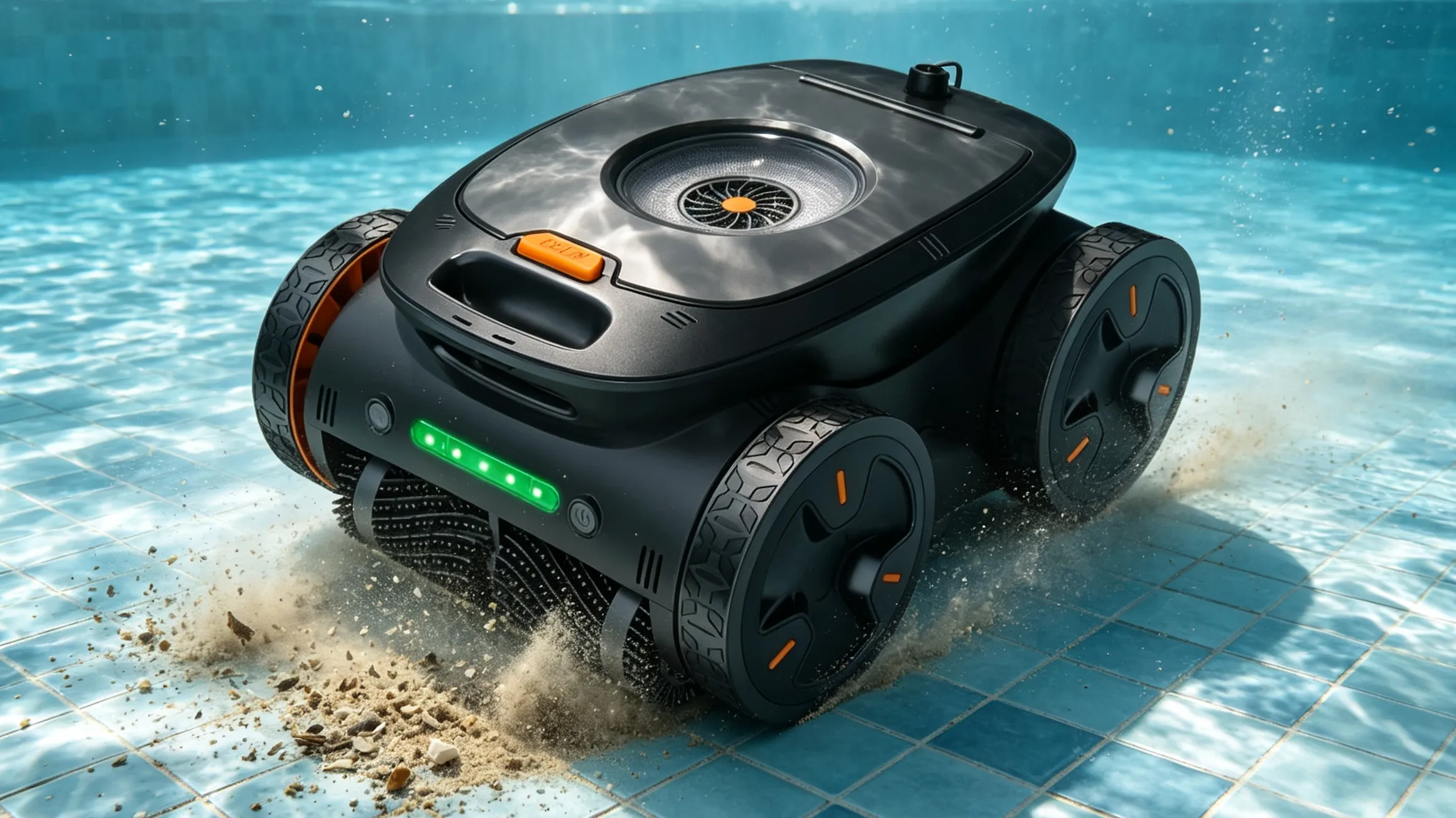
Sand, Dust, and Algae Debris
Pools located near beaches, gardens, or outdoor areas may collect sand, dust, and organic residue more frequently.
A robotic pool cleaner with an effective filtration system can help remove these particles from the pool surface. The brushes also play an important role by loosening dirt that sticks to the pool floor before it enters the filtration system.
For pools with frequent fine debris buildup, choosing the right filter type and cleaning schedule can improve overall results.
Leaves and Insects
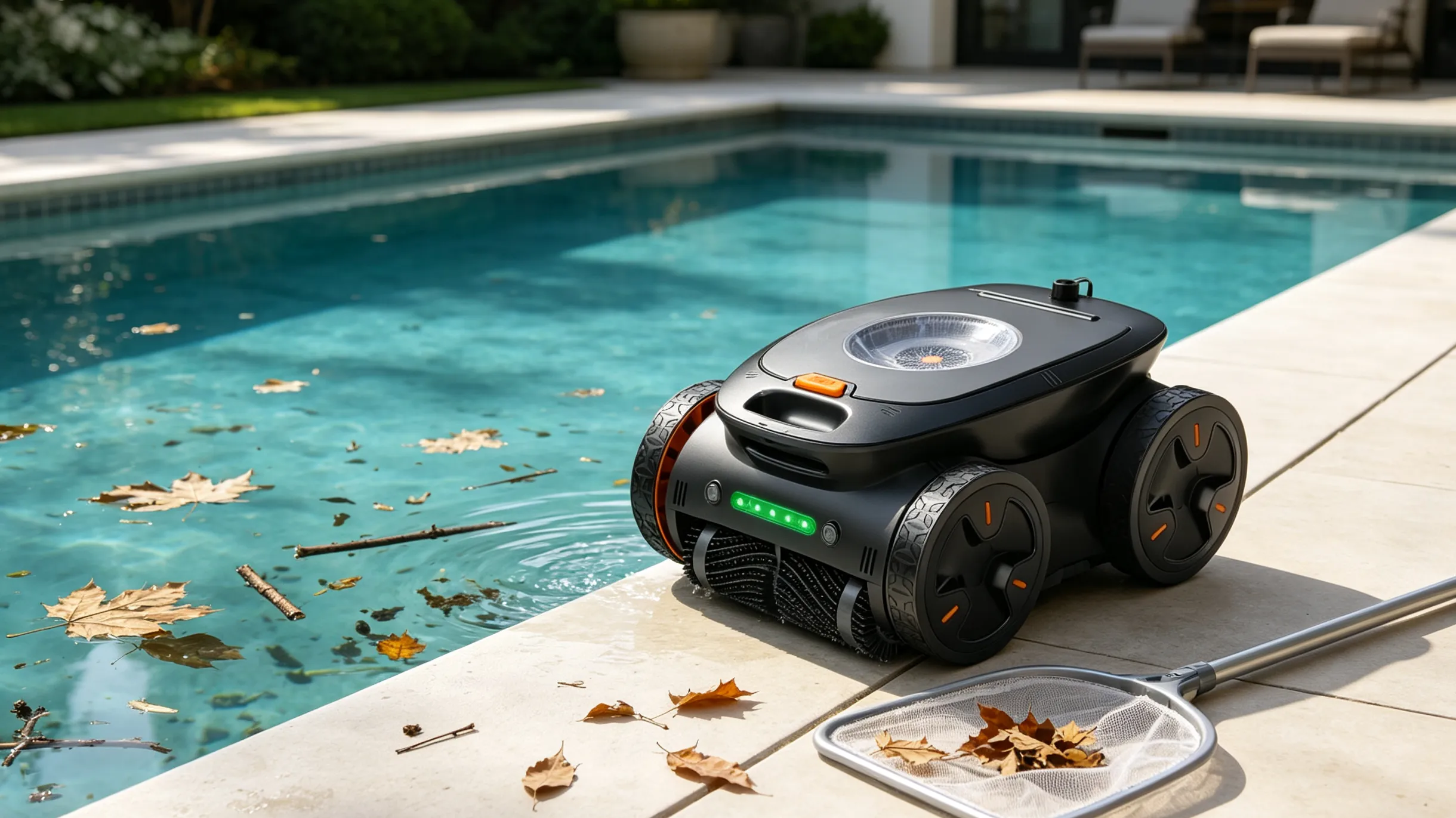
Leaves and small insects are common debris problems, especially for outdoor pools surrounded by trees or plants.
Many robotic pool cleaners can collect leaves and similar lightweight debris when equipped with a suitable debris basket or filtration system.
However, performance may vary depending on the size and amount of leaves. A small number of leaves scattered across the pool floor is usually easier to handle than a large accumulation after storms or heavy winds.
Can Robotic Pool Cleaners Pick Up Large Debris?
Robotic pool cleaners can handle some larger debris, but they are not designed to replace manual removal of extremely large objects.
When Large Debris Becomes a Challenge
Large leaves, branches, toys, or heavy organic material can create challenges for robotic cleaners.
Oversized debris may:
Fill the filter basket quickly
Reduce cleaning efficiency
Increase the cleaning time
For this reason, removing very large objects before running the cleaner is often recommended, especially after storms or long periods without cleaning.
Why Filter Capacity Matters
The filtration system determines how much debris a robotic pool cleaner can collect during one cleaning cycle.
A larger debris container allows the cleaner to collect more material before it needs to be emptied. This is especially useful for pools that frequently collect leaves or outdoor debris.
Pool owners should consider both the filter type and capacity when selecting a robotic pool cleaner, especially if their pool environment produces a high amount of debris.
How to Improve Robotic Pool Cleaner Performance With Heavy Debris
When a pool contains a large amount of debris, a few simple steps can help the robotic cleaner work more effectively.
Remove Oversized Objects Before Cleaning
Although many robotic pool cleaners can collect leaves and small debris, very large objects should usually be removed manually first.
Branches, large piles of leaves, and other heavy debris may exceed the cleaner’s capacity and prevent it from completing a normal cleaning cycle.
Removing these objects before operation allows the cleaner to focus on routine debris collection and reduces unnecessary stress on the filtration system.
Choose the Right Cleaning Mode
Some robotic pool cleaners provide different cleaning modes for different pool conditions.
For a pool with regular dirt and small debris, a standard cleaning cycle may be enough. For pools with heavier debris accumulation, selecting a longer or deeper cleaning cycle can help improve coverage.
The right cleaning mode depends on factors such as pool size, debris level, and how frequently the pool is maintained.
Clean the Filter After Collecting Heavy Debris
Heavy debris collection can quickly fill the filter basket or cartridge.
After cleaning a pool with many leaves or organic materials, check and empty the filter before the next cycle. A clean filter helps maintain proper water flow and allows the cleaner to continue collecting debris efficiently.
Robotic Pool Cleaner vs Manual Cleaning for Heavy Debris
Robotic pool cleaners and manual cleaning methods serve different purposes when dealing with debris.
Cleaning Method | Best For | Limitations |
|---|---|---|
Robotic Pool Cleaner | Routine debris, dirt, sand, small leaves | May struggle with very large debris |
Manual Net/Vacuum | Large leaves, branches, heavy debris buildup | Requires more time and physical effort |
Combination Approach | Regular maintenance and occasional heavy cleaning | Requires both methods |
When a Robotic Pool Cleaner Is the Better Choice
For regular pool maintenance, a robotic cleaner can reduce the need for frequent manual vacuuming.
It is especially useful for removing small debris before it accumulates and keeping the pool cleaner between deeper maintenance sessions.
When Manual Cleaning Is Still Needed
Manual cleaning remains useful when the pool contains large amounts of debris after storms, seasonal changes, or extended periods without maintenance.
A robotic pool cleaner is designed to support pool care, but it may not be the most efficient solution for removing very large objects or heavy debris piles.
How to Choose a Robotic Pool Cleaner for Leaf and Debris Removal
If your pool regularly collects leaves or outdoor debris, several features are worth considering.
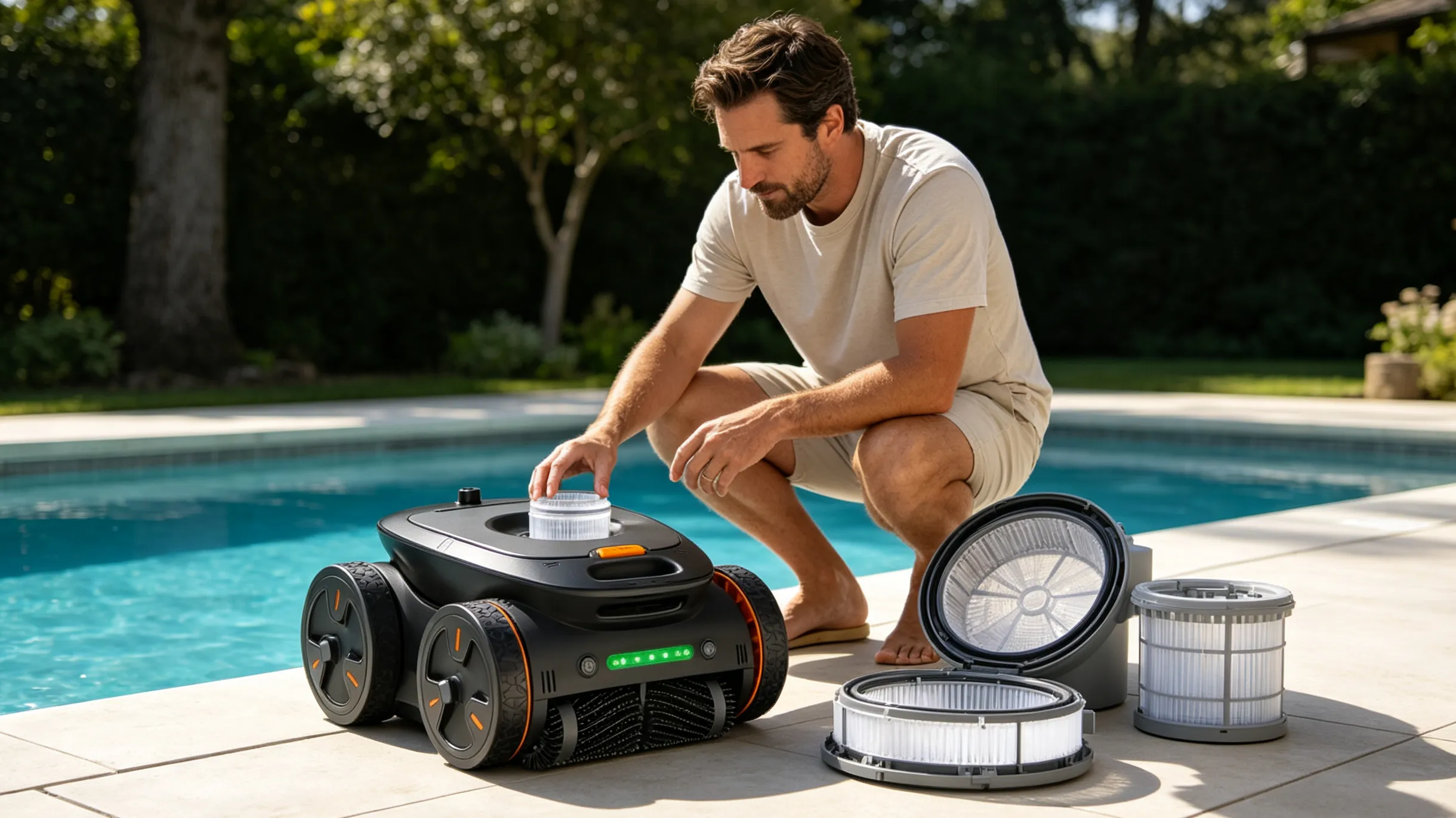
Check the Filter and Debris Capacity
A larger filter basket can reduce how often the cleaner needs to be emptied during a cleaning cycle.
For pools surrounded by trees or exposed outdoor areas, debris capacity can have a significant impact on convenience.
Consider Cleaning Coverage
Pools with larger surfaces or complex designs may require a cleaner that can provide better coverage.
Features such as floor cleaning, wall climbing, or multiple cleaning modes may improve performance depending on the pool design.
Match the Cleaner to Your Pool Environment
The best robotic pool cleaner depends on where and how the pool is used.
A pool surrounded by trees may need stronger debris-handling ability, while an indoor pool or covered pool may mainly require fine particle cleaning.
Understanding your pool’s typical debris conditions helps you choose a cleaner that matches your actual needs.
Frequently Asked Questions
Q1: Can a robotic pool cleaner pick up leaves?
A: Yes, many robotic pool cleaners can collect leaves, especially small or moderate amounts. However, large piles of leaves may require manual removal before cleaning.
Q2: Can a robotic pool cleaner pick up large debris?
A: Some robotic pool cleaners can handle larger debris, but very large objects such as branches or heavy debris buildup may exceed their cleaning capacity.
Q3: Should I remove leaves before using a robotic pool cleaner?
A: Removing large leaves and oversized debris before cleaning is recommended. This helps prevent the filter from filling too quickly and allows the cleaner to operate more efficiently.
Q4: Do robotic pool cleaners collect sand and dirt?
A: Yes. Robotic pool cleaners are commonly designed to remove fine debris such as sand, dust, and small particles from pool surfaces.
Q5: How often should I empty the robotic pool cleaner filter?
A: The filter should be checked and emptied regularly, especially after cleaning a pool with a high amount of leaves or debris.
Conclusion
Robotic pool cleaners can handle many common types of pool debris, including dirt, sand, small leaves, and organic particles. However, their ability to collect larger debris depends on factors such as filter capacity, cleaner design, and the amount of debris present.
For everyday pool maintenance, a robotic cleaner can significantly reduce manual cleaning work and help keep the pool consistently cleaner. When dealing with heavy debris such as large branches or excessive leaves, combining robotic cleaning with occasional manual removal is usually the most effective approach.
Choosing a robotic pool cleaner that matches your pool environment, debris level, and maintenance needs can help ensure better cleaning performance and long-term convenience.