How Do Robotic Pool Cleaners Work? A Complete Guide to Smart Pool Cleaning
Robotic Pool Cleaners Work
Robotic Pool Cleaners Supplier
How Do Robotic Pool Cleaners Work?
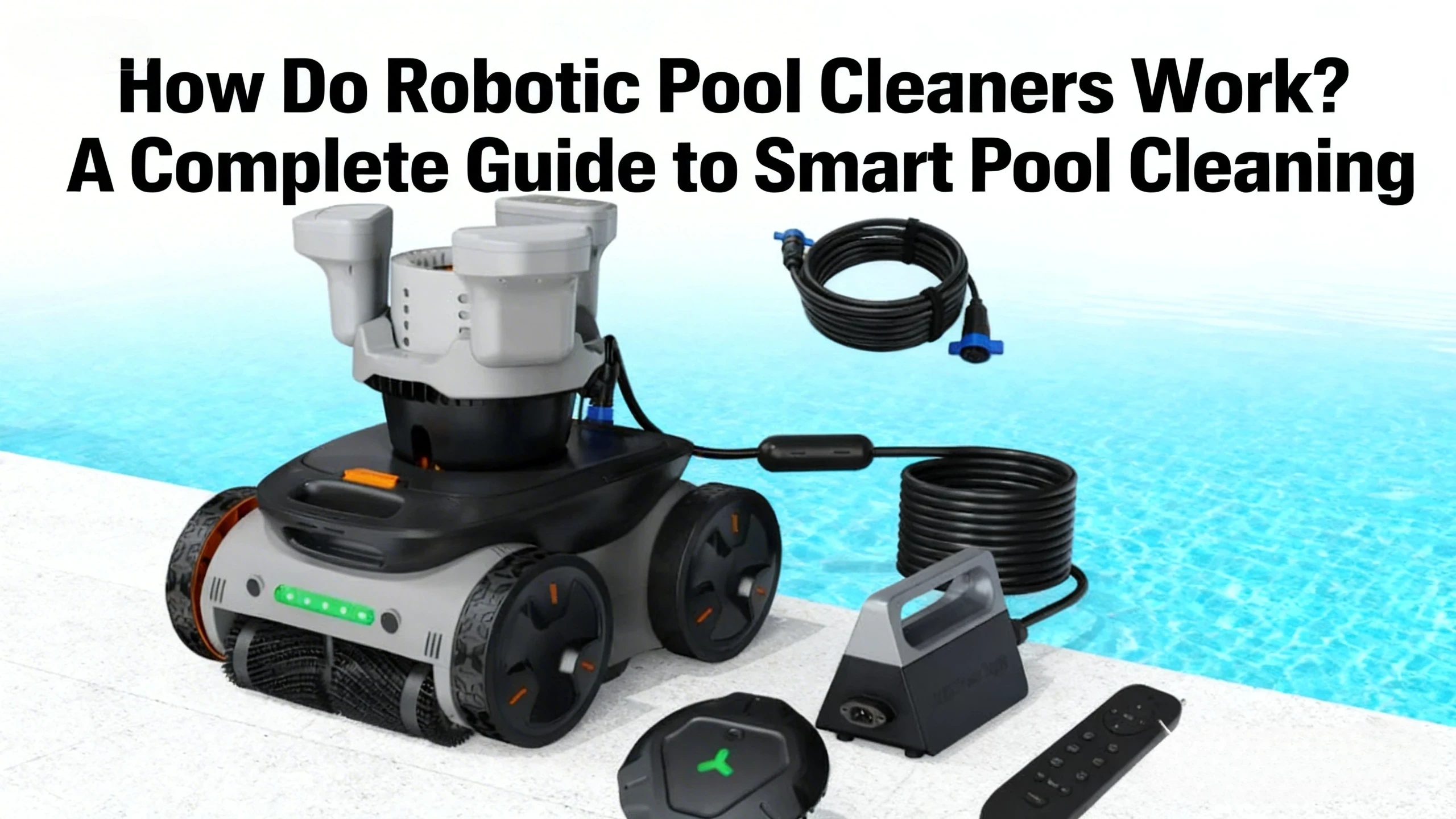
Robotic pool cleaners work by combining movement, scrubbing, suction, and internal filtration in one self-contained machine. You place the robot in the pool, it moves across the floor and often up the walls, loosens dirt with brushes, pulls debris in with its own pump, and traps that debris in an internal filter basket or cartridge. Most robotic cleaners do this without using your pool’s main pump or filtration system, which is a big reason they are popular with pool owners.
That is the simple answer. The more useful answer is that a robotic cleaner is really a small underwater cleaning system with several parts working together at the same time. The drive system helps it move. The brushes loosen dirt and algae. The pump creates suction. The filters trap debris. And the navigation system helps it cover more of the pool instead of wandering randomly. Modern models may also add scheduling, remote control, app connectivity, and smarter path planning.
What a Robotic Pool Cleaner Actually Does
A robotic pool cleaner is designed to automate one of the most tedious parts of pool ownership: physically cleaning the floor, walls, and sometimes the waterline. Unlike suction-side cleaners that connect to the skimmer or pressure-side cleaners that rely on return pressure, robotic cleaners are built as independent units with their own motors and debris collection system.
That independence matters for two reasons. First, the cleaner is not depending on your pool pump to move or vacuum. Second, it is collecting debris in its own filter basket or cartridge instead of sending all of that debris through your main pool filtration system. In practical terms, that usually means less strain on the pool system and more control over how the cleaner performs.
The Five Main Parts That Do the Work
1. The Drive System
Every robotic pool cleaner needs a way to move. That is usually handled by drive motors connected to wheels or tracks. Better traction helps the cleaner travel across the floor, climb walls, and maintain contact on slippery pool surfaces. Some premium units use four-wheel drive or similar traction-focused designs to improve movement and coverage.
2. The Pump and Suction System
Separate from movement, the cleaner also needs suction. A pump motor pulls water and debris through the robot. As the water moves through the unit, leaves, sand, insects, and finer particles get pulled toward the internal filter. This is the vacuum side of the machine.
3. The Brushes
Brushes do the scrubbing. As the robot moves, rotating or high-friction brushes loosen debris, algae film, and dirt from the pool floor, walls, and sometimes the waterline. Strong suction helps, but suction alone is not enough when debris is stuck to the surface. The brush system is a big reason robotic cleaners can outperform simpler cleaners on stubborn grime.
4. The Filter Basket or Cartridge
Once debris is sucked into the cleaner, it has to go somewhere. Robotic cleaners use internal filters rather than your pool’s main filter. Depending on the model, that may be a filter bag, canister, or cartridge. Easier-access filter designs usually make ownership better because you will be cleaning that basket regularly.
5. The Navigation and Control System
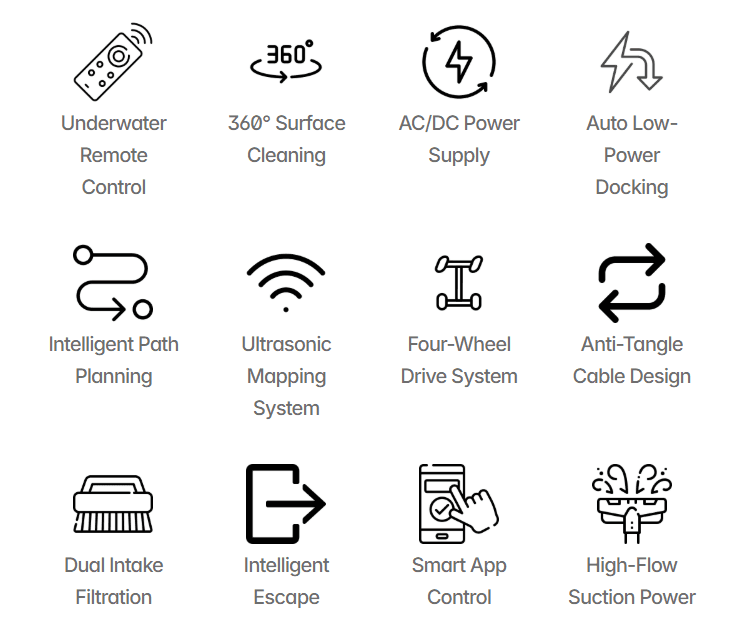
Older or simpler robots may follow basic patterns. More advanced ones use sensors, scanning, algorithms, or platform-specific navigation systems to improve coverage. Many newer models also include app control, adaptive cleaning cycles, and more precise path planning.
Step by Step: How a Robotic Pool Cleaner Cleans a Pool
Here is what usually happens during a cleaning cycle.
Step 1: You Place the Cleaner in the Pool
Most robotic pool cleaners are dropped directly into the water and started from an external power supply or, in cordless models, from an onboard battery system.
Step 2: The Robot Sinks and Begins Moving
Once submerged, the drive system starts moving the cleaner across the pool floor. The robot is not floating around randomly. It is actively driving itself along the surface using wheels or tracks.
Step 3: Brushes Loosen Debris
As it moves, the brushes agitate dirt, algae, and fine debris stuck to the pool surface. This scrubbing step matters because not all debris is sitting loose on the bottom. Some of it is lightly attached to the floor, walls, or waterline.
Step 4: The Pump Pulls in Water and Debris
The robot’s pump motor creates suction. Water and debris are pulled through the intake and into the cleaner. Large debris and finer particles then get separated from the water by the internal filter.
Step 5: Filtered Water Is Expelled Back into the Pool
After debris is captured, cleaner water passes back out of the unit. This is one reason robotic cleaners are often described as acting like a secondary filtration layer during the cleaning cycle.
Step 6: The Cleaner Changes Direction and Continues Coverage
Throughout the cycle, the cleaner keeps changing direction based on its programming, traction, and navigation system. More advanced models try to optimize path coverage instead of relying only on random bump-and-turn behavior.
Step 7: The Cycle Ends and You Clean the Filter
After the programmed cycle finishes, you remove the robot and empty or rinse the filter basket or cartridge. This part is easy to underestimate, but it is a major part of the ownership experience. A cleaner with great suction but annoying filter maintenance can become frustrating fast.
How Robotic Cleaners Move, Climb, and Avoid Getting Stuck
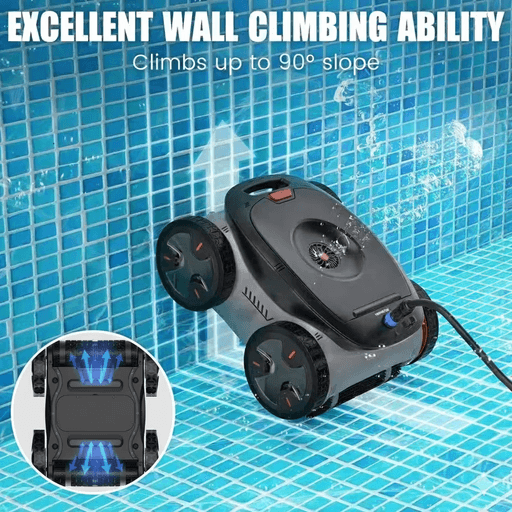
This is where many people assume there is some kind of magic. There is not. It is mostly a mix of traction, buoyancy control, motor power, and navigation logic.
To climb walls, the cleaner needs enough grip and enough suction or water flow behavior to maintain contact while moving upward. That is why some models are better on walls and waterlines than others.
To avoid getting stuck, better robots use deflection logic, sensor input, path adjustments, or escape behaviors. In simpler terms, they recognize when they are trapped in a corner, against a drain, or in an awkward geometry and try to back out and re-route. This is one of the clearest practical differences between basic and premium models.
How Robotic Pool Cleaners Differ From Suction-Side and Pressure-Side Cleaners
This distinction matters because buyers often compare all automatic cleaners as if they work the same way.
A suction-side cleaner connects to your skimmer and uses your pool pump’s suction to move and collect debris. A pressure-side cleaner uses water pressure from the pool system and often has its own debris bag. A robotic cleaner is different because it uses its own internal motors and filtration rather than depending on the pool’s circulation system to do the work.
That usually makes robotic cleaners the most independent and feature-rich option. It also explains why they often cost more upfront.
What Affects Cleaning Performance the Most
Not all robotic pool cleaners perform equally well, even if the general mechanism is the same.
Pool Shape and Size
A small rectangular pool is easier to clean than a large pool with curves, steps, benches, and awkward transitions. The more complex the shape, the more important navigation quality becomes.
Debris Type
If your pool mostly collects dust and sand, almost any decent robot may perform well. If it deals with leaves, bugs, twigs, or algae film, brush design, suction strength, and filter design matter more.
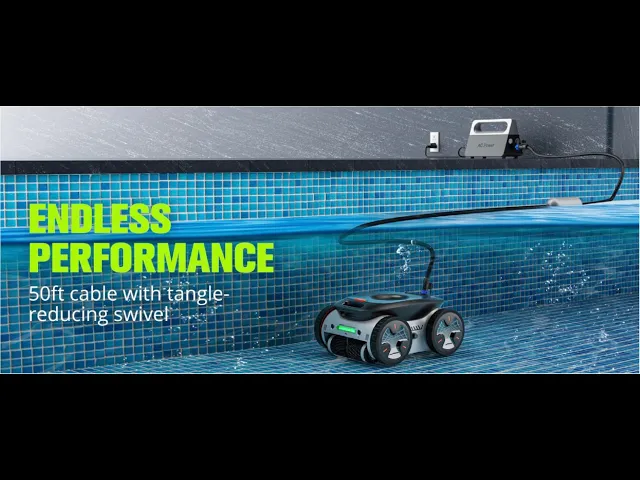
Filter Design
A robot is only as useful as its ability to capture the mess it lifts. Fine filtration matters for silt and small particles. Easy filter removal matters for real-world convenience.
Navigation Quality
Many buyers focus on suction because it sounds powerful. In reality, navigation often matters just as much. A robot that covers the pool efficiently can clean better than a robot with strong suction but poor path logic.
Corded vs. Cordless Design
Corded models often offer longer continuous runtime, while cordless models improve convenience and reduce cable frustration. The better choice depends on your pool size, layout, and cleaning habits.
Are Robotic Pool Cleaners Worth It?
For many pool owners, yes. The main reason is not that they are flashy. It is that they reduce manual cleaning work and do it with less dependence on the main pool system.
But whether they are worth it depends on your pool and expectations. A robotic cleaner is a strong fit if you want convenience, regular cleaning, and better floor-and-wall coverage with less manual vacuuming. It is less compelling if your pool is very small, your debris load is minimal, or you want the cheapest possible automation option.
The practical tradeoffs are straightforward:
● more upfront cost,
● ongoing filter cleaning,
● possible cord management on corded models,
● feature differences that matter more than marketing suggests.
What to Look for if You Are Buying One
Once you understand how robotic pool cleaners work, the buying criteria become much clearer.
Look for:
● good navigation, especially for larger or irregular pools,
● strong wall and waterline capability if you want full-pool cleaning,
● easy-to-clean filters because maintenance affects satisfaction,
● reliable traction for slippery surfaces,
● the right power format for your pool size and preferences,
● useful controls like scheduling, app support, or manual modes if you will actually use them.
Manufacturers now differentiate through features like advanced sensing, AI path planning, Wi-Fi and Bluetooth control, OTA updates, wall climbing, anti-stuck logic, dual-intake filtration, and hybrid power options. Those features are not equally important for every buyer, but they are the kinds of design details that actually affect real-world performance.
If you want to explore robotic pool cleaner options or discuss the right platform for your market, you can review PURILY’s technology and product pages or contact james@hydrarobo.com.
FAQs
Do Robotic Pool Cleaners Use the Pool’s Filter System?
No. Robotic pool cleaners generally use their own internal motors and debris filters rather than relying on the pool’s main filtration system.
How Do Robotic Pool Cleaners Move Around the Pool?
They use drive motors connected to wheels or tracks. Better models add smarter navigation, scanning, or sensor systems to improve coverage and reduce missed spots.
Can Robotic Pool Cleaners Climb Walls?
Many can, but not all perform equally well. Wall climbing depends on traction, design, power, and navigation quality. Some also scrub the waterline.
Do Robotic Pool Cleaners Pick Up Fine Debris?
Yes, many models can capture fine debris, but performance depends on the filter system and basket or cartridge design.
Are Robotic Pool Cleaners Worth the Money?
They often are for pool owners who want less manual cleaning and more independent operation. The value depends on pool size, debris load, and how much you care about features like wall climbing, scheduling, and app control.