Why Do Robotic Pool Cleaners Get Stuck? Common Causes and Solutions
Introduction
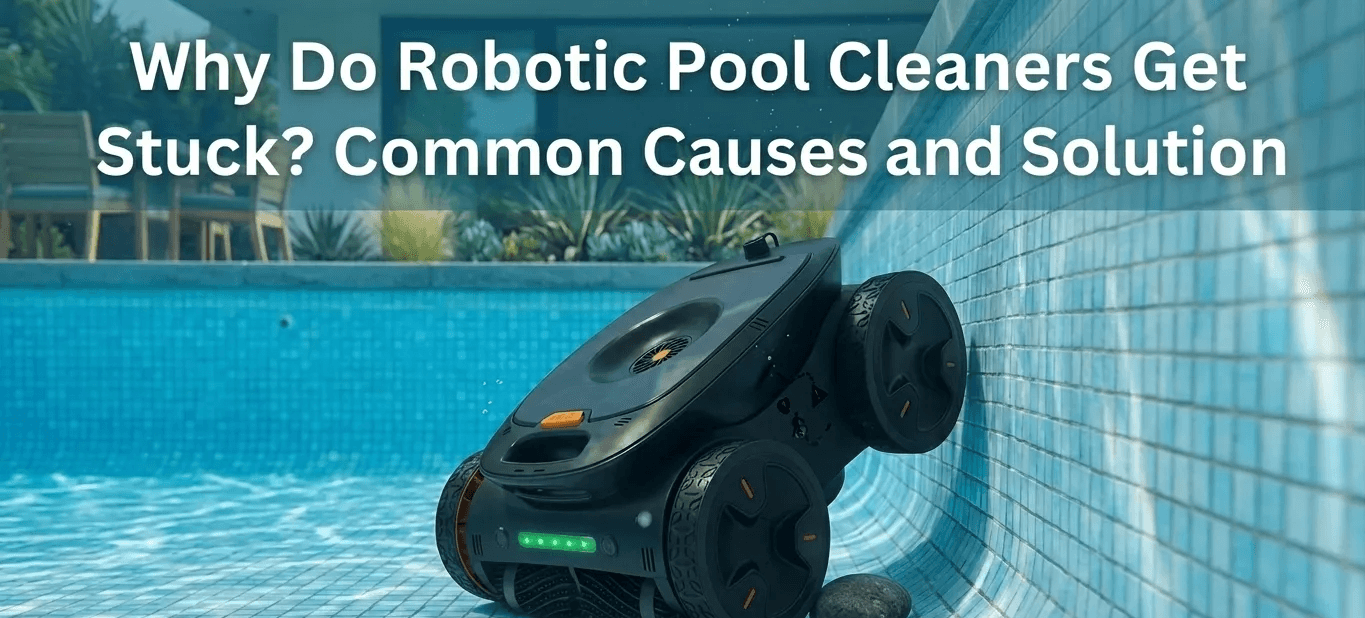
Robotic pool cleaners are designed to operate independently and reduce the effort required for regular pool maintenance. However, during operation, some users may experience situations where the cleaner stops moving, becomes trapped in certain areas, or cannot complete its cleaning cycle.
A robotic pool cleaner getting stuck does not always mean there is a problem with the machine itself. Pool conditions, obstacles, cable management, and cleaning environments can all affect how smoothly the robot operates.
Understanding the common causes behind these issues can help users improve cleaning efficiency and choose a robotic cleaner with suitable features.
Common Reasons Why Robotic Pool Cleaners Get Stuck
A robotic pool cleaner needs to move through different areas of the pool while maintaining contact with various surfaces. When external conditions or equipment limitations interfere with movement, the cleaner may become stuck or unable to continue cleaning.
Identifying the cause is the first step toward improving the cleaning experience.
Pool Obstacles and Uneven Surfaces
One common reason robotic pool cleaners become stuck is the presence of obstacles inside the pool. Items such as drain covers, steps, corners, or uneven surfaces can affect the robot’s movement.
Pools with complex designs may require stronger movement systems and intelligent detection features to avoid areas where the cleaner could lose mobility.
A robotic cleaner with stable movement capability can better adapt to different pool structures and reduce unnecessary interruptions during cleaning cycles.
Cable Tangling and Movement Restrictions
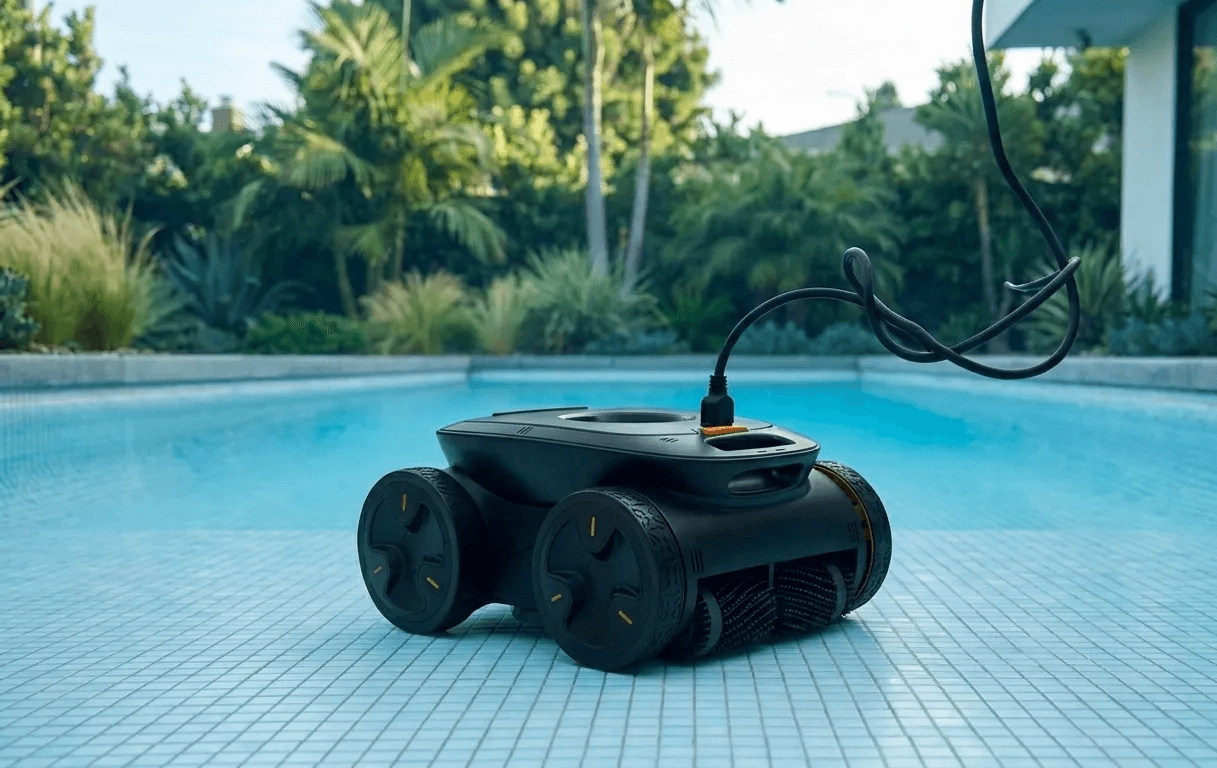
For corded robotic pool cleaners, cable management is an important factor affecting operation. A tangled cable can limit the cleaner’s movement range and prevent it from reaching different areas of the pool.
When the cable becomes twisted or trapped, the robot may stop moving or return to the same area repeatedly. Proper cable design and automatic anti-tangle functions can help reduce these problems.
How Battery and Power Conditions Affect Cleaning
Power-related issues can also interrupt cleaning cycles. A robotic pool cleaner requires sufficient energy to complete its planned operation, especially when cleaning larger pools or performing multiple cleaning functions.
Understanding how power management works can help users avoid unnecessary interruptions.
Low Battery Before Completing Cleaning Cycles
Cordless robotic pool cleaners may stop operating when battery power becomes too low. This is especially common when the cleaning cycle requires longer operation time.
Some advanced models include low-power detection and automatic docking functions, allowing the cleaner to return to a suitable position before completely losing power.
Insufficient Power for Different Pool Requirements
Different pools require different levels of cleaning performance. Larger pools, wall cleaning, and extended operation may require more energy compared with smaller and simpler pool environments.
Selecting a cleaner that matches the pool size and cleaning requirements helps reduce the chance of incomplete cleaning cycles.
How Smart Technology Helps Prevent Robotic Pool Cleaners from Getting Stuck
Modern robotic pool cleaners use different technologies to improve movement reliability and reduce interruptions during cleaning. Instead of simply moving randomly through the pool, advanced systems help the cleaner identify its surroundings and respond to unexpected situations.
These technologies allow robotic cleaners to operate more smoothly in pools with different layouts and cleaning conditions.
Intelligent Escape Systems
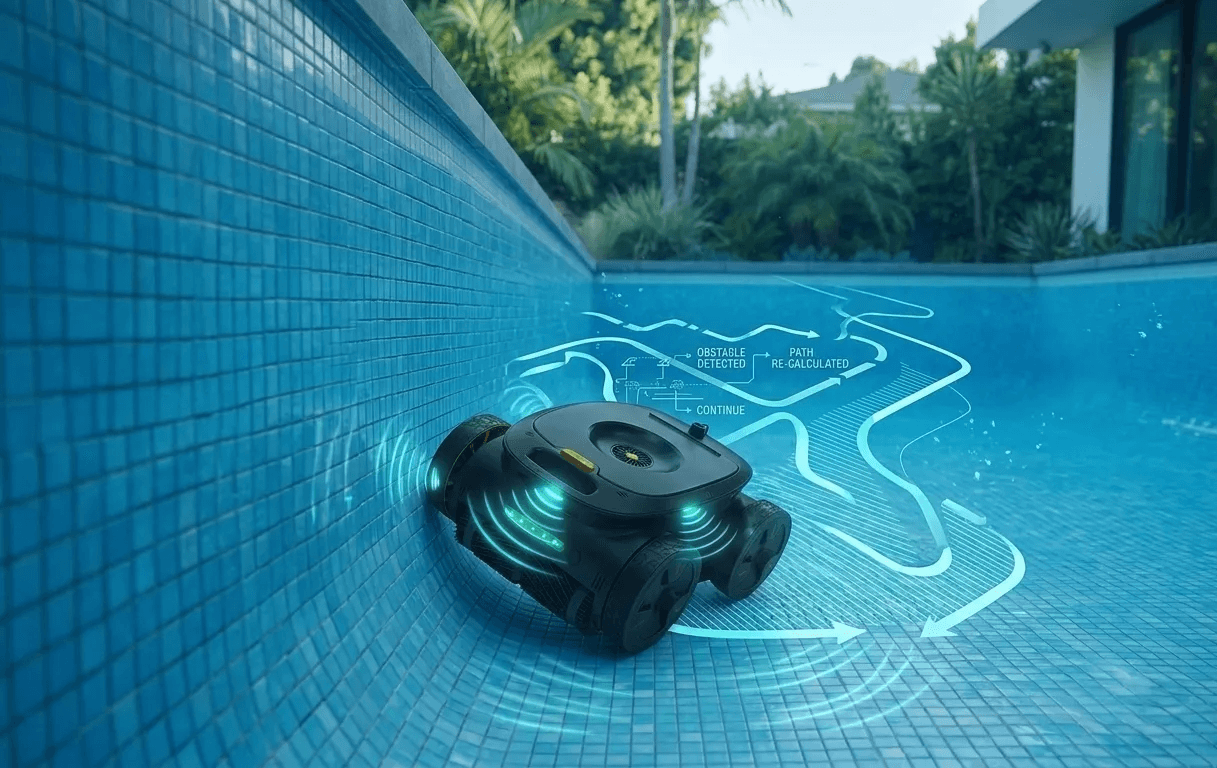
An intelligent escape system helps the robotic cleaner recover when it encounters difficult situations, such as corners, obstacles, or areas where movement becomes limited.
When the cleaner detects that its movement is restricted, the system can adjust its direction and attempt to continue the cleaning cycle instead of remaining trapped in one position.
This function is especially useful for pools with complex designs or areas that may affect normal movement.
Sensors and Navigation Support
Sensors help robotic pool cleaners understand their surroundings and make better movement decisions. By detecting obstacles and changes in the pool environment, the cleaner can reduce unnecessary stops and improve cleaning efficiency.
Technologies such as ultrasonic sensors and intelligent navigation systems provide additional support for maintaining stable operation across different pool conditions.
How to Reduce the Risk of Robotic Pool Cleaners Getting Stuck
Although robotic cleaners are designed for automatic operation, proper preparation and regular checks can further improve cleaning reliability.
Simple steps before and after cleaning can help prevent common movement problems.
Preparing the Pool Before Cleaning
Before starting a cleaning cycle, users should remove large objects or unnecessary items from the pool that may interfere with the cleaner’s movement.
Checking areas such as pool steps, drains, and corners can help reduce the possibility of the robot becoming trapped during operation.
A cleaner that operates in a prepared environment can complete its cleaning cycle more efficiently.
Regular Equipment Checks
Regular inspection of the robotic cleaner and its accessories helps maintain reliable performance.
Users should check components such as cables, brushes, and filters to ensure they are working properly. For corded models, keeping the cable organized can help prevent movement restrictions.
Small maintenance actions can reduce operational problems and improve the overall cleaning experience.
How Purily Hydro Handles Common Stuck Problems
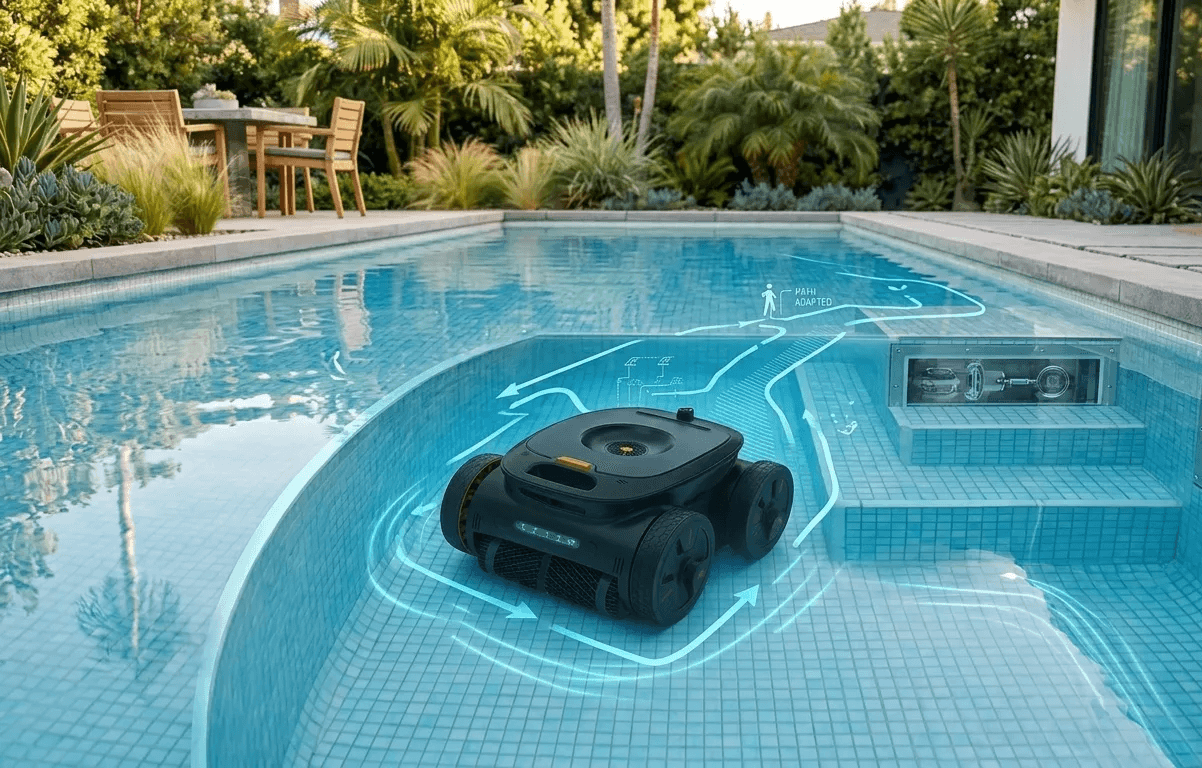
Purily Hydro robotic pool cleaners are designed with multiple technologies to improve movement stability and reduce common operational issues.
By combining intelligent control systems, advanced sensors, and flexible movement features, Hydro models can better adapt to different pool environments.
Anti-Tangle Cable Design and Intelligent Movement
For models with cable systems, the anti-tangle cable design helps reduce cable-related movement restrictions. The robot can automatically adjust its movement direction to avoid unnecessary cable twisting.
Combined with four-wheel drive movement, this design helps maintain smoother operation across different pool surfaces.
Intelligent Escape and Smart Cleaning Support
Purily Hydro uses intelligent escape technology to help the cleaner recover from difficult positions and continue operation.
With ultrasonic sensors and intelligent path planning, the robot can better understand the pool environment and reduce unnecessary interruptions during cleaning cycles.
These features work together to provide a more reliable automated cleaning experience for different residential pool applications.
Frequently Asked Questions
Q1: Why does my robotic pool cleaner keep getting stuck in corners?
A: Corners, steps, and complex pool designs can limit movement. A cleaner with intelligent movement systems and obstacle detection features can better handle these situations.
Q2: Can robotic pool cleaners get stuck on pool drains?
A: Yes, some pool structures or obstacles may affect movement. Choosing a cleaner with suitable navigation and escape functions can help reduce this risk.
Q3: How can I prevent the cable of a robotic pool cleaner from tangling?
A: Proper cable storage and anti-tangle designs can help reduce cable problems. Users should also avoid leaving the cable twisted after cleaning.
Q4: Does a low battery cause a robotic pool cleaner to stop?
A: Yes. Cordless models may stop when battery power is insufficient to complete the cleaning cycle. Some advanced cleaners include low-power docking features to improve convenience.
Q5: Are robotic pool cleaners suitable for pools with complex shapes?
A: Many modern robotic pool cleaners can handle different pool layouts, but performance depends on movement systems, sensors, and cleaning technology.
Conclusion
A robotic pool cleaner getting stuck is usually related to pool conditions, power management, or movement limitations rather than the cleaning concept itself.
By understanding common causes and selecting a cleaner with suitable technologies, users can reduce interruptions and achieve more reliable automatic pool maintenance.
Features such as intelligent escape, anti-tangle design, sensors, and stable movement systems help modern robotic pool cleaners operate more effectively in different pool environments.