Are Robotic Pool Cleaners Really Effective at Scrubbing? Pool Cleaning Guide
Introduction
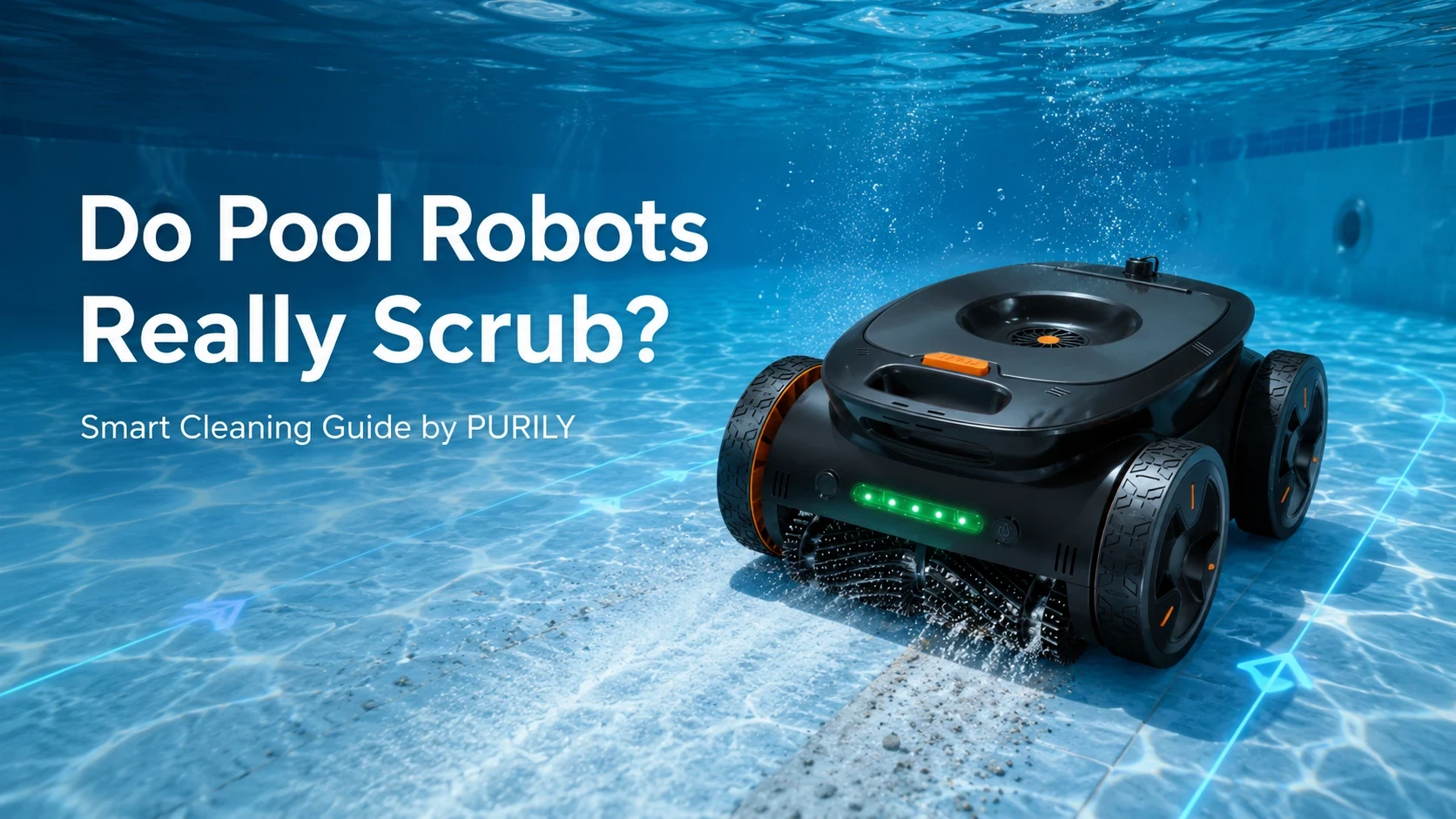
Robotic pool cleaners are becoming one of the most popular tools for modern pool maintenance. They can move across the pool floor, climb walls, collect debris, and reduce the amount of manual vacuuming required. But many pool owners still ask one practical question before buying:
Are robotic pool cleaners really effective at scrubbing, or do they only vacuum loose debris?
The honest answer is: yes, a well-designed robotic pool cleaner can be effective at scrubbing, especially for routine dirt, dust, sand, light algae film, and surface buildup. However, scrubbing performance depends on the brush design, suction power, filtration system, navigation quality, pool surface, and the type of dirt being removed.
A pool robot is not magic. It cannot replace proper water chemistry, algae treatment, or deep manual brushing in severely neglected pools. But for regular maintenance, a smart robotic pool cleaner can significantly reduce manual work and help keep the pool floor, walls, and waterline cleaner.
This guide explains how robotic pool cleaner scrubbing works, what types of dirt pool robots can remove, when manual brushing is still needed, and how PURILY robotic pool cleaners combine brushing, suction, filtration, and intelligent navigation for more efficient pool care.
Do Robotic Pool Cleaners Really Scrub?
The short answer
Yes, robotic pool cleaners do more than simply vacuum the pool. Most modern robotic pool cleaners use rotating brushes or scrubbing rollers to loosen dirt from the pool surface. After the dirt is loosened, the cleaner’s suction system pulls the debris into an internal filter basket or cartridge.
This means the cleaning process usually has three steps:
The brush loosens dirt from the surface.
The suction system pulls the debris into the robot.
The filtration system traps the dirt inside the cleaner.
Without scrubbing, suction may only remove loose leaves or floating debris. Without suction and filtration, brushed dirt may simply return to the water. The best robotic pool cleaners combine all three functions.
What “scrubbing” means in pool cleaning
In pool maintenance, scrubbing means using brush contact to break the bond between dirt and the pool surface. This is important because not all pool dirt is loose.
Some materials stick to the pool floor or walls, such as:
Fine dust
Sand
Pollen
Light algae film
Body oils
Sunscreen residue
Biofilm
Dirt trapped in textured surfaces
A robotic pool cleaner with effective scrubbing helps loosen these materials so they can be collected by the cleaner’s suction and filtration system.
What robotic scrubbing cannot do
Robotic scrubbing is very useful, but it has limits.
A pool robot may struggle with:
Heavy algae blooms
Calcium scale
Metal stains
Deep organic stains
Long-neglected pool surfaces
Tight corners and narrow steps
Areas blocked by ladders or obstacles
For these problems, the pool may need water balancing, shock treatment, stain remover, scale treatment, or manual brushing before the robot can maintain the surface effectively.
How Robotic Pool Cleaner Scrubbing Works
Brushes loosen dirt and algae film
The brush is the part of the robotic pool cleaner that makes direct contact with the pool surface. Depending on the model, the robot may use rubber brushes, PVC brushes, foam brushes, roller brushes, or active scrubbing brushes.
The brush helps loosen dirt from the pool floor, walls, and sometimes the waterline. This is especially important for fine debris and light algae film because these materials may cling to the surface rather than float freely in the water.
A pool robot with strong brush contact can help remove buildup before it becomes harder to clean.
Suction pulls loosened debris into the cleaner
Scrubbing alone is not enough. Once dirt is loosened, the pool robot must collect it quickly.
This is where suction power matters. A robotic pool cleaner uses its internal pump or suction motor to pull water and debris into the machine. The stronger and more stable the suction flow, the better the cleaner can collect loosened particles.
However, suction should be balanced. Too little suction may leave debris behind. Poorly controlled suction may reduce efficiency on walls or uneven surfaces.
A good pool robot combines brush contact, suction flow, and body movement into one cleaning system.
Filtration captures fine particles
After suction pulls debris into the robot, the filtration system traps it. This may include a filter basket, filter cartridge, fine mesh filter, or dual filtration system.
Filtration quality affects scrubbing results because some of the dirt loosened by brushes is very small. Fine dust, pollen, algae residue, and sand require efficient filtration.
If the filter is clogged or too coarse, the cleaner may not capture small particles effectively. That is why regular filter cleaning is essential for maintaining scrubbing performance.
Navigation determines cleaning coverage
Even the strongest brush cannot clean an area the robot never reaches. This is why navigation is one of the most important parts of robotic pool cleaner performance.
A robot with poor navigation may scrub the same area repeatedly while missing corners, slopes, walls, or waterline zones. A smart robotic pool cleaner uses sensors, route planning, and movement control to cover the pool more efficiently.
For pool owners, this means better cleaning consistency. For distributors and commercial buyers, navigation quality is also a key product positioning factor.
What Types of Dirt Can a Pool Robot Scrub Effectively?
Not all pool dirt is the same. Some debris is easy for a pool robot to remove, while other problems require chemical treatment or manual brushing.
Dirt or Buildup Type | Robotic Pool Cleaner Effectiveness | What Pool Owners Should Know |
|---|---|---|
Dust and sand | High | Usually easy to loosen and collect with good suction and filtration |
Leaves and small debris | High | Basket size and suction flow matter |
Pollen | Medium to high | Fine filtration is important |
Light algae film | Medium to high | Active brushing helps, but water chemistry must be balanced |
Biofilm | Medium | May need repeated cleaning cycles |
Sunscreen and body oils | Medium | Waterline cleaning support helps |
Heavy algae bloom | Low to medium | Chemical treatment is usually needed first |
Calcium scale | Low | Usually requires scale treatment or manual work |
Stains | Low | May need stain-specific treatment |
Corners and narrow steps | Limited | Manual brushing may still be needed |
The key point is simple: robotic pool cleaners are highly effective for routine scrubbing and maintenance, but they are not a complete solution for every pool surface problem.
Active Scrubbing vs Basic Brushing: Why It Matters
Basic brush contact
Some robotic pool cleaners have brushes that rotate as the robot moves. These brushes provide basic contact with the pool surface and help loosen light dirt.
Basic brushing can be enough for pools that are already well maintained. If the pool is cleaned regularly and the water chemistry is balanced, a basic brush system may handle daily dust, sand, and small debris.
However, basic brushing may struggle with more stubborn film, textured surfaces, or waterline buildup.
Active scrubbing brushes
An active scrubbing pool cleaner uses brushes that rotate with stronger or more deliberate action. These brushes are designed to loosen dirt more effectively than passive brush contact.
Active scrubbing is especially useful for:
Light algae film
Fine dirt
Pollen
Biofilm
Waterline residue
Textured pool surfaces
High-use residential pools
Commercial pools with frequent swimmers
The stronger the cleaning challenge, the more important brush design becomes.
Brush material must match the pool surface
Scrubbing power should not be judged only by how aggressive the brush feels. The brush must match the pool surface.
Different pool surfaces require different cleaning behavior:
Vinyl liner pools need soft or non-abrasive brushes.
Fiberglass pools need gentle but effective brushing.
Tile pools often need good waterline scrubbing.
Plaster pools can usually handle stronger brush contact.
Pebble finish pools may need better traction and surface coverage.
Using the wrong brush type can reduce cleaning performance or increase surface risk. A good robotic pool cleaner should balance cleaning strength with surface protection.
Are Robotic Pool Cleaners Better Than Manual Brushing?
Where pool robots perform better
For routine cleaning, robotic pool cleaners are often much more convenient than manual brushing. They can run automatically, collect debris, and reduce the time pool owners spend cleaning.
A robotic pool cleaner is especially useful for:
Weekly floor cleaning
Removing sand and dust
Collecting leaves and small debris
Maintaining light algae film
Cleaning large pool surfaces
Reducing manual vacuuming
Supporting regular pool maintenance
For busy homeowners, the biggest advantage is consistency. A robot can be used regularly before dirt becomes difficult to remove.
Where manual brushing still matters
Manual brushing is still useful for problem areas. A human can apply targeted pressure in places where a robot may not reach or where dirt is especially stubborn.
Manual brushing may still be needed for:
Tight corners
Narrow steps
Ladder areas
Heavy algae
Calcium scale
Stains
Deep waterline buildup
Areas blocked by obstacles
A realistic pool maintenance plan uses both tools wisely. Let the robot handle the routine work, and use manual brushing only where needed.
Pool robot vs manual brush comparison
Cleaning Task | Robotic Pool Cleaner | Manual Brush |
Routine floor cleaning | Excellent | Effective but labor-intensive |
Light algae film | Good | Good |
Heavy algae | Limited without chemicals | Better with chemicals |
Large pool surfaces | Excellent | Time-consuming |
Corners and tight steps | Limited | Better |
Waterline buildup | Model-dependent | Good |
Stains and scale | Limited | Better with treatment |
Weekly maintenance | Excellent | Useful as support |
A robotic pool cleaner does not completely replace manual brushing in every situation. But it can reduce the amount of manual work dramatically when the pool is properly maintained.
Why Some Robotic Pool Cleaners Do Not Scrub Well
The brush is worn out
Brushes wear down over time. When the brush becomes smooth, soft, cracked, or uneven, it may not contact the pool surface properly.
A worn brush may still look acceptable from a distance, but cleaning performance can decline significantly.
If your pool robot is not scrubbing well, inspect the brush first.
The filter is clogged
A clogged filter reduces water flow. When suction becomes weak, the robot may loosen dirt but fail to collect it.
This can make the pool look cloudy after cleaning because fine particles are stirred up but not captured.
To maintain strong scrubbing performance, clean the filter basket or cartridge after every cycle.
The cleaning mode is wrong
Some robotic pool cleaners have different cleaning modes, such as floor-only, floor and wall, waterline, quick clean, or deep clean.
If the wrong mode is selected, the robot may not scrub the area you expect. For example, a floor-only mode may not clean walls or waterline buildup.
Always select the cleaning mode that matches the pool condition.
The pool has severe algae
A pool robot can help remove light algae film, but it is not a replacement for chemical treatment.
If the pool has a heavy algae bloom, the first step should be correcting water chemistry. This may include brushing, shocking, filtering, and balancing chlorine, pH, alkalinity, and stabilizer levels.
After the algae is treated, the robot can help collect dead algae and maintain cleaner surfaces.
The robot has poor navigation
A robot may have good brushes but still deliver poor results if it misses areas. Random movement, weak obstacle detection, or poor path planning can lead to uneven cleaning.
Smart navigation helps the robot cover more of the pool and reduce missed zones.
The brush type does not match the pool surface
A brush that works well on plaster may not be ideal for vinyl. A soft brush that protects vinyl may not be aggressive enough for rough plaster or pebble finishes.
Choosing the right robotic pool cleaner means matching the brush system to the pool surface.
What Makes PURILY Effective at Pool Scrubbing?
Brushing, suction, filtration, and navigation in one system
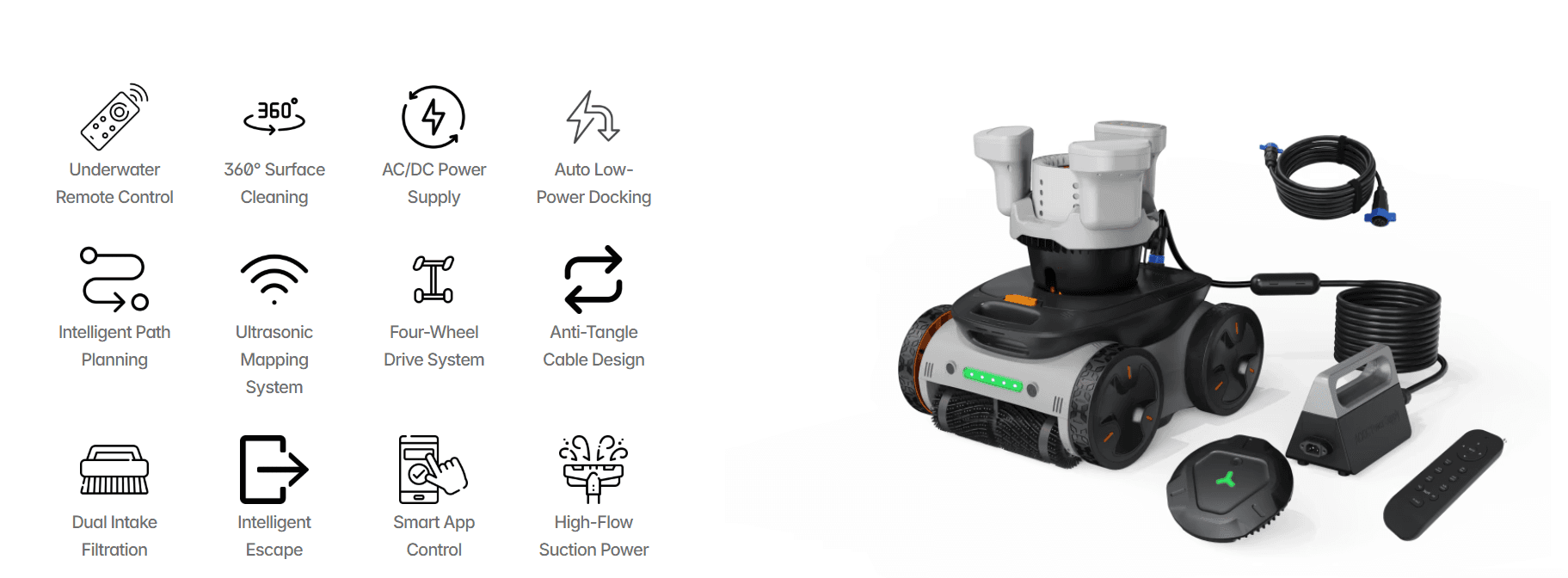
PURILY robotic pool cleaners are designed to combine multiple cleaning functions into one smart system. Instead of relying only on suction or random movement, PURILY focuses on coordinated cleaning performance.
Effective scrubbing depends on four things working together:
Brush contact to loosen dirt
High-flow suction to collect loosened debris
Efficient filtration to trap particles
Smart navigation to improve pool coverage
When these systems work together, a pool robot can clean more consistently and reduce the need for manual brushing.
Smart navigation for better coverage
One of the biggest differences between a basic pool cleaner and a smart robotic pool cleaner is navigation.
PURILY’s smart robotic pool cleaning approach emphasizes intelligent route planning, sensor-based movement, and efficient coverage. This matters because scrubbing is only useful when the robot reaches the dirty areas.
Better navigation can help the robot:
Reduce missed areas
Avoid repeating the same path too often
Improve floor and wall coverage
Detect obstacles more effectively
Support complex pool shapes
Improve cleaning efficiency
For pools with walls, slopes, waterlines, and irregular shapes, smart navigation can make a meaningful difference.
Strong suction and dual filtration
Scrubbing loosens dirt, but filtration completes the cleaning process. PURILY robotic pool cleaner solutions are designed around efficient debris collection and filtration.
A strong filtration system is especially useful for:
Fine dust
Sand
Pollen
Hair
Leaves
Algae residue
Small organic debris
For pool owners, this means clearer water and less manual cleaning. For commercial pool operators, it supports more consistent maintenance.
4WD movement and stable traction
Stable traction helps a pool robot maintain contact with the surface while scrubbing. If the cleaner slips, spins, or loses contact, scrubbing performance drops.
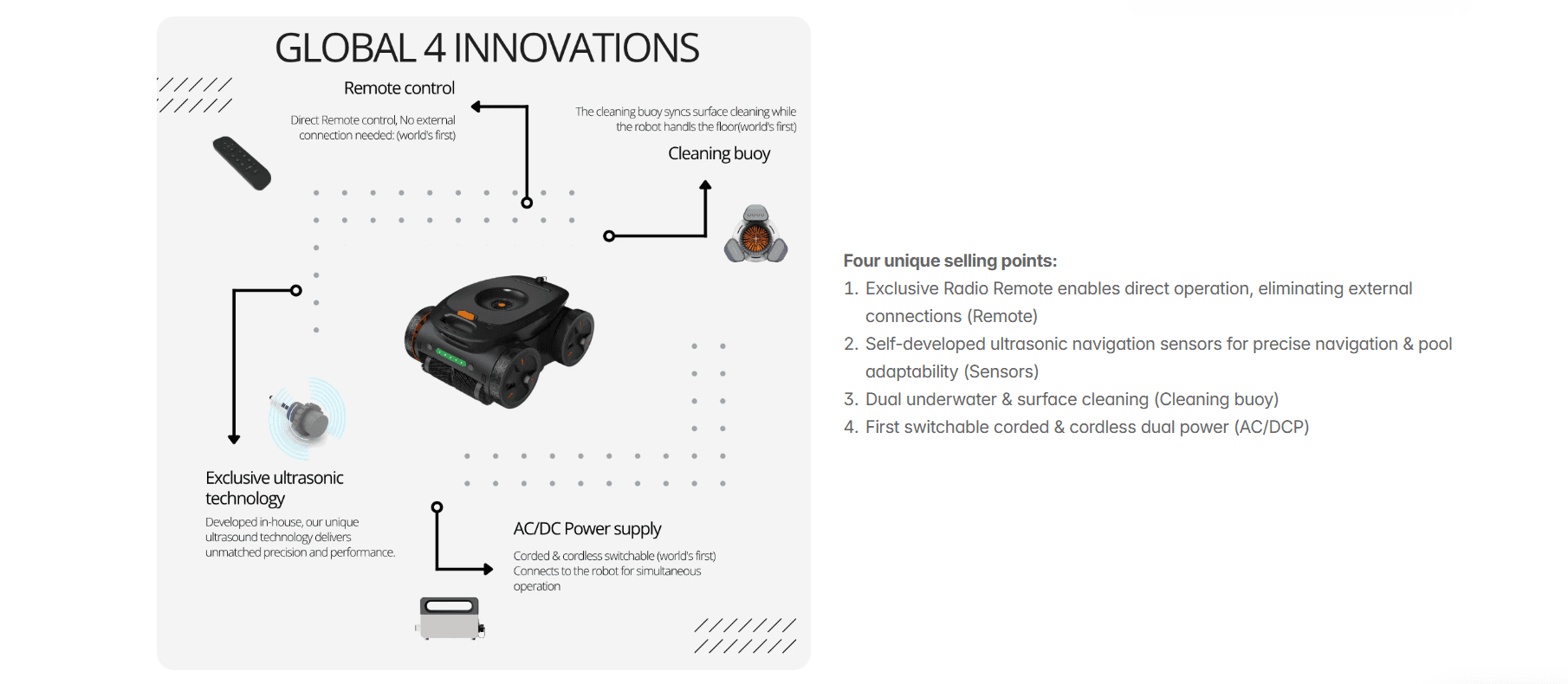
PURILY’s 4WD design supports more stable movement across pool floors, walls, and transitions. This can help improve cleaning consistency in residential and commercial pool environments.
How to Get Better Scrubbing Results From a Pool Robot
Even a good robotic pool cleaner needs correct use and maintenance. Follow these steps to improve scrubbing performance.
Balance the pool water first.
Poor water chemistry makes algae, biofilm, and scale harder to remove.Run the robot regularly.
Regular cleaning prevents dirt from bonding strongly to the pool surface.Choose the right cleaning mode.
Use floor, wall, or waterline mode depending on the area that needs attention.Clean the filter after every cycle.
A clean filter helps maintain suction and debris capture.Inspect brushes, wheels, and tracks.
Worn parts reduce scrubbing and movement performance.Remove large debris before deep cleaning.
Large leaves or branches may block suction or interfere with movement.Brush problem areas manually when needed.
Steps, corners, ladders, and heavy algae may still need targeted brushing.Use a cleaner matched to your pool surface.
Vinyl, fiberglass, tile, plaster, and pebble surfaces may require different brush behavior.Do not expect one cycle to fix a neglected pool.
Severely dirty pools may need multiple cycles and chemical treatment.Store the robot properly after use.
Proper storage protects brushes, filters, motors, and body components.
How to Choose a Robotic Pool Cleaner With Strong Scrubbing Power
Key features to look for
When comparing robotic pool cleaners, do not judge scrubbing power by suction alone. A strong pool robot should have a balanced cleaning system.
Look for these features:
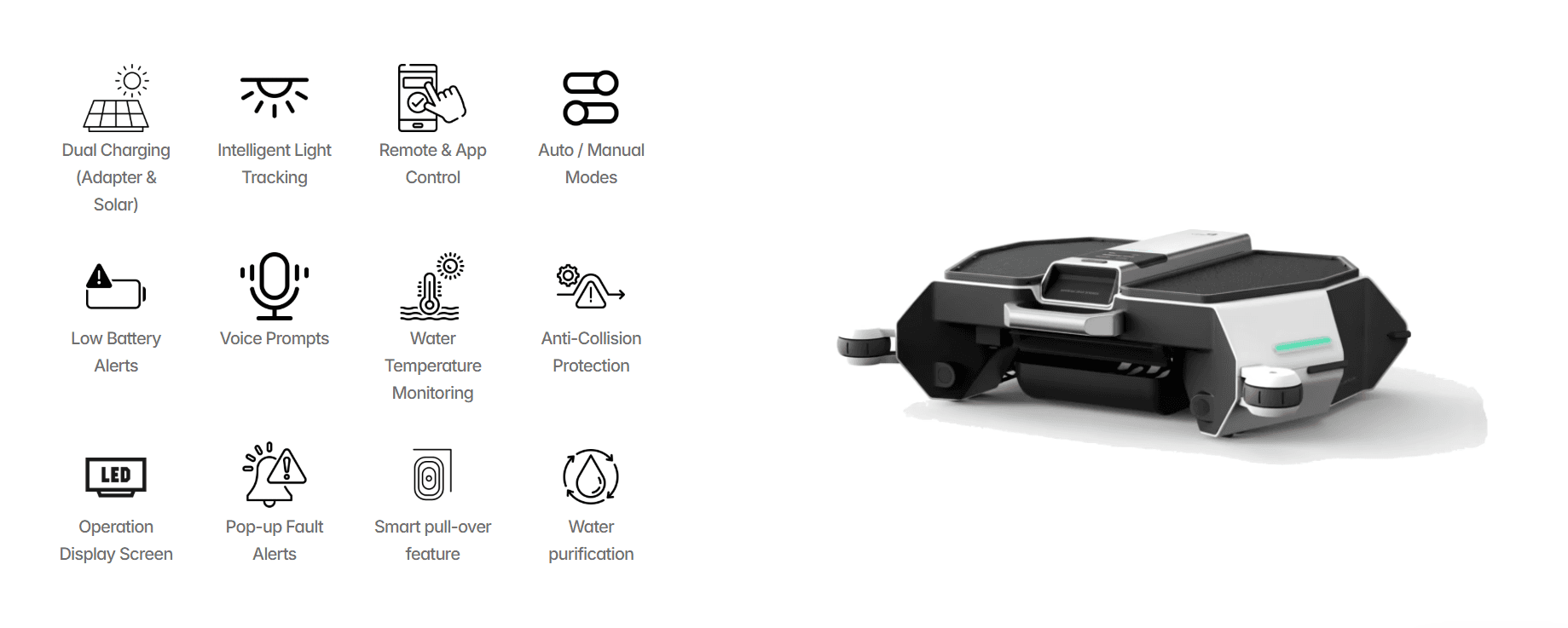
Active scrubbing brush
Brush material suitable for your pool surface
Strong and stable suction
Fine filtration or dual filtration
Smart navigation
Wall cleaning support
Waterline cleaning support
Stable traction
Anti-stuck design
Easy filter access
Reliable manufacturer support
These features work together to determine real cleaning performance.
Choosing by pool surface
Pool surface is one of the most important buying factors.
For a vinyl pool, choose gentle brushes and smooth movement. For tile, look for strong waterline cleaning. For plaster or concrete, stronger brushing may be helpful. For pebble finishes, traction and brush contact are especially important.
A cleaner that works well in one pool may not be the best choice for another.
Choosing by pool condition
A lightly used residential pool may need regular maintenance cleaning. A commercial pool may need more frequent cleaning, larger filtration capacity, and stronger coverage.
Ask these questions before choosing a model:
Does the pool collect leaves, sand, or fine dust?
Does algae film appear quickly?
Do you need wall and waterline cleaning?
Is the pool surface delicate or textured?
Are there steps, slopes, or curved walls?
Is the pool residential or commercial?
How often will the robot run?
The best robotic pool cleaner is the one that matches the real cleaning environment.
Common Mistakes Pool Owners Make About Scrubbing
Many pool owners misunderstand what a robotic pool cleaner can and cannot do. Avoiding these mistakes will help you get better results.
Mistake 1: Thinking suction alone is enough
Suction is important, but stuck-on dirt needs brushing. A pool robot must loosen debris before it can collect it effectively.
Mistake 2: Ignoring water chemistry
If chlorine, pH, alkalinity, or stabilizer levels are wrong, algae and biofilm can return quickly. A pool robot helps maintain cleanliness, but it does not replace water balance.
Mistake 3: Running the robot with a dirty filter
A dirty filter reduces suction and can leave fine particles behind. Clean the filter regularly.
Mistake 4: Using the wrong brush for the pool surface
A brush that is too soft may not clean textured surfaces well. A brush that is too aggressive may not be suitable for delicate surfaces.
Mistake 5: Expecting perfect cleaning in every corner
Robotic cleaners are excellent for large surfaces, but some corners, steps, ladders, and tight spaces may still need manual attention.
Mistake 6: Waiting until the pool is badly dirty
Robotic pool cleaners work best as maintenance tools. Running the robot regularly is better than waiting for heavy buildup.
FAQ
Do robotic pool cleaners actually scrub the pool?
Yes. Most modern robotic pool cleaners use brushes or rollers to loosen dirt from the pool surface. The suction system then pulls debris into the internal filter.
Are robotic pool cleaners effective at scrubbing algae?
They can help remove light algae film, especially when the pool chemistry is balanced. However, heavy algae blooms usually require chemical treatment and manual brushing first.
Does a pool robot replace manual brushing?
A pool robot can reduce manual brushing, but it may not replace it completely. Corners, steps, ladders, stains, and heavy algae may still need hand brushing.
What is active scrubbing in a robotic pool cleaner?
Active scrubbing means the brush system rotates or agitates the surface to loosen dirt more effectively than passive movement alone.
Are robotic pool cleaners effective on pool walls?
Some models are designed to clean walls. Wall cleaning depends on traction, suction, brush contact, navigation, and pool surface type.
Can pool robots scrub the waterline?
Some advanced models can scrub the waterline. This requires good wall climbing, stable traction, and waterline cleaning support.
Why is my pool robot not scrubbing well?
Common reasons include worn brushes, clogged filters, wrong cleaning mode, poor navigation, severe algae, or using a brush type that does not match the pool surface.
What brush type is best for vinyl pools?
Vinyl pools usually need soft or non-abrasive brushes to protect the liner while still removing light dirt and debris.
How often should I run a robotic pool cleaner?
Many pool owners run a robotic cleaner two to three times per week during swimming season. High-use pools or leaf-heavy pools may need more frequent cleaning.
Is PURILY effective for pool scrubbing?
PURILY robotic pool cleaners are designed to combine brushing, suction, filtration, smart navigation, and stable movement. This helps improve routine scrubbing performance for modern pool maintenance.
Conclusion
Robotic pool cleaners are effective at scrubbing when they combine the right brush design, strong suction, efficient filtration, and intelligent navigation. They are especially useful for routine pool maintenance, light algae film, dust, sand, leaves, and surface debris.
However, a robotic pool cleaner should not be expected to solve every pool problem alone. Severe algae, scale, stains, neglected surfaces, and tight corners may still require water treatment and manual brushing.
The best results come from using the robot as part of a complete maintenance routine: balanced water chemistry, regular cleaning cycles, clean filters, suitable brushes, and the right cleaning mode.
For pool owners, this means less manual work and more consistent cleanliness. For distributors and commercial buyers, scrubbing performance is a key feature because customers can quickly see whether a robot actually improves pool cleanliness.
CTA Closing
Looking for a robotic pool cleaner that does more than vacuum?
Explore PURILY smart robotic pool cleaner solutions designed with active scrubbing, intelligent navigation, high-flow suction, stable movement, and efficient filtration for modern residential and commercial pool care.
With PURILY, pool cleaning becomes smarter, more consistent, and easier to manage.