How Sensors Help Robotic Pool Cleaners Move Efficiently

Introduction
A robotic pool cleaner may seem like a simple device that moves underwater and collects debris, but efficient cleaning requires much more than basic movement. A pool environment can be unpredictable, with different shapes, surfaces, depths, and obstacles that affect how a cleaner operates.
To complete cleaning tasks effectively, a robotic pool cleaner needs to understand changes around it and adjust its movement accordingly. This is where sensor technology becomes important.
Sensors help robotic pool cleaners collect information during operation, allowing them to detect environmental changes, improve movement control, and reduce unnecessary actions. By working together with drive systems, brushes, and filtration components, sensors contribute to a more efficient and reliable cleaning process.
Understanding how sensors work can help pool owners better recognize the technology behind modern robotic pool cleaners and make more informed decisions when choosing a cleaning solution.
Why Sensors Matter in Robotic Pool Cleaning
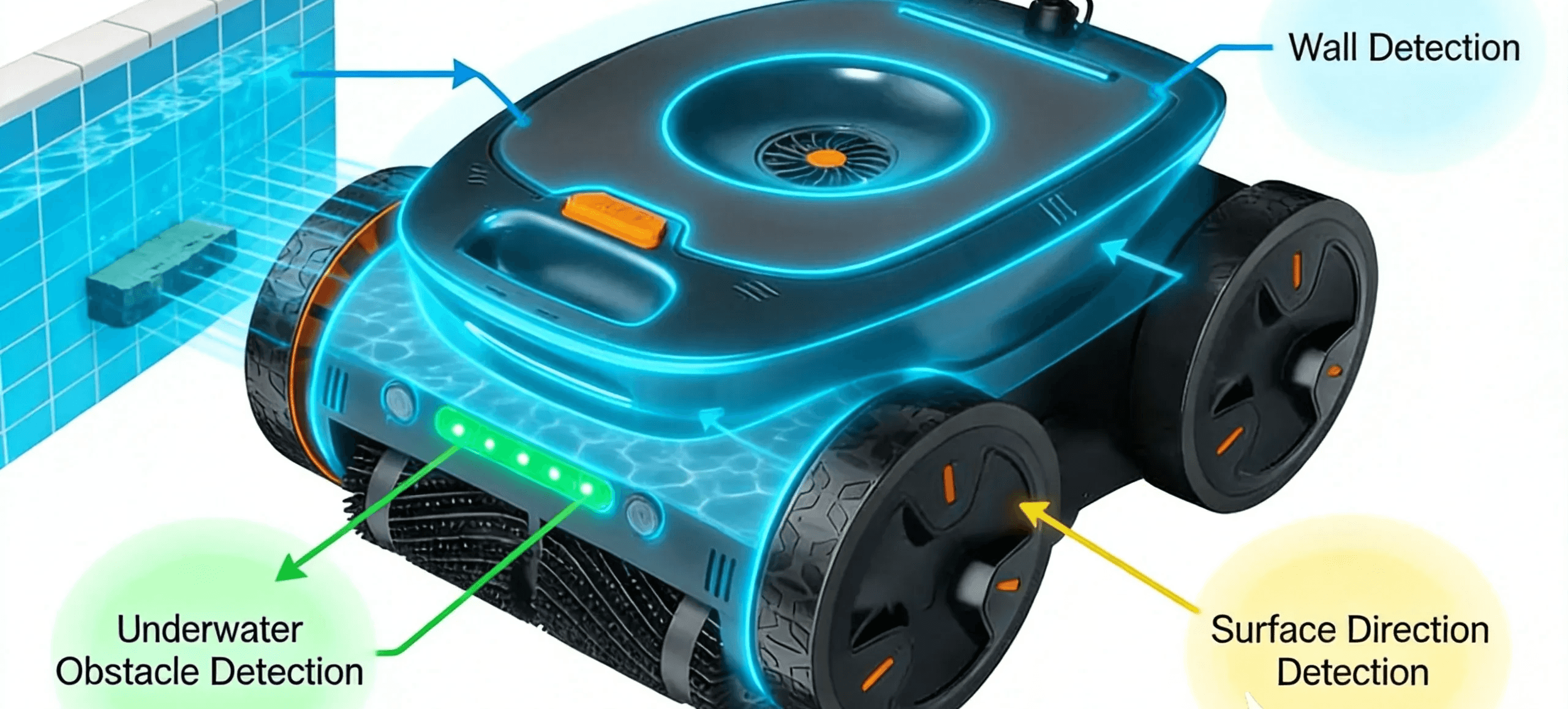
A swimming pool is not a completely predictable environment. Even pools of the same size can have different layouts, surfaces, and cleaning challenges. A robotic cleaner needs to handle these differences while maintaining consistent performance.
Without sensing capabilities, a robotic pool cleaner would have limited information about its surroundings. This could lead to inefficient movement, repeated cleaning of the same areas, or difficulty handling changes in the pool structure.
Sensors help solve these challenges by providing important information that allows the cleaner’s control system to adjust its movement control.
For example, sensors can help a robotic cleaner:
Recognize changes in the pool environment;
Adjust direction when encountering boundaries;
Respond to obstacles during operation;
Maintain smoother movement throughout a cleaning cycle.
The purpose of sensors is not to make a pool robot think independently, but to help it operate in a more controlled and organized way.
This is especially important for cordless robotic pool cleaners, where efficient movement can help maximize cleaning performance within a limited battery runtime.
How Sensors Help Robotic Pool Cleaners Detect Pool Conditions
Modern robotic pool cleaners use different types of sensing technologies to support movement and cleaning performance. While the exact sensor systems vary between models, their main purpose is similar: helping the robot better respond to the conditions around it.
Detecting Pool Walls and Boundaries
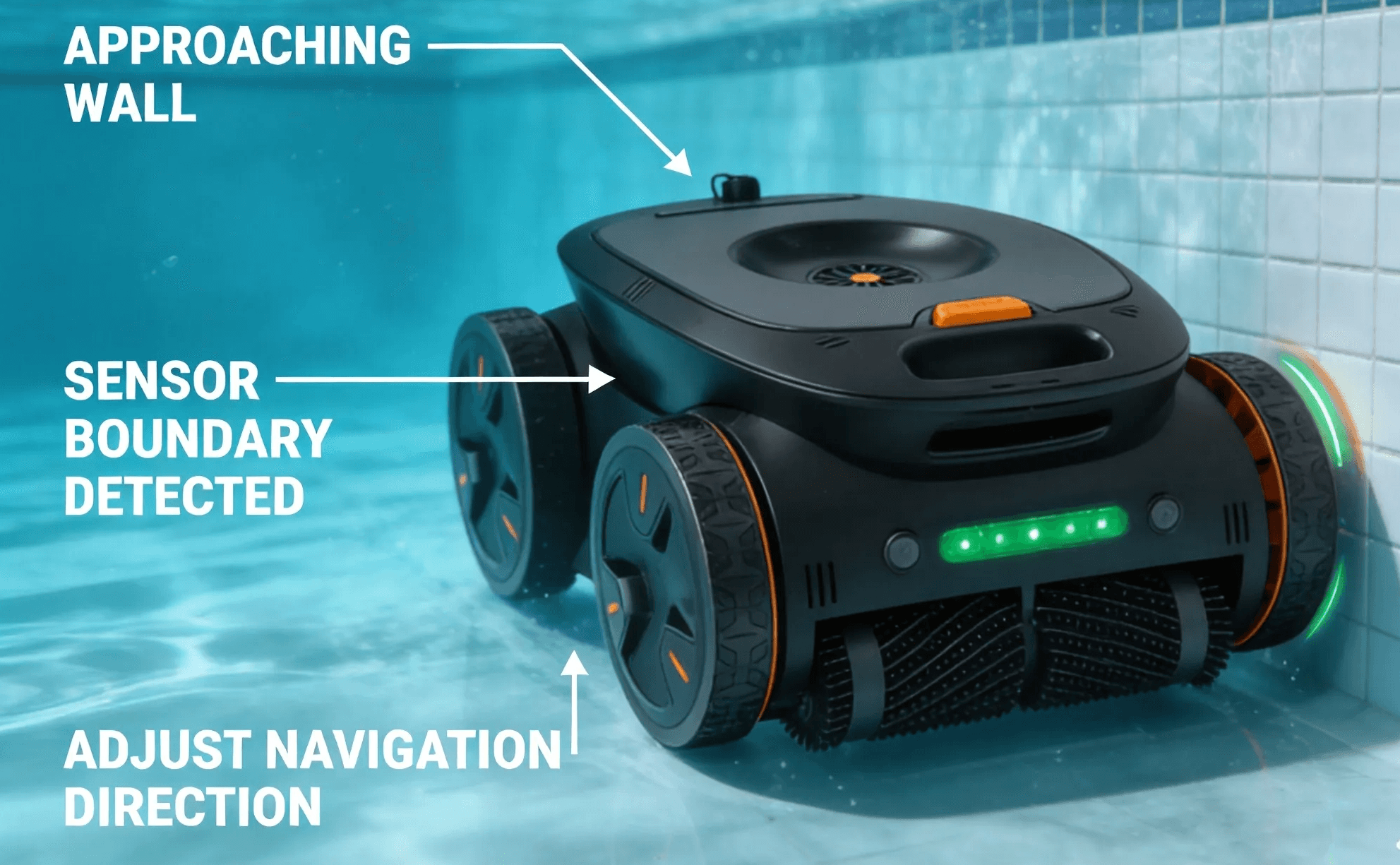
One of the most important tasks for a robotic pool cleaner is recognizing the limits of the cleaning area.
During operation, the robot needs to understand when it reaches:
Pool walls;
Corners;
Changes between surfaces;
Different cleaning zones.
Without effective detection, the cleaner may continue moving in an inefficient direction or spend additional time correcting its position.
Sensors help the robot identify these changes and adjust its movement accordingly. For example, when reaching a pool wall, the cleaner can change direction and continue its cleaning cycle instead of repeatedly pushing against the same area.
This ability improves cleaning consistency and helps the robot cover more of the available pool surface.
Identifying Obstacles and Adjusting Movement
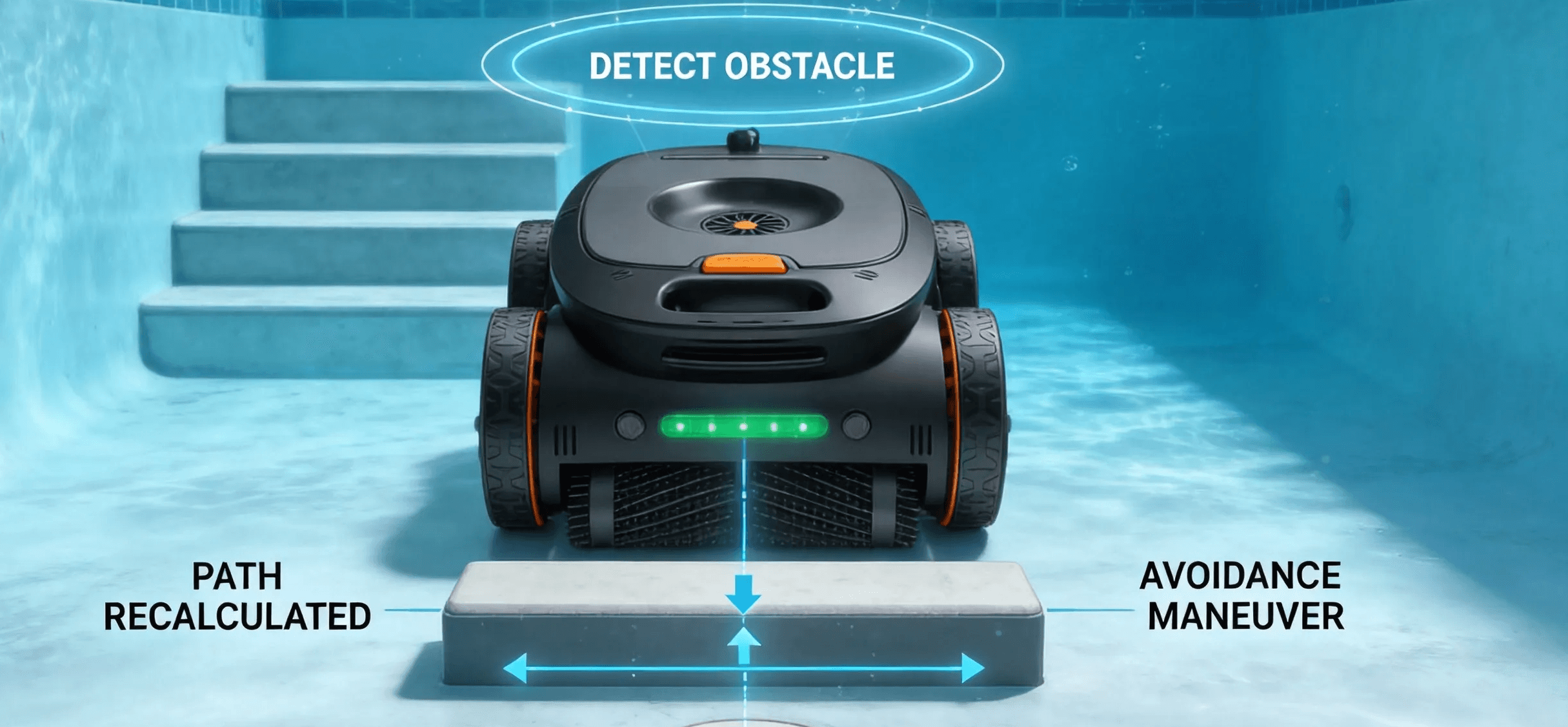
Pools often contain features that can affect robot movement, including steps, drains, corners, and changes in pool design.
Sensors help robotic pool cleaners detect these conditions and make appropriate movement adjustments. Instead of relying only on a fixed movement pattern, the cleaner can respond to environmental changes and maintain smoother operation.
This helps reduce:
Unnecessary movement;
Repeated contact with obstacles;
Energy waste during cleaning cycles.
For pool owners, better obstacle response means a more reliable cleaning process and less need for manual intervention.
How Sensors Improve Cleaning Efficiency
Sensors do more than help robotic pool cleaners detect their surroundings. They also support more efficient cleaning by helping the robot make better movement decisions during operation.
A pool cleaner without effective movement control may spend too much time covering the same areas or making unnecessary adjustments. This can reduce the amount of time available for actual cleaning, especially during limited operating cycles.
By providing information about the pool environment, sensors help the robotic cleaner manage its movement more effectively. This can improve:
Cleaning coverage;
Movement consistency;
Energy usage;
Overall operating efficiency.
For example, when a robotic cleaner can better recognize its position and surrounding conditions, it can reduce unnecessary movement and spend more time collecting debris from different areas of the pool.
For cordless models, this efficiency is particularly valuable. Since cordless robotic pool cleaners rely on battery capacity, reducing wasted movement can help the cleaner achieve better performance within each cleaning cycle.
However, sensors are only one part of the complete cleaning system. Their effectiveness depends on how well they work together with other components.
Sensors Work Together With Other Robotic Pool Cleaner Components
Although sensors play an important role in movement control, they do not clean the pool by themselves. A robotic pool cleaner requires multiple systems working together to deliver reliable performance.
Drive Systems
The drive system determines how effectively a robotic cleaner can move across different pool surfaces.
Even with accurate sensing technology, a cleaner needs stable movement capabilities to respond properly to environmental information. Strong traction, reliable motors, and suitable wheel or track designs help the robot maintain contact with the pool surface and complete its cleaning tasks efficiently.
For example, when sensors detect a change in direction or a pool wall, the drive system needs to provide the necessary movement response. This shows why navigation technology and mechanical design must work together.
Brushes and Scrubbing Systems
Sensors help the robot move efficiently, but brushes are responsible for physically removing dirt and buildup from pool surfaces.
During operation, the cleaner needs to maintain the correct movement while brushes work against the pool floor, walls, or waterline areas. Stable movement supported by sensing technology allows the cleaning system to work more consistently.
This combination of controlled movement and effective brushing helps improve the overall cleaning result.
Filtration Systems
A robotic pool cleaner also relies on its filtration system to collect debris after it has been removed from the pool surface.
Sensors can help improve the efficiency of the cleaning process by supporting better movement, allowing the filtration system to spend more time collecting debris from different areas rather than dealing with repeated or inefficient routes.
Together, sensors, movement systems, brushes, and filtration components create a complete cleaning solution.
Why Sensor Technology Matters for Pool Owners
For pool owners, the value of sensor technology is not only found in the technical details. The main benefit is a more convenient and consistent cleaning experience.
A robotic pool cleaner with effective sensing capabilities can operate with less manual adjustment and provide more predictable cleaning results. Instead of frequently monitoring or repositioning the cleaner, users can allow the robot to complete regular maintenance tasks more independently.
When choosing a robotic pool cleaner, sensors should be considered alongside other important factors, including:
Cleaning performance;
Filtration capacity;
Drive capability;
Battery life;
Pool compatibility.
The best cleaning solution is not necessarily the one with the most advanced technology, but the one that combines different systems effectively to match the needs of the pool.
FAQ
Q: Do robotic pool cleaners need sensors to clean a pool?
A: Not every robotic pool cleaner uses the same level of sensing technology. Basic models may rely on simpler movement systems, while more advanced cleaners use sensors to improve movement control and cleaning efficiency. The overall cleaning performance depends on how sensors work together with other components.
Q: Can sensors prevent a robotic pool cleaner from getting stuck?
A: Sensors can help reduce situations where a cleaner becomes stuck by allowing it to detect changes in the pool environment and adjust movement. However, performance also depends on factors such as pool design, surface type, and the robot’s mechanical structure.
Q: How do sensors affect the cleaning time of a robotic pool cleaner?
A: Sensors can indirectly influence cleaning time by helping the robot avoid unnecessary movement and improve route efficiency. A cleaner that moves more effectively may complete its cleaning cycle with less wasted operation.
Q: Are more sensors always better for a pool cleaning robot?
A: Not necessarily. More sensors do not automatically guarantee better cleaning performance. A well-designed system that balances sensing technology, movement control, filtration, and cleaning ability is usually more important than simply adding more sensors.
Q: Can sensor technology replace regular pool maintenance?
A: No. Robotic pool cleaners can reduce the time and effort required for routine cleaning, but regular pool maintenance is still necessary. Water balance, filter care, and overall pool management remain important for keeping a pool in good condition.
Conclusion
Sensors are an important part of modern robotic pool cleaners, helping them detect changes in their surroundings, adjust movement, and improve cleaning efficiency.
While sensors work together with drive systems, brushes, and filtration technology, they provide the information needed for smoother and more controlled operation. By reducing unnecessary movement and improving cleaning consistency, sensor technology helps robotic cleaners deliver a more convenient maintenance experience.
For pool owners looking for an efficient automated cleaning solution, Purily robotic pool cleaners combine intelligent movement systems with practical cleaning features to help maintain cleaner pools with less manual effort. Through technologies designed to improve movement control and cleaning performance, Purily continues to provide solutions that make everyday pool maintenance easier.