Can Robotic Pool Cleaners Clean Steps and Stairs?
Introduction
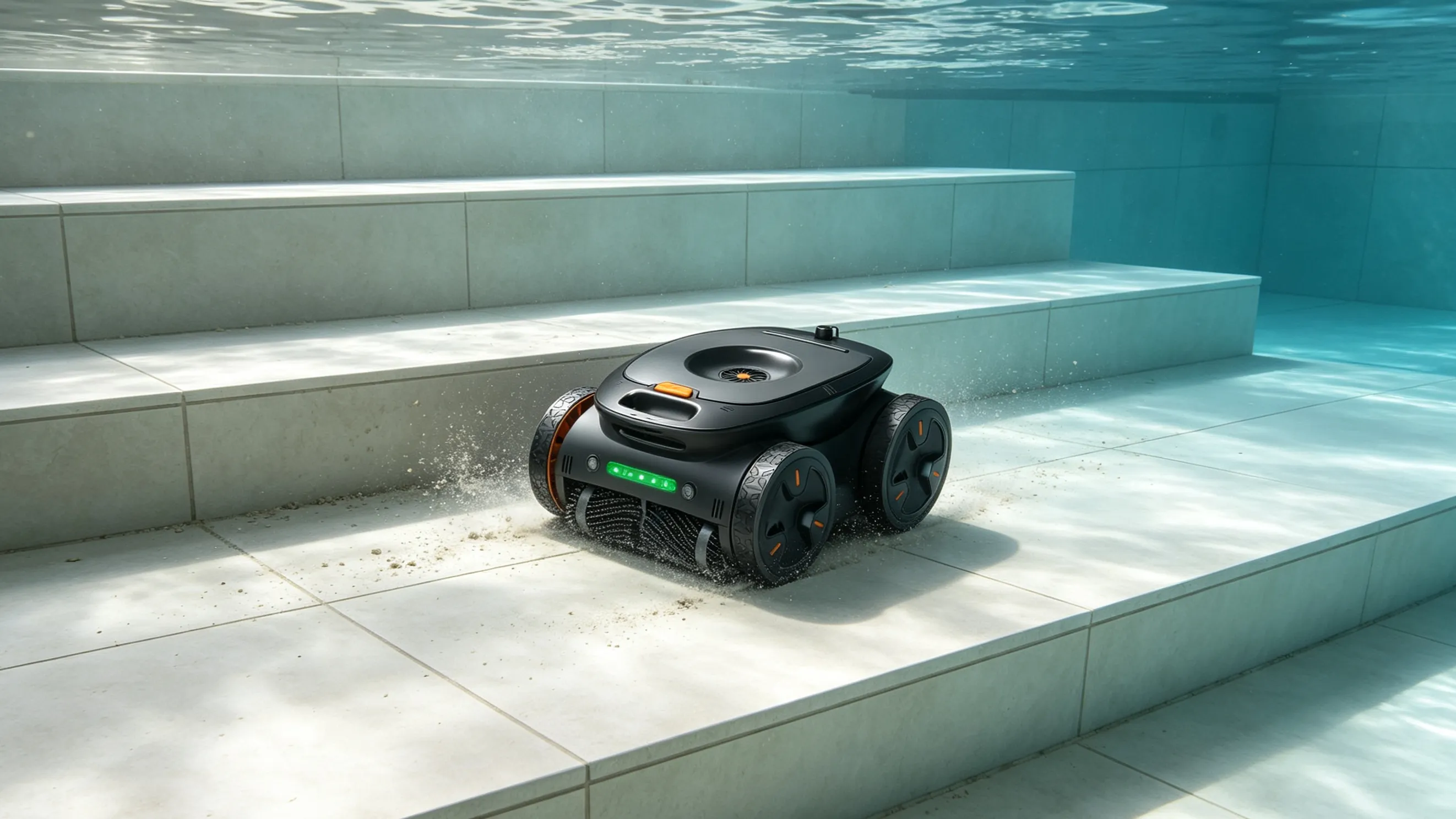
Pool steps and stairs are often more difficult to clean than large, open pool surfaces. Their narrow surfaces, changes in height, and corners can create areas where dirt and debris accumulate.
This raises a practical question for pool owners: can a robotic pool cleaner actually clean these areas, or are they still best handled manually?
The answer depends on the design of the pool, the structure of the steps, and the capabilities of the robotic cleaner. Understanding these factors can help users determine whether a pool robot is suitable for their particular pool.
Why Are Pool Steps and Stairs Difficult to Clean?
Steps are different from a flat pool floor because the cleaner needs to move between surfaces with different angles and elevations.
Different Levels Create Movement Challenges
A pool robot normally moves across a relatively continuous surface. Steps introduce sudden changes in height that can affect how the robot moves and maintains contact with the surface.
Wide, gradual steps may be easier to approach than narrow steps with sharp transitions.
Narrow Surfaces Can Limit Cleaning Coverage
Pool steps often provide less space for a robotic cleaner to maneuver.
A cleaner may have difficulty repositioning itself when a step is particularly narrow or when several steps are placed close together. This can leave some areas requiring additional manual cleaning.
Can Robotic Pool Cleaners Clean Pool Steps?
Some robotic pool cleaners can clean certain types of pool steps, but performance varies significantly between models and pool designs.
Step Design Matters
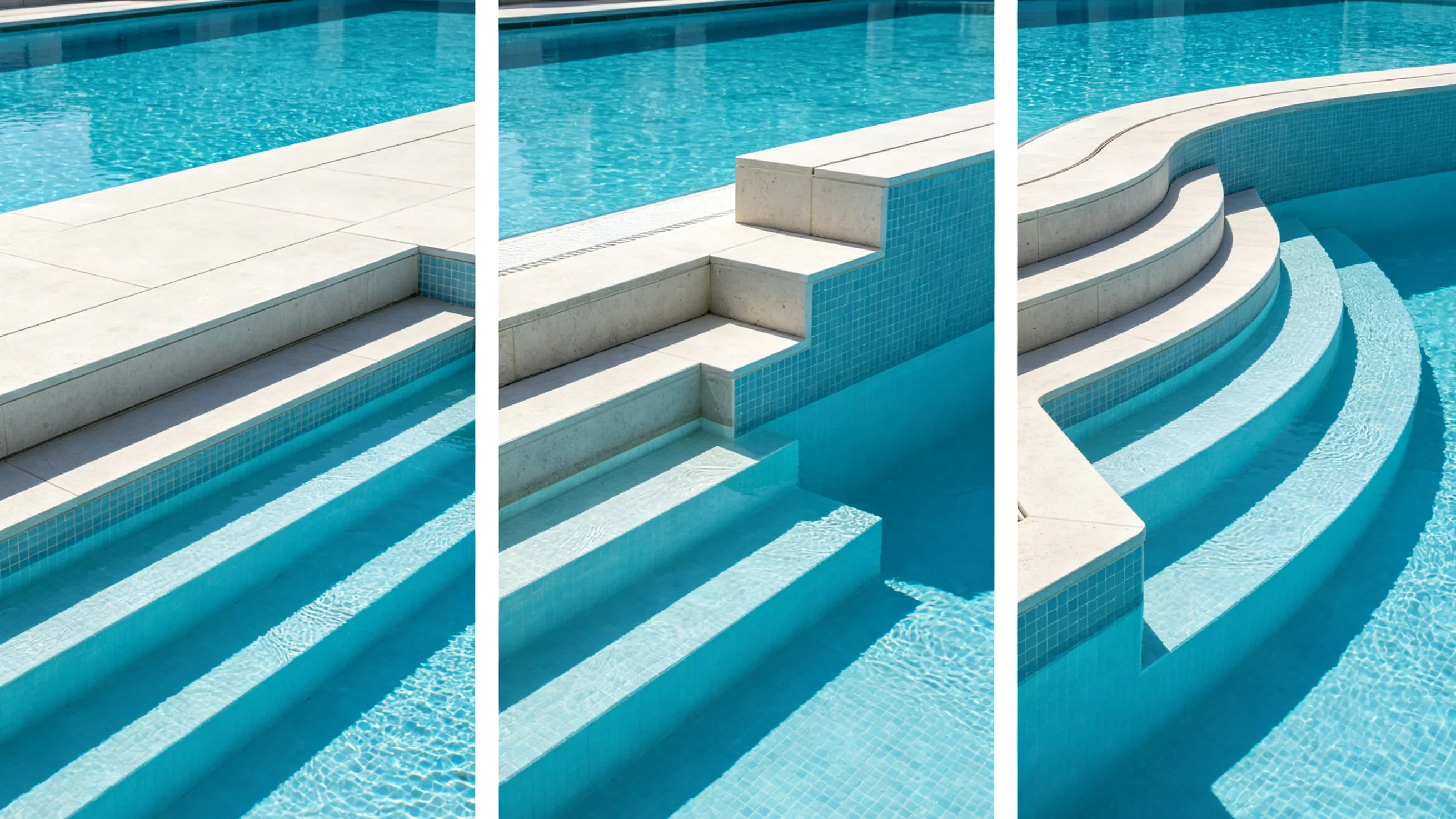
The shape and dimensions of the steps are important factors.
Wide, flat steps generally provide more usable surface area for a robotic cleaner, while curved, narrow, or steeply designed steps can be more challenging.
Users should consider the actual structure of their pool rather than assuming that a cleaner capable of floor and wall cleaning will automatically handle every type of staircase.
Cleaner Mobility Also Matters
A robot needs sufficient movement flexibility to transition between different surfaces.
Drive systems, wheel design, surface contact, and obstacle-handling capabilities can all influence how effectively the cleaner approaches and moves across pool steps.
For this reason, checking the manufacturer's specifications for step or stair cleaning is important before making a purchase.
What Should You Consider When Choosing a Pool Robot for Steps?
If pool steps are an important part of the cleaning area, users should consider more than just basic floor-cleaning performance.
A suitable robotic pool cleaner should match the structure of the pool and have the movement capability needed to handle different surfaces.
Check the Step Structure and Dimensions
Before choosing a robotic pool cleaner, users should evaluate the design of their pool steps.
The width, depth, angle, and surface shape of the steps can all influence cleaning performance. Wide and flat steps usually provide more space for a robot to move, while narrow or steep steps may create more challenges.
Understanding the pool structure before purchasing can help users select a cleaner that better matches their needs.
Consider Movement and Obstacle Handling
Movement capability is an important factor when a robotic cleaner needs to handle different pool areas.
Features such as stable drive systems, flexible movement, and obstacle detection can help the robot adjust its direction and continue cleaning when facing changes in the pool structure.
A cleaner with better maneuverability may have an advantage in pools with more complex designs.
How Purily Hydro Handles Different Pool Structures
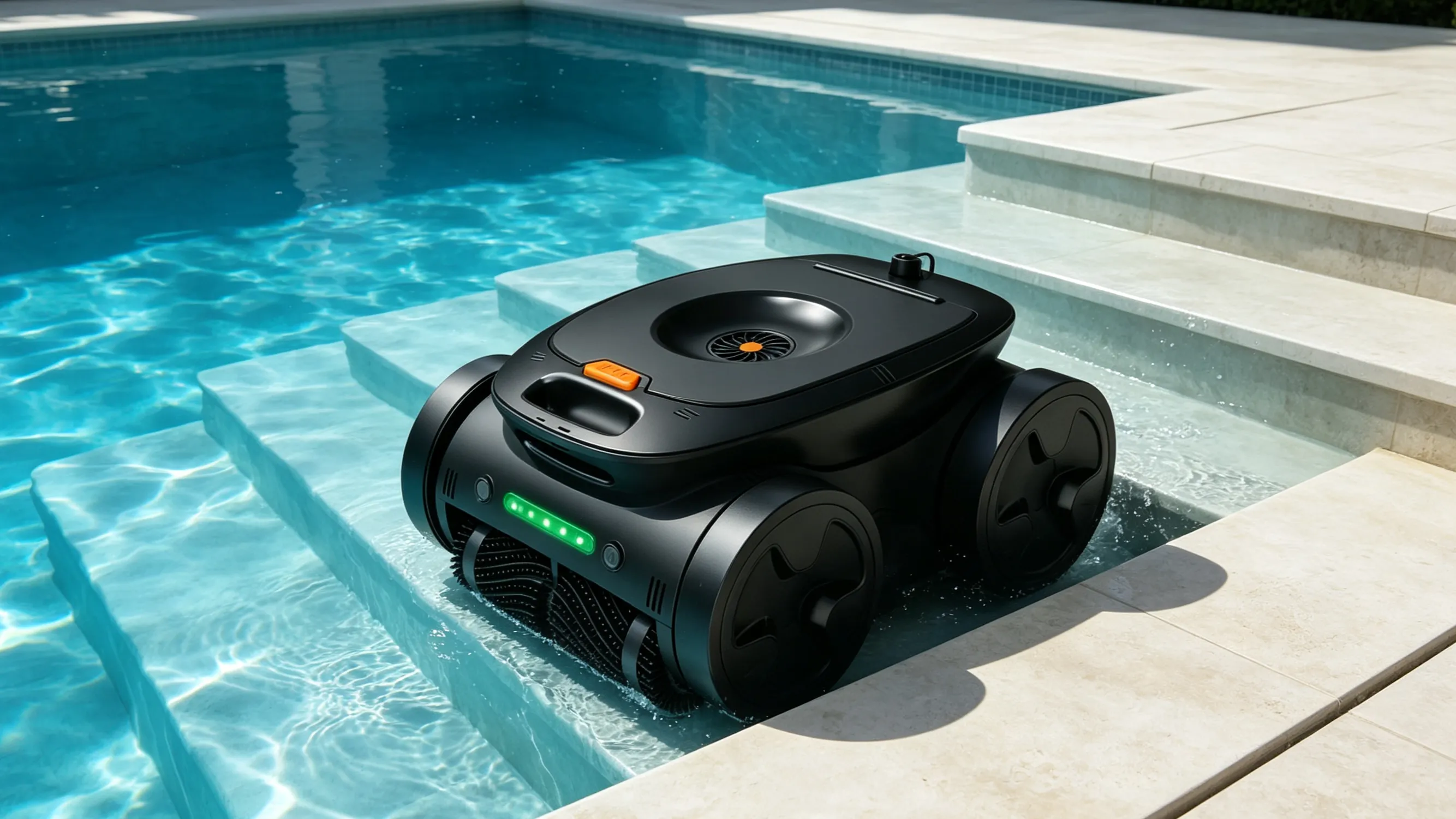
Purily Hydro combines several technologies designed to improve movement stability and cleaning adaptability in different pool environments.
While cleaning performance depends on the specific pool design, features such as four-wheel drive and intelligent obstacle handling help support more reliable operation.
Four-Wheel Drive for Better Maneuverability
Purily Hydro uses a four-wheel drive system to improve stability and movement control during cleaning.
The independent wheel system helps the robot move smoothly across different surfaces and maintain better contact with the pool during operation.
This design supports more flexible movement when navigating areas with different shapes and structures.
Intelligent Escape and Obstacle Handling
Pool steps and other structural changes may create situations where a cleaner needs to adjust its movement.
Purily Hydro includes intelligent escape technology to help the robot detect obstacles and change direction when necessary.
This helps reduce situations where the cleaner becomes trapped and supports a smoother cleaning process.
Frequently Asked Questions
Q1: Can robotic pool cleaners clean pool steps?
A: Some robotic pool cleaners can clean certain types of pool steps, but performance depends on the cleaner design and the shape, size, and structure of the steps.
Q2: Can a pool robot clean narrow steps?
A: Narrow steps can be more difficult because the robot has limited space to move and adjust its direction. Users should check the cleaner’s size and movement capabilities before purchasing.
Q3: Do all robotic pool cleaners clean stairs?
A: No. Different models have different cleaning capabilities. Some are designed mainly for pool floors, while others can also handle areas such as walls, steps, or waterlines.
Q4: What type of pool steps are easier for robotic cleaners to clean?
A: Wide, flat steps with simple designs are generally easier for robotic cleaners to approach and clean. Narrow, steep, or irregular steps may require additional manual cleaning.
Q5: Can a robotic pool cleaner completely replace manual cleaning for pool steps?
A: It depends on the pool structure and the cleaner’s capabilities. Some step areas can be cleaned effectively by a robotic cleaner, while more complex designs may still require occasional manual maintenance.
Conclusion
Robotic pool cleaners can clean certain types of pool steps, but the results depend on both the cleaner’s design and the structure of the pool.
Step dimensions, surface transitions, and movement capability all affect how effectively a robot can handle these areas. Users should consider their pool design and cleaning requirements before selecting a model.
With features such as four-wheel drive, intelligent escape technology, and flexible movement control, Purily Hydro is designed to support more consistent cleaning across different pool environments.