How Robotic Pool Cleaners Navigate Pools: Understanding Smart Mapping and Path Planning
Introduction
A robotic pool cleaner may appear simple from the outside, but its movement inside a swimming pool involves multiple technologies working together. Unlike manual cleaning tools, robotic cleaners need to move independently, avoid obstacles, cover different areas, and complete cleaning tasks with limited user involvement.
One of the key factors behind this process is navigation technology. A robotic pool cleaner must understand its surroundings and determine how to move efficiently across the pool surface.
Modern robotic pool cleaners use a combination of sensors, movement systems, and intelligent route planning methods to improve cleaning coverage and reduce unnecessary movement. Understanding how these technologies work can help pool owners better evaluate the performance of different robotic cleaning solutions.
Why Navigation Matters in Robotic Pool Cleaning
Navigation plays an important role in determining how effectively a robotic pool cleaner can complete its cleaning cycle. A pool environment is not a simple flat surface. Different pools may include various shapes, depths, corners, slopes, walls, and obstacles that affect how the cleaner moves.
Without an effective navigation system, a robotic cleaner may repeatedly cover the same areas while missing other sections of the pool. This can reduce cleaning efficiency and require longer operating times to achieve better results.
A well-designed navigation system helps the cleaner understand where it has already moved and how it should continue its cleaning path.
Managing Different Pool Environments
Every swimming pool has its own structure. Some pools have simple rectangular designs, while others may include curved edges, steps, different depths, or irregular layouts.
For robotic pool cleaners, these differences create challenges. The cleaner needs to maintain stable movement while adapting to changes in the pool environment.
Navigation technology helps the robot respond to these conditions by supporting more controlled movement. Instead of moving without direction, the cleaner can adjust its route based on the information collected during operation.
This is especially important for larger pools, where inefficient movement can result in longer cleaning cycles and incomplete coverage.
How Sensors Help Robotic Pool Cleaners Understand Their Surroundings
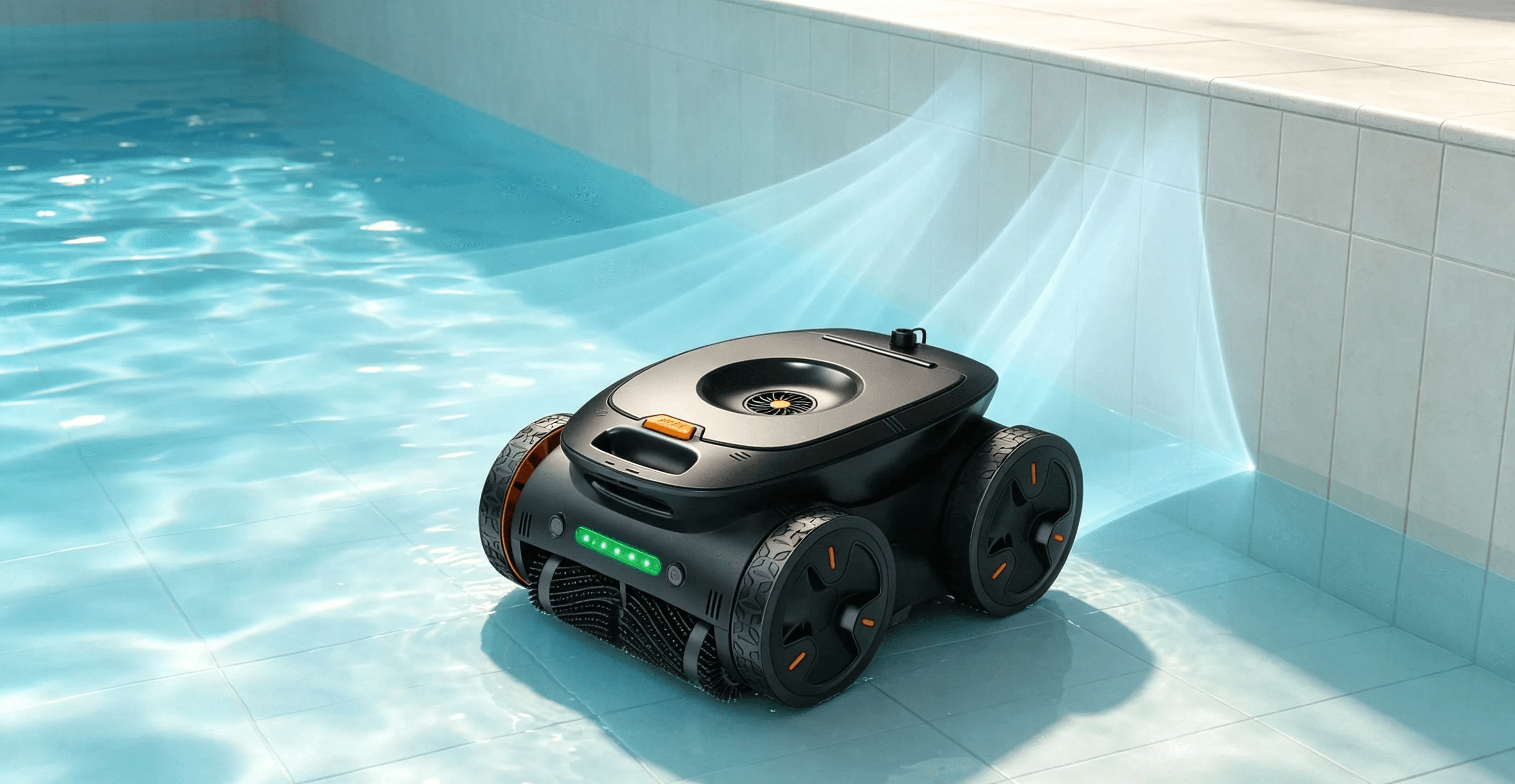
Sensors are one of the most important components that support robotic pool cleaner navigation. They allow the machine to collect information about its environment and make adjustments during operation.
Different types of sensors may support different functions, such as detecting obstacles, maintaining stability, and improving movement accuracy.
Detecting Pool Boundaries and Obstacles
During operation, a robotic pool cleaner needs to recognize changes in its surroundings. Pool walls, corners, and other structures can affect movement and require the cleaner to adjust direction.
Sensors help the cleaner identify these changes and avoid unnecessary collisions or repeated movements.
For example, when approaching a wall or corner, the navigation system can use sensor information to determine how the cleaner should change direction and continue the cleaning route.
This helps improve overall movement efficiency and allows the cleaner to cover more areas during each cleaning cycle.
Maintaining Stable Movement Underwater
Moving underwater is different from moving on a dry surface. Water resistance, changing angles, and different pool surfaces can influence how a robotic cleaner travels.
To maintain stable operation, some robotic pool cleaners use technologies such as gyroscopes and motion sensors to monitor their position and movement.
These systems help the cleaner maintain balance and improve control, especially when navigating walls, slopes, or changing pool surfaces.
The Role of Mapping Technology in Pool Navigation
Beyond basic sensing, some robotic pool cleaners use mapping technology to improve route planning. Instead of simply reacting to obstacles, mapping systems help the cleaner create a better understanding of the pool environment.
By collecting information during operation, the cleaner can develop more organized movement patterns and improve cleaning coverage.
How Intelligent Path Planning Improves Cleaning Efficiency
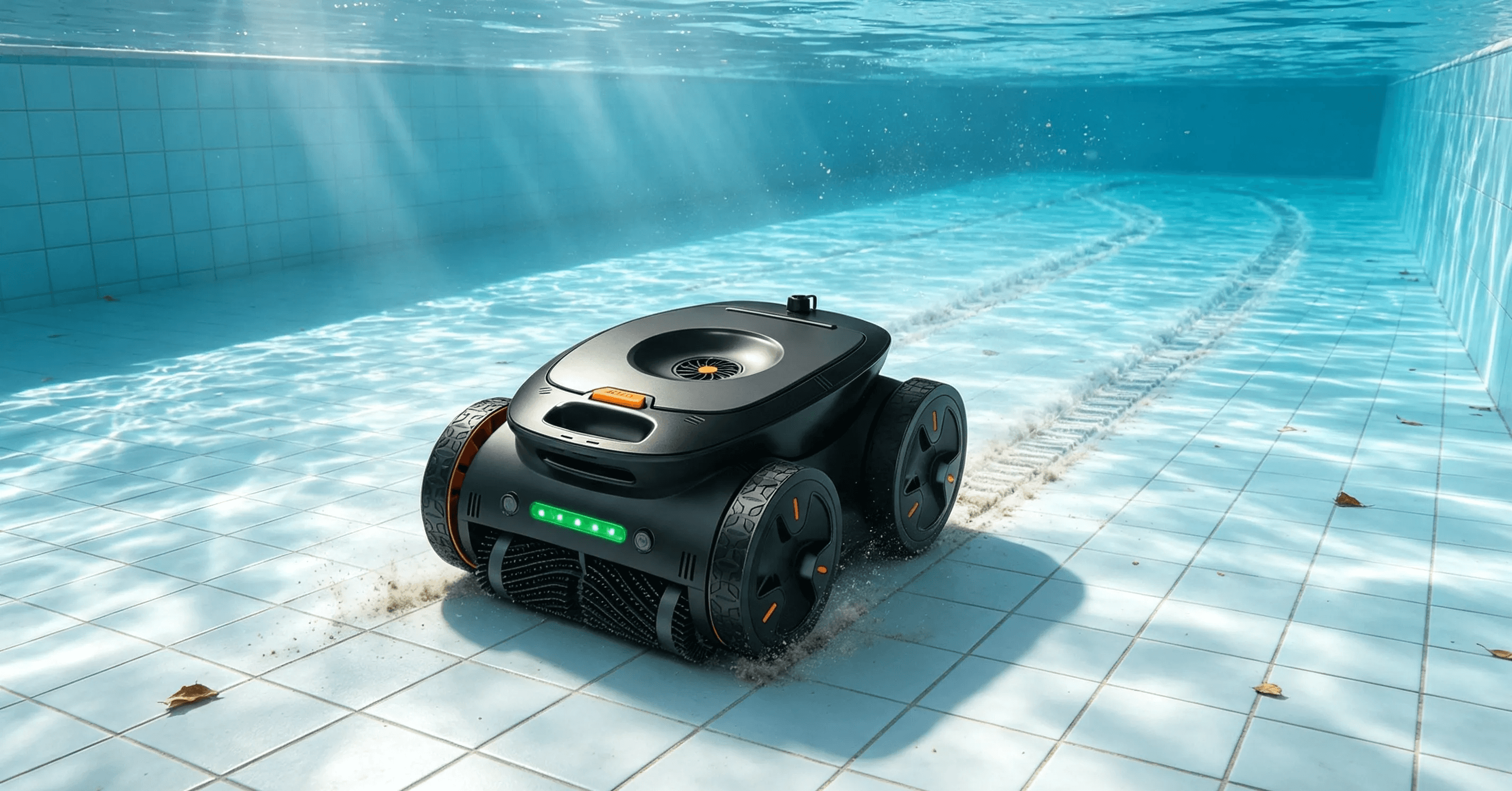
While sensors help robotic pool cleaners understand their surroundings, navigation also depends on how the cleaner decides where to move next. This is where intelligent path planning becomes important.
A robotic pool cleaner needs more than the ability to detect walls or obstacles. It also needs to determine how to move through the pool in a way that improves coverage and avoids spending unnecessary time in the same areas.
By using route planning technology, modern robotic cleaners can create more organized cleaning patterns and support more efficient operation.
Reducing Repeated Movements
One challenge with pool cleaning is ensuring that all areas receive enough attention without wasting operating time.
Without effective route planning, a cleaner may repeatedly travel through the same sections of the pool while leaving other areas with less coverage. This can result in longer cleaning cycles and reduced efficiency.
Intelligent path planning helps reduce this problem by allowing the cleaner to adjust its movement based on the environment it detects. Instead of moving randomly, the robot can follow a more structured cleaning approach.
This does not mean every pool cleaner follows the exact same route every time. Pool conditions, debris levels, and pool structures can affect movement decisions. However, better navigation systems can help create more consistent cleaning coverage.
How Smart Mapping Supports Better Pool Coverage
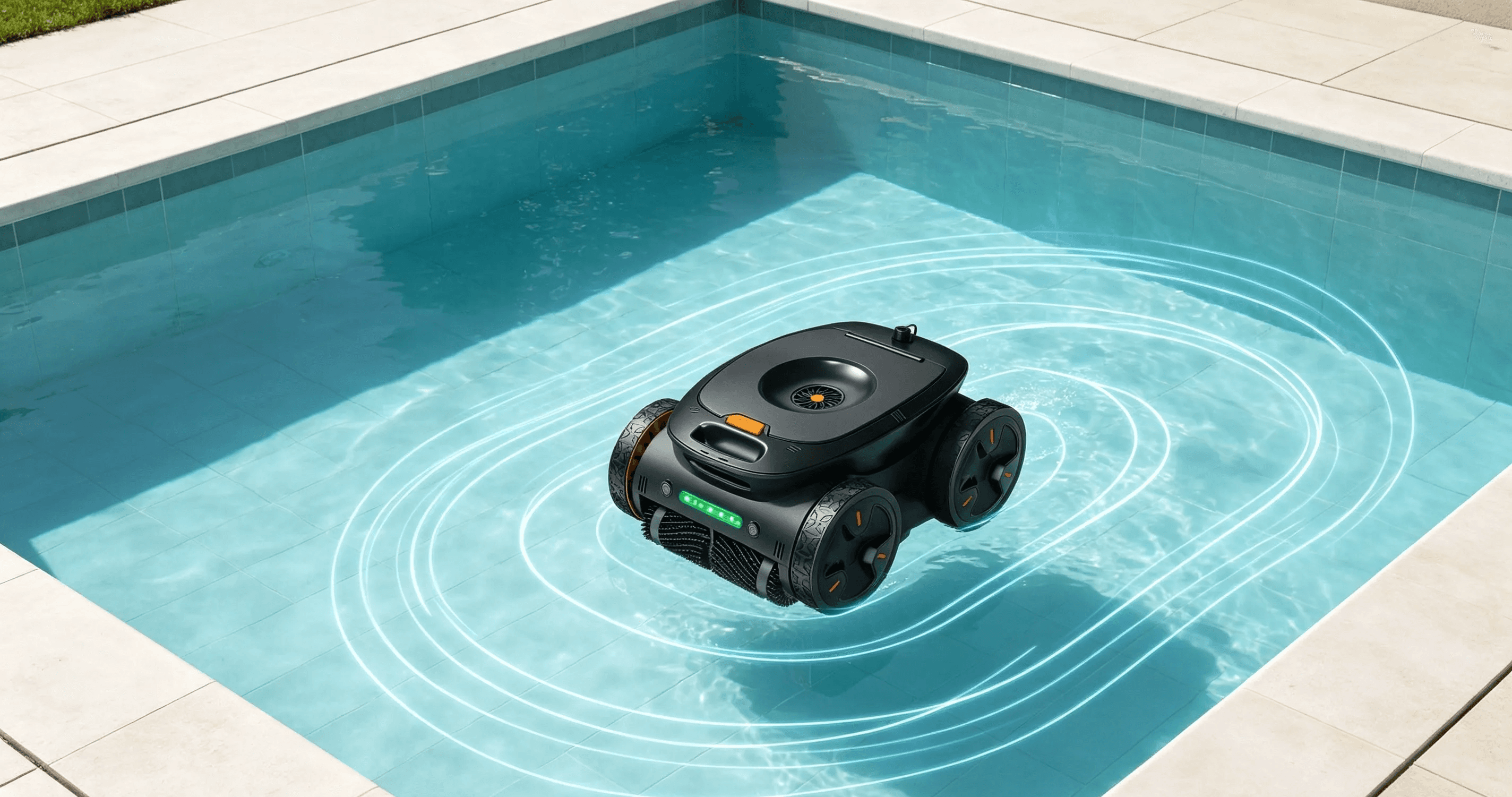
Mapping technology allows robotic pool cleaners to collect information about the pool environment and use that information to make better movement decisions during operation. Instead of moving without a clear direction, a cleaner with mapping capabilities can gradually understand the layout of the pool and adjust its cleaning route accordingly.
By analyzing factors such as pool boundaries, previous cleaning paths, obstacles, and different surface conditions, the navigation system can create a more organized movement pattern. This helps the robotic cleaner reduce unnecessary travel and improve overall cleaning coverage.
For larger pools, efficient movement becomes even more important because the cleaner needs to manage a wider cleaning area and more possible movement paths. A smarter mapping system helps the robot organize its cleaning process, avoid repeatedly covering the same sections, and spend more time reaching areas that require attention.
Adapting to Different Pool Shapes
Not all swimming pools have the same design. Some pools are simple rectangles, while others may include curved walls, irregular corners, steps, or different depths.
These differences can affect how a robotic cleaner moves. A navigation system that can adapt to changing conditions allows the cleaner to handle more complex pool layouts.
This is especially useful for homeowners who have pools with unique designs. Instead of relying only on manual adjustments, the robotic cleaner can automatically respond to the environment during operation.
Why Navigation Technology Matters for Modern Pool Maintenance
Navigation is an important part of the overall cleaning system because it influences how efficiently a robotic pool cleaner uses its time and energy.
A cleaner that can move effectively may complete cleaning tasks with fewer unnecessary movements while maintaining better coverage. This helps users receive more consistent cleaning support without needing to manually guide the device.
However, navigation technology is only one part of robotic pool cleaner performance. Other factors, such as brush design, filtration capability, suction power, and drive systems, also contribute to overall cleaning results.
Smart Navigation Features in Purily Robotic Pool Cleaners
Modern robotic pool cleaners continue to combine different technologies to improve underwater movement and cleaning performance.
The Purily robotic pool cleaner uses features such as intelligent path planning, an ultrasonic mapping system, and multiple sensors to support more controlled navigation. These technologies help the cleaner understand its environment and improve cleaning coverage across pool floors, walls, and waterlines.
With a combination of smart navigation, four-wheel drive movement, and automated cleaning functions, Purily is designed to provide a more convenient cleaning experience for residential pool owners.
FAQ
Q: Does a robotic pool cleaner remember the exact layout of a pool?
A: Not all robotic pool cleaners use the same navigation technology. Some models use basic movement patterns, while others use sensors or mapping systems to improve route planning during cleaning.
Q: Can a robotic pool cleaner work in an irregularly shaped pool?
A: Yes, many robotic pool cleaners are designed to handle different pool layouts. However, performance may vary depending on the navigation system, movement design, and pool structure.
Q: Does better navigation mean a pool cleaner removes more debris?
A: Navigation can help improve cleaning coverage, but debris removal also depends on factors such as suction power, filtration system, and brush performance.
Q: Are sensors necessary for a robotic pool cleaner?
A: Sensors are not the only factor that determines cleaning ability, but they can help robotic cleaners move more accurately and respond better to changes in the pool environment.
Q: Do robotic pool cleaners need user control while cleaning?
A: Most robotic pool cleaners are designed to operate automatically after setup. Some models may also provide remote control or app functions for users who want additional control.
Conclusion
Navigation technology has become an important part of modern robotic pool cleaners. By combining sensors, mapping systems, and intelligent route planning, these devices can move more efficiently and provide more consistent cleaning coverage.
Understanding how navigation works can help pool owners choose a cleaner based not only on cleaning power but also on how effectively the device manages movement inside the pool.
For users looking for a robotic cleaner with advanced navigation features, Purily combines intelligent path planning, ultrasonic mapping, and automated cleaning functions to support easier pool maintenance. A well-designed navigation system allows the cleaner to spend less time moving without purpose and more time supporting a cleaner swimming environment.