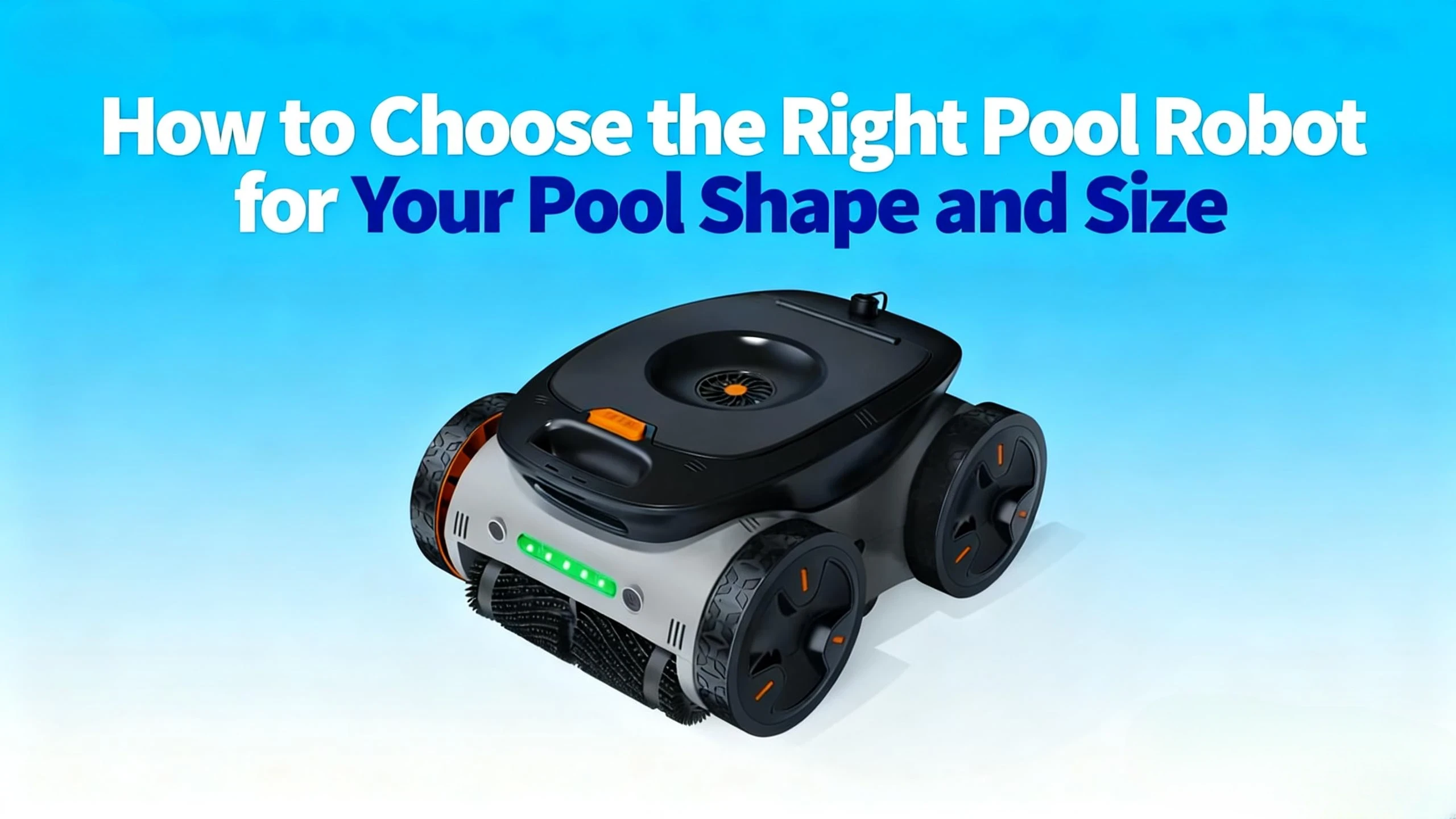
How to Choose the Right Pool Robot for Your Pool Shape and Size
Robotic Cleaners
Choose the Right Pool Robot
What is an Automatic Pool Cleaner and How Does It Work?
An automatic pool cleaner is a robotic device designed to maintain pool cleanliness without manual intervention. These devices operate independently, using advanced navigation systems and cleaning mechanisms to remove debris, dirt, and algae from pool surfaces. Purily's engineering team has developed innovative automatic pool cleaners that combine efficiency with user-friendly operation, making pool maintenance more accessible than ever.
1. Types of Automatic Pool Cleaners
1.1 Suction-Side Cleaners
Suction-side cleaners connect to your pool's filtration system, using the pump's suction power to move around and collect debris. These cleaners are cost-effective and easy to install, making them popular for residential pools. They work best for pools with minimal large debris.
Key advantages include simple maintenance and compatibility with existing pool systems. However, they may increase filter cleaning frequency due to the debris they collect.
1.2 Pressure-Side Cleaners
Pressure-side cleaners use water pressure from a dedicated booster pump or return jets to navigate and clean. They feature their own filter bags, reducing strain on your main pool filter. These cleaners excel at handling larger debris like leaves and twigs.
Many models include advanced features like backup valves and sweep hoses for thorough cleaning coverage.
1.3 Robotic Cleaners
Robotic cleaners operate independently of your pool's filtration system, powered by low-voltage electricity. They feature built-in motors, filters, and advanced navigation systems that map your pool for efficient cleaning. Purily's robotic models incorporate smart technology for optimal cleaning patterns.
These cleaners offer superior cleaning performance and energy efficiency, though they require periodic emptying of their filter canisters.
2. Working Mechanism of Automatic Pool Cleaners
2.1 Navigation Systems
Modern automatic pool cleaners use various navigation technologies to cover the entire pool surface. Basic models follow random patterns, while advanced units employ sensors, gyroscopes, and mapping algorithms. Some high-end cleaners can even learn your pool's layout for optimized cleaning routes.
The navigation system determines cleaning efficiency and coverage, with more sophisticated systems reducing cleaning time and energy consumption.
2.2 Cleaning Components
Automatic pool cleaners utilize multiple cleaning mechanisms working in tandem. Brushes scrub pool surfaces, removing algae and stubborn dirt. Vacuum systems collect debris, while water jets help dislodge particles from hard-to-reach areas. Many models feature specialized brushes for different pool surfaces like vinyl, fiberglass, or concrete.
Advanced cleaners incorporate multiple brush types and adjustable cleaning intensities to handle various pool conditions effectively.
2.3 Power and Control Systems
Power sources vary by cleaner type. Suction and pressure-side models rely on your pool's existing systems, while robotic cleaners use internal batteries or external power supplies. Control systems range from simple timer-based operations to smartphone apps with scheduling and monitoring capabilities.
Purily's automatic pool cleaners feature intuitive controls and energy-efficient motors that reduce operating costs while maintaining powerful cleaning performance.
Pro Tip: For optimal performance, Purily recommends running your automatic pool cleaner 2-3 times per week during peak swimming season, adjusting frequency based on pool usage and environmental factors.
Types of Pool Cleaners: Suction, Pressure, and Robotic Pool Cleaners
Choosing the right pool cleaner is crucial for maintaining crystal-clear water and extending your pool's lifespan. Each type offers distinct advantages depending on your pool size, debris type, and budget. When selecting a pool cleaner, Purily experts recommend considering your specific needs before making a decision.
1. Suction Pool Cleaners
1.1 How Suction Cleaners Work
Suction pool cleaners connect directly to your pool's skimmer or dedicated suction line. They use your pool's existing filtration system to create suction that moves the cleaner around while vacuuming debris.
These cleaners are ideal for pools with light to moderate debris and are typically the most affordable option.
1.2 Pros and Cons
Lower initial cost compared to other types
Simple installation with minimal setup
Effective for small to medium debris
Requires pool pump to be running during cleaning
Can strain your filtration system
Less effective with large debris like leaves
2. Pressure Pool Cleaners
2.1 How Pressure Cleaners Work
Pressure pool cleaners use water pressure from a dedicated booster pump or your pool's return jets. They collect debris in an attached bag rather than sending it to your pool's filter, reducing strain on your filtration system.
These cleaners excel at handling larger debris and are particularly effective in pools surrounded by trees.
2.2 Pros and Cons
Excellent for large debris and leaves
Doesn't clog your pool's filter
Often includes a tail sweep for wall cleaning
Requires a booster pump (additional cost)
Higher energy consumption than suction cleaners
More complex installation process
3. Robotic Pool Cleaners
3.1 How Robotic Cleaners Work
Robotic pool cleaners are self-contained units with their own motors, filters, and power supply. They operate independently of your pool's filtration system and use advanced algorithms to navigate your pool efficiently.
Modern robotic cleaners can scrub walls, clean waterlines, and even be controlled via smartphone apps.
3.2 Pros and Cons
Most energy-efficient option (uses 60-70% less energy)
Superior cleaning performance and coverage
Operates independently of pool equipment
Highest initial investment
Requires regular filter cleaning
May need occasional repairs for electronic components
Pro Tip: Purily's technical team suggests testing robotic pool cleaners with different filter types to find the optimal balance between cleaning efficiency and maintenance frequency.
3.3 Comparison Table
Feature | Suction | Pressure | Robotic |
|---|---|---|---|
Initial Cost | $100-$400 | $300-$800 | $500-$1500 |
Energy Efficiency | Low | Medium | High |
Debris Handling | Small-Medium | Large | All Types |
Installation Complexity | Easy | Medium | Plug-and-Play |
Maintenance | Low | Medium | Medium-High |
Each pool cleaner type offers unique benefits for different pool environments and maintenance preferences. Consider your pool's specific needs, your budget, and your willingness to perform maintenance when making your selection.
How to Choose the Right Pool Cleaner for Your Pool Size and Type?
Selecting the optimal pool cleaner requires understanding your pool's unique characteristics. Purily recommends evaluating three key factors: pool size, surface type, and debris load before making your decision.
1. Assess Your Pool Dimensions and Volume
1.1 Measure Pool Size Accurately
Start by calculating your pool's surface area and volume. For rectangular pools, multiply length � width � average depth � 7.5 to get gallons. Irregular shapes require breaking into sections or using a pool size calculator for precision.
Pool cleaners have maximum coverage areas - a 30-foot cable cleaner won't effectively clean a 40-foot pool. Match cleaner specifications to your actual dimensions.
1.2 Consider Pool Shape and Features
Rectangular pools work well with most cleaner types
Freeform pools may need specialized navigation
Steps, benches, and slopes affect cleaner performance
Water features may require additional cleaning attention
2. Match Cleaner Type to Pool Surface
2.1 Identify Your Pool Surface Material
Different surfaces require specific brush types and cleaning pressure. Vinyl liners need gentle brushes to prevent tears, while concrete surfaces can handle aggressive scrubbing. Fiberglass requires medium-stiffness brushes to avoid scratching.
Most modern robotic cleaners offer interchangeable brushes for various surfaces, providing flexibility as your pool needs change.
2.2 Evaluate Debris Types and Volume
Pro Tip: Purily's pool maintenance experts suggest analyzing your typical debris load - fine dust requires different filtration than large leaves. Match your cleaner's filtration capacity to your environment.
3. Calculate Power and Filtration Requirements
3.1 Determine Suction Power Needs
Pool volume directly impacts required suction power. A 20,000-gallon pool needs approximately 70 GPM (gallons per minute) flow rate for effective cleaning. Undersized cleaners leave debris behind, while oversized units waste energy.
Check your pool's pump specifications - suction-side cleaners require adequate flow, while robotic models operate independently of your filtration system.
3.2 Select Appropriate Filtration System
Pool Size (Gallons) | Recommended Filter Type | Maintenance Frequency |
|---|---|---|
Under 15,000 | Fine mesh cartridge | Weekly |
15,000-30,000 | Fine mesh + leaf canister | Bi-weekly |
Over 30,000 | Dual filtration system | Weekly |
4. Decision Framework for Cleaner Selection
4.1 Quick Selection Checklist
Measure pool dimensions and calculate volume
Identify surface material and condition
Assess typical debris types and seasonal variations
Check existing equipment compatibility
Consider budget and long-term operating costs
4.2 Common Selection Mistakes to Avoid
Avoid choosing based solely on price - the cheapest option often costs more in energy bills and replacement parts. Don't overlook warranty coverage and service availability. Many pool owners regret selecting undersized cleaners that can't handle their pool's demands.
Consider future needs too - if you plan pool renovations or landscaping changes, choose a cleaner that adapts to evolving conditions.
What Features Should You Look for in a Pool Cleaner?
Selecting the right pool cleaner requires understanding the essential features that determine cleaning efficiency, durability, and ease of use. Purily experts recommend evaluating these key aspects before making your purchase decision.
1. Cleaning Performance Features
1.1 Suction Power and Coverage
Effective pool cleaners need sufficient suction power to remove debris of all sizes. Look for models with at least 30 GPM (gallons per minute) flow rate for optimal cleaning performance.
Coverage area determines how much of your pool gets cleaned in each cycle. Premium models offer 360-degree coverage with multiple cleaning patterns.
1.2 Filter System Efficiency
The filter system captures debris while maintaining water flow. Multi-layer filtration systems trap particles as small as 2 microns, ensuring crystal-clear water.
Easy-access filter cartridges reduce maintenance time and improve overall cleaning efficiency.
2. Navigation and Mobility Features
2.1 Smart Navigation Technology
Advanced pool cleaners use intelligent mapping to optimize cleaning routes and avoid obstacles. Look for models with gyroscopic navigation systems that remember pool layouts.
Wall-climbing capabilities ensure complete cleaning of pool floors, walls, and waterlines.
2.2 Cable Management Systems
Tangle-free cable designs prevent interruptions during cleaning cycles. Swivel technology allows unrestricted movement while maintaining power connection.
Models with anti-tangle mechanisms reduce maintenance and extend cable lifespan.
3. Convenience and Control Features
3.1 Programmable Cleaning Cycles
Multiple cleaning modes let you customize cleaning schedules based on pool usage and debris levels. Timer functions enable automatic cleaning during off-peak hours.
Remote control operation provides manual override capabilities for spot cleaning.
3.2 Energy Efficiency Ratings
Energy-efficient models reduce operating costs while maintaining cleaning performance. Look for Energy Star certified pool cleaners that consume less power.
Variable speed motors adjust power consumption based on cleaning requirements.
Must-Have vs. Nice-to-Have Features
Must-Have: Reliable suction power, basic navigation, filter system
Must-Have: Wall climbing capability, tangle-free cable
Must-Have: Multiple cleaning modes, easy filter access
Nice-to-Have: Smart mapping technology, remote control
Nice-to-Have: Advanced scheduling features, energy monitoring
Pro Tip: Purily recommends prioritizing suction power and filter efficiency over advanced features for most pool owners. These core features determine long-term cleaning effectiveness.
Feature Comparison Chart
Feature | Essential | Premium | Budget |
|---|---|---|---|
Suction Power (GPM) | 30+ | 40+ | 20-25 |
Filter Micron Rating | 2-5 microns | 1-2 microns | 5-10 microns |
Navigation Type | Basic patterns | Smart mapping | Random patterns |
Wall Climbing | Yes | Advanced | Limited |
Understanding these features helps you make an informed decision based on your pool size, usage patterns, and budget constraints. Focus on core cleaning capabilities first, then consider additional features that enhance convenience.
Top Pool Cleaner Brands and Models to Consider in 2024
Selecting the right pool cleaner involves balancing performance, durability, and value. Purily experts recommend evaluating multiple brands to find the optimal solution for your specific pool configuration and maintenance needs.
1. Leading Robotic Pool Cleaner Brands
1.1 Dolphin by Maytronics
Dolphin robotic cleaners dominate the premium segment with their advanced navigation systems and energy efficiency. The Dolphin Nautilus CC Plus remains the best-selling model, cleaning pools up to 50 feet in just 2 hours.
Key features include CleverClean scanning technology and dual scrubbing brushes that remove debris as small as 2 microns.
1.2 Polaris by Zodiac
Polaris specializes in pressure-side cleaners that excel at handling large debris. The Polaris 9550 Sport features 4-wheel drive and a motion-sensing remote for targeted cleaning.
With a 7-day programmable timer and 70-foot cable, it's ideal for larger residential pools up to 60 feet.
2. Top Suction-Side Pool Cleaners
2.1 Hayward Pool Products
Hayward's Wanda the Whale series offers reliable suction-side cleaning for budget-conscious pool owners. These cleaners connect directly to your pool's filtration system and require no additional booster pump.
The Hayward Navigator Pro features SmartDrive steering technology that ensures complete pool coverage without hang-ups.
2.2 Pentair Pool Cleaners
Pentair's Kreepy Krauly line includes the popular Legend II model with dual thrust jets for powerful cleaning action. These cleaners handle both small and large debris effectively.
The Pentair GW9500 Kreepy Krauly Great White features a programmed steering system that cleans pools up to 20' x 40' in approximately 3 hours.
3. Budget-Friendly Options
3.1 Aiper Cordless Cleaners
Aiper has emerged as a strong competitor in the cordless robotic cleaner market. The Aiper Seagull Pro offers 180W suction power and runs for 150 minutes on a single charge.
Without cords or hoses, these cleaners eliminate tangling issues and provide greater maneuverability around pool obstacles.
3.2 XtremepowerUS Economy Models
Xtremepower US provides affordable suction-side cleaners starting under $100. The Automatic Suction Vacuum attaches to existing filtration systems and climbs walls effectively.
While lacking advanced features, these cleaners provide reliable basic maintenance for small to medium pools.
Pro Tip: Purily technicians recommend testing any pool cleaner in a small area first to verify compatibility with your pool surface material and ensure optimal cleaning performance.
4. 2026 Price Range Analysis
Brand | Model | Price Range | Pool Size Capacity |
|---|---|---|---|
Dolphin | Nautilus CC Plus | $799-$999 | Up to 50 ft |
Polaris | 9550 Sport | $1,199-$1,499 | Up to 60 ft |
Hayward | Navigator Pro | $399-$599 | Up to 40 ft |
Aiper | Seagull Pro | $499-$699 | Up to 40 ft |
XtremepowerUS | Automatic Suction | $80-$150 | Up to 30 ft |
5. Key Features Comparison
Cleaning Coverage: Wall climbing vs floor-only cleaning
Filtration System: Fine mesh vs ultra-fine cartridges
Energy Efficiency: Variable speed motors vs standard motors
Smart Features: Wi-Fi connectivity and mobile app control
Maintenance Requirements: Filter cleaning frequency and replacement parts
According to 2024 market data, robotic cleaners now represent 68% of the premium pool cleaner market, with suction-side models maintaining 45% of the budget segment. When selecting your pool cleaner, consider your pool's specific needs, local climate conditions, and long-term maintenance costs to ensure the best investment for your swimming season.
How Much Does a Pool Cleaner Cost and What's the Best Value?
Investing in a pool cleaner requires understanding the price spectrum and identifying which option delivers optimal long-term value. The market offers solutions ranging from budget-friendly manual tools to premium robotic systems, with significant differences in performance and durability. Purily experts recommend evaluating total cost of ownership rather than just upfront price to determine true value.
1. Price Ranges by Cleaner Type
1.1 Manual Pool Cleaners
Manual cleaning tools represent the most affordable entry point, typically costing between $20-$150. These include handheld vacuums, brushes, and telescoping poles that require direct user operation. While inexpensive initially, they demand significant time investment and physical effort.
Operating costs remain minimal with only occasional replacement parts needed. However, labor costs in terms of your time should factor into the value equation.
1.2 Suction-Side Automatic Cleaners
Suction-side cleaners connect to your pool's filtration system and cost $100-$400. These devices move randomly across pool surfaces, collecting debris through suction power. Installation requires no additional equipment beyond your existing pump system.
Annual operating costs include increased electricity usage and more frequent filter replacements. Replacement parts typically need replacement every 2-3 seasons.
1.3 Pressure-Side and Robotic Cleaners
Pressure-side cleaners ($300-$900) use water pressure to navigate and collect debris, while robotic models ($500-$1,500+) operate independently with their own motors and filters. Robotic cleaners offer the highest efficiency and feature sets including programmable schedules and smart navigation.
Robotic models consume minimal electricity but have higher upfront costs. Their advanced filtration reduces strain on your pool's main system, potentially extending equipment lifespan.
2. Value Analysis and Cost-Benefit Considerations
2.1 Total Cost of Ownership Comparison
Cleaner Type | Initial Cost | Annual Operating Cost | Expected Lifespan | Cost per Year |
|---|---|---|---|---|
Manual | $20-$150 | $10-$30 | 2-3 years | $10-$65 |
Suction-Side | $100-$400 | $50-$100 | 3-5 years | $40-$100 |
Pressure-Side | $300-$900 | $75-$150 | 5-7 years | $85-$200 |
Robotic | $500-$1,500 | $25-$75 | 5-8 years | $100-$275 |
2.2 Value-Adding Features Worth the Investment
Smart navigation systems that learn pool layout and optimize cleaning patterns
Multi-layer filtration capable of capturing particles as small as 2 microns
Energy-efficient motors that reduce electricity consumption by up to 82%
Remote monitoring and control via smartphone apps
Self-diagnostics that alert you to maintenance needs before failures occur
Pro Tip: Purily pool specialists recommend calculating your break-even point by dividing the cleaner's price by your estimated annual savings in professional cleaning services, which typically range from $1,200-$2,500 per season.
3. Making the Right Investment Decision
3.1 Matching Cleaner to Pool Characteristics
Pool size and shape significantly impact cleaner effectiveness and value proposition. Larger pools benefit more from robotic cleaners' efficiency, while smaller pools may find manual or suction-side options sufficient. Complex pool geometries with steps, benches, and irregular shapes require cleaners with advanced maneuverability features.
Surface material also matters - vinyl liners need gentler cleaning mechanisms, while concrete surfaces can withstand more aggressive brushing action.
3.2 Budget Optimization Strategies
Consider purchasing during off-season sales when retailers offer 20-30% discounts on premium models. Look for floor models or last year's versions that often include the same core functionality at reduced prices. Some manufacturers offer certified refurbished units with full warranties at 40-50% savings.
Factor in potential insurance discounts - some providers offer premium reductions for pools with automated cleaning systems that maintain consistent chemical balance and reduce slip hazards from debris.
Understanding the relationship between initial investment and long-term value helps you select a pool cleaner that delivers optimal performance for your specific needs and budget constraints.
FAQS
Q1: How long do automatic pool cleaners typically last?
A1: Quality automatic pool cleaners typically last 3-5 years with proper maintenance. Robotic models often have longer lifespans due to their durable construction and replaceable components.
Q2: Can automatic pool cleaners handle all types of debris?
A2: Most automatic pool cleaners handle common debris like dirt, sand, and small leaves effectively. However, very large debris or heavy leaf loads may require manual removal or specialized equipment.
Q3: Do automatic pool cleaners work on all pool shapes and sizes?
A3: Modern automatic pool cleaners are designed to work with various pool shapes and sizes, from small above-ground pools to large commercial installations. Always verify compatibility with your specific pool dimensions.
Q4: How much electricity do robotic pool cleaners consume?
A4: Robotic pool cleaners typically consume 100-200 watts per cleaning cycle, making them energy-efficient compared to running your pool's filtration system continuously.
Q5: What maintenance do automatic pool cleaners require?
A5: Regular maintenance includes cleaning filters, checking brushes for wear, inspecting hoses for leaks, and storing the unit properly when not in use. Following the manufacturer's maintenance schedule ensures optimal performance and longevity.