Pool Skimmer vs. Robotic Pool Cleaner: What Does Each One Do?
Introduction
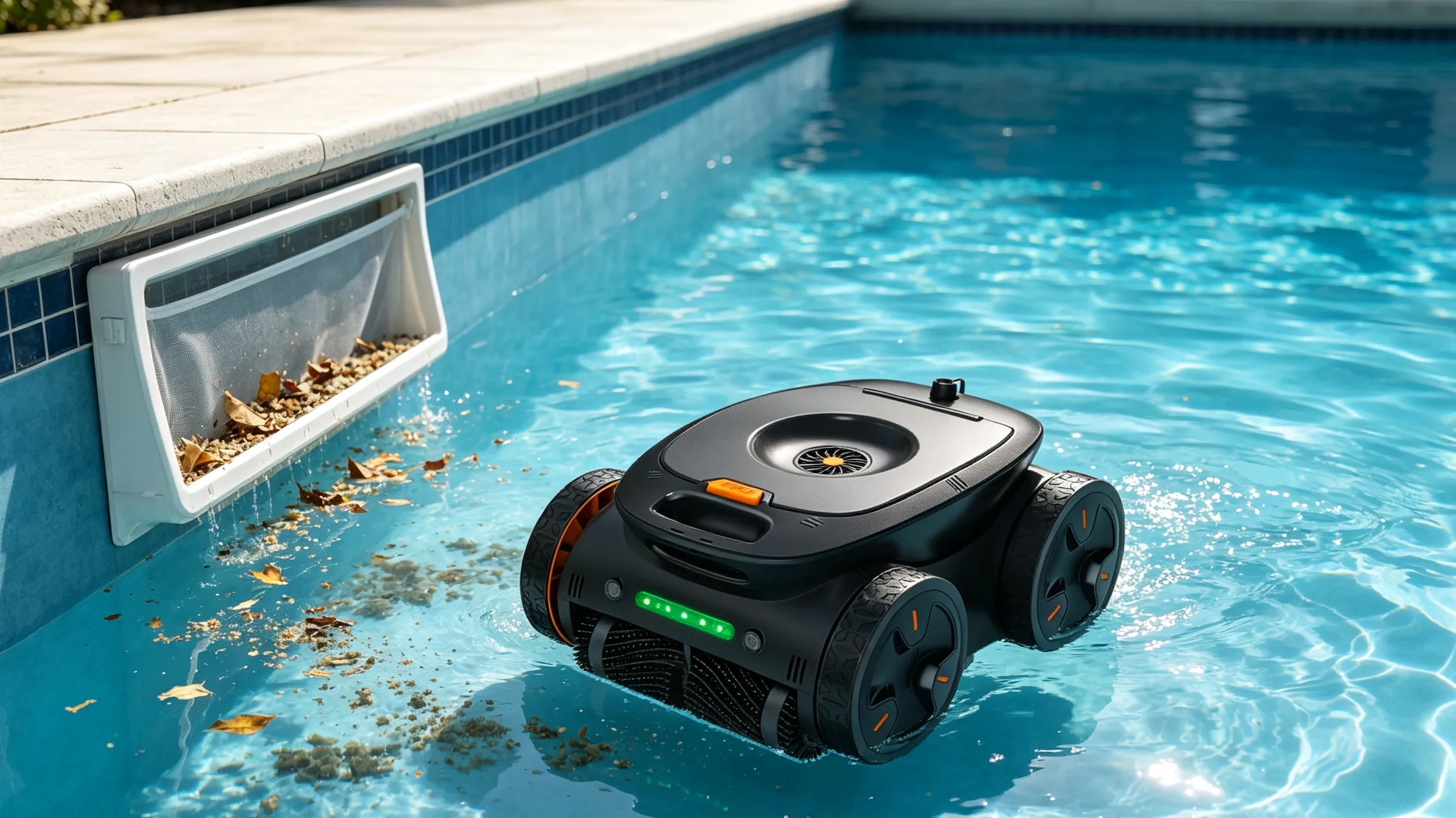
A clean pool depends on more than removing visible debris. Surface debris, dirt on the pool floor, water circulation, and filtration are handled by different parts of a pool cleaning system. Two commonly used solutions are the pool skimmer and the robotic pool cleaner, but they do not perform the same job.
Understanding the difference between a pool skimmer vs. robotic pool cleaner can help pool owners choose the right combination of equipment instead of expecting one system to handle every cleaning task.
Understanding the Two Pool Cleaning Systems
How a Pool Skimmer Works
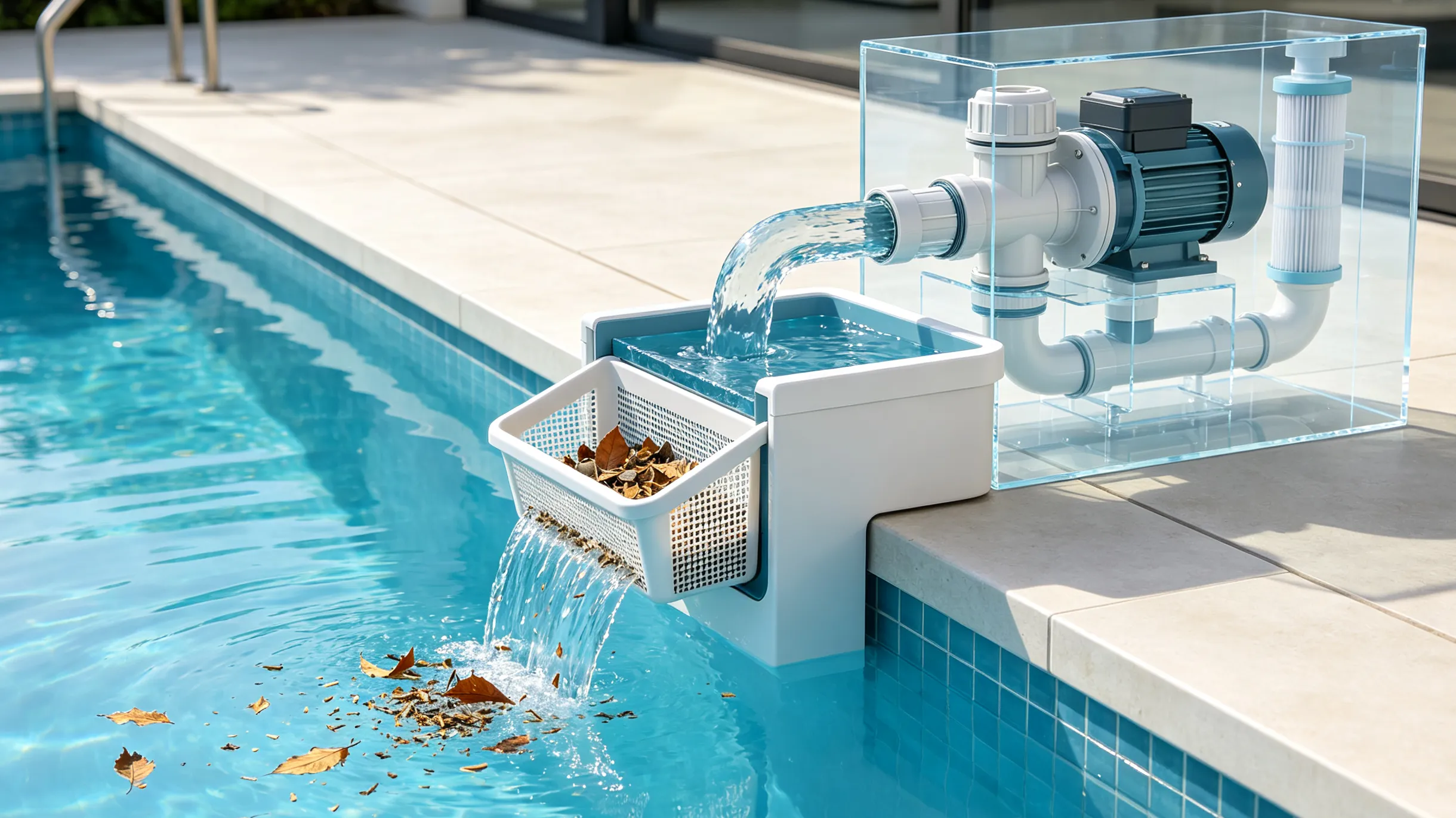
A pool skimmer is built into or connected to the pool's circulation system. It draws water from near the surface of the pool and directs it toward the pump and filtration system.
As water enters the skimmer, its basket can capture larger floating debris such as leaves, insects, and other material. The filtered water then continues through the circulation system before returning to the pool.
The skimmer therefore has two related functions: it helps remove floating debris and provides an intake point for water circulation. Its main cleaning area is the pool surface, rather than the floor or walls.
How a Robotic Pool Cleaner Works
A robotic pool cleaner is a separate cleaning device that moves through the pool and collects debris as it travels across pool surfaces. Depending on the model, it may clean the pool floor, walls, or waterline.
Instead of relying on the pool's main circulation system to move the cleaner around, a robotic cleaner uses its own drive and cleaning components. Brushes loosen debris from surfaces, while the cleaner's filtration system captures the material it collects.
This gives a robotic pool cleaner a fundamentally different role from a skimmer. Rather than continuously drawing surface water into the pool's circulation system, it physically travels through the pool to clean areas that surface skimming does not normally reach.
The Main Difference Between Their Functions
The simplest way to understand the difference is to look at where and how each system cleans.
A pool skimmer focuses on water and floating debris near the surface. A robotic pool cleaner focuses on physical pool surfaces and the debris resting on them.
This means neither system should automatically be viewed as a complete replacement for the other. A skimmer supports circulation and surface cleaning, while a robotic cleaner provides more direct cleaning of the pool itself.
Pool Skimmer vs. Robotic Pool Cleaner: Key Differences
Surface Debris and Floating Contaminants
Pool skimmers have a natural advantage when it comes to floating debris. Leaves, insects, pollen, and similar material can be captured as surface water moves toward the skimmer.
A conventional robotic pool cleaner is generally designed to clean submerged surfaces rather than continuously remove material floating on top of the water. Some specialized robotic systems may have surface-cleaning capabilities, but this depends on the product design.
For a typical pool setup, the skimmer remains an important part of managing surface debris.
Floor, Wall, and Waterline Cleaning
This is where a robotic pool cleaner provides a different type of cleaning coverage.
Debris that settles on the pool floor is outside the normal operating area of a wall-mounted skimmer. Depending on its design, a robotic cleaner can move across the floor and collect this debris directly. Models with wall-climbing or waterline capabilities can extend that coverage to additional pool surfaces.
As a result, a robotic cleaner can address dirt and debris that remain after surface skimming has already taken place.
Water Circulation and Filtration
A pool skimmer is part of the pool's circulation system. Water passes through the skimmer, moves through the pump and filter, and is then returned to the pool.
A robotic pool cleaner has a different purpose. Its internal filtration system captures the debris collected during its cleaning cycle, while its movement and cleaning mechanism operate independently of the skimmer's normal surface intake function.
This distinction matters because cleaning the pool and circulating the water are related but separate tasks.
Cleaning Frequency and Maintenance
Skimmers work as part of the pool's circulation schedule, so they can continuously collect floating debris whenever the circulation system is operating.
Robotic pool cleaners typically operate during dedicated cleaning cycles. Their baskets or filters need to be emptied and cleaned after use or according to the manufacturer's maintenance recommendations.
The two systems therefore require different types of attention. Skimmer maintenance focuses on components such as the basket and water flow, while robotic cleaner maintenance generally involves cleaning the filter, brushes, and other accessible components.
What Each System Can and Cannot Clean
What Pool Skimmers Can Handle
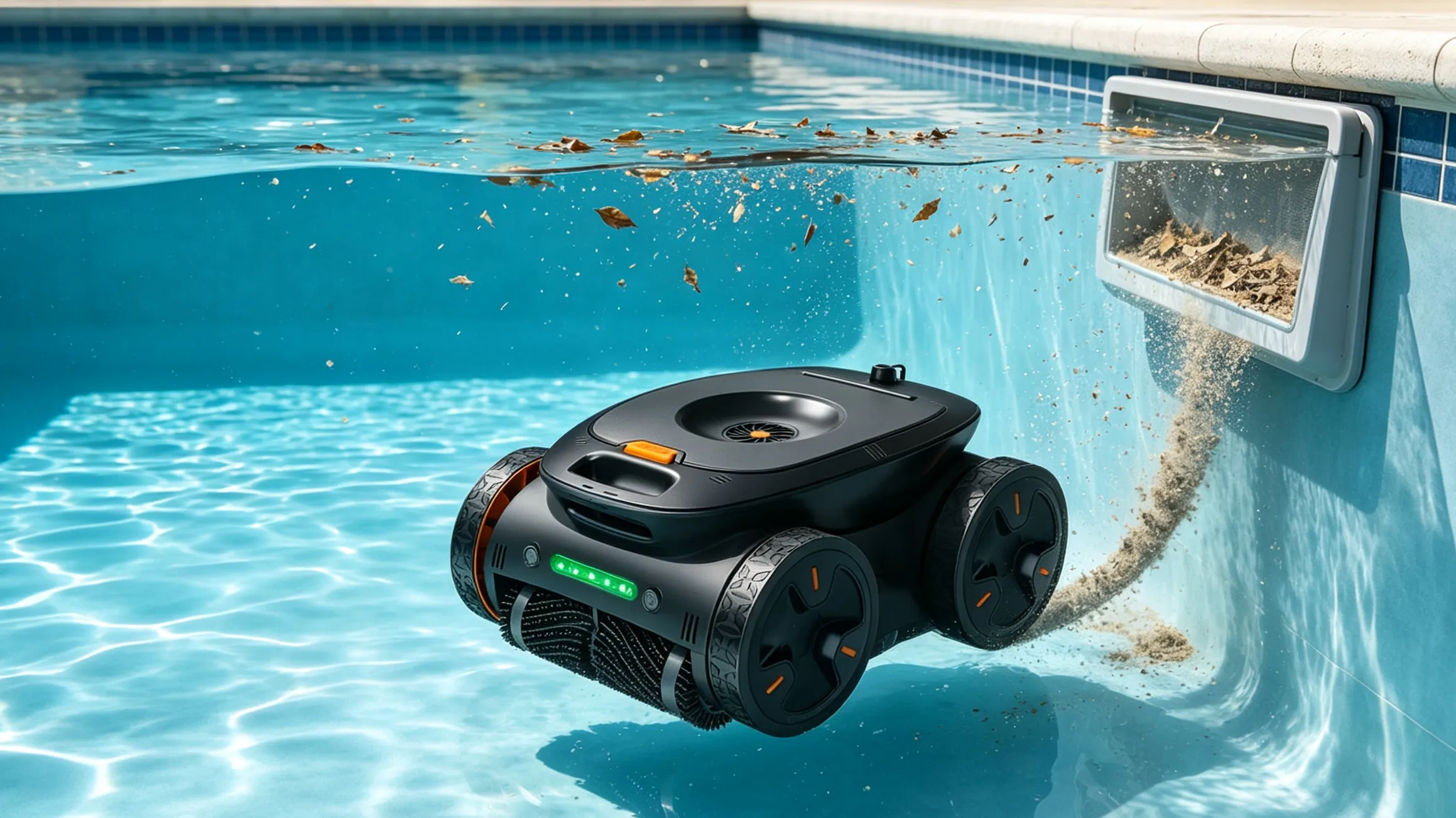
A pool skimmer is primarily designed to remove debris floating on or near the water surface. Leaves, insects, pollen, and other lightweight contaminants can be pulled into the skimmer as water moves through the circulation system.
This makes the skimmer particularly useful for keeping the visible water surface clear between cleaning cycles. It also helps prevent floating debris from remaining in the pool long enough to become waterlogged and sink.
However, a skimmer has a limited cleaning area. It does not travel through the pool, so its ability to collect debris depends on water movement and the position of the skimmer. Dirt that settles on the bottom or sticks to the walls generally remains outside its reach.
What Robotic Pool Cleaners Can Handle
A robotic pool cleaner is designed to move through the pool and collect debris from submerged surfaces. Depending on the model, this can include the floor, walls, and waterline.
Its brushes can loosen dirt and debris from pool surfaces, while the built-in filtration system captures the material as the cleaner moves.
This makes robotic cleaning particularly useful for debris that a skimmer cannot reach. Fine particles, sand, leaves that have sunk, and other settled debris can be collected directly from the pool surfaces rather than relying on water circulation to move them toward the skimmer.
The exact cleaning coverage varies by model, so floor, wall, and waterline capabilities should be checked before selecting a robotic pool cleaner.
Where Their Cleaning Capabilities Overlap
There is some overlap between the two systems, particularly when floating debris eventually becomes submerged. A robotic cleaner may collect that debris after it sinks, while the skimmer has an opportunity to remove it before it reaches the bottom.
However, their primary functions remain different. The skimmer works with water circulation and surface debris, while the robotic cleaner focuses on physical surface cleaning and debris collection.
Understanding this distinction makes it easier to see why using both systems can provide broader cleaning coverage.
Why Pool Skimmers and Robotic Cleaners Can Work Together
How the Two Systems Complement Each Other
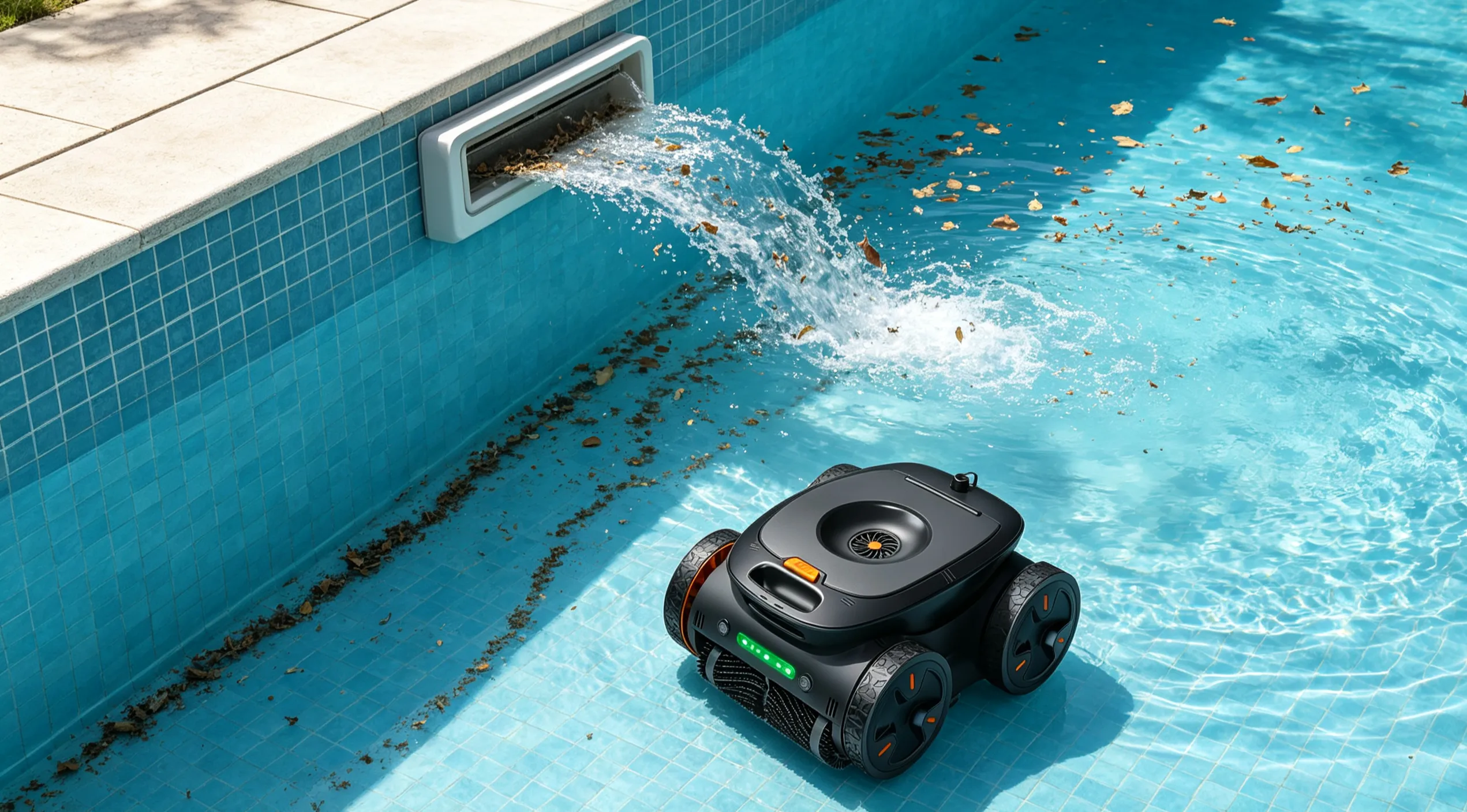
A pool skimmer and robotic pool cleaner address different stages of pool cleaning. The skimmer helps remove floating material and supports the circulation system, while the robotic cleaner removes debris that has settled on submerged surfaces.
Using both can reduce the amount of debris that remains in the pool between maintenance sessions. Instead of asking one device to handle every type of contamination, each system can perform the task it was designed for.
This approach is particularly useful for pools exposed to trees, wind, frequent swimming, or other conditions that introduce different types of debris.
When a Robotic Pool Cleaner Provides Extra Cleaning Coverage
A robotic pool cleaner becomes especially useful when routine surface skimming is not enough to keep the pool clean.
For example, leaves and dirt can sink before they reach the skimmer, while particles can accumulate on the pool floor or along the walls. Manual cleaning can remove this material, but it requires additional time and effort.
A robotic cleaner can automate much of this physical cleaning. Depending on its design, it can travel across the pool floor and may also clean walls or the waterline during a scheduled cleaning cycle.
Why a Robotic Cleaner Does Not Replace Every Skimmer Function
Although a robotic pool cleaner can provide extensive surface cleaning, it does not necessarily perform the same function as a pool skimmer.
The skimmer remains part of the pool's water circulation system and helps draw surface water toward the pump and filter. A robotic cleaner, by contrast, is primarily a debris-collection and surface-cleaning device.
For this reason, replacing one with the other is not simply a matter of comparing which device removes more dirt. They contribute to pool maintenance in different ways, and the most effective setup may use both.
Choosing the Right Pool Cleaning Solution
Pool Design and Cleaning Requirements
The right cleaning setup depends partly on the pool itself. Pool size, shape, depth, surface design, and the location of skimmers can all affect how effectively debris is collected.
A pool with a simple shape and limited debris may be relatively easy to maintain with standard circulation and manual cleaning. A larger or more complex pool may benefit from additional automated cleaning coverage, particularly if certain areas are difficult to reach manually.
A robotic pool cleaner can be especially useful when regular cleaning of the floor, walls, or waterline would otherwise require significant manual effort.
Debris Type and Pool Environment
The type and amount of debris entering the pool should also influence the cleaning approach.
Pools surrounded by trees may collect large amounts of leaves and branches on the surface, making an effective skimmer important. Other pools may experience more fine dirt, sand, or debris that settles on the bottom, increasing the value of a robotic cleaner.
No single cleaning method is ideal for every pool environment. Considering where debris usually accumulates is often more useful than choosing equipment based only on pool size.
Maintenance Time and Cleaning Preferences
Time and maintenance habits are another practical consideration. A pool skimmer can continuously collect floating debris while the circulation system is running, but its basket still needs to be checked and emptied.
A robotic pool cleaner requires its own cleaning cycles and routine maintenance, including removing collected debris and keeping its filtration components clean.
For pool owners who want to reduce the amount of manual floor and wall cleaning, a robotic cleaner can provide useful automation. The skimmer, meanwhile, continues to serve its separate role in surface debris removal and water circulation.
Frequently Asked Questions
Q1: Is a robotic pool cleaner the same as a pool skimmer?
A: No. A pool skimmer collects surface water and floating debris as part of the pool's circulation system, while a robotic pool cleaner moves through the pool to collect debris from submerged surfaces.
Q2: Can a robotic pool cleaner replace a pool skimmer?
A: Generally, no. A robotic cleaner can provide extensive physical cleaning, but it does not necessarily perform the skimmer's role as a water intake point for the pool circulation system.
Q3: Does a robotic pool cleaner remove floating debris?
A: Most conventional robotic pool cleaners are designed primarily for submerged surfaces rather than continuous surface skimming. Their ability to handle floating debris depends on the specific model and its design.
Q4: Do robotic pool cleaners clean the pool floor?
A: Yes. Cleaning the pool floor is one of the main functions of many robotic pool cleaners. They collect dirt and debris that may settle below the reach of a conventional skimmer.
Q5: Can a robotic pool cleaner clean pool walls?
A: Some models can climb and clean pool walls, while others are designed mainly for floor cleaning. Wall-cleaning capability should therefore be confirmed for the specific model.
Q6: Do I still need a skimmer if I have a robotic pool cleaner?
A: In most pool systems, yes. The two perform different functions. A robotic cleaner handles physical surface cleaning, while the skimmer helps remove floating debris and supports water circulation.
Q7: Which is better, a pool skimmer or a robotic pool cleaner?
A: Neither is universally better because they solve different problems. A skimmer is important for surface debris and circulation, while a robotic cleaner provides automated cleaning of submerged pool surfaces.
Q8: Does a robotic pool cleaner replace the pool filter?
A: No. A robotic cleaner's internal filter collects debris during its cleaning cycle, but it does not replace the pool's main filtration system, which is responsible for filtering circulating pool water.
Q9: Can a pool skimmer remove debris from the pool floor?
A: Not directly. A conventional skimmer is designed to draw water and floating debris from the surface. Debris that settles on the pool floor normally requires manual cleaning or a suitable pool cleaner.
Q10: Should I use a skimmer and robotic pool cleaner together?
A: For many pools, using both provides more complete cleaning coverage. The skimmer handles surface debris and supports circulation, while the robotic cleaner can remove debris from the floor and, depending on the model, walls and waterline.
Conclusion
A pool skimmer vs. robotic pool cleaner comparison is not really about choosing one device over the other. The two systems are designed for different functions.
The skimmer helps remove floating debris and supports the pool's circulation and filtration process, while a robotic pool cleaner provides automated physical cleaning of submerged surfaces. Using them together can give pool owners broader cleaning coverage and reduce the amount of manual maintenance required.