Can Robotic Pool Cleaners Remove Leaves, Sand, and Fine Dust?
Introduction
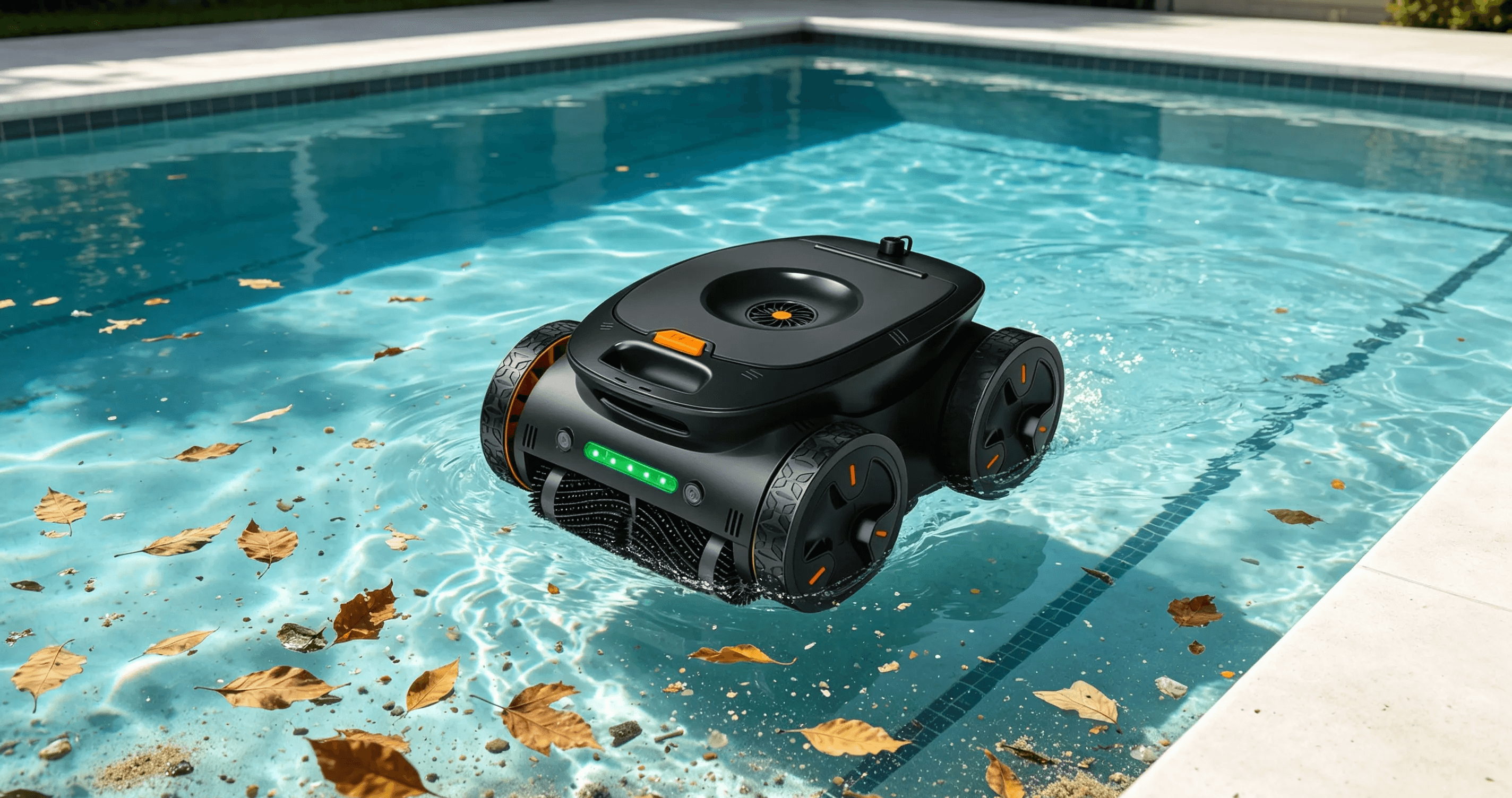
Pool debris comes in many different forms. Large leaves, sand, dust, and small particles can all affect water quality and make regular pool maintenance more difficult.
Many pool owners choose robotic pool cleaners because they want a more convenient way to remove unwanted debris. However, different types of debris can create different cleaning challenges.
Understanding what robotic pool cleaners can remove helps users choose a suitable model and set realistic expectations for automatic pool cleaning.
What Types of Pool Debris Can Robotic Cleaners Remove?
Robotic pool cleaners are designed to handle common types of debris found in residential swimming pools. However, cleaning performance depends on factors such as debris size, filter design, cleaning system, and pool conditions.
Different debris types may require different cleaning capabilities.
Large Leaves and Larger Pool Debris
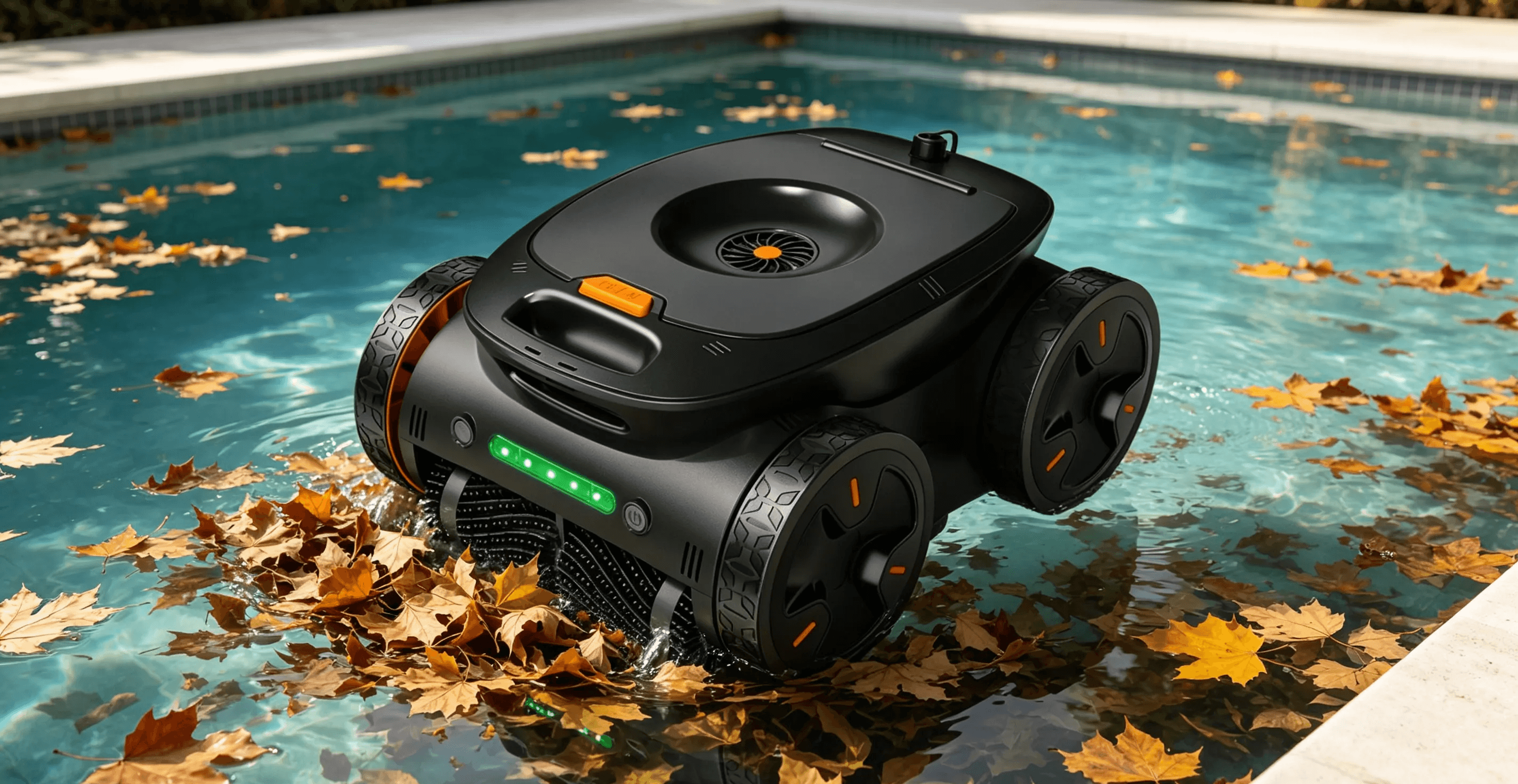
Leaves are one of the most common types of debris found in outdoor pools, especially during seasons with heavy vegetation.
Robotic pool cleaners can help collect larger debris by moving across pool surfaces and transferring particles into their internal collection system.
However, the amount of leaves a cleaner can handle depends on factors such as the size of the debris basket, cleaning frequency, and the overall design of the robot.
Sand and Small Particles
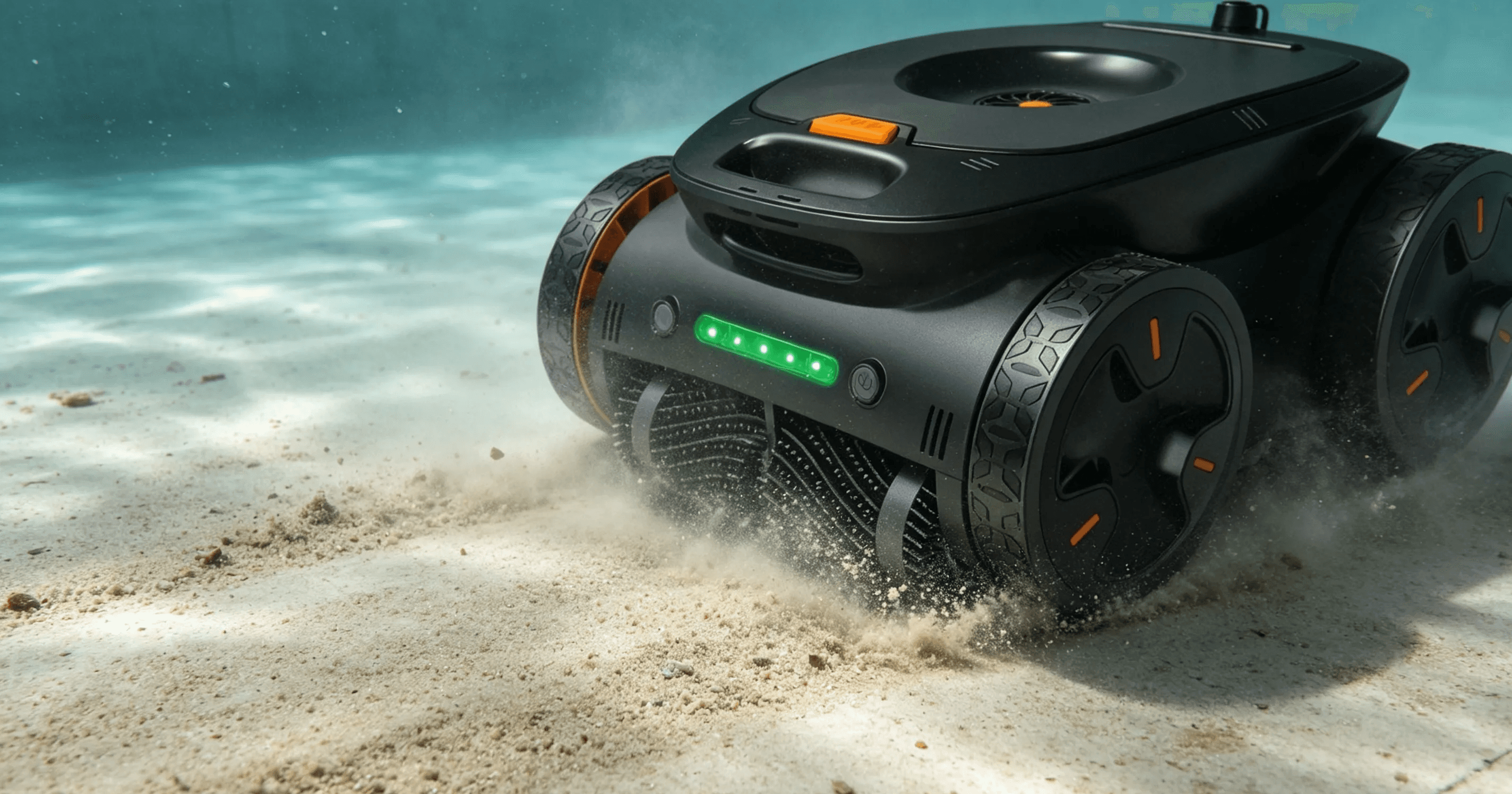
Sand and small particles are often more difficult to remove because they can settle on the pool floor and become harder to collect.
A robotic pool cleaner designed for effective debris collection can help remove these particles during regular cleaning cycles.
The cleaning result may depend on the robot’s ability to maintain contact with the pool surface and efficiently collect smaller debris.
Fine Dust and Silt
Fine dust and silt particles are among the most challenging types of pool debris because they are extremely small and can easily remain suspended in water.
For these particles, the cleaner’s filtration capability plays an important role. A suitable filtration system helps capture smaller particles and prevents them from returning to the pool.
Why Some Pool Debris Is More Difficult to Clean
Not all debris behaves the same way inside a swimming pool. The size, weight, and location of debris can affect how easily a robotic cleaner can remove it.
Particle Size and Weight
Large debris such as leaves is easier to identify and collect, while fine particles such as dust and silt require more effective collection capabilities.
Smaller particles may also settle into corners, cracks, or uneven areas where they are more difficult for a cleaner to reach.
Pool Conditions and Cleaning Environment
The pool environment also affects cleaning performance.
Factors such as pool shape, surface material, debris accumulation, and cleaning frequency can influence how effectively a robotic cleaner removes different types of particles.
Regular cleaning can help prevent debris from building up and becoming more difficult to remove.
How to Choose a Robotic Pool Cleaner for Different Debris Types
Different pools face different cleaning challenges. Choosing a robotic pool cleaner should not only depend on the pool size but also on the types of debris that commonly appear.
Understanding the main cleaning requirements can help users select a model that matches their pool environment.
For Pools With Heavy Leaves
Pools surrounded by trees or outdoor vegetation often collect larger debris such as leaves and small branches.
For these environments, a suitable robotic pool cleaner should have enough debris storage capacity and reliable collection performance to handle larger particles without requiring frequent manual cleaning.
Regular cleaning schedules can also help prevent leaves from accumulating and affecting overall pool maintenance.
For Pools With Fine Dust and Sand
Pools located in dry areas or exposed outdoor environments may collect more sand, dust, and fine particles.
These types of debris usually require more precise collection capabilities because small particles can settle on the pool floor or remain in difficult-to-reach areas.
A cleaner with effective debris collection and suitable filtration performance can help improve cleaning results for these conditions.
How Purily Hydro Handles Different Pool Debris
Purily Hydro is designed to handle various types of common pool debris through a combination of cleaning technologies.
Instead of relying on a single function, the system combines multiple components to improve overall cleaning performance.
Dual Intake Filtration for Better Debris Collection
Purily Hydro features a dual intake filtration system designed to improve debris collection during operation.
This helps the cleaner collect different types of particles while reducing the chance of debris being redistributed back into the pool.
The filtration design supports regular maintenance by helping capture unwanted materials collected during cleaning cycles.
High-Flow Suction Power for Effective Cleaning
With high-flow suction performance, Purily Hydro helps remove debris from pool surfaces during operation.
The system is designed to support the collection of different debris types, from everyday pool dirt to heavier particles that accumulate over time.
Active Scrubbing for Surface Debris Removal
Some debris can attach more firmly to pool surfaces and may require additional cleaning action.
Active scrubbing helps loosen dirt from surfaces before it is collected by the cleaning system, improving the overall cleaning process.
Frequently Asked Questions
Q1: Can robotic pool cleaners pick up leaves?
A: Yes. Many robotic pool cleaners can collect leaves and larger debris. However, performance depends on the cleaner’s debris capacity, cleaning system, and how much debris has accumulated.
Q2: Can a robotic pool cleaner remove sand from a pool?
A: Yes. Robotic pool cleaners can help remove sand from pool floors, but fine particles may require a cleaner with suitable collection and filtration capabilities.
Q3: Can robotic pool cleaners clean fine dust and algae particles?
A: Some models can collect fine dust and small particles, but results depend on the filtration system and cleaning design of the robot.
Q4: Should I run a robotic pool cleaner every day if my pool has lots of debris?
A: The cleaning frequency depends on the pool environment and debris level. Pools with more leaves or dust may require more frequent cleaning cycles.
Q5: Do all robotic pool cleaners work well with all types of debris?
A: No. Different models have different cleaning capabilities. Users should consider their common debris types and pool conditions when selecting a robotic cleaner.
Conclusion
Robotic pool cleaners can help remove many common types of pool debris, including leaves, sand, dust, and other particles. However, cleaning performance depends on the type of debris, pool conditions, and the technologies included in the cleaner.
Choosing a robotic pool cleaner that matches the specific challenges of your pool can improve cleaning efficiency and reduce manual maintenance.
With features such as dual intake filtration, high-flow suction power, and active scrubbing, Purily Hydro provides a practical solution for maintaining cleaner residential pools with different debris conditions.