Best Cordless Robotic Pool Cleaners: What to Look for Before Buying
cordless robotic pool cleaner
best cordless pool cleaner
cordless pool robot

Choosing the best cordless robotic pool cleaner is not simply about finding the model with the longest battery life or the biggest list of smart features.
A pool robot can look impressive on a specification sheet and still be poorly suited to your swimming pool.
Pool size, shape, surface material, debris type, wall design, cleaning frequency and even the way you prefer to retrieve and recharge the cleaner can all affect which model makes the most sense.
Modern cordless robotic pool cleaners have also become far more capable. Many models now go beyond basic floor vacuuming to offer wall climbing, waterline scrubbing, intelligent navigation, app control and even water-surface cleaning.
The challenge is knowing which features actually matter.
This buying guide explains what to look for before purchasing a cordless robotic pool cleaner so you can compare different models based on practical cleaning performance rather than marketing claims.
What Is a Cordless Robotic Pool Cleaner?
A cordless robotic pool cleaner is a self-contained, battery-powered machine designed to move through a swimming pool and collect debris without being connected to an external power cable during normal operation.
Unlike traditional suction-side or pressure-side cleaners, a robotic cleaner typically has its own drive system, suction motor, filtration system and control technology.
A modern cordless pool robot may be able to clean:
Pool floors
Pool walls
The waterline
Steps and shallow areas
Floating debris on the water surface
The exact capabilities vary significantly between models.
This is why two products both described as "cordless robotic pool cleaners" may provide very different levels of cleaning.
What Makes the Best Cordless Robotic Pool Cleaner?
There is no single specification that automatically makes one pool robot the best.
Instead, a good cordless robotic pool cleaner should combine several systems effectively:
Feature | Why It Matters |
|---|---|
Pool compatibility | Determines whether the robot fits your pool size, shape and surface |
Cleaning coverage | Determines whether it cleans floor only or also walls and waterline |
Battery runtime | Determines how much cleaning can be completed per charge |
Navigation | Helps reduce repeated passes and missed areas |
Suction | Helps collect leaves, dirt and larger debris |
Filtration | Determines how effectively fine particles are captured |
Wall climbing | Reduces manual brushing of vertical surfaces |
Waterline cleaning | Helps remove buildup where water meets the pool wall |
Mobility | Helps the robot move across slopes, transitions and obstacles |
Controls | Determines how easily cleaning modes can be selected |
Retrieval | Affects how easy the robot is to remove after cleaning |
Maintenance | Determines long-term convenience and ownership cost |
The best choice is therefore the cleaner that matches your pool and maintenance requirements most closely.
1. Start With Your Pool Size
Pool size should be one of the first specifications you check.
Every cordless robot has a practical limit on how much area it can cover within a cleaning cycle.
A cleaner designed for a small above-ground pool may not have enough battery capacity, filtration volume or navigation efficiency for a large in-ground swimming pool.
Before comparing products, determine approximately:
Pool Length
Manufacturers may recommend their robots for pools up to a certain length.
Pool Surface Area
Some manufacturers specify compatibility using square feet or square meters.
Surface area can provide a more useful measurement than length alone, particularly for wide or irregularly shaped pools.
Pool Depth
Depth affects wall climbing, retrieval and the total surface area the robot needs to clean.
Pool Shape
A simple rectangular pool can be easier to navigate than a free-form pool with curves, ledges, slopes and multiple depth transitions.
A larger pool does not necessarily mean you need the biggest battery available. Efficient navigation can also make a major difference in how much cleaning a robot completes during a cycle.
2. Check What Areas of the Pool It Actually Cleans
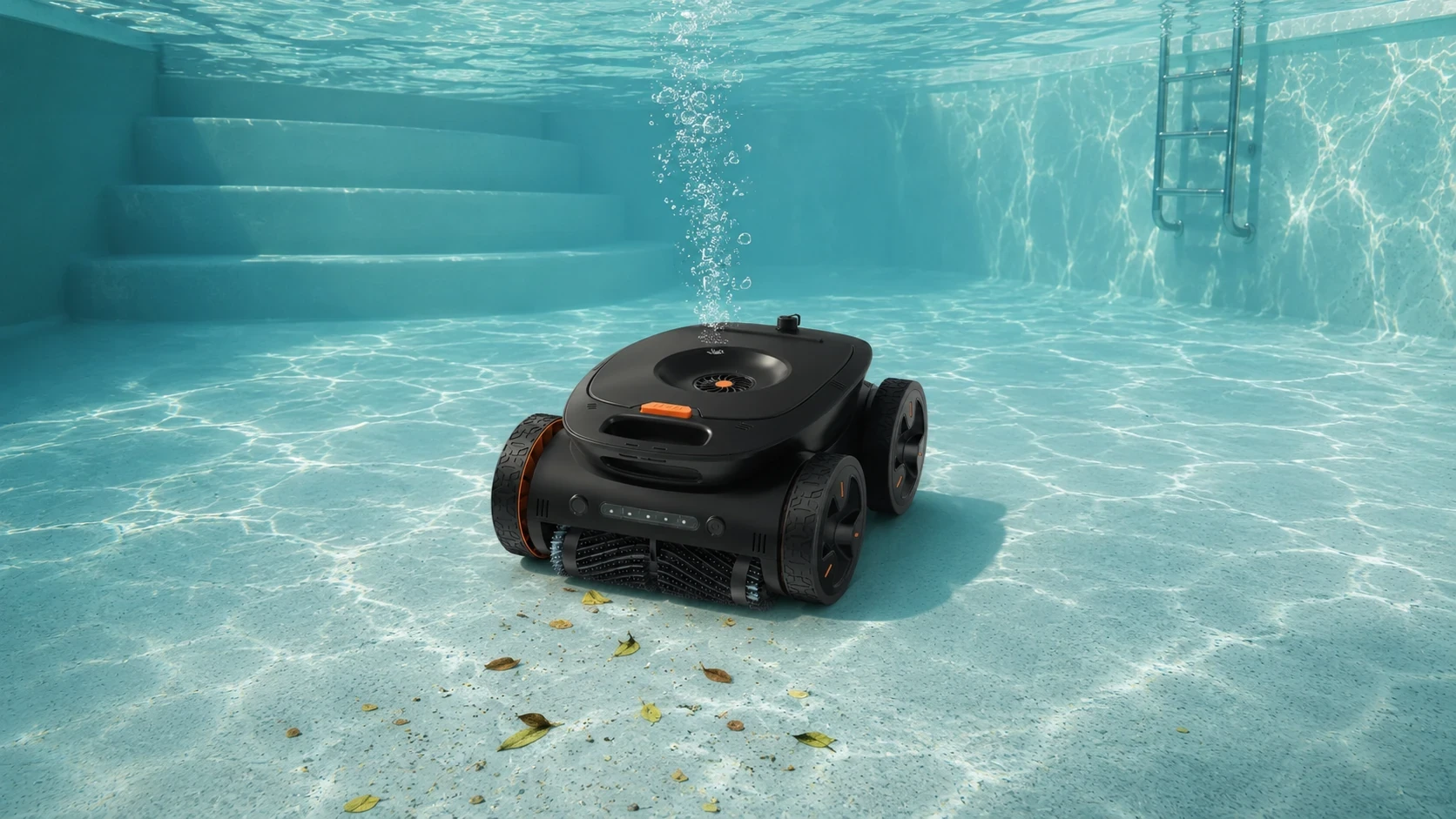
One of the biggest differences between cordless robotic pool cleaners is cleaning coverage.
Do not assume that every pool robot cleans the entire swimming pool.
Floor-Only Cleaning
Entry-level cordless cleaners often focus on the pool floor.
These can be suitable if most of your debris settles on the bottom and you are comfortable brushing the walls manually.
Floor and Wall Cleaning
More capable robots can transition from horizontal surfaces to vertical pool walls.
This reduces the amount of manual brushing required.
Floor, Wall and Waterline Cleaning
Premium models may climb the wall and actively clean along the waterline.
This is particularly useful because oils, sunscreen, dust and other contaminants frequently accumulate near the point where the water meets the pool wall.
Surface Cleaning
Water-surface cleaning is a separate capability.
Leaves, insects and other lightweight debris may remain floating for a considerable period before sinking.
Some advanced pool-cleaning systems are therefore designed to handle both underwater debris and floating surface debris.
Before buying, ask one simple question:
Exactly which areas of my pool do I want the robot to clean automatically?
If you want to minimize manual maintenance, floor + wall + waterline coverage should usually be higher on your priority list than a long list of software features.
3. Match Battery Runtime to the Cleaning Job
Battery runtime is one of the most heavily advertised cordless pool-cleaner specifications.
It is important, but it can also be misleading when viewed in isolation.
A robot advertised with a long maximum runtime may achieve that figure only in a lower-power cleaning mode.
Wall climbing, strong suction, active brushing and intensive navigation can all require additional energy.
When comparing cordless robotic pool cleaners, check:
Runtime Per Cleaning Mode
Look for information about runtime during actual floor, wall and waterline cleaning rather than relying only on the longest published runtime.
Pool Coverage Per Charge
A more useful question than "How many hours does it run?" is:
Can it complete my pool within one charge?
Charging Time
A robot that runs for several hours but requires a very long recharge may be less convenient if you regularly perform multiple cleaning cycles.
Battery Capacity
Battery capacity can provide useful context, but a larger battery does not automatically guarantee better performance.
Motor efficiency, navigation and software optimization also affect runtime.
Long-Term Battery Support
Rechargeable batteries gradually lose capacity through repeated charge cycles.
Before purchasing a premium cordless pool robot, it is worth checking battery warranty, replacement availability and after-sales support.
4. Look Beyond Suction Power
Strong suction is useful, but suction alone does not determine cleaning quality.
A robotic pool cleaner needs to:
Reach the debris.
Dislodge debris from the surface.
Pull it into the cleaner.
Capture it in the filtration system.
Keep moving efficiently through the pool.
That means suction should be evaluated together with brush design, intake configuration, filtration and navigation.
Large Debris
If your pool is surrounded by trees, you may regularly deal with leaves, insects and other larger debris.
Look for a wide intake path and sufficient debris-storage capacity.
Fine Debris
Sand, dust, pollen and other fine particles require an effective filter.
A powerful motor will provide limited benefit if very small contaminants simply pass through the filtration system and return to the pool.
The best cordless robotic pool cleaner therefore needs a balanced cleaning system rather than simply the highest advertised suction figure.
5. Pay Attention to the Filtration System
Filtration is one of the most overlooked parts of a robotic pool cleaner.
The filter determines what happens to the debris after it enters the machine.
When comparing filters, consider:
Filter Fineness
Fine or ultra-fine filtration can be useful in pools that regularly collect dust, sand or pollen.
Filter Capacity
A larger debris basket can reduce the number of times you need to empty the cleaner during heavy cleaning.
Filter Access
Top-access baskets are often easier to remove and rinse than systems that require more complicated disassembly.
Cleaning Convenience
Ideally, the basket or filter should be easy to remove, rinse and reinstall.
A robot that cleans the pool effectively but is frustrating to maintain may become less convenient over time.
6. Smart Navigation Matters More Than It Sounds
A cordless robot has a limited amount of stored energy.
How it uses that energy matters.
A cleaner that repeatedly travels over the same area may waste battery capacity while leaving other parts of the pool untouched.
More advanced robotic pool cleaners may use combinations of:
Ultrasonic sensors
Gyroscopes
Motion sensors
Mapping algorithms
Intelligent path planning
Obstacle detection
Adaptive route control
The goal of smart navigation is not simply to make the robot appear more technologically advanced.
Its practical purpose is to improve coverage.
Random Movement vs Planned Cleaning
Basic cleaners may change direction after detecting a wall or obstacle.
More sophisticated cleaners can follow structured paths intended to cover the pool systematically.
For larger or irregular pools, navigation can be especially important.
Before purchasing, look beyond terms such as "AI-powered" or "smart."
Find out what the navigation system actually helps the robot do.
7. Evaluate Wall-Climbing Performance
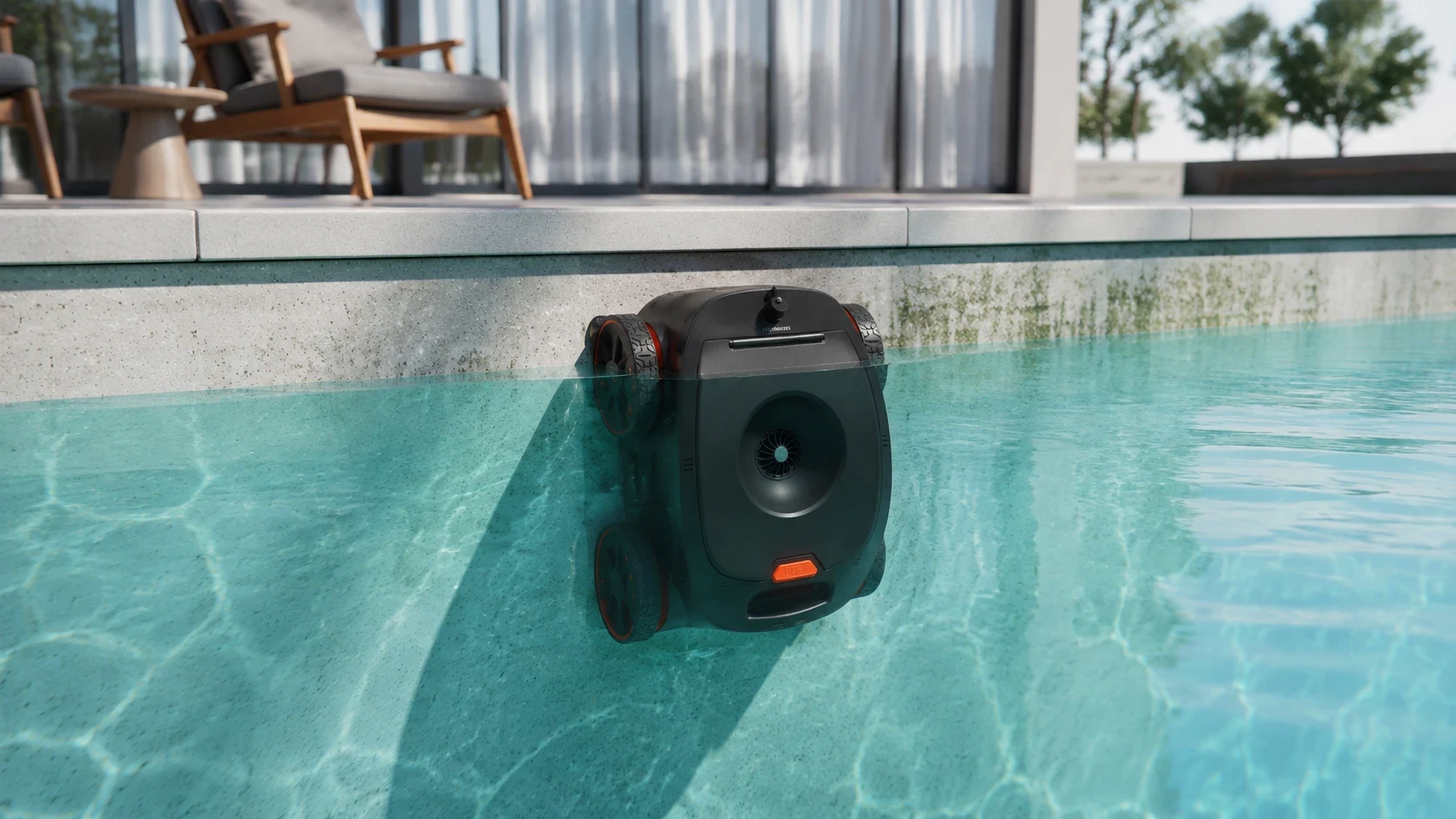
Wall climbing can significantly reduce manual pool maintenance.
However, wall climbing requires more than suction.
The robot needs enough traction and drive force to transition from the floor onto a vertical surface while remaining stable.
Important factors include:
Drive System
Multiple driven wheels or tracks can improve movement across different surfaces.
Traction
The cleaner needs sufficient grip to remain in contact with the wall.
Pool Surface Compatibility
Tile, vinyl, fiberglass, plaster and other pool surfaces can present different traction conditions.
Wall Shape
Curved wall transitions may be easier for certain robots than abrupt 90-degree floor-to-wall transitions.
If wall cleaning is important to you, verify the manufacturer's stated wall-climbing capability rather than assuming it is included.
8. Decide Whether You Need Waterline Cleaning
The waterline is one of the most visible areas of a swimming pool.
Oils, sunscreen, dust and organic material can accumulate along this zone.
A robot capable of waterline cleaning can reduce the amount of manual scrubbing required.
However, not every robot that climbs walls performs dedicated waterline cleaning.
There is an important difference between:
Reaching the top of the wall
and
Actively moving along and scrubbing the waterline.
If you want this capability, check whether the manufacturer specifically lists waterline cleaning as part of the cleaning coverage.
9. Consider Your Pool's Shape, Slopes and Obstacles
Swimming pools are rarely perfectly flat boxes.
Your pool may contain:
Sloped floors
Deep-to-shallow transitions
Curved walls
Main drains
Steps
Benches
Ledges
Sun shelves
Irregular corners
These features can affect robot movement.
A cleaner may work perfectly in a simple rectangular pool but struggle in a pool with multiple elevations and unusual geometry.
Look for a mobility system that can handle the specific conditions in your pool.
Four-wheel-drive systems, intelligent escape functions and navigation sensors can help robots adapt to more complex environments.
10. Do Not Buy an App Instead of a Pool Cleaner
Smartphone connectivity has become common in premium robotic pool cleaners.
Useful app functions may include:
Selecting cleaning modes
Checking battery status
Monitoring cleaning progress
Remote operation
Software updates
Scheduling cleaning
Receiving notifications
These features can make ownership more convenient.
But app control should remain secondary to core cleaning performance.
A beautifully designed app cannot compensate for weak filtration, poor traction or incomplete pool coverage.
The correct order should usually be:
Cleaning performance → pool compatibility → battery → navigation → convenience features.
Not the other way around.
11. Think About How You Will Retrieve the Robot
Retrieval sounds like a minor issue until you have to remove a heavy water-filled robot from the deep end of the pool.
Before buying, investigate how the cleaner finishes its cycle.
Useful features can include:
Automatic poolside parking
Low-battery docking
Waterline parking
Retrieval hooks
Remote positioning
Fast water drainage
Fast drainage is particularly useful because a cleaner can become significantly heavier when filled with water.
Easy retrieval is an important part of everyday usability and should not be ignored.
12. Check the Weight and Portability
Cordless robotic pool cleaners contain batteries, motors, pumps, filters and drive systems.
As features increase, weight can increase as well.
Consider who will normally:
Carry the robot to the pool
Place it into the water
Remove it after cleaning
Empty the filter
Store the cleaner
Move it to the charging location
A slightly lighter or faster-draining robot may be more convenient than a heavier model with features you rarely use.
13. Look at Warranty and After-Sales Support
A robotic pool cleaner is a combination of mechanical components, electronics, software and a rechargeable battery.
That makes long-term support important.
Before purchasing, check:
Warranty Period
Understand what components are covered and for how long.
Battery Coverage
Battery warranty terms may differ from coverage for the rest of the robot.
Replacement Parts
Filters, brushes, wheels, seals and other wear components may eventually require replacement.
Software Support
If the robot depends heavily on an app, continued software and firmware support can affect long-term usability.
Manufacturer Support
Reliable troubleshooting and spare-part availability can be as important as the initial purchase price.
The cheapest robot is not necessarily the least expensive robot to own over several years.
14. Decide Whether Fully Cordless Is Always What You Need
Cordless operation has a clear advantage: convenience.
You can charge the robot, place it in the pool and clean without managing a long floating power cable.
However, battery operation also creates a fixed runtime.
For most residential pools, that trade-off may be completely acceptable.
For larger pools or particularly demanding cleaning sessions, continuous operation can still be useful.
This has led to another category of product: hybrid robotic pool cleaners.
A hybrid cleaner can provide cordless convenience during normal maintenance while allowing a continuous power option when a longer cleaning cycle is needed.
This approach can be particularly interesting for pool owners who do not want to choose permanently between cordless flexibility and corded runtime.
Cordless vs Hybrid Robotic Pool Cleaner
Feature | Cordless | Hybrid Cordless + Corded |
|---|---|---|
Cable-free operation | Yes | Yes, in cordless mode |
Battery required | Yes | Yes |
Continuous-power option | No | Yes |
Easy setup | Excellent | Excellent in cordless mode |
Long cleaning cycles | Battery-dependent | More flexible |
Large-pool flexibility | Model-dependent | Strong |
Charging required | Yes | Yes for cordless use |
Best for | Convenience | Convenience + flexibility |
Neither design is automatically better.
The right choice depends on how you maintain your pool.
A Practical Cordless Pool Cleaner Buying Checklist
Before choosing a model, make sure you can answer these questions:
Pool Fit
What is my pool size?
Is it above-ground or in-ground?
What surface material does it use?
Does it have steep slopes or unusual shapes?
Cleaning Coverage
Do I only need floor cleaning?
Do I need walls cleaned?
Do I want automatic waterline scrubbing?
Do I need floating debris removed from the water surface?
Battery
Can the robot complete my pool in one charge?
How long does charging take?
Is replacement battery support available?
Cleaning Performance
What type of debris does my pool collect most often?
Does the robot have appropriate suction and filtration?
How large is the debris basket?
Navigation
Does it use planned navigation or simple directional movement?
Can it adapt to irregular pool geometry?
Convenience
Can I control it remotely?
How does it park after cleaning?
Is it easy to lift from the pool?
How quickly does water drain from the machine?
Ownership
How easy is the filter to clean?
How long is the warranty?
Are replacement filters, brushes and other parts available?
If you can answer these questions, comparing robotic pool cleaners becomes much easier.

Which Cordless Robotic Pool Cleaner Is Right for Different Pools?
Different pools create different priorities.
Small Residential Pools
Focus on:
Simple operation
Adequate runtime
Easy retrieval
Compact design
Low maintenance
Extremely long runtime may provide little additional value if the robot can already complete the pool easily.
Large In-Ground Pools
Prioritize:
Longer operating time
Efficient navigation
Strong filtration
Wall climbing
Waterline cleaning
Larger debris capacity
Hybrid power can also be worth considering if you regularly require extended cleaning cycles.
Pools Surrounded by Trees
Look for:
Strong debris pickup
Larger baskets
Wide suction openings
Surface-cleaning capability
Floating leaves are particularly important because removing them before they sink can reduce the amount of debris reaching the pool floor.
Pools With Fine Sand or Dust
Focus more on filtration quality than maximum suction claims.
Fine filtration can make a substantial difference when dealing with small particles.
Pools With Complex Shapes
Navigation, obstacle handling, mobility and intelligent escape systems become increasingly important as pool geometry becomes more complicated.
Where PURILY Fits Into the Cordless Pool Cleaner Market
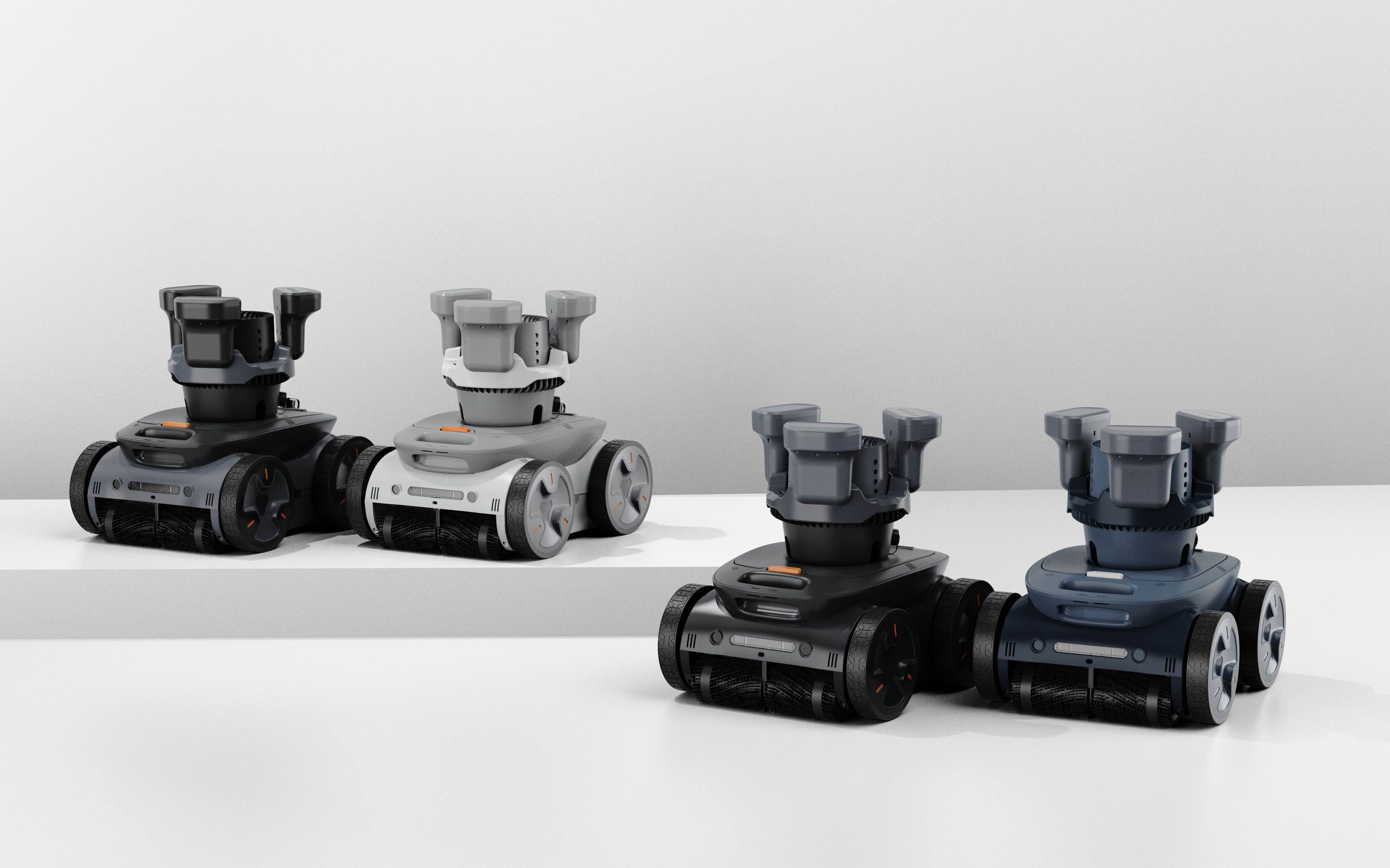
PURILY develops robotic pool-cleaning systems around intelligent navigation, flexible control and multi-area cleaning.
For example, the PURILY Hydro is designed for residential pools and combines a 9000mAh battery, intelligent route planning, four-wheel drive, ultrasonic navigation, dual-intake filtration and cleaning coverage for the floor, walls and waterline.
For users who want broader coverage, models such as PURILY Hydro SU extend the concept to four-area cleaning across the pool floor, walls, waterline and water surface.
The important point is not simply to choose the model with the most features.
It is to select the system whose cleaning coverage, runtime and control options match your pool.
Common Mistakes When Buying a Cordless Robotic Pool Cleaner
Choosing Based Only on Battery Life
A long runtime does not guarantee good coverage.
Navigation efficiency and cleaning performance matter just as much.
Assuming Every Robot Climbs Walls
Some models are designed primarily for floor cleaning.
Always verify the actual coverage specification.
Confusing Wall Climbing With Waterline Cleaning
A robot may reach the wall without performing dedicated waterline scrubbing.
Ignoring Filter Design
Fine debris requires appropriate filtration.
Suction numbers alone do not tell the full story.
Buying More Technology Than You Need
Advanced mapping and app features can be useful, but a simple pool may not require every premium feature.
Ignoring Retrieval
A robot that is difficult to remove and clean can quickly become inconvenient.
Ignoring Long-Term Support
Battery replacement, spare parts, warranty and manufacturer support should be considered before purchase, not after a problem occurs.
Are Cordless Robotic Pool Cleaners Worth It?
For many pool owners, yes.
A cordless robotic pool cleaner can significantly simplify routine maintenance by eliminating cable management and automating much of the vacuuming and scrubbing work.
They are particularly attractive when you value:
Fast setup
Cable-free operation
Automatic cleaning
Smart navigation
Easy storage
Reduced manual brushing
However, cordless operation is not automatically the best solution for every pool.
Large pools, heavy debris loads and long cleaning sessions may require greater battery capacity or a system that provides an alternative continuous-power option.
The key is matching the cleaner to the job.
Final Thoughts: Choose for Your Pool, Not the Spec Sheet
The best cordless robotic pool cleaner is not necessarily the robot with the largest battery, highest suction figure or most advanced app.
It is the robot that can reliably clean the areas that matter in your pool, complete the job within a practical cleaning cycle and remain convenient to maintain over the long term.
Before buying, focus on:
Pool compatibility, cleaning coverage, battery runtime, navigation, filtration, wall and waterline performance, mobility, retrieval and after-sales support.
Once those fundamentals are right, smart features become valuable additions rather than distractions.
If you are comparing cordless robotic pool cleaners for a residential or commercial pool, explore PURILY robotic pool cleaning solutions to compare different cleaning configurations, control options and pool-coverage capabilities.
Frequently Asked Questions About Cordless Robotic Pool Cleaners
What is the best cordless robotic pool cleaner?
There is no single best model for every pool. The best cordless robotic pool cleaner should match your pool size, surface, shape, debris type and required cleaning coverage. For many in-ground pools, floor, wall and waterline cleaning, efficient navigation and sufficient battery runtime are among the most useful features.
How long should a cordless robotic pool cleaner run?
The ideal runtime depends on pool size and cleaning mode. Instead of looking only for the longest advertised battery life, determine whether the cleaner can complete your required pool coverage within a single charge.
Can cordless robotic pool cleaners climb walls?
Some can, but not all models include wall climbing. Wall-climbing performance depends on the robot's drive system, traction, suction and compatibility with the pool surface.
Do cordless robotic pool cleaners clean the waterline?
Premium models often include waterline cleaning, but it should not be assumed. Check whether the manufacturer specifically lists waterline scrubbing as part of the cleaning coverage.
Can a cordless pool robot clean an in-ground pool?
Yes. Many cordless robotic pool cleaners are designed specifically for in-ground pools. Always check the recommended pool size, depth, surface and cleaning coverage before purchasing.
Are cordless pool cleaners good for above-ground pools?
Yes, provided the robot is compatible with the pool's size and surface. A floor-focused cordless cleaner may be sufficient for many above-ground pools, while more advanced features may be unnecessary.
Can a robotic pool cleaner pick up leaves?
Many robotic pool cleaners can collect leaves, but performance depends on intake size, suction and filter-basket capacity. Pools surrounded by trees may benefit from a larger debris basket and surface-cleaning capability.
Is smart navigation important in a pool robot?
It can be. Efficient navigation can reduce repeated cleaning and missed areas, which is particularly valuable in cordless models where battery capacity is limited.
How often should I use a cordless robotic pool cleaner?
Cleaning frequency depends on pool use, weather, surrounding vegetation and debris levels. Many pool owners run a robotic cleaner several times per week during swimming season, while pools with heavy debris may require more frequent cleaning.
Should I choose a cordless or corded robotic pool cleaner?
Choose cordless if cable-free convenience and easy setup are your priorities. Corded operation may be preferable when continuous cleaning time matters most. A hybrid system can provide both options for users who want greater flexibility.