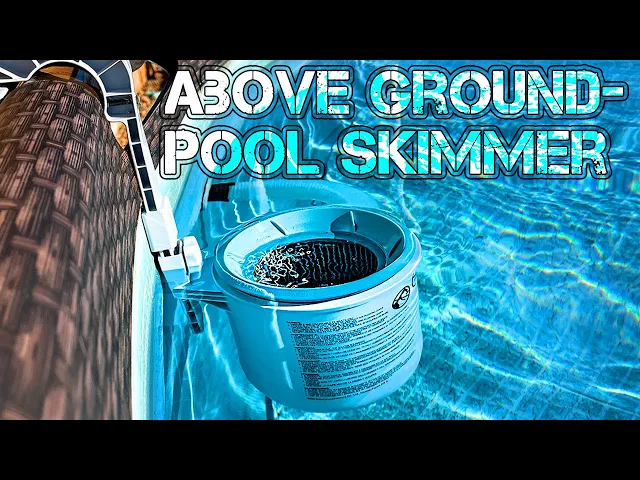
Above Ground Pool Skimmer: Types, Installation, and Replacement Guide

Keeping an above-ground swimming pool clean involves more than removing leaves with a net. Debris can accumulate on the water surface every day, while dirt and other particles may eventually settle on the pool floor. Without effective surface cleaning and circulation, routine maintenance can become more time-consuming.
An above ground pool skimmer helps solve the first part of this problem. It collects surface water and floating debris, directing the water toward a collection basket or circulation system, depending on the design.
However, not every pool skimmer is installed in the same way. Some models mount directly through the pool wall, while others use a floating or suspended design that connects to the pool's circulation system. There are also powered surface-cleaning devices that operate independently of a traditional wall-mounted skimmer.
Choosing the right option depends on your pool construction, filtration setup, debris load, and installation requirements.
This guide explains how above-ground pool skimmers work, which types are available, how to choose one, what to consider before installation or replacement, and how a skimmer works alongside a robotic pool cleaner.

What Is an Above Ground Pool Skimmer and How Does It Work?
An above-ground pool skimmer is a device designed to collect surface water and remove floating debris before it sinks into the pool.
A conventional wall-mounted skimmer is installed near the waterline. As the pool pump draws water through the skimmer opening, leaves, insects, pollen, and other floating material enter the skimmer basket.
The water then continues through the pool's circulation and filtration system.
The exact design depends on the product. Some above-ground pools use a wall-mounted skimmer connected directly to the plumbing, while others use an attachment or floating arrangement that works with compatible filtration equipment.
What Does an Above Ground Pool Skimmer Do?
The main purpose of a pool skimmer is to keep the water surface clear and direct surface water into the appropriate collection or circulation system.
It can help remove:
Leaves and small plant debris
Insects and other floating material
Pollen and grass
Hair and larger floating particles
Other debris carried across the water surface
By collecting floating debris early, a skimmer reduces the amount of material that eventually sinks to the bottom.
However, a conventional skimmer basket is not a replacement for the main pool filter. It primarily captures larger debris, while the filter removes finer suspended particles from circulating water.
How Does a Pool Skimmer Work With the Pump and Filter?
In a conventional wall-mounted system, the pump creates suction that pulls surface water through the skimmer opening.
A floating flap called a weir door helps guide surface water into the skimmer. Larger debris collects in the basket, while the water continues toward the pump and filter.
The basic circulation path is:
Pool surface → Skimmer → Pump → Filter → Return jets → Pool
The pump, filter, plumbing, and skimmer must be compatible and operate together for effective circulation.
For a deeper explanation of the components, see our related guide: What Is a Pool Skimmer? How It Works and Why It Matters.

What Are the Different Types of Above Ground Pool Skimmers?
The most suitable above ground pool skimmer depends on how your pool is built and how its water circulation system operates.
The two broad options to consider are wall-mounted skimmers and floating or suspended skimmers. Some powered surface skimmers also provide automatic debris collection.
Wall-Mounted Above Ground Pool Skimmers
A wall-mounted skimmer is fitted into a designated opening in the pool wall. It usually includes a housing, faceplate, gaskets, weir, basket, and plumbing connection.
This arrangement becomes part of the pool's normal circulation system.
Advantages include:
Continuous surface skimming while the circulation system operates
A fixed collection point for floating debris
Integration with compatible pump and filter equipment
Easy access to the basket for routine cleaning
The main consideration is compatibility. A wall-mounted skimmer must suit the pool's wall construction, liner, opening dimensions, and plumbing arrangement.
Some above-ground pools are designed for a wall-mounted skimmer, while others are not. Installing one in an unsupported location can damage the wall or liner and create leaks.
Floating Skimmers for Above Ground Pools
A floating or suspended skimmer is designed to operate at the water surface without using the same permanent wall cutout as a conventional through-wall unit.
The term can describe different product designs. Some are suspended from a pool frame or inflatable top ring and connect to the pool's circulation system. Others are powered surface skimmers that collect debris independently of the standard filtration intake.
For example, INTEX's official floating surface skimmer instructions demonstrate a suspended design that connects to compatible pool circulation equipment.
Potential advantages include:
Less permanent modification to the pool wall
Flexible positioning, depending on the design
Compatibility with certain frame or inflatable-ring pools
An alternative for pool setups that do not support a conventional wall skimmer
Before purchasing one, check its attachment method, hose connections, required pump flow, power requirements if applicable, and compatibility with your pool.
A floating skimmer is not automatically compatible with every above-ground pool. The product's installation instructions should determine whether it will work with your particular setup.
Wall-Mounted vs. Floating Pool Skimmers
Feature | Wall-Mounted Skimmer | Floating or Suspended Skimmer |
|---|---|---|
Installation | Mounted through a designated wall opening | Attached to a compatible frame, ring, or surface |
Permanent wall modification | Usually required | Often avoided, depending on design |
Circulation connection | Usually integrated with pool plumbing | Depends on the product |
Position | Fixed | May be adjustable |
Compatibility | Depends on wall, liner, and plumbing | Depends on frame, ring, mounting, and connections |
Maintenance | Basket and components need regular inspection | Collection components and mounting need inspection |
Best selection criterion | Existing skimmer configuration and pool design | Pool construction and product compatibility |
Neither option is universally better. A wall-mounted skimmer may be appropriate for a pool designed to accommodate one, while a floating or suspended model may be more practical for a compatible pool that should not be modified.

Above Ground Pool Skimmer vs. Inground Pool Skimmer
Although both types remove surface debris, an inground pool skimmer should not automatically be used in an above-ground pool.
Inground skimmers are generally designed for a different wall structure and installation configuration. Above-ground skimmers may have different mounting arrangements, faceplates, gaskets, and plumbing connections.
Before selecting a replacement or conversion kit, verify:
Pool wall construction
Liner compatibility
Skimmer opening dimensions
Mounting requirements
Plumbing connections
Manufacturer-approved applications
If the pool's original equipment documentation specifies a particular skimmer type, use that information as the starting point.
How to Choose the Right Above Ground Pool Skimmer
The best above ground pool skimmer is not necessarily the largest or most expensive model. It is the one that works safely and effectively with your pool's structure and circulation system.
Check Pool Type and Wall Construction
Start by identifying your pool type.
Is it a steel-wall pool with a vinyl liner, a resin-frame pool, or an inflatable-ring pool?
A skimmer designed for one construction may not fit another. If the pool is soft-sided or inflatable, pay particular attention to the attachment method and manufacturer restrictions.
Do not assume that a skimmer can be installed through a pool wall simply because its dimensions appear suitable.
Check Pump Flow and Plumbing Requirements
For a skimmer that connects to the pool's filtration system, confirm the required hose or pipe connections and the manufacturer's flow recommendations.
An incompatible connection or unsuitable hydraulic arrangement may cause poor skimming, air entering the system, or reduced circulation.
If a floating skimmer uses a dedicated motor or another power source, check the product's operating instructions and electrical safety requirements.
Consider Debris Load and Basket Capacity
The amount and type of debris around your pool affect how frequently the skimmer basket needs cleaning.
A pool located beneath trees may collect leaves and seeds throughout the swimming season. A pool in an open area may accumulate more dust, pollen, or smaller debris.
Consider how easy it is to access and empty the basket. A convenient maintenance design can be more useful than a larger but difficult-to-service component.
When Is a Floating Skimmer a Better Option?
A floating or suspended skimmer may be worth considering when:
The pool is designed to support a compatible attachment.
Permanent wall modification is undesirable or not permitted.
The existing filtration arrangement supports the chosen model.
You need a removable surface-cleaning option.
However, a floating skimmer's actual performance depends on its design, water movement, attachment position, and debris load.
Review the specifications before buying rather than relying on the product category alone.
How to Install a Skimmer in an Above Ground Pool
The installation method depends on the skimmer design. A wall-mounted skimmer can require work on the pool wall and liner, while a floating model may only require assembly, attachment, and hose connections.
Important: The steps below are a general planning guide, not a replacement for the manufacturer's instructions. Do not cut a pool wall or liner unless the pool and skimmer manufacturers explicitly approve that installation method. If the pool is filled, has structural damage, or requires an unfamiliar wall modification, consult a qualified pool professional.
What to Check Before Installing a Pool Skimmer
Before beginning, confirm:
The skimmer is approved for your pool type.
The required mounting components and gaskets are included.
The existing plumbing can accommodate the connection.
The manufacturer's instructions specify the correct water level and installation sequence.
You understand any requirements for draining or lowering the water.
The installation will not compromise the pool wall, liner, frame, or warranty.
For a wall-mounted unit, the location is especially important because the skimmer opening must align correctly with the liner and pool wall.
Manufacturer instructions may also specify how far the pool should be filled before the installation proceeds, so do not apply a generic water-level rule to every model.
How to Install a Wall-Mounted Above Ground Pool Skimmer
The following sequence outlines the decisions and checks involved in a typical installation.
Confirm compatibility. Match the skimmer model to the pool wall, liner, mounting arrangement, and plumbing.
Prepare the pool and equipment. Shut down the circulation system and follow the manufacturer's requirements for the water level and installation conditions.
Verify the mounting position. Use the approved template and dimensions. Check the alignment with the pool's return fitting and plumbing arrangement.
Prepare the wall and liner as instructed. Only create openings if the pool and skimmer manufacturers expressly authorize the work. Do not improvise cuts or enlarge openings to force a fit.
Install the specified seals and mounting components. Follow the exact gasket placement and fastener sequence stated in the manual.
Secure the skimmer housing. Tighten fasteners evenly as instructed, avoiding uneven pressure that could damage the liner or sealing surfaces.
Connect the plumbing. Use compatible fittings and follow the specified hose or pipe connection procedure.
Inspect before operation. Check the mounting, seals, basket, weir, and plumbing.
Restart and test as directed. Confirm normal water movement and inspect the installation for leakage.
The Hayward Dyna-Skim owner’s manual illustrates why model-specific installation matters: its wall-mounted installation uses designated gaskets, a faceplate, supplied screws, and a prescribed liner-cutting sequence.
Do not copy dimensions or procedures from that manual unless your particular skimmer model and pool installation match its specifications.
How to Set Up a Floating Skimmer
Floating and suspended skimmers generally require a different process.
Assemble the skimmer according to the product instructions.
Install the approved hook, support, or mounting arm.
Connect the specified hose or fitting, if the model uses the pool's circulation system.
Secure the skimmer to the approved attachment point.
Place the basket and other removable components correctly.
Check that the unit remains stable at the water surface.
Start the circulation system or power the unit as directed.
Confirm that debris is being collected and that hoses, cables, and attachments are positioned safely.
If the unit connects to a filter pump, make sure the pump is suitable for that arrangement. If it is powered independently, follow the manufacturer's charging, electrical, and operating precautions.
Common Pool Skimmer Installation Mistakes
Avoid these problems:
Choosing a skimmer that is incompatible with the pool wall or frame
Cutting the liner before confirming the exact opening specifications
Misplacing gaskets or using damaged seals
Overtightening or unevenly tightening fasteners
Using unsuitable plumbing adapters
Starting the pump before checking connections
Ignoring the manufacturer's water-level requirements
Assuming an inground skimmer will fit an above-ground pool
If installation requires structural changes or you cannot confidently identify the correct procedure, professional help is preferable to risking a damaged liner or leaking connection.
How to Replace an Above Ground Pool Skimmer
Replacing an above ground pool skimmer may be straightforward when a compatible part is available, but it can become a more involved repair if the pool wall, liner, or plumbing has been damaged.
Signs That Your Pool Skimmer Needs Replacement
Look for the following signs:
Cracked housing: The skimmer body cannot retain water or remain securely mounted.
Damaged weir: The door is broken, missing, or unable to move as intended.
Broken basket supports: The basket cannot sit securely in the housing.
Persistent leakage: Water escapes around the skimmer despite an appropriate repair to the seal or connection.
Damaged connections: Threads, ports, or fittings no longer create a reliable connection.
Unavailable or unsuitable parts: Essential components cannot be replaced with compatible parts.
A damaged basket or weir does not necessarily mean the entire skimmer needs replacing. Check whether the manufacturer offers the relevant replacement component first.
How to Replace an Above Ground Pool Skimmer
For a wall-mounted skimmer, use the following general approach:
Identify the current skimmer model and confirm the replacement is compatible.
Shut down the pump and prepare the pool according to the installation manual.
Determine the required water level and whether the liner or wall must be exposed.
Remove the old skimmer according to the manufacturer's procedure.
Inspect the wall, liner, gaskets, and plumbing for damage.
Install the replacement with the specified seals, fasteners, and fittings.
Restore the pool water level and circulation as directed.
Check for leaks and confirm normal operation.
If the wall opening has become enlarged, the liner is damaged, or the new skimmer does not align with the existing mounting holes, do not force the installation. A repair or compatible conversion kit may be required.
Can You Replace a Pool Skimmer Without Replacing the Entire Pool?
Often, a compatible skimmer can be replaced without replacing the entire pool.
The important factors are the pool's condition, the skimmer design, and the availability of an appropriate replacement.
If the surrounding wall and liner are intact and the replacement matches the original configuration, the work may be limited to the skimmer assembly and its seals or connections.
By contrast, major wall damage, deterioration around the opening, or extensive liner damage may require a more comprehensive repair.
A floating skimmer may be an alternative for some compatible pools, but it does not repair a leaking wall-mounted skimmer or replace the pool's required circulation equipment.

Above Ground Pool Skimmer Maintenance and Troubleshooting
Regular maintenance helps a pool skimmer maintain surface flow and makes small problems easier to identify.
How to Clean an Above Ground Pool Skimmer Basket
Follow the equipment manufacturer's safety instructions. A typical maintenance procedure is:
Turn off the circulation system if required before opening the skimmer.
Remove the skimmer lid or access cover.
Lift out the basket carefully.
Empty leaves, insects, and accumulated debris.
Rinse the basket if necessary.
Inspect the basket for cracks and check the weir for damage.
Reinstall the basket and cover correctly.
Restore operation and check that water flow is normal.
Inspect the basket regularly, especially after storms or heavy leaf fall. A basket packed with debris can restrict flow and affect circulation.
Why Is My Above Ground Pool Skimmer Not Working?
If the skimmer is not collecting debris effectively, check the entire circulation path instead of assuming the skimmer body is defective.
Common causes include:
Low water level: The skimmer may not receive water properly.
Blocked basket: Accumulated debris restricts flow.
Damaged weir: A stuck or broken door interferes with surface movement.
Pump problems: Reduced pump performance affects suction.
Dirty filter: A restriction elsewhere in the system can reduce flow.
Blocked plumbing: A suction-line obstruction can limit circulation.
Incorrect valve settings: Water may not be flowing through the intended intake.
Check the water level, basket, and accessible components first. If the system continues to lose suction or the pump repeatedly loses prime, stop guessing and arrange professional diagnosis.
Why Is My Pool Skimmer Leaking?
Potential causes include deteriorated gaskets, damaged housing, loose or incompatible fittings, or damage to the pool wall and liner around the opening.
First identify where the water is escaping. A leak at a hose connection requires a different repair from leakage around the faceplate or damage to the pool structure.
If the leak continues after a compatible seal or fitting has been inspected, a qualified pool professional can determine whether the problem involves the mounting, liner, plumbing, or wall structure.
How Often Should You Clean a Pool Skimmer?
There is no single cleaning interval that suits every pool.
A practical approach is to inspect the basket regularly and empty it whenever accumulated debris begins to restrict normal flow. A pool beneath trees may need daily attention during heavy leaf fall, while a pool in an open area may require less frequent cleaning.
The CDC's Model Aquatic Health Code similarly emphasizes maintaining appropriate skimmer water levels, keeping weirs operational, and cleaning baskets as needed in aquatic facilities. Residential pool owners should follow the requirements and equipment instructions applicable to their own pools.

Pool Skimmer vs. Robotic Pool Cleaner: Do You Need Both?
An above ground pool skimmer and a robotic pool cleaner perform different tasks.
A skimmer collects floating debris at the surface and, in a conventional system, directs water toward the filtration equipment.
A robotic pool cleaner moves through the pool and collects debris from submerged surfaces, depending on its design. Some models clean only the floor; others may also clean walls or the waterline.
Equipment | Main Function | What It Does Not Replace |
|---|---|---|
Pool skimmer | Collects surface water and floating debris | Main filtration and submerged-surface cleaning |
Pool filter | Removes suspended particles from circulating water | Surface skimming and physical floor cleaning |
Robotic pool cleaner | Automates physical debris collection from supported surfaces | Pool circulation, water filtration, or chemical treatment |
Can a Robotic Pool Cleaner Replace an Above Ground Pool Skimmer?
Generally, no. A robotic pool cleaner does not normally replace the hydraulic role of a conventional pool skimmer.
It can collect debris that has settled on the floor and, depending on the model, clean walls and the waterline. However, that is different from continuously drawing surface water into the pool's circulation system.
The two technologies are complementary rather than interchangeable.
How Can PURILY Fit Into an Above Ground Pool Cleaning Routine?
For pool owners who want to reduce manual cleaning, an appropriate robotic pool cleaner can complement the existing skimmer and filtration system.
When considering a robot for an above-ground pool, check its approved pool type, pool-size rating, liner compatibility, cleaning coverage, filter design, and weight. Not every robotic cleaner is suitable for every above-ground pool configuration.
The goal is to divide maintenance tasks effectively: use the skimmer for surface debris, the filter for circulating water, and a compatible robotic cleaner for the submerged areas it is designed to clean.
Frequently Asked Questions About Above Ground Pool Skimmers
Do above ground pools need a skimmer?
A skimmer is a useful part of many above-ground pool cleaning and circulation systems. The appropriate arrangement depends on the pool design and equipment. If your pool does not have a wall-mounted skimmer, a compatible floating or suspended option may be available.
Can you add a skimmer to an above ground pool?
Sometimes. The pool must be designed or approved for the installation, and the skimmer must match the wall, liner, mounting arrangement, and plumbing. Do not cut the wall or liner without explicit manufacturer approval.
Can you install a skimmer in an above ground pool without cutting the liner?
A floating or suspended skimmer may avoid permanent liner cuts, depending on the design. A conventional through-wall skimmer normally requires a designated wall opening and installation through the liner. Always confirm compatibility before installation.
Are floating skimmers effective for above ground pools?
They can be useful when properly matched to the pool and its circulation or power setup. Performance depends on the unit's design, positioning, operating requirements, water movement, and debris load.
How much suction should an above ground pool skimmer have?
There is no universal suction value for every skimmer. The correct flow depends on the skimmer model, pump, plumbing, and overall hydraulic design. Follow the manufacturer's specifications rather than increasing pump power arbitrarily.
How often should you empty an above ground pool skimmer basket?
Inspect the basket regularly and empty it whenever debris starts to restrict flow. Pools exposed to heavy leaf fall or pollen may need much more frequent cleaning than pools in relatively clear surroundings.
Can an inground pool skimmer be used in an above ground pool?
Not automatically. Inground and above-ground skimmers may differ in their mounting arrangements, housings, and plumbing requirements. Use a model approved for your specific pool configuration.
Why is my above ground pool skimmer losing suction?
Possible causes include a low water level, a blocked basket, pump-basket debris, a dirty filter, incorrect valve settings, air entering the system, or a blocked suction line. Check the accessible components first and seek professional assistance if the problem persists.
Can a robotic pool cleaner replace a pool skimmer?
Usually not. A robotic pool cleaner collects debris from the surfaces it is designed to clean. A conventional skimmer draws surface water into the circulation system, so the two serve different functions.
Conclusion: Choose the Right Above Ground Pool Skimmer for Your Setup
The right above ground pool skimmer depends on the construction of your pool, the available mounting options, your circulation system, and the amount of debris the pool receives.
A wall-mounted skimmer can provide an integrated surface-water intake when the pool is designed for that installation. A floating or suspended skimmer can offer another option for compatible pools without requiring the same permanent wall opening.
Before purchasing, compare pool compatibility, plumbing requirements, basket access, installation procedures, and replacement-part availability. If you are replacing an existing skimmer, inspect the liner and wall around the opening instead of assuming that only the skimmer housing needs attention.
Remember that a skimmer is just one part of pool maintenance. The filtration system manages suspended particles, while a compatible robotic pool cleaner can reduce the manual effort needed to remove debris from submerged surfaces.
Make Your Pool Maintenance Routine More Efficient
PURILY's robotic pool cleaning solutions can complement an existing pool skimmer and filtration system by automating supported physical cleaning tasks.
Choose equipment based on what your pool actually needs: effective surface skimming, reliable filtration, and suitable automated cleaning can work together to make regular pool maintenance more manageable.