The Evolution of Pool Cleaning: Performance Analysis of Wired vs. Wireless Robotic Systems
Evolution
Guidance
Introduction
Maintaining a pristine swimming pool has evolved from a manual chore into a high-tech convenience. In 2025, the debate for pool owners has shifted from "Should I get a robot?" to "Should I go wired or wireless?"
As battery technology advances and smart navigation becomes the norm, choosing between a corded workhorse and a cordless innovator is harder than ever. In this performance analysis, we break down the evolution of robotic pool cleaners to help you decide which system reigns supreme for your backyard oasis.
1. The Core Difference: Power vs. Freedom
At its simplest, the choice between wired and wireless robotic pool cleaners is a trade-off between unlimited runtime and unrestricted mobility.
I.Wired (Corded) Robotic Pool Cleaners
Wired systems are the "classic" powerhouse. They connect to an external power supply via a long, floating cable.
Best for: Large pools, heavy debris (leaves/twigs), and "set-and-forget" weekly scheduling.
Top Advantage: Consistent, 100% suction power from start to finish.
II.Wireless (Cordless) Robotic Pool Cleaners
Wireless robots are the "new frontier," powered by on-board lithium-ion batteries.
Best for: Minimalist setups, complex pool shapes with obstacles, and quick daily touch-ups.
Top Advantage: Zero cable tangles and sleek aesthetics.
2. Performance Comparison: Head-to-Head
To understand the evolution of these systems, we must look at the key metrics that define a "clean pool."
Feature | Wired Robotic Cleaners | Wireless Robotic Cleaners (2025 Models) |
Suction Power | High (Up to 4,500 GPH) | Moderate (1,300 - 2,500 GPH) |
Cleaning Duration | Unlimited (Continuous) | Limited (60 - 180 minutes) |
Filtration Depth | Supports Nano-Filters | Often limited to standard mesh |
Maneuverability | High (but tethered) | Superior (360° Freedom) |
Automation | Weekly timers available | Requires manual retrieval/recharging |
I. Suction and Filtration
Wired models like the Dolphin Premier or Nautilus CC still hold the crown for raw power. Because they draw electricity directly from the grid, they can drive heavy-duty motors that push water through ultra-fine Nano-Filters. Wireless models often prioritize energy efficiency, which sometimes means they struggle with fine silt or heavy acorn loads compared to their corded counterparts.
II. Navigation and Coverage
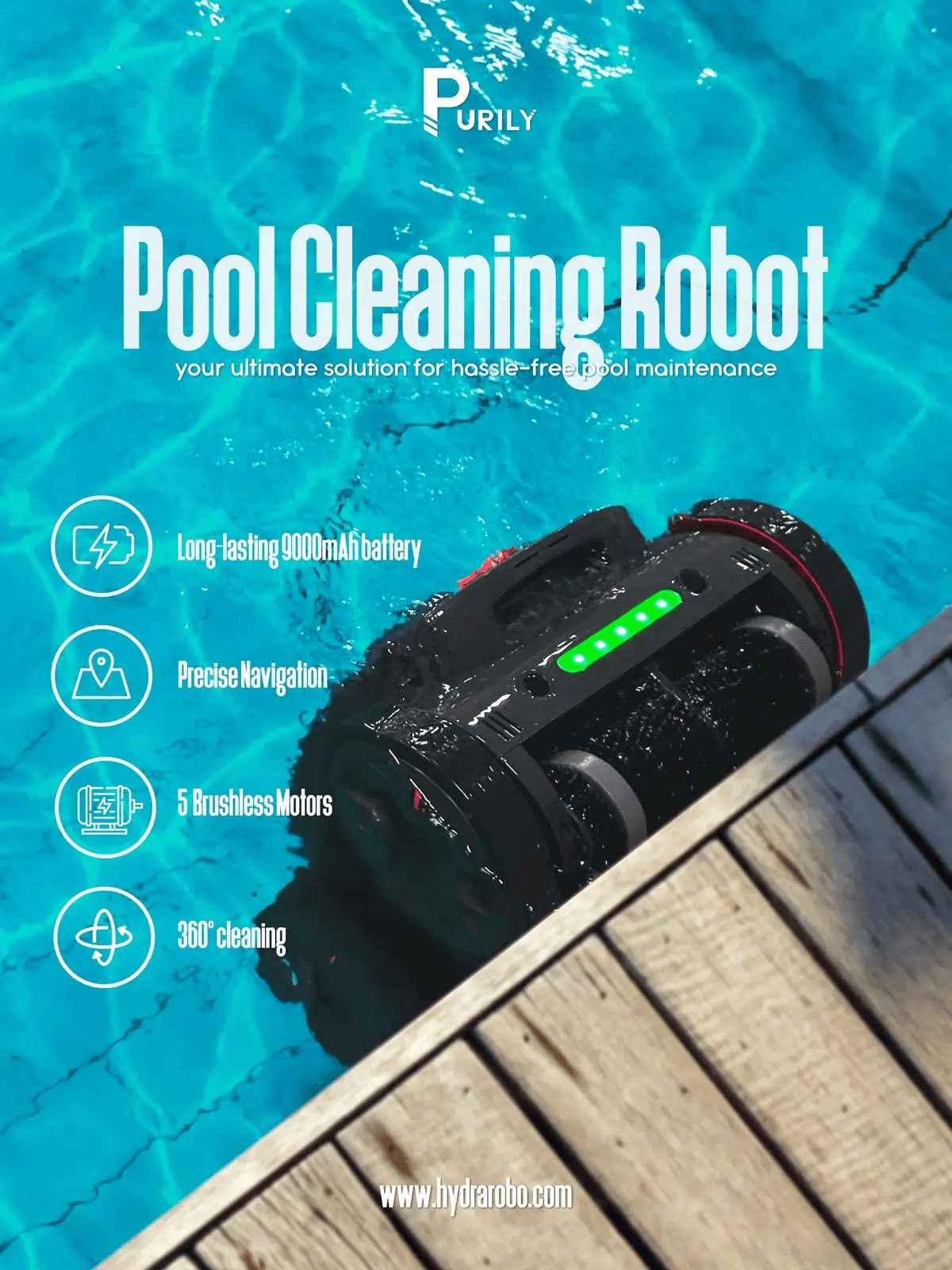
This is where wireless systems shine. Without a cord to snag on steps, ladders, or sharp corners, wireless robots (like the Aiper Scuba or Beatbot AquaSense) use AI-driven pathfinding to cover 100% of the pool floor without the risk of a "cable knot" stopping them mid-cycle.
3. The 2025 Evolution: Smart Tech Integration
The "Evolution" in our title refers to the massive leap in AI and Battery Density we've seen this year.
Smart Docking: Modern wireless robots now feature "Auto-Parking." When the battery hits 10%, they automatically navigate to the pool edge for easy retrieval.
Hybrid Solutions: We are seeing the rise of "intelligent tethering," where some wired models use thinner, lighter cables with 360-degree swivels that virtually eliminate tangling.
App Control: Both systems now offer WiFi/Bluetooth connectivity, allowing you to monitor water temperature, pH levels, and cleaning progress from your smartphone.
4. Pros and Cons: A Quick Guide
I.Wired Robotic Systems
Pros:
True Automation: Can stay in the pool all week and run on a schedule.
Deeper Clean: Stronger scrubbing brushes for algae removal.
Longevity: No battery to degrade; often lasts 5–7+ years.
Cons:
The "Cord Tangle": Even with swivels, cables can occasionally bunch up.
Aesthetics: A power box and cord stay visible on your pool deck.
II.Wireless Robotic Systems
Pros:
Safety: No trip hazards or electrical cords near the water.
Ease of Use: "Drop and go" – perfect for quick cleans before a party.
Storage: Compact and easy to tuck away in a garage.
Cons:
The Charging Routine: You must manually take it out and plug it in after every use.
Battery Life: Over 2-3 years, battery capacity will naturally decline.
5. FAQ: Frequently Asked Questions about Wired and Wireless Pool Robots
To help you make a quick decision, we've compiled some of the most frequently asked questions by users when making a purchase:
Q1: How long do the batteries of cordless pool robots typically last?
A: Most high-quality cordless robots have lithium batteries that can last 3-5 years (approximately 500-800 charging cycles). After that, battery performance may decline. In contrast, corded robots, being directly plugged in, do not have this battery degradation issue.
Q2: Are the cables of wired robots really easy to get tangled?
A: In the past, yes, but high-end models in 2025 (such as some Dolphin series) are equipped with 360° tangle-free swivel cables , which greatly reduces the chance of cables getting tangled.
Q3: Can a cordless robot vacuum clean the pool waterline?
A: It depends on the model. Entry-level cordless models typically only clean the bottom of the pool, while high-end cordless models (such as those with dual drive motors) are fully capable of climbing walls and deeply scrubbing the waterline.
Q4: Which type has lower maintenance costs?
A: In the short term, they are about the same. However, in the long term, wired robots are easier to maintain (replacing filters or belts); once the battery of a wireless robot ages, the cost of replacing the battery is usually higher.
6. Conclusion: The Final Conclusion of Performance Analysis
The evolution of pool cleaning technology is essentially a balance between "ultimate power" and "ultimate convenience".
Choose a wired robot if you own a large swimming pool and want "full automation"—let it stay in the pool for a whole week with preset programs to provide you with consistently powerful cleaning.
Choose a wireless robot if you're going for a minimalist deck environment, or if your pool has an extremely complex shape, and you don't mind taking a minute to take it out to charge after each cleaning task.
Whichever you prefer, robotics technology by 2025 will be enough to let you say goodbye to manual nets and brushes.