How to Remove Green Algae From a Swimming Pool and Prevent It
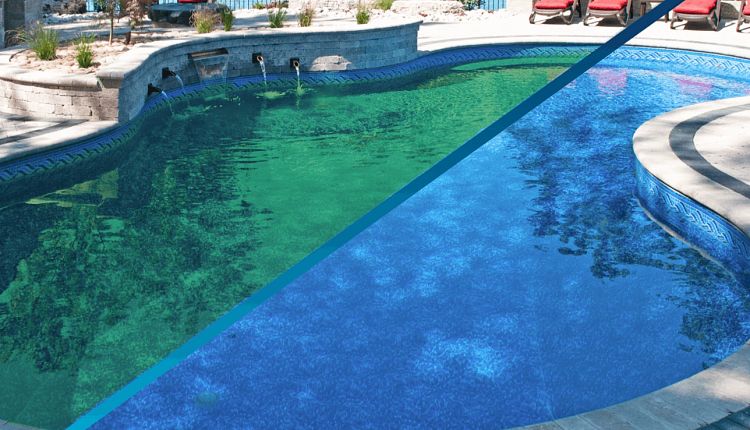
Green algae is one of the most common causes of cloudy, green, or slippery pool water. It can develop quickly when sanitizer levels are too low, circulation is poor, filtration is inadequate, or a pool is not maintained consistently.
The good news is that most green algae problems can be addressed with a systematic cleaning and water-treatment process. Simply adding chemicals, however, is not always enough. Dead algae still needs to be removed from the pool, filtration system, walls, floor, and other surfaces.
This guide explains how to remove green algae from a swimming pool, how to identify the conditions that allow it to return, and how regular cleaning and robotic pool maintenance can help keep the water clear.
Important: Pool chemicals must always be handled according to the manufacturer's label and the requirements applicable to your pool and location. If you are unsure about chemical compatibility, concentrations, or treatment procedures, consult a qualified pool professional.
What Causes Green Algae in a Swimming Pool?
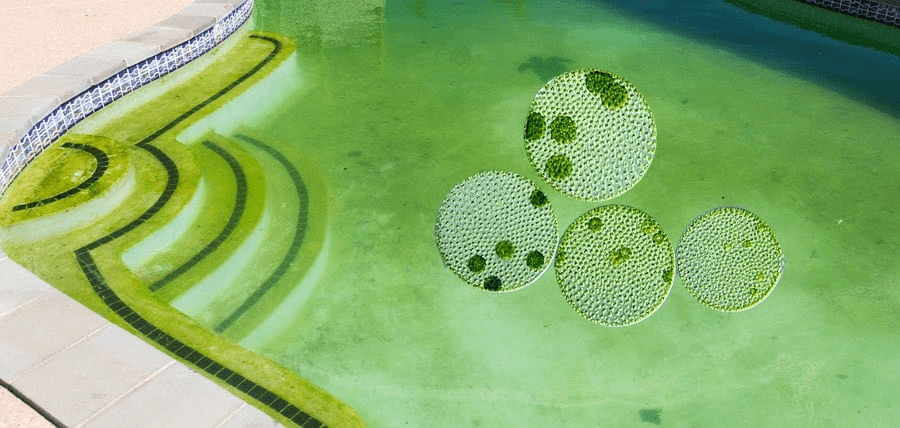
Green algae is a photosynthetic organism that can grow when pool conditions allow it to multiply.
Several factors can contribute to an algae outbreak.
Low Sanitizer Levels
Free chlorine and other approved sanitizers help control microorganisms in pool water. When sanitizer levels fall below the appropriate range for the pool, algae can gain an opportunity to grow.
This can happen after:
Heavy swimming
Rainfall
High temperatures
Poor chemical maintenance
Extended periods without treatment
Dilution from adding water
High organic contamination
Testing the water regularly is therefore one of the most important parts of algae prevention.
Poor Water Circulation
Even when the chemical levels are appropriate, poor circulation can create areas where algae and debris accumulate.
Common problem areas include:
Pool corners
Steps
Behind ladders
Around fittings
Along walls
Areas with limited water movement
A properly operating circulation and filtration system helps distribute treated water throughout the pool.
Inadequate Filtration
Your filter removes suspended particles from the water. When algae dies after treatment, the resulting organic material and particles still need to be removed.
A dirty, undersized, or poorly maintained filtration system can make it more difficult to restore clear water.
Warm Water and Sunlight
Warm temperatures and sunlight can create favorable conditions for algae growth, particularly when sanitizer levels and circulation are not adequately maintained.
Outdoor pools may therefore require more consistent maintenance during periods of high temperature and heavy use.
Poor Pool Maintenance
Leaves, pollen, dirt, sunscreen, and other organic material can contribute to the overall contamination load in a swimming pool.
Regular skimming, brushing, filtration, and water testing can help reduce the conditions that encourage algae growth.
How to Tell If Your Pool Has Green Algae
Green algae does not always look exactly the same.
Early-stage algae may appear as:
Green film on pool walls
Slippery surfaces
Greenish water
Small patches around steps or corners
Cloudy water
More advanced algae growth can make the entire pool appear green.
If the pool has suddenly changed color, do not automatically assume that algae is the only cause. Water chemistry problems, suspended particles, metals, and other contaminants can also affect pool appearance.
Testing the water and examining the surfaces can help determine the appropriate treatment.
How to Remove Green Algae From a Swimming Pool
Removing green algae usually requires more than one step.
A practical approach is:
Test → Brush → Sanitize → Filter → Vacuum → Clean → Retest
The exact chemical treatment should follow the instructions for your pool and the chemical products being used.
Step 1: Test the Pool Water
Before treating an algae outbreak, test the pool water.
Depending on the testing method and pool system, important parameters may include:
Free chlorine
pH
Total alkalinity
Cyanuric acid for stabilized chlorine pools
Other parameters relevant to the pool's treatment system
Testing gives you a starting point and helps identify whether the water chemistry is contributing to the problem.
Do not simply add large quantities of chemicals without testing first.
Step 2: Remove Large Debris
Before brushing and treating the algae, remove leaves, insects, branches, and other visible debris.
Use a pool skimmer or appropriate net to remove floating material.
This reduces the amount of organic contamination that the sanitation system has to handle.
Step 3: Brush the Pool Walls and Floor
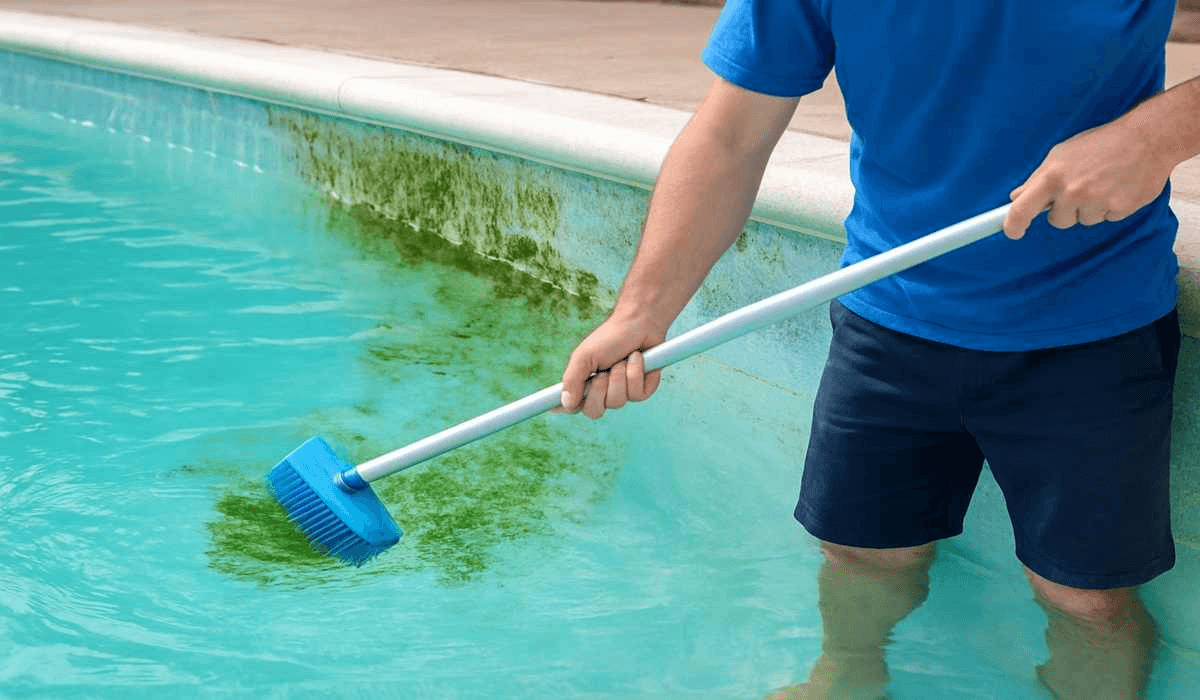
Brushing is an important step because algae can attach to pool surfaces.
Brush:
Walls
Floor
Steps
Corners
Around fittings
Other accessible surfaces where algae is visible
The goal is to loosen algae from the surfaces so that the sanitizer and filtration system can work more effectively.
Choose a brush appropriate for your pool surface. Different surfaces, such as plaster, vinyl, fiberglass, and tile, may require different cleaning equipment.
Step 4: Correct the Water Chemistry
Once the pool has been tested, adjust the water chemistry according to the requirements of your pool and the chemical manufacturer's instructions.
Maintaining the appropriate sanitizer and pH conditions is essential for algae treatment.
Avoid mixing pool chemicals unless the product instructions specifically allow it. Some chemicals can react dangerously when combined.
Step 5: Apply the Appropriate Algae Treatment or Sanitizer
For an established algae outbreak, a stronger sanitation treatment may be required.
The appropriate product and treatment method depend on:
Pool volume
Current water chemistry
Type and severity of algae
Sanitizer system
Water temperature
Existing chemical levels
Always follow the chemical manufacturer's label for dosage, application, storage, and safety instructions.
Adding more chemical than recommended does not necessarily make treatment faster and can create additional water-quality problems.
Step 6: Run the Filtration System
After treatment, filtration becomes particularly important.
As algae dies, particles and organic material can remain suspended in the water.
Run the filtration system according to the manufacturer's recommendations and monitor the filter pressure or other indicators used by your pool system.
If the filter becomes dirty or reaches its specified cleaning point, clean or backwash it according to the filter manufacturer's instructions.
Step 7: Vacuum the Pool
Dead algae needs to be physically removed.
Depending on the pool equipment and filtration setup, you may use:
A manual pool vacuum
A suction-side cleaner
A pressure-side cleaner
A robotic pool cleaner
For heavy algae contamination, manual vacuuming may sometimes be appropriate because it allows the operator to control exactly where material is removed.
If a robotic pool cleaner is used, follow the manufacturer's instructions for algae-contaminated water and clean the robot after use.
Step 8: Clean the Pool Cleaner
This step is often overlooked.
A robotic pool cleaner can collect algae, dirt, leaves, and other debris during a cleaning cycle. If the cleaner is returned to storage without being rinsed or cleaned, contaminants can remain on the robot, filter basket, or filter elements.
After cleaning a heavily contaminated pool:
Remove the robot from the pool.
Switch it off according to the manufacturer's instructions.
Remove the filter basket or filter components.
Empty the collected debris.
Rinse the filter components thoroughly.
Rinse the robot as recommended.
Allow components to dry or store them according to the manufacturer's instructions.
Always follow the specific maintenance instructions for your robotic pool cleaner.
How Long Does It Take to Get Rid of Green Algae?
There is no universal treatment time for every algae outbreak.
The recovery time can depend on:
Severity of the algae growth
Pool size
Water temperature
Current sanitizer level
pH and other water chemistry
Filtration capacity
Surface contamination
Circulation
How thoroughly the pool is brushed and cleaned
A mild early-stage problem may be easier to correct than a pool with extensive algae growth and heavily contaminated surfaces.
Instead of relying on a fixed number of hours, monitor the water condition and test the chemistry during the recovery process.
Why Does Green Algae Keep Coming Back?
If algae repeatedly returns, treating the visible green water may only be addressing the symptom.
Look for the underlying cause.
Check Sanitizer Levels
Inconsistent sanitizer levels can allow algae to return.
Establish a regular testing schedule based on your pool's usage and treatment system.
Check pH
Sanitizer effectiveness is influenced by water chemistry, including pH.
Keep pH within the range recommended for your pool and sanitizer system.
Inspect Circulation
Check whether water is circulating effectively throughout the pool.
Poorly circulated areas can become problem spots for algae.
Maintain the Filter
A filter that is overloaded or improperly maintained can reduce filtration performance.
Follow the filter manufacturer's cleaning and maintenance recommendations.
Brush Regularly
Even a pool that looks clean can develop buildup on surfaces.
Regular brushing helps disrupt surface contamination before it becomes an established algae problem.
Remove Organic Debris
Leaves, pollen, dirt, and other organic material should not be allowed to accumulate.
Regular skimming and cleaning can reduce the contamination load.
How to Prevent Green Algae in Your Pool
Prevention is usually easier than dealing with a severe algae outbreak.
Test the Water Regularly
A regular testing routine helps identify chemical imbalances before they become larger problems.
Record your results if necessary so that you can identify trends over time.
Maintain Proper Sanitization
Use the appropriate sanitizer system and follow the manufacturer's recommended maintenance procedures.
Do not assume that clear water automatically means the sanitizer level is correct.
Keep the Pool Circulating
Run the circulation system according to your pool's requirements and inspect pumps, filters, valves, and return fittings regularly.
Brush the Pool
Include walls, floor, steps, corners, and other areas where buildup can develop in your cleaning routine.
Clean the Filter
Follow the manufacturer's recommended filter maintenance schedule.
A clean and properly operating filter helps remove suspended particles from the water.
Remove Debris Quickly
Skim leaves and other debris from the water rather than allowing organic material to remain in the pool for extended periods.
Clean Your Pool Equipment
Do not forget the equipment used to clean the pool.
Rinse and maintain brushes, vacuum equipment, filter baskets, and robotic pool cleaners according to their maintenance instructions.
Can a Robotic Pool Cleaner Remove Green Algae?
A robotic pool cleaner can help remove algae and debris from pool surfaces, but it should not be considered a replacement for proper water chemistry.
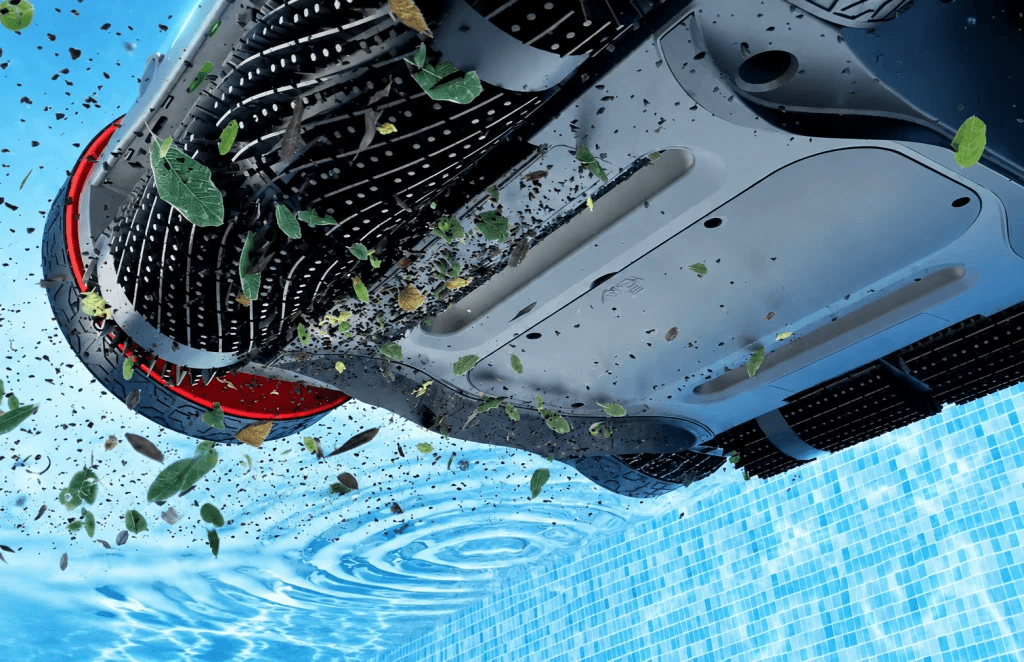
A pool robot primarily provides physical cleaning. It can collect loosened algae, dirt, leaves, and other debris from the pool floor and, depending on its design, walls and waterline.
However, a robotic cleaner does not replace the role of:
Proper sanitization
Water testing
pH management
Filtration
Adequate circulation
The most effective approach is to combine automated physical cleaning with a properly maintained pool sanitation system.
How PURILY Robotic Pool Cleaners Can Help
PURILY develops robotic pool cleaning solutions for residential and commercial pool-cleaning applications.
Depending on the model, PURILY robotic pool cleaners can provide automated cleaning of pool surfaces and help collect debris during routine maintenance.
Features across PURILY's product range may include technologies such as:
Intelligent navigation
Gyroscope-assisted movement
Multiple cleaning patterns
Four-wheel drive configurations
Corded or cordless operation
Remote-control functions on applicable models
Automatic docking or low-battery return functions on applicable models
The exact features and cleaning coverage vary by model, so buyers should check the individual product specification before selecting a cleaner.
For an algae-prone pool, a robotic cleaner can be particularly useful as part of a broader maintenance routine. After chemical treatment loosens algae from pool surfaces, the robot can help collect the resulting debris and reduce the amount of manual cleaning required.
However, the robot should be cleaned after working in heavily contaminated water, and users should follow the product's maintenance instructions.
Green Algae vs. Other Pool Algae
Not every green-looking pool problem is identical.
Green Algae
Green algae is generally the most commonly encountered type of visible pool algae. It may appear as green water, green surface deposits, or slippery areas.
Yellow or Mustard Algae
Mustard algae can appear yellowish or brownish and may be more difficult to eliminate from certain pool environments.
Black Algae
Black algae can form dark spots and may establish itself firmly in pool surfaces.
Different algae problems can require different treatment approaches.
If an algae problem persists despite appropriate cleaning and water treatment, consult a qualified pool professional rather than repeatedly adding chemicals without identifying the cause.
Common Mistakes When Removing Green Algae
Mistake 1: Adding Chemicals Without Testing
Without knowing the current water chemistry, it is difficult to determine what treatment is actually required.
Mistake 2: Skipping Brushing
Algae attached to pool surfaces may remain even after the water has been treated.
Mistake 3: Ignoring the Filter
Dead algae still has to be removed from the water.
Mistake 4: Cleaning Only the Water
Walls, floors, steps, corners, and equipment can also hold contaminants.
Mistake 5: Stopping Treatment Too Early
Clear-looking water does not necessarily mean the underlying maintenance issue has been resolved.
Mistake 6: Treating a Robot as a Chemical Solution
A robotic pool cleaner provides physical cleaning. It does not replace proper water chemistry and sanitation.
Green Algae Pool Maintenance Checklist
Use this checklist as part of your regular pool maintenance routine:
Test pool water regularly
Maintain appropriate sanitizer levels
Monitor pH
Check circulation
Maintain the filtration system
Remove leaves and organic debris
Brush walls and floor
Clean steps and corners
Vacuum when necessary
Clean the robotic pool cleaner
Inspect pool equipment
Address recurring algae problems rather than repeatedly treating the symptoms
Frequently Asked Questions
What is the fastest way to remove green algae from a pool?
The most effective approach depends on the severity of the algae problem. In general, test the water, remove debris, brush the pool, correct the water chemistry, apply the appropriate sanitation treatment according to the product label, operate the filtration system, and physically remove dead algae.
Can I swim in a pool with green algae?
A pool with visible algae should not be treated as ready for swimming simply because the algae is being treated. Follow the chemical manufacturer's instructions and confirm that the water chemistry and sanitation conditions are appropriate before returning to normal use.
Will a robotic pool cleaner remove green algae?
A robotic pool cleaner can help physically remove loosened algae and debris from pool surfaces, depending on the model. It does not replace chemical sanitation, water testing, filtration, or circulation.
How often should I brush my pool to prevent algae?
The appropriate cleaning frequency depends on pool conditions, usage, temperature, environment, and water chemistry. Pools exposed to heavy debris or warm conditions may require more frequent cleaning.
Why does my pool turn green after rain?
Rain can introduce contaminants and dilute or affect the pool's chemical balance. Heavy rain can also increase the organic load in the water. Testing the water after significant rainfall can help identify whether chemical adjustment or additional cleaning is required.
Can I use a robotic pool cleaner every day?
The appropriate cleaning frequency depends on the robot's design and the manufacturer's recommendations. For routine maintenance, regular automated cleaning can help control debris accumulation, but users should follow the operating schedule specified for their particular model.
Final Thoughts
Green algae is usually a sign that one or more parts of the pool maintenance system need attention.
The most effective approach combines water testing, proper sanitation, brushing, filtration, vacuuming, circulation, and regular physical cleaning.
A robotic pool cleaner can make the physical-cleaning part of this routine easier by automatically collecting dirt, debris, and loosened algae from suitable pool surfaces. However, automated cleaning works best as part of a complete pool-care strategy rather than as a replacement for water chemistry management.
For pool owners and professionals looking for a more convenient maintenance routine, choosing a robotic cleaner with appropriate navigation, filtration, mobility, cleaning coverage, and operating time can reduce repetitive manual cleaning and help maintain a cleaner pool between deeper maintenance sessions.