How Long Does It Take to Charge a Cordless Robotic Pool Cleaner?

A cordless robotic pool cleaner provides a convenient way to maintain a swimming pool without dealing with a power cable during operation. However, because these cleaners rely on rechargeable batteries, charging time is an important factor that affects cleaning schedules and overall user experience.
Many pool owners ask:
How long does it take to charge a cordless robotic pool cleaner?
The answer depends on several factors, including battery capacity, charger design, battery condition, remaining battery level, temperature and the specific model.
A larger battery may provide longer cleaning runtime, but it may also require more time to recharge. Likewise, a faster charger may reduce waiting time, but battery protection systems are designed to control charging speed to maintain long-term battery health.
Understanding charging time helps pool owners choose the right robotic cleaner and create a more efficient cleaning routine.
Charging Time vs Runtime: What Is the Difference?
When comparing cordless robotic pool cleaners, users often focus on runtime but overlook charging time.
These two specifications describe different parts of the cleaning cycle.
Specification | Meaning | Why It Matters |
|---|---|---|
Charging Time | The time required to restore battery energy | Determines when the robot can be used again |
Runtime | How long the cleaner operates after a full charge | Determines cleaning coverage |
Battery Capacity | The amount of stored energy available | Influences both runtime and charging requirements |
Charging Cycle | One complete use and recharge process | Affects long-term battery aging |
Cleaning Coverage | The area cleaned during one cycle | Shows practical performance |
A robotic pool cleaner with a longer runtime is not always the most convenient option if it also requires significantly longer charging.
The best choice depends on the relationship between:
Cleaning time → Charging time → Pool size → Cleaning frequency
How Long Does a Cordless Robotic Pool Cleaner Usually Take to Charge?
Charging time varies between models.
There is no universal charging time because cordless robotic pool cleaners use different:
Battery capacities
Battery technologies
Charging systems
Power-management designs
Operating requirements
A cleaner with a smaller battery may recharge faster, while a high-capacity model designed for larger pools may require more charging time.
In general:
Small residential pool cleaners may require less charging time because they use smaller battery systems.
High-capacity cordless pool robots may require longer charging periods because they store more energy.
Premium models with advanced battery-management systems may optimize charging speed while protecting battery lifespan.
When comparing models, charging time should always be considered together with runtime.
A robot that charges slightly longer but cleans a significantly larger area per cycle may provide better overall value.
Why Do Cordless Pool Cleaners Need Several Hours to Recharge?
Rechargeable batteries cannot simply be filled instantly.
The charging process must carefully control electrical current, voltage and temperature to protect the battery cells.
Several factors influence charging speed.
Battery Capacity
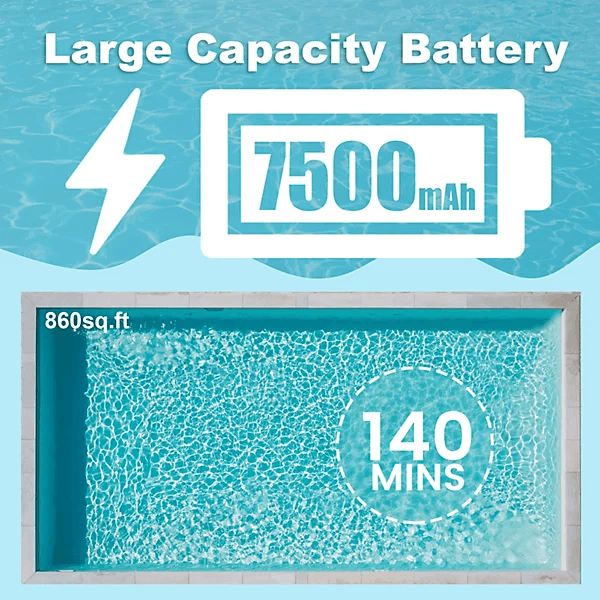
Battery capacity is one of the biggest factors affecting charging time.
A battery with greater energy storage can provide longer operating time, but it generally requires more energy to recharge.
For example, a robot designed for:
Larger pools
Longer cleaning cycles
Wall and waterline cleaning
may use a larger battery than a basic floor-cleaning model.
The trade-off is that more stored energy usually means more charging time.
Battery Management System
Modern cordless robotic pool cleaners use battery-management systems (BMS) to monitor charging conditions.
The system helps control:
Charging current
Battery temperature
Voltage levels
Cell protection
Charging safety
A well-designed battery-management system may intentionally reduce charging speed under certain conditions to protect battery health.
This means the fastest possible charging speed is not always the best approach.
A balanced charging system helps maintain reliable battery performance over the long term.
Charger Output
The charger determines how much power can be delivered to the battery.
Using an incorrect charger may result in:
Slow charging
Charging failure
Battery damage
Safety risks
Always use the charger recommended by the manufacturer.
The charging system is designed specifically for the battery pack used in that robotic cleaner.
Battery Condition
A new battery and an older battery may not charge in exactly the same way.
As rechargeable batteries age, their charging characteristics can change.
Possible signs include:
Longer charging times
Reduced runtime
Inconsistent charging behavior
The battery failing to reach expected performance
If charging suddenly becomes much slower than before, check the charger, connections and battery condition.
Does a Longer Runtime Mean Longer Charging Time?
Not always, but it is common.
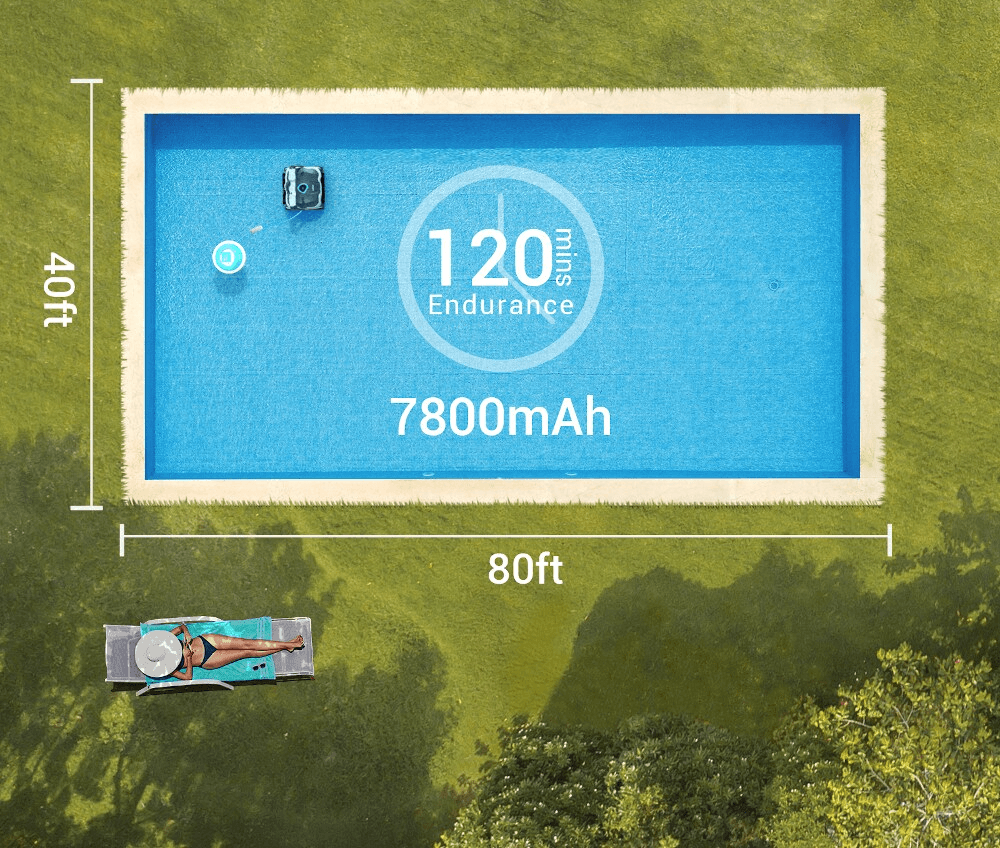
A robot with a larger battery often requires more charging time because it needs to store more energy.
However, charging efficiency depends on the complete system.
Two robots with similar battery capacities may have different charging times because of:
Charger design
Battery chemistry
Charging algorithms
Thermal management
This is why comparing cordless pool cleaners only by battery capacity does not provide the full picture.
A better comparison includes:
Runtime
Charging time
Cleaning coverage
Battery lifespan
Can I Use a Cordless Robotic Pool Cleaner While It Is Charging?
No.
Most cordless robotic pool cleaners are designed for separate charging and cleaning cycles.
The normal process is:
Charge the battery.
Disconnect the charger.
Place the cleaner in the pool.
Start the cleaning cycle.
Operating while connected to a charger is generally not part of the intended design.
This separation helps protect:
Electrical components
Waterproofing systems
Battery-management systems
User safety
Always follow the specific instructions provided with your robotic pool cleaner.
Can I Leave My Pool Robot Charging Overnight?
Many modern robotic pool cleaners include battery-management systems designed to prevent unsafe charging conditions.
However, the best practice is always to follow the manufacturer's charging recommendations.
Before leaving a cleaner charging for extended periods, consider:
Using the original charger
Charging in a suitable environment
Keeping charging contacts clean and dry
Following the product manual
Battery technology and charging systems vary between models, so manufacturer instructions should always take priority.
For long-term battery health, correct charging habits are more important than simply charging faster.
How Often Should I Charge a Cordless Pool Cleaner?
The charging schedule depends on how frequently you clean your pool.
For many residential users:
Charge after a cleaning cycle so the robot is ready for the next use.
Avoid storing the cleaner completely empty for long periods.
Follow manufacturer recommendations during seasonal storage.
The ideal routine depends on:
Pool size
Cleaning frequency
Debris level
Robot runtime
Cleaning mode
A homeowner with a small pool may clean only a few times per week.
A large pool with heavy debris may require more frequent operation.
Why Is My Cordless Pool Cleaner Taking Too Long to Charge?
A longer-than-normal charging time does not always mean the battery is damaged.
Possible causes include:
Problem | Possible Cause | Recommended Check |
|---|---|---|
Charging takes much longer than before | Battery aging | Compare with previous charging performance |
Cleaner does not reach full charge | Charger or connection issue | Check charger and contacts |
Charging stops unexpectedly | Temperature protection | Move to suitable environment |
Battery drains quickly after charging | Battery capacity reduction | Check runtime performance |
Charging indicator behaves unusually | Electrical or system issue | Follow manufacturer troubleshooting |
Start with simple checks before assuming the battery needs replacement.
Check the Charging Contacts
Dirty charging contacts are a common reason for charging problems.
Inspect:
Charging pins
Charging ports
Contact surfaces
Connection areas
Remove dirt or residue according to the manufacturer's instructions.
A poor electrical connection can prevent the battery from receiving full charging power.
Check the Charger
Always verify that:
The correct charger is being used.
The charger is connected properly.
The power source is working normally.
The charger shows normal operating indicators.
Using third-party chargers or incorrect power supplies may affect charging performance.
Does Fast Charging Damage Robotic Pool Cleaner Batteries?
Fast charging itself is not necessarily harmful.
The important factors are:
Charging control
Temperature management
Battery quality
Charger compatibility
A properly designed charging system balances charging speed with battery protection.
However, excessive heat during charging can negatively affect rechargeable batteries.
This is why professional battery systems use monitoring and protection features.
The goal is not simply:
Charge as fast as possible.
The goal is:
Charge efficiently while maintaining battery health.
Should I Fully Charge My Pool Robot Before the First Use?
For most cordless robotic pool cleaners, fully charging before the first cleaning cycle is recommended.
The exact procedure depends on the manufacturer's instructions.
A complete initial charge helps ensure:
Maximum available runtime
Accurate battery performance
Proper first-use experience
Always check the user manual for model-specific recommendations.
How Charging Time Affects Your Pool Cleaning Schedule
Charging time becomes more important when cleaning frequency increases.
For example:
A small residential pool cleaned several times per week may not be affected by a longer charging period.
A large pool requiring frequent cleaning may require more careful scheduling.
Before purchasing a cordless robotic pool cleaner, consider:
How often you want to clean
How large your pool is
How much debris enters the pool
Whether one cleaning cycle covers the entire pool
How long you are willing to wait between cycles
A good cleaning system matches charging time with your actual pool maintenance routine.
Cordless vs Corded Robotic Pool Cleaners: Charging Considerations
Cordless and corded robotic pool cleaners solve different problems.
Feature | Cordless Pool Cleaner | Corded Pool Cleaner |
|---|---|---|
Power Source | Rechargeable battery | External power supply |
Charging Required | Yes | No |
Cable Management | No cable during cleaning | Cable required |
Setup Convenience | Higher | Lower |
Long Cleaning Sessions | Limited by battery | Continuous power available |
Mobility | Excellent | Depends on cable design |
Cordless cleaners provide excellent convenience because there is no cable during operation.
Corded cleaners provide continuous power for extended cleaning requirements.
For users who need both convenience and longer cleaning capability, some hybrid systems combine cordless operation with alternative power options.
How to Improve Charging Performance and Battery Health
Good charging habits can help maintain reliable performance.
Use the Original Charger
The charger is designed for the specific battery system.
Keep Charging Connections Clean
Dirty contacts can reduce charging efficiency.
Avoid Extreme Temperatures
Charge and store the cleaner according to manufacturer recommendations.
Do Not Store the Battery Empty for Long Periods
Long-term storage requires proper battery maintenance.
Follow Seasonal Storage Instructions
If the cleaner will not be used for months, follow the manufacturer's recommended storage procedure.
Maintain the Entire Cleaner
A robot with clean filters, brushes and drive components operates more efficiently and places less unnecessary demand on the battery.
Does Charging Time Affect Battery Lifespan?
Charging habits can influence long-term battery condition.
Good practices include:
Avoiding inappropriate chargers
Following charging instructions
Protecting the cleaner from extreme temperatures
Maintaining clean charging contacts
Following storage recommendations
Battery aging is normal, but proper care can help reduce unnecessary stress.
How Long Does a Robotic Pool Cleaner Battery Last?
Charging time and battery lifespan are different topics.
Charging time describes how long it takes to restore energy.
Battery lifespan describes how long the battery remains useful before capacity declines significantly.
A battery may continue charging normally while providing shorter runtime because of natural aging.
For a complete explanation of battery lifespan and runtime factors, see:
Cordless Robotic Pool Cleaner Battery Life: How Long Does It Really Last?
What If My Pool Robot Charges Fully but Runs for a Short Time?
A full charge does not always guarantee normal runtime.
Possible causes include:
Battery aging
Heavy debris
Dirty filters
Wall climbing
High-power cleaning modes
Navigation problems
Mechanical resistance
If runtime is significantly shorter than expected, inspect the entire cleaning system.
Charging and runtime should always be evaluated together.
How to Choose a Cordless Pool Cleaner Based on Charging Time
Do not choose a robot only because it has the shortest charging time.
Instead, compare:
Runtime
How long does it clean after charging?
Cleaning Coverage
Can it complete your pool?
Charging Speed
How quickly can it be ready again?
Battery Support
Can the battery be serviced or replaced?
Pool Requirements
Does it handle your pool size, walls and debris?
The best cordless robotic pool cleaner is the one that fits your cleaning schedule.
Final Verdict: Charging Time Is Only One Part of Performance
Charging time is an important specification for any cordless robotic pool cleaner, but it should not be evaluated alone.
A faster-charging robot is not automatically better.
The best choice depends on the relationship between:
Charging time
Runtime
Cleaning coverage
Battery lifespan
Pool size
Cleaning requirements
A well-designed cordless pool cleaner should provide enough runtime to complete useful cleaning while maintaining efficient charging and long-term battery performance.
Understanding charging time helps pool owners create a realistic maintenance schedule and get the best performance from their robotic cleaner.
Frequently Asked Questions
How long does it take to charge a cordless robotic pool cleaner?
Charging time varies by model, battery capacity, charger design and battery condition. Larger battery systems generally require more charging time because they store more energy.
How long does a pool robot take to charge?
Most cordless robotic pool cleaners require several hours to recharge, but exact charging time depends on the specific model and charging system.
Can I leave my cordless pool cleaner charging overnight?
Follow the manufacturer's instructions. Many modern systems include battery protection features, but proper charging practices are important for long-term battery health.
Can I use a pool robot while charging?
No. Cordless robotic pool cleaners are generally designed to charge first and operate separately from the charging process.
Why is my cordless pool cleaner not charging?
Possible causes include dirty charging contacts, incorrect charger use, electrical connection problems, temperature protection or battery issues.
Does fast charging reduce robotic pool cleaner battery life?
Not necessarily. A properly designed charging system controls current and temperature to protect the battery. Poor charging conditions and excessive heat are more important concerns.
How often should I charge my robotic pool cleaner?
Charge according to your cleaning schedule and manufacturer instructions. Many users recharge after each cleaning cycle so the robot is ready for the next use.
Should I fully charge my pool robot before using it?
A full initial charge is generally recommended, but always follow the instructions provided with your specific model.
Why does my pool robot take longer to charge than before?
Possible causes include battery aging, charger issues, dirty contacts or temperature conditions.
Does a larger battery take longer to charge?
Usually, yes. A larger battery stores more energy and may require more charging time, depending on charger speed and battery-management design.