How Does an In-Ground Pool Skimmer Work? Parts & Maintenance
How Does an In-Ground Pool Skimmer Work?
An in-ground pool skimmer is an essential part of a swimming pool's circulation and cleaning system. Installed near the waterline, it draws surface water into the pool's plumbing system and catches leaves, insects, and other floating debris before they sink.
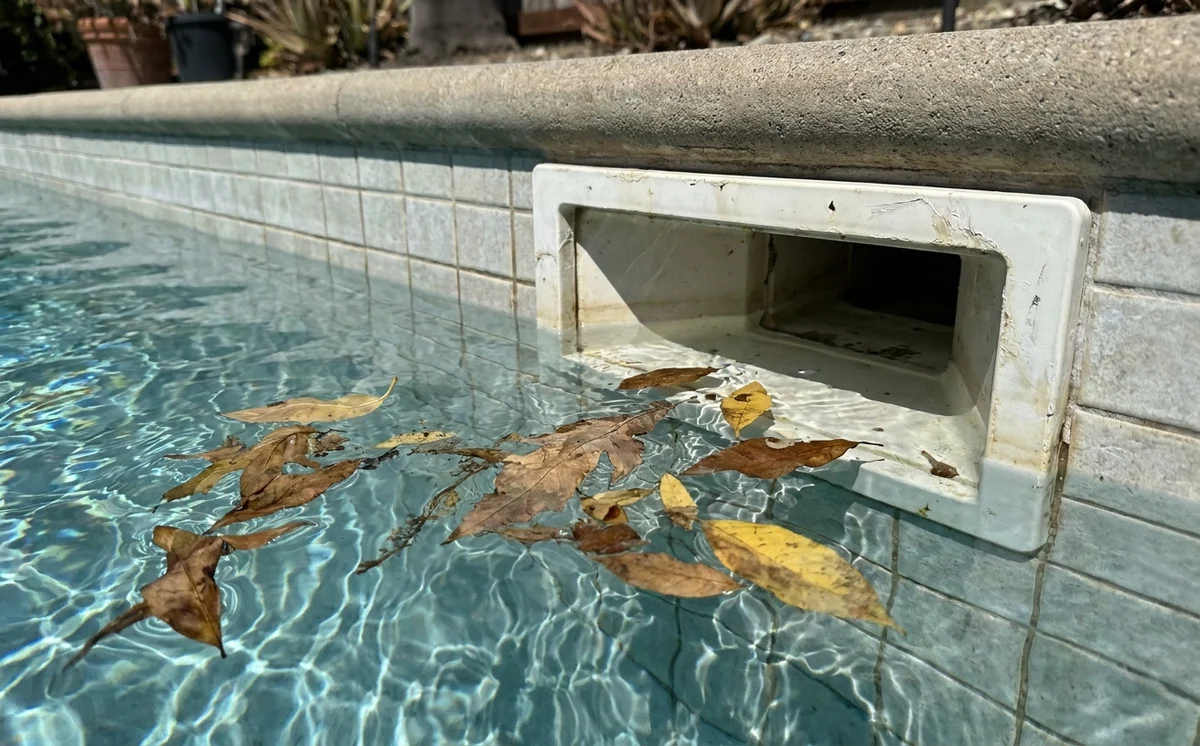
Although a pool skimmer may look like a simple opening in the pool wall, several components work together to support effective surface cleaning. The skimmer opening allows water to enter, the weir door helps guide floating debris inside, and the skimmer basket captures larger objects before water continues toward the pump and filtration system.
Understanding how an in-ground pool skimmer works can help you maintain better water circulation, identify common problems, and keep your pool cleaner with less manual effort.
In this guide, we explain the main parts of an in-ground pool skimmer, how water moves through the system, how to maintain it, and what to check when it stops collecting debris effectively.

What Is an In-Ground Pool Skimmer?
An in-ground pool skimmer is a built-in component installed in the wall of an in-ground swimming pool. Its primary purpose is to remove floating debris from the water surface and direct that water into the circulation system.
Most conventional in-ground pools use one or more skimmers connected to the pool pump and filtration equipment. The number and placement of skimmers depend on the pool's size, shape, plumbing design, and circulation requirements.
Why Is a Pool Skimmer Installed Near the Waterline?
Leaves, insects, flower petals, and other lightweight debris tend to remain on the water surface before becoming waterlogged and sinking.
Positioning the skimmer near the waterline allows it to draw in surface water and capture this debris early. This helps reduce the amount of floating organic material that accumulates in the pool or settles on the bottom.
The skimmer also supports water circulation by directing surface water toward the pump and filter. However, it does not replace the filtration system, pool vacuum, or other maintenance equipment.
What Does an In-Ground Pool Skimmer Do?
An in-ground pool skimmer performs several related functions:
Collects floating debris: Draws in leaves, insects, and other surface contaminants.
Captures larger objects: Uses a removable basket to prevent larger debris from continuing through the plumbing.
Supports circulation: Directs surface water into the pool's circulation system.
Helps maintain water quality: Removes some floating organic material before it breaks down or sinks.
A skimmer is therefore both a debris-collection point and part of the pool's hydraulic system.
How Does an In-Ground Pool Skimmer Work?
An in-ground pool skimmer works by using suction generated by the pool circulation system. As the pump operates, water is drawn through the skimmer opening, passes through the collection basket, and travels toward the pump and filter.
The exact plumbing arrangement varies by pool, but the basic process follows several steps.
Step 1: The Pool Pump Creates Suction
The pool pump circulates water through the filtration system. When the circulation system is operating correctly, it draws water through connected suction lines, which may include the skimmer and main drain.
The flow through each opening depends on the plumbing arrangement, valve positions, pump operation, and hydraulic resistance.
For the skimmer to collect surface debris effectively, water must move through its opening at an appropriate rate.
Step 2: Surface Water Enters Through the Skimmer Opening
As the pump draws water through the skimmer, floating debris near the opening can be carried into the skimmer throat.
Water movement across the pool surface also depends on return-jet direction, wind, pool geometry, and other circulation factors. These conditions influence where leaves and insects accumulate and how easily they reach the skimmer.
If surface debris consistently collects in a different area, the issue may involve circulation patterns rather than a faulty skimmer.
Step 3: The Weir Door Helps Guide Floating Debris Inside
Many in-ground pool skimmers include a component called a weir door. This hinged or floating flap sits at the skimmer opening and moves with the water.
As water enters, the weir door typically opens inward. Its position helps create a controlled opening at the water surface, encouraging floating debris to enter the skimmer.
When the pump stops, the door may move toward a closed position, depending on its design. This can help reduce debris escaping from the skimmer and returning to the pool.
A damaged, jammed, or missing weir door can affect surface-skimming performance.
Step 4: The Skimmer Basket Captures Larger Debris
After entering the skimmer, water passes through a removable basket. The basket catches leaves, insects, twigs, and other relatively large objects.
This is important because large debris could otherwise travel farther into the circulation system and contribute to blockages or additional maintenance.
The basket does not usually provide fine filtration. Smaller particles can pass through it and continue to the pool filter.
For this reason, the skimmer basket and the pool filter serve different purposes: the basket collects larger debris, while the filter removes smaller particles according to its design.
Step 5: Water Travels to the Pump and Filter
After passing through the skimmer basket, water travels through the suction plumbing toward the pump. The pump then moves water through the pool's filtration system.
Depending on the system design, the skimmer may share suction with a main drain or other connected components.
The pool filter removes particles from the circulating water. Filtered water then returns to the pool through the return fittings or jets.
This continuous circulation helps distribute treated water and maintain the pool's overall water quality.
The Complete Pool Skimmer Water Flow Path
The basic water flow path can be summarized as:
Pool surface → Skimmer opening → Weir door → Skimmer basket → Suction plumbing → Pump → Filter → Return jets → Pool
The exact configuration may vary. Some pools have multiple skimmers, additional suction outlets, different valve arrangements, or specialized circulation systems.
The key point is that a conventional in-ground pool skimmer works as part of a connected system rather than operating independently.
What Are the Main Parts of an In-Ground Pool Skimmer?
Understanding the main components makes it easier to identify maintenance needs and recognize potential problems.

1. Skimmer Mouth and Throat
The skimmer mouth is the opening in the pool wall through which surface water enters. The throat connects this opening to the skimmer body.
Its position relative to the waterline is important because the skimmer must draw in surface water without excessive air entering the suction system.
The opening should remain unobstructed by debris, equipment, or other objects.
2. Weir Door
The weir door is a movable flap located at the skimmer opening.
It helps regulate the opening through which surface water enters and can help retain debris when circulation stops.
Check that the door moves freely and is not obstructed by leaves or damaged hinges. Replacement parts should match the skimmer's design.
3. Skimmer Basket
The skimmer basket collects larger debris before water enters the suction plumbing.
It is usually removable so pool owners can empty and clean it without dismantling the entire skimmer.
A full, cracked, or poorly fitted basket can reduce effective collection or allow larger debris to pass into the plumbing. Inspect the basket regularly and replace it if damaged.
4. Skimmer Lid
The lid covers the skimmer access opening, generally located on the pool deck or surrounding surface.
It provides access to the basket while helping protect the opening from external debris and accidental contact.
The lid should remain properly fitted and in good condition. Avoid operating or maintaining the skimmer with an unsafe or damaged access cover.
5. Suction Line and Plumbing Connections
The suction line carries water from the skimmer toward the pump.
Leaks, blockages, or plumbing problems can reduce flow and affect the entire circulation system. Some pools also have additional suction connections, including a dedicated vacuum connection.
Plumbing repairs can require specialized equipment and should be handled by a qualified pool professional when necessary.
6. Equalizer Line or Other Additional Connections
Some in-ground skimmer installations include an equalizer line or another connection intended to help maintain water flow under particular conditions.
These components are not present in every pool, and their functions depend on the system's design.
Do not assume that every skimmer has the same plumbing configuration. Consult the pool's installation documentation before changing valves or modifying connections.
How Does an In-Ground Pool Skimmer Work With the Pool Pump?
The skimmer and pump perform different but closely connected roles.
The skimmer provides an entry point for surface water and captures larger debris. The pump supplies the circulation force that moves water through the system.
What Happens When the Pump Is Running?
When the pump operates, it draws water through the available suction lines. Water entering through the skimmer carries floating debris toward the basket.
After larger objects are captured, the water continues toward the pump and filter. The filtration system then removes additional particles before water returns to the pool.
For the skimmer to function effectively, the pump, basket, plumbing, valves, and filter must all operate within the system's intended conditions.
Does the Skimmer Work When the Pump Is Off?
A conventional in-ground skimmer does not actively draw surface water when the pump is off.
Some debris may drift into the opening naturally, but there is no pump-driven suction to sustain normal skimming.
This is an important distinction between a built-in pool skimmer and an independently powered robotic surface skimmer. A robotic unit may have its own propulsion and collection system, whereas a conventional in-ground skimmer depends on the pool's circulation equipment.
Skimmer vs. Main Drain: What Is the Difference?
A pool skimmer and a main drain can both be connected to the pump's suction side, but they serve different roles.
Feature | In-Ground Pool Skimmer | Main Drain |
|---|---|---|
Typical location | Pool wall near the waterline | Pool floor or another designated low-level location |
Primary function | Draws in surface water and floating debris | Draws water from a lower part of the pool |
Debris collection | Usually includes a removable basket | Configuration varies by installation |
Surface cleaning | Directly supports surface skimming | Does not directly collect floating debris |
Plumbing role | Part of the suction and circulation system | May contribute to circulation and drainage |
The exact contribution of each suction point depends on the pool's plumbing and valve settings. Neither component should be assumed to perform all circulation or cleaning functions by itself.
What Is the Correct Water Level for an In-Ground Pool Skimmer?
Water level is one of the most important factors affecting skimmer performance.
If the water level is too low, the skimmer may draw in air instead of a steady stream of water. If the water level is too high, the opening may not skim the surface as effectively because the waterline sits too far above the intended operating range.
What Happens When the Water Level Is Too Low?
When the water falls below the skimmer's appropriate operating level, the opening may draw air.
Depending on the plumbing and pump design, this can cause irregular flow, air entering the pump system, or a loss of effective circulation.
If the water level becomes very low, stop and check the system according to the manufacturer's instructions. Never allow the pump to run dry.
What Happens When the Water Level Is Too High?
When the water level is excessively high, the skimmer opening may lose some of its ability to draw floating debris efficiently.
The weir door may also operate differently depending on its design and the actual waterline.
Check the skimmer manufacturer's recommended operating level rather than relying on a universal measurement.
How Can You Maintain the Right Water Level?
Check the waterline regularly, especially during hot weather.
Account for evaporation, rainfall, splashing, and backwashing where applicable.
Keep the water within the range specified for the skimmer and pool system.
Investigate unexpected water loss instead of continually topping up without checking the cause.
Maintaining an appropriate water level helps the skimmer collect surface debris while supporting normal pump operation.
Common In-Ground Pool Skimmer Problems and How to Troubleshoot Them
A skimmer that stops collecting debris effectively may have a simple maintenance issue or a problem elsewhere in the circulation system.
Before attempting repairs, switch off the pump when required by the manufacturer's instructions and follow appropriate safety procedures. Never reach into moving equipment or open pressurized components.
Problem | Possible Cause | What to Check |
|---|---|---|
Weak skimmer suction | Full basket, clogged filter, incorrect valve settings, or a plumbing restriction | Clean the basket, check the filter, and review the normal valve configuration |
Leaves remain on the surface | Poor circulation patterns, insufficient flow, or blocked opening | Inspect the opening and observe how water moves across the pool |
Weir door is stuck | Debris, damaged hinges, or a misaligned flap | Remove obstructions and inspect the door |
Air appears in the pump basket | Low water level, air leak, or another suction-side problem | Check water level and visible seals; contact a professional if the cause is unclear |
Basket is cracked | Wear, impact, or unsuitable replacement parts | Replace the basket with a compatible model |
Skimmer housing leaks | Damaged seals, plumbing connections, or structural problems | Arrange a professional inspection if leakage persists |
Skimmer makes unusual noise | Restricted flow, air entering the system, or pump-related issues | Stop the equipment if necessary and investigate safely |
Why Is My In-Ground Pool Skimmer Not Pulling in Leaves?
If leaves remain on the surface, begin with the simplest checks.
First, inspect the skimmer opening and basket for obstructions. Then confirm that the water level is within the recommended range and that the pump is operating normally.
Next, consider the pool's circulation pattern. Return jets may push floating debris away from the skimmer, or wind may repeatedly move leaves into an area with limited surface circulation.
If the basket is clean but suction remains weak, the problem may involve the filter, valves, pump, or suction plumbing. A qualified pool technician can help identify issues that cannot be diagnosed safely through visual inspection alone.
Why Is There Air in the Pool Pump Basket?
Air in the pump basket can be associated with a low pool water level, an air leak on the suction side, a lid seal problem, or other circulation issues.
Check the water level and inspect accessible components according to the equipment instructions. Do not open a pressurized system or dismantle pump components while the equipment is operating.
If the pump repeatedly loses prime or the air problem persists, arrange a professional inspection.
When Should You Replace a Pool Skimmer Basket or Weir Door?
Replace a basket if it is cracked, distorted, or no longer fits securely. A damaged basket may allow larger debris to pass into the plumbing.
A weir door may need replacement if it is broken, detached, or unable to move correctly.
Choose replacement parts that match the skimmer model. Similar-looking components are not necessarily interchangeable.
If the skimmer body or the surrounding pool structure is damaged, replacing the basket or flap alone may not resolve the problem.
How to Maintain an In-Ground Pool Skimmer
Regular maintenance helps the skimmer collect debris consistently and reduces the chance of avoidable flow problems.
Clean the Skimmer Basket Regularly
Switch off the pump when required by the equipment instructions, then access and remove the basket safely.
Empty leaves, insects, and other collected debris. Rinse the basket and check for cracks, broken supports, or deformation before reinstalling it.
The frequency depends on the amount of debris entering the pool. Pools surrounded by trees may require daily inspection during heavy leaf fall, while other pools may need less frequent cleaning.
Always reinstall the basket correctly before restarting the system.
Inspect the Weir Door
Check that the weir door can move freely and is not blocked by leaves, twigs, or other objects.
Look for broken hinges, cracks, or other visible damage. A door that cannot move as intended may reduce effective surface skimming.
Replace damaged parts with components designed for the specific skimmer.
Keep the Skimmer Opening Clear
Remove visible obstructions from the skimmer mouth and the immediate surrounding area.
Avoid forcing tools into the opening or attempting to clear an unknown plumbing blockage without appropriate knowledge.
If debris repeatedly accumulates in the same location, investigate the circulation pattern as well as the skimmer itself.
Monitor Water Level and Circulation
Check the water level and observe whether floating debris moves toward the skimmer during normal operation.
If the skimmer suddenly performs worse than usual, compare the current water level, pump operation, filter condition, and valve settings with their normal state.
Changes in performance can provide useful clues about where the problem may be occurring.
Schedule Professional Inspections When Needed
Routine basket cleaning and visual inspection are generally manageable maintenance tasks. Plumbing leaks, electrical problems, persistent pump-prime issues, and structural damage may require professional service.
Do not modify suction plumbing or bypass safety equipment as a troubleshooting shortcut.
In-Ground Pool Skimmer vs. Robotic Pool Skimmer: What Is the Difference?
Although both devices collect floating debris, an in-ground pool skimmer and a robotic surface skimmer work differently.
A conventional in-ground skimmer is built into the pool wall and relies on the pool's pump and plumbing. A robotic surface skimmer is a separate device that moves across the water and collects debris using its own onboard system.
Feature | Built-In In-Ground Skimmer | Robotic Surface Skimmer |
|---|---|---|
Integrated into pool wall and plumbing | Placed in the pool according to manufacturer instructions | |
Water movement | Depends on the pool circulation pump | Depends on the robot's onboard propulsion and intake system |
Debris collection | Basket inside the built-in skimmer | Onboard basket or collection compartment |
Operation when the pool pump is off | No normal pump-driven skimming | May operate independently, depending on the model |
Primary role | Part of the pool's permanent circulation system | Additional surface-debris collection |
Maintenance | Basket, weir door, plumbing, and circulation equipment | Debris basket, intake, propulsion system, and power components |
A robotic surface skimmer can supplement a built-in skimmer by collecting floating debris in areas where it travels. It does not automatically replace the pool's circulation and filtration system.
For pool owners who want to reduce manual surface cleaning, a robotic skimmer may be worth considering as an additional tool. The most suitable option depends on the pool layout, debris conditions, maintenance preferences, and the capabilities of the specific device.
Frequently Asked Questions About In-Ground Pool Skimmers
Does an In-Ground Pool Need a Skimmer?
Many conventional in-ground pools use built-in skimmers as part of their circulation and surface-cleaning system. However, pool designs and local requirements vary, and some systems use alternative configurations.
Consult the pool's design documentation or a qualified pool professional before assuming that every pool must use the same arrangement.
Should the Pool Pump Run for the Skimmer to Work?
A conventional in-ground skimmer relies on pump-driven circulation to draw surface water through the opening. When the pump is off, normal active skimming stops.
The operating schedule should follow the pool's circulation, filtration, sanitation, and equipment requirements.
How Often Should I Empty an In-Ground Pool Skimmer Basket?
Inspect the basket regularly and empty it whenever debris begins to accumulate significantly. During heavy leaf fall, it may need daily or more frequent attention.
A clean basket helps maintain unobstructed flow and reduces the risk of debris moving farther into the circulation system.
Why Is My Pool Skimmer Not Pulling in Leaves?
Possible causes include a full basket, a blocked opening, a low water level, weak circulation, an obstructed filter, or a problem with the pump or suction plumbing.
Check the simple maintenance items first. If suction remains weak or the pump loses prime, seek professional assistance.
Can an In-Ground Pool Skimmer Remove Pollen?
A built-in skimmer can collect some pollen that enters the opening, but the basket is generally intended for larger debris. Fine pollen may pass through and require the pool's filtration system or other suitable maintenance methods.
The result depends on particle size, circulation, and the filtration equipment.
Can I Replace a Broken Pool Skimmer Without Replacing the Entire Pool?
The answer depends on the location and extent of the damage, the pool construction, and the plumbing arrangement.
Some components, such as baskets and weir doors, are designed to be replaced independently. Damage to the skimmer body, plumbing connections, or surrounding pool structure may require more extensive repair.
A qualified pool professional can assess the damage and recommend the appropriate solution.
What Is the Difference Between a Pool Skimmer and a Pool Filter?
A skimmer draws surface water into the circulation system and typically catches larger debris in a removable basket. A pool filter removes smaller particles from circulating water, depending on its filtration design.
Both components contribute to pool maintenance, but they perform different functions.
Conclusion: Keep Your In-Ground Pool Skimmer Working Efficiently
An in-ground pool skimmer is an important part of a swimming pool's circulation system. It draws in surface water, helps guide floating debris through the skimmer opening, captures larger objects in a basket, and sends water toward the pump and filter.
The weir door, basket, water level, pump, and plumbing all contribute to effective performance. When one component becomes obstructed or damaged, the skimmer may stop collecting leaves efficiently or show signs of reduced flow.
Regularly cleaning the basket, inspecting the weir door, maintaining the correct water level, and monitoring circulation can help keep the system operating as intended.
For pools that need additional surface cleaning, a robotic surface skimmer can complement the built-in system. However, it should be viewed as a supplementary cleaning option rather than a replacement for proper circulation, filtration, and overall pool maintenance.