Can a Cordless Robotic Pool Cleaner Pick Up Leaves? What You Need to Know

Leaves are one of the most common types of debris found in outdoor swimming pools. If your pool is surrounded by trees, shrubs, or other landscaping, leaves can fall into the water throughout the swimming season and quickly collect on the pool floor.
This raises an important question for anyone considering a cordless robotic pool cleaner:
Can a cordless robotic pool cleaner actually pick up leaves?
Yes. Many cordless robotic pool cleaners are capable of collecting leaves from the pool floor, but their performance depends heavily on the cleaner's intake design, water flow, filter basket, debris capacity, navigation system, and the size and condition of the leaves.
A robotic pool cleaner that performs well with fine sand is not automatically the best robot for a pool filled with large leaves. Likewise, a cleaner with impressive suction specifications may still struggle if its intake opening or filter system is not designed for bulky debris.
If leaves are one of the main cleaning problems in your pool, understanding these differences can help you choose a more suitable cordless pool robot.
Can Cordless Robotic Pool Cleaners Pick Up Leaves?
Yes, many cordless robotic pool cleaners can collect leaves that have settled on the pool floor.
The robot moves across the bottom of the pool while its internal pump creates water flow through the cleaner. Leaves and other debris are pulled through the intake and stored inside a filter basket or debris container.
However, leaf-cleaning performance varies significantly between models.
Several factors determine how effectively a pool robot handles leaves:
Feature | Why It Matters for Leaves |
|---|---|
Intake Opening | Determines the size of debris that can enter the cleaner |
Water Flow | Helps move leaves toward and through the intake |
Filter Basket Size | Determines how many leaves can be stored |
Filter Design | Affects clogging and water-flow resistance |
Navigation | Helps the robot reach areas where leaves collect |
Runtime | Determines how much of the pool can be cleaned per charge |
Brush Design | Helps move debris away from the pool surface |
Surface Cleaning | Helps collect leaves before they sink |
For pools with only a few small leaves, many standard robotic cleaners can perform adequately.
For pools surrounded by large trees, however, the design of the debris collection system becomes much more important.

What Types of Leaves Can a Robotic Pool Cleaner Pick Up?
Not all leaves create the same cleaning challenge.
A pool robot may handle small, flat leaves very differently from large, wet leaves or clusters of organic debris.
Small Leaves
Small leaves are usually among the easiest types of organic debris for a robotic pool cleaner to collect.
Once they settle on the pool floor, sufficient water flow can move them toward the intake and into the filter basket.
The main concern is usually basket capacity rather than intake size.
Large Leaves
Large leaves require more attention to intake design.
If the intake opening is too narrow, a large leaf may:
block the opening,
fold against the intake,
partially restrict water flow,
or fail to enter the cleaner completely.
For pools that regularly collect large leaves, a wide debris path and large-capacity basket are valuable features.
Wet and Waterlogged Leaves
Leaves become heavier after remaining underwater.
They may also stick against the pool floor, particularly if they have begun to break down.
In these conditions, brushes and effective water movement become more important.
The cleaner needs to loosen the leaf from the surface before directing it toward the intake.
Small Twigs and Plant Debris
Some robotic pool cleaners can collect small twigs and other lightweight plant debris, but large sticks or branches should generally be removed manually.
Large rigid objects can obstruct the intake or interfere with brushes and moving components.
The goal of a pool robot is routine debris collection, not processing large branches or oversized objects.
Why Are Leaves More Difficult Than Fine Dirt?
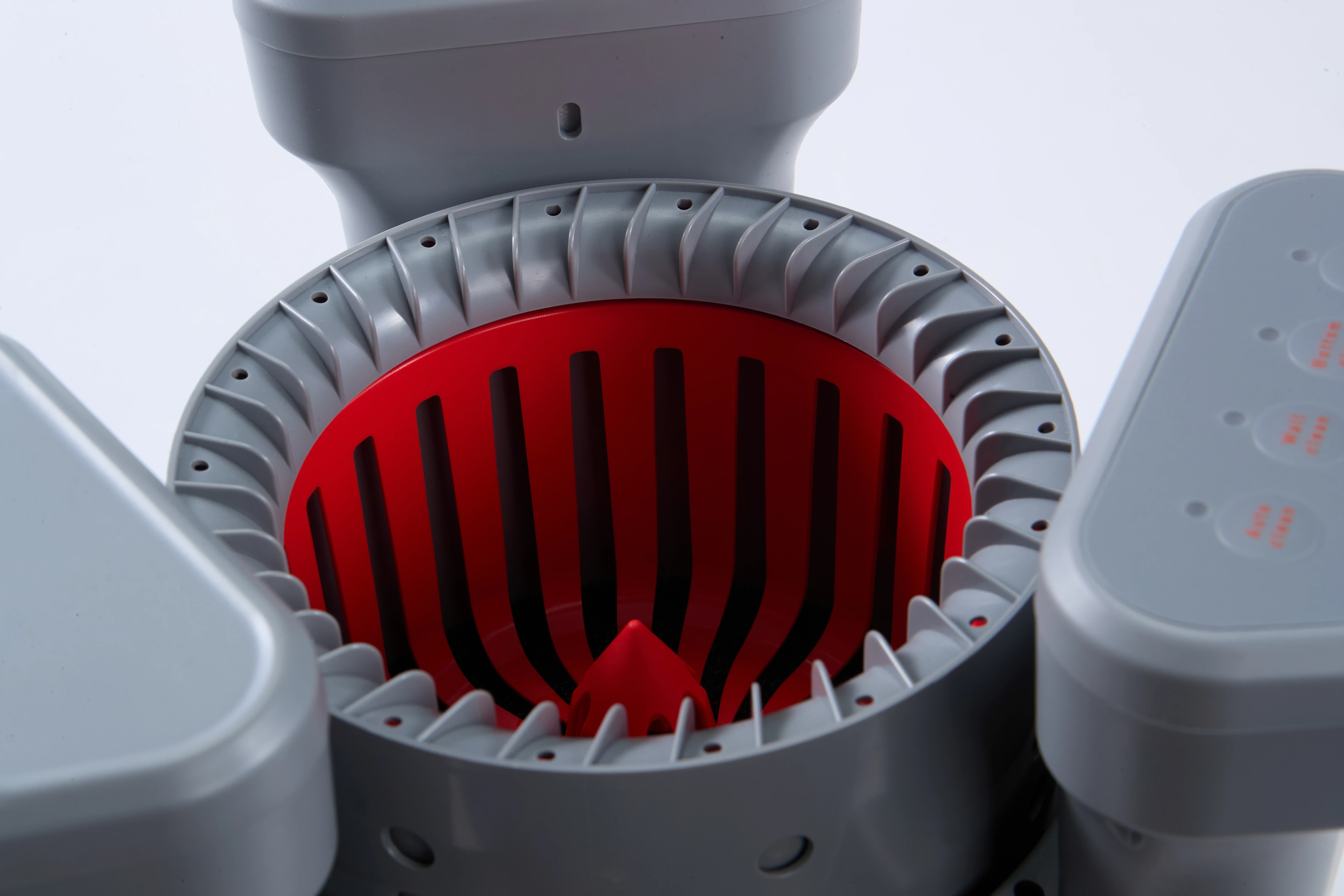
Leaves and fine dirt create completely different filtration challenges.
Fine particles such as:
sand,
dust,
silt,
and pollen
require fine filtration.
Leaves require:
a sufficiently large intake,
adequate water flow,
and enough debris storage capacity.
This creates an important trade-off in robotic pool cleaner filtration.
Very fine filter media can trap small particles effectively, but it may restrict water flow more quickly as the filter becomes dirty.
A coarse debris basket allows larger organic material to enter more easily and may maintain better flow when handling leaves, but it may not capture very fine dust as effectively.
For pools containing both leaves and fine dirt, a well-designed multi-stage or interchangeable filtration system can be useful.
Intake Size Matters When Cleaning Leaves
One of the most important specifications for a robotic pool cleaner designed for leaves is the debris intake.
Imagine two pool robots with similar suction power.
Robot A has a narrow intake opening.
Robot B has a wider debris path.
A large leaf may reach Robot A but become trapped across its intake.
The same leaf may pass more easily into Robot B.
This illustrates why suction power alone does not determine debris pickup.
A robotic cleaner needs an entire debris-handling system that works together:
Water flow → Intake → Filter → Debris storage
If any part of that system becomes restricted, effective leaf collection can decrease.
Is Strong Suction Enough for Picking Up Leaves?
Not by itself.
Suction is certainly important, but the largest suction number does not automatically identify the best cordless robotic pool cleaner for leaves.
Leaf collection depends on several interacting factors.
Water Flow
The cleaner needs sufficient water movement to carry the leaf toward the intake.
Intake Geometry
Once the leaf reaches the cleaner, it must be able to enter.
Filter Resistance
Water must continue moving through the system after debris begins accumulating.
Basket Capacity
Collected leaves need somewhere to go.
Brush Action
Leaves resting against the pool floor may need to be disturbed before they can be collected.
For this reason, buyers should avoid evaluating a pool cleaner using only one headline specification.
A balanced debris system is more important than suction alone.
Why Filter Basket Capacity Matters for Leafy Pools
Imagine a pool surrounded by mature trees.
Even if a robotic cleaner can pick up each individual leaf, a small filter basket may fill before the robot completes the pool.
Once the basket becomes heavily loaded, cleaning performance may decline and the owner must stop the cleaning cycle to empty it.
For pools with frequent leaf fall, a larger debris basket can therefore provide several advantages:
more debris can be collected per cycle,
fewer interruptions are required,
water flow may remain more consistent,
and the robot may complete more useful cleaning before maintenance is required.
Basket accessibility is also important.
A large filter is less convenient if removing and emptying it is unnecessarily difficult.
When comparing cordless robotic pool cleaners for leaves, consider both capacity and ease of maintenance.
Fine Filter or Coarse Filter: Which Is Better for Leaves?
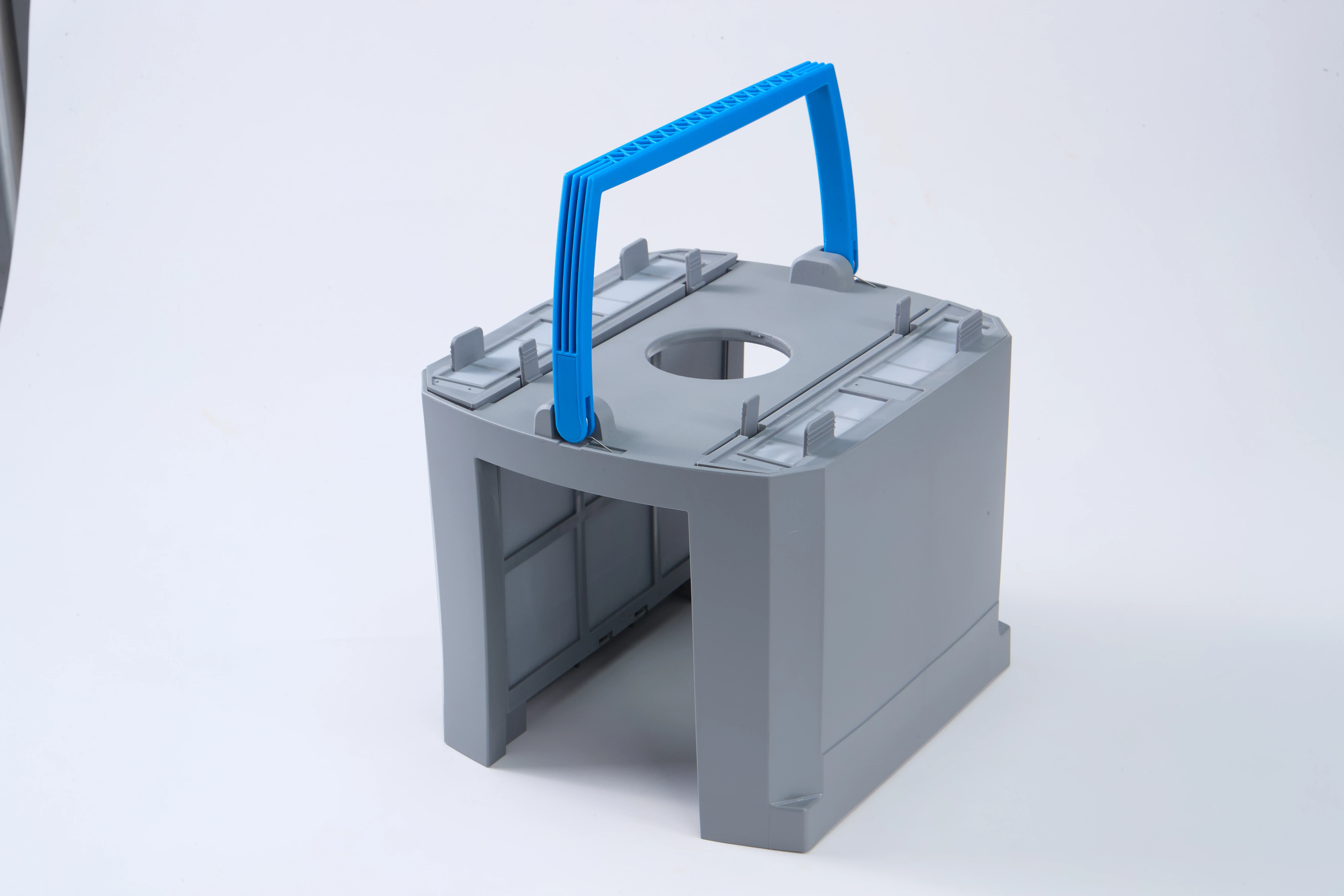
For large leaves, a coarser debris filter is often more appropriate than an extremely fine filter.
Fine filtration is designed primarily for small particles such as:
dust,
silt,
fine sand,
and pollen.
A coarse filter or debris basket generally allows higher water flow and provides more suitable storage for bulky organic material.
However, many pools contain both types of debris.
You may have leaves from nearby trees and fine dust settling on the floor at the same time.
In that situation, filtration flexibility becomes valuable.
A robotic pool cleaner that offers multiple filtration stages or suitable filter options can provide more balanced performance across different debris conditions.
Can a Cordless Pool Robot Pick Up Leaves From the Pool Floor?
Yes. This is where most underwater robotic pool cleaners perform their leaf-cleaning function.
After leaves fall into the pool, some initially remain on the surface.
Over time, they absorb water and sink.
Once they settle on the pool floor, a robotic pool cleaner can travel over or near them and collect them through its intake.
Floor navigation therefore plays an important role.
A robot may have sufficient suction to collect leaves, but it still needs to reach them.
This is particularly important in pools where leaves accumulate in:
corners,
deep ends,
sloped areas,
around drains,
or along wall-floor transitions.
Effective navigation helps reduce areas where debris is repeatedly missed.
Can a Cordless Robotic Pool Cleaner Pick Up Floating Leaves?
This depends on the design of the cleaner.
A conventional underwater robotic pool cleaner primarily cleans submerged areas such as the floor, walls, and sometimes the waterline.
Floating leaves remain on the water surface and may therefore be outside the cleaner's normal operating zone.
This is why it is important to distinguish between:
underwater robotic pool cleaners
and
surface skimming systems.
If floating leaves are the main problem in your pool, surface-cleaning capability becomes particularly valuable.
Some advanced pool-cleaning systems use a dedicated surface-cleaning component or combine underwater cleaning with surface debris collection.
For pools under trees, preventing leaves from sinking can reduce the amount of organic material that eventually reaches the floor.
Surface Leaves vs. Sunken Leaves
Understanding where leaves are located can help determine the right equipment.
Leaf Location | Most Suitable Cleaning Approach |
|---|---|
Floating on water surface | Pool skimmer or robotic surface cleaner |
Suspended in water | Circulation and filtration |
Resting on pool floor | Robotic pool cleaner |
Accumulated in corners | Robot with effective coverage/navigation |
Large branches or oversized debris | Manual removal |
This is why a single device should not always be expected to handle every type of pool debris.
An effective pool-maintenance system may combine surface skimming, robotic floor cleaning, filtration, and occasional manual removal.
What If Your Pool Is Surrounded by Trees?
Pools surrounded by trees place much greater demands on robotic cleaners.
During periods of heavy leaf fall, debris may enter the pool faster than a normal maintenance cycle can remove it.
The problem becomes even more noticeable after:
strong winds,
storms,
seasonal leaf drop,
or landscaping work.
For these pools, prioritize a robotic cleaner with characteristics designed for higher debris loads.
Larger Debris Capacity
The robot should be able to collect a meaningful amount of leaves before the filter basket needs to be emptied.
Wide Debris Intake
A larger opening helps reduce problems with oversized leaves blocking the intake.
Effective Water Flow
Strong and consistent water movement helps carry organic debris through the cleaner.
Easy Filter Access
During heavy leaf seasons, the basket may need to be emptied more frequently.
Efficient Navigation
The robot should spend its available battery runtime cleaning useful areas rather than repeatedly travelling over already-clean sections.
Adequate Runtime
A cordless robotic pool cleaner needs enough battery capacity to complete the required pool area before recharging.
For pools with very heavy vegetation, these characteristics can matter more than app features or other convenience functions.
Should You Remove Large Leaves Before Running a Pool Robot?
You do not need to manually remove every leaf before using a robotic pool cleaner.
Collecting normal leaves is part of the cleaner's job.
However, manually removing unusually large debris can improve the cleaning cycle.
Examples include:
large branches,
thick clusters of leaves,
oversized seed pods,
sticks,
or other objects that could obstruct the cleaner.
This allows the robotic pool cleaner to concentrate on normal debris rather than spending much of its cleaning cycle dealing with objects that are unusually large.
The same principle applies after a major storm.
If the pool floor is covered with an extreme amount of debris, removing the largest material first can prevent the robot's debris container from becoming full almost immediately.
What Happens When the Filter Basket Becomes Full of Leaves?
As leaves accumulate inside the filter basket, available storage space decreases.
Depending on the filter design, a very heavy debris load may also influence water flow through the cleaner.
This can result in:
reduced debris pickup,
less efficient suction,
more debris being left behind,
or the need to stop and empty the basket.
For pools with significant leaf loads, check the basket after each cleaning cycle.
During autumn or after storms, it may need to be checked more frequently.
Regular filter maintenance helps ensure that the robot begins each cycle with maximum available debris capacity.
Can Leaves Clog a Robotic Pool Cleaner?
Yes, particularly when debris is unusually large or the intake and filter system are not well matched to the pool environment.
Possible clogging areas include:
the intake,
filter basket,
brushes,
impeller area,
or other water-flow passages.
Wet leaves can sometimes fold or overlap, creating a temporary blockage.
This is why pools with heavy organic debris benefit from:
larger debris openings,
good water-flow design,
and accessible filters.
If the robot suddenly stops collecting debris effectively, inspect the filter and intake before assuming that the motor or battery has failed.
Cordless vs. Corded Pool Robots for Heavy Leaves
Battery power does not directly determine whether a robot can collect leaves.
Both cordless and corded robotic pool cleaners can be designed with effective leaf-handling systems.
The main difference is runtime.
A corded cleaner can normally continue operating while connected to its power supply.
A cordless robotic cleaner has a limited amount of stored battery energy.
For a normal residential pool, that may not be a problem if the cleaner can finish the pool in one cycle.
For a large pool with a heavy leaf load, the robot may need:
longer runtime,
a larger filter basket,
or multiple cleaning cycles.
When evaluating a cordless robotic pool cleaner for leaves, ask:
Can it collect the debris and finish my pool before the battery is depleted?
That is more useful than asking only how many minutes the battery lasts.
Does Smart Navigation Help With Leaf Cleaning?
Yes, especially in cordless robotic pool cleaners.
Every unnecessary movement consumes battery power.
A robot that repeatedly crosses the same clean section of the pool may have impressive runtime but poor cleaning coverage.
Effective navigation can help the cleaner:
cover more of the pool,
reduce unnecessary repetition,
reach debris accumulation areas,
and use battery energy more efficiently.
For leafy pools, navigation becomes particularly important because leaves often collect unevenly.
Wind and water movement may push debris toward one side of the pool or into specific corners.
The robot needs sufficient coverage to find those areas.
What Features Should You Look for in a Cordless Robotic Pool Cleaner for Leaves?
When leaves are a major concern, consider the complete debris-management system.
Wide Debris Intake
A wide intake helps accommodate larger leaves and organic debris.
Large Filter Basket
More capacity means fewer interruptions during heavy leaf-cleaning cycles.
Strong Water Flow
Effective flow helps move lightweight and waterlogged leaves through the cleaner.
Suitable Filter Design
The filtration system should handle bulky debris without becoming unnecessarily restrictive.
Easy Filter Cleaning
A top-access or easy-removal basket can make frequent maintenance faster.
Smart Navigation
Efficient coverage is particularly important in a battery-powered cleaner.
Adequate Runtime
The robot should have enough battery capacity to cover the required pool size.
Wall and Waterline Capability
If leaves and other debris collect around wall-floor transitions, broader cleaning coverage can be useful.
Surface Cleaning Capability
For pools where most leaves remain floating, a surface-cleaning solution can help capture debris before it sinks.
Leaves vs. Sand vs. Fine Dirt: What Features Matter?
Different debris requires different cleaner characteristics.
Debris Type | Most Important Features |
|---|---|
Large Leaves | Wide intake + large debris basket |
Small Leaves | Water flow + basket capacity |
Wet Leaves | Brush agitation + suction |
Fine Sand | Fine filtration |
Silt | Ultra-fine filtration |
Pollen | Fine filter media |
Hair | Brush and filter design |
Small Insects | Suitable filtration |
Floating Leaves | Surface skimming |
Twigs | Large intake, although oversized debris should be removed manually |
This is why there is no single filtration specification that is perfect for every pool.
The right system depends on the debris you experience most frequently.
Is a Cordless Robotic Pool Cleaner Good for Heavy Leaf Debris?
It can be, provided the cleaner is designed for the task.
Look for a combination of:
large debris capacity + suitable intake + consistent water flow + efficient navigation + sufficient runtime.
A cordless cleaner can be especially convenient because there is no cable to manage around the pool.
However, heavy leaf environments make battery efficiency and basket capacity more important.
If the robot needs to stop repeatedly for charging or filter emptying, the convenience advantage becomes smaller.
This is why matching the cleaner to the pool environment is more important than choosing a product based only on one feature.
Do You Still Need a Pool Skimmer If You Have a Robotic Pool Cleaner?
In many pools, yes.
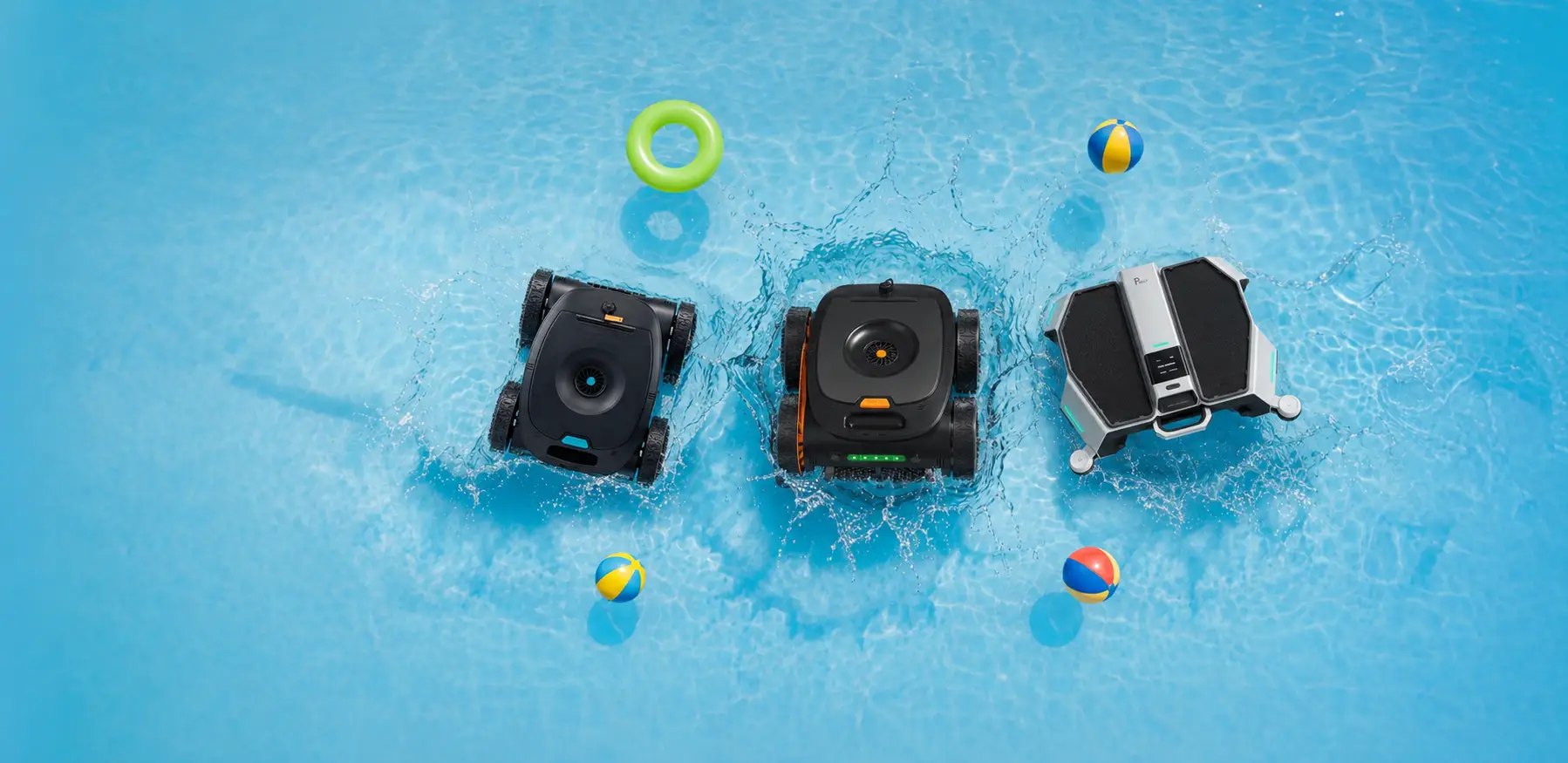
A traditional pool skimmer and an underwater robotic pool cleaner perform different jobs.
The skimmer primarily helps remove floating debris from the surface before it sinks.
The robotic cleaner collects dirt and debris that has already reached pool surfaces.
For pools surrounded by trees, using both systems can be particularly effective:
Skimmer → catches leaves while they float
Robotic cleaner → collects leaves and dirt after they sink
This reduces the amount of debris any single cleaning system needs to handle.
How Often Should You Run a Cordless Pool Robot During Leaf Season?
There is no single schedule that works for every pool.
Cleaning frequency depends on:
surrounding vegetation,
weather,
pool usage,
season,
and the amount of debris entering the water.
A pool under several mature trees may require much more frequent cleaning during autumn than during the middle of summer.
Rather than following a fixed number of weekly cycles, monitor how quickly debris accumulates.
The best time to run the cleaner is before large amounts of organic material remain underwater long enough to break down.
Regular cleaning can make each individual cleaning cycle easier and reduce the chance of the filter basket becoming overloaded.
Is More Suction Always Better for Leaves?
No.
This is one of the most important points when comparing cordless robotic pool cleaners.
A very high suction specification may look impressive, but leaf removal still depends on whether the debris can physically enter the cleaner and remain inside the filter basket.
A better way to evaluate performance is to consider:
Water Flow + Intake Size + Filter Design + Basket Capacity + Navigation
rather than suction alone.
For real-world pool cleaning, these systems must work together.
What Is the Best Cordless Robotic Pool Cleaner for a Leafy Pool?
The best model depends on the amount and type of debris in your pool.
For a lightly wooded residential environment, a standard cordless robotic pool cleaner with a reasonably sized filter basket may be sufficient.
For a pool under heavy tree cover, prioritize:
a larger debris basket,
wide intake openings,
efficient navigation,
long battery runtime,
easy filter access,
and possibly surface debris collection.
If your pool contains both large leaves and fine particles such as sand or pollen, filtration flexibility becomes even more important.
The ideal cleaner should not simply pick up the biggest leaves.
It should handle the range of debris conditions normally found in your pool.
Final Verdict: Can Cordless Robotic Pool Cleaners Pick Up Leaves?
Yes. A well-designed cordless robotic pool cleaner can collect leaves that have settled on the pool floor.
However, not every pool robot handles large organic debris equally well.
For leaf-heavy pools, the most important features are not just battery capacity or advertised suction power.
Look at the complete cleaning system:
intake size, water flow, filter basket capacity, filtration design, navigation efficiency and runtime.
Small leaves are generally easier to collect, while large or waterlogged leaves may require wider intakes and stronger debris-handling capability.
For leaves floating on the water surface, an underwater robotic cleaner may not be enough on its own. A pool skimmer or robotic surface-cleaning system can remove floating material before it sinks.
If your pool is surrounded by trees, choosing a cordless robotic pool cleaner designed for high debris loads can reduce manual cleaning and help maintain a cleaner pool throughout the swimming season.
The best question is therefore not simply:
Can this robot pick up leaves?
It is:
Can this robot efficiently handle the type and amount of leaves that regularly enter my pool?
That is the comparison that matters most.
Frequently Asked Questions
Can a cordless robotic pool cleaner pick up large leaves?
Many models can collect large leaves, but performance depends on intake width, water flow and filter-basket design. If your pool regularly experiences large leaves, look for a wide debris intake and large-capacity basket.
Can robotic pool cleaners pick up wet leaves?
Yes. Many robotic pool cleaners can collect wet or waterlogged leaves from the pool floor. Brush action and effective water flow can help loosen leaves that have settled against the surface.
Can a pool robot pick up floating leaves?
Conventional underwater robotic pool cleaners primarily collect debris from submerged surfaces. Floating leaves are usually better handled by a pool skimmer or robotic surface-cleaning system.
What type of filter is best for leaves?
A relatively open debris basket or coarse filtration system is usually more suitable for bulky leaves than ultra-fine filtration alone. Pools containing both leaves and fine dirt may benefit from multi-stage or interchangeable filtration.
Can leaves clog a robotic pool cleaner?
Large or overlapping leaves can sometimes obstruct the intake or restrict the filter system. Regularly emptying the filter basket and removing oversized debris can help reduce clogging.
Is suction power important for picking up leaves?
Yes, but suction alone does not determine performance. Intake size, water flow, filter resistance, brush design and debris capacity are also important.
Do I need to remove leaves before using a pool robot?
Normal leaves do not need to be removed manually. However, unusually large branches, heavy piles of leaves or oversized objects should be removed before running the cleaner.
Is a cordless pool cleaner good for pools surrounded by trees?
Yes, if it has suitable debris capacity, intake design, navigation and runtime. Pools with heavy leaf fall should prioritize these features when choosing a cordless robotic cleaner.
How often should I empty the filter basket when cleaning leaves?
Check the basket after each cleaning cycle. During heavy leaf fall or after a storm, the basket may need to be checked more frequently.
Are cordless robotic pool cleaners good for leaves and sand?
They can be, but leaves and sand require different filtration characteristics. Large leaves benefit from a wide intake and large debris basket, while sand requires finer filtration.
Does a bigger filter basket make a pool robot better for leaves?
Generally, a larger debris basket is helpful in leaf-heavy pools because it can hold more organic material before requiring emptying. However, intake design and water flow remain equally important.
Should I use a pool skimmer and robotic pool cleaner together?
For pools with significant leaf debris, the combination can be very effective. The skimmer removes leaves from the surface, while the robotic pool cleaner collects debris that settles on the floor and other submerged surfaces.