Best Cordless Robotic Pool Cleaners (2026): Top Models Compared and Tested
Best Cordless Robotic Pool Cleaners
2026
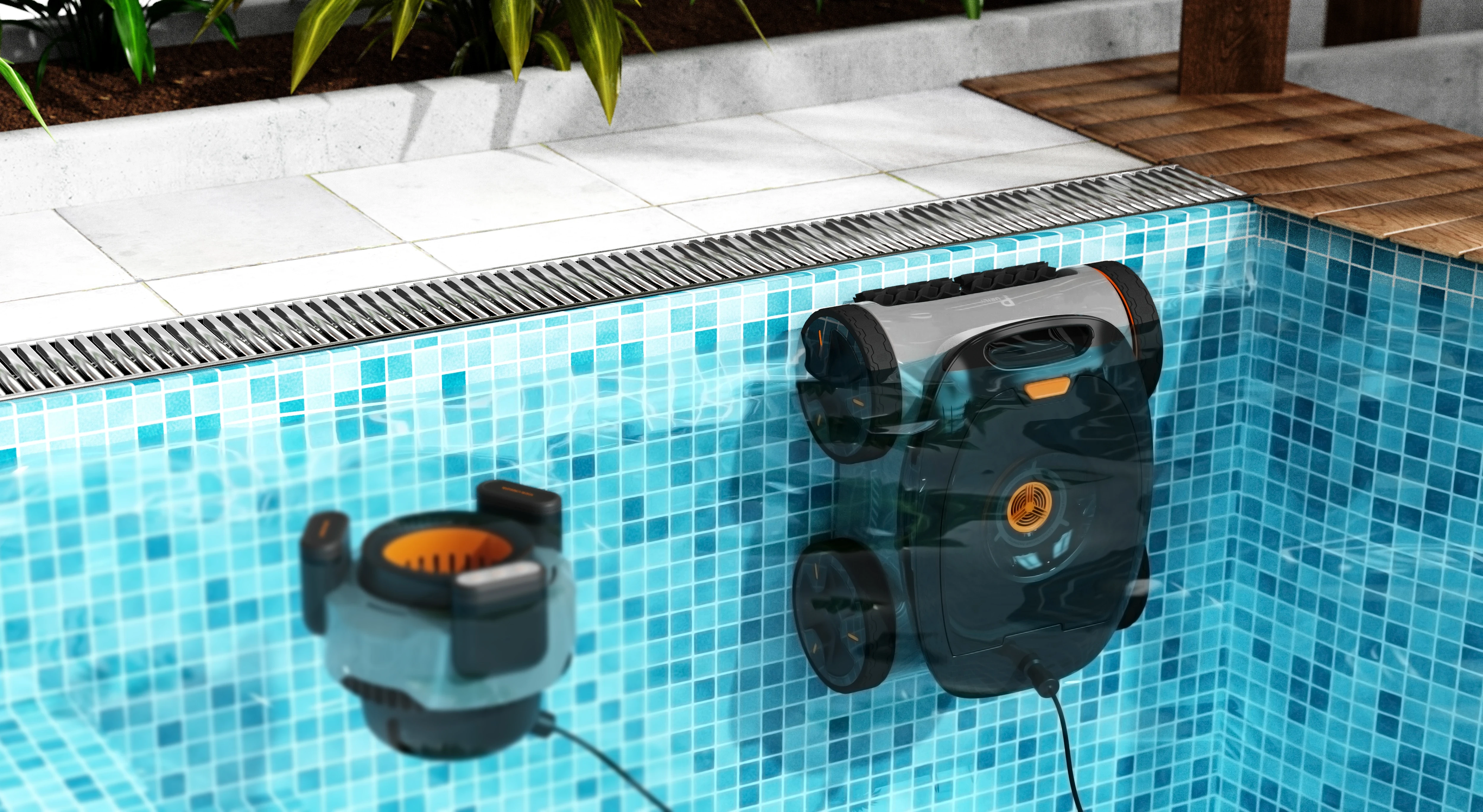
Best Cordless Robotic Pool Cleaners in 2026
A cordless robotic pool cleaner can completely change the way you maintain a swimming pool. Instead of connecting a long power cable, managing cable tangles, and positioning a power supply, you can place a battery-powered robot directly into the pool and let it clean automatically.
But choosing the best cordless robotic pool cleaner is not as simple as choosing the robot with the largest battery or the most impressive list of smart features.
Today's premium pool robots are becoming increasingly sophisticated. Beatbot offers AI-powered mapping and multi-surface cleaning with its AquaSense 2 Ultra. Dolphin / Maytronics has developed the LIBERTY cordless line around established robotic pool-cleaning technology. Aiper has pushed cordless cleaning toward high-output motors, long runtime, advanced sensors, and surface cleaning. Polaris offers the FREEDOM series with multiple cleaning modes and app connectivity. PURILY takes a different approach with models that combine cordless operation with the option of corded power.
That means there is no single robot that is automatically the best choice for every pool.
A small above-ground pool, a large in-ground pool, a pool surrounded by trees, and a complex pool with steps and waterline buildup can all require different cleaning capabilities.
This guide compares leading cordless robotic pool cleaners based on the features that actually matter: cleaning coverage, battery runtime, navigation, suction and filtration, wall and waterline cleaning, controls, pool compatibility, and power options.
The goal is not simply to name a winner. It is to help you understand which cordless robotic pool cleaner makes the most sense for your pool and why.
Important: This is a product comparison and buying guide based primarily on manufacturers' current published specifications and product information. It is not an independent laboratory test or hands-on ranking of every model.
Best Cordless Robotic Pool Cleaners at a Glance
Different pool owners have different priorities, so a useful comparison should not assume that "best" means the same thing for everyone.
Model | Best For | Floor | Walls | Waterline | Surface | Smart Navigation | App Control | Cordless | Corded |
|---|---|---|---|---|---|---|---|---|---|
Beatbot AquaSense 2 Ultra | Premium AI cleaning | ✓ | ✓ | ✓ | ✓ | ✓ | ✓ | ✓ | — |
Dolphin LIBERTY 600 | Established robotic cleaning | ✓ | ✓ | ✓ | — | Smart navigation | ✓ | ✓ | — |
Aiper Scuba X1 Pro Max | Large-pool, high-performance cleaning | ✓ | ✓ | ✓ | ✓ | ✓ | ✓ | ✓ | — |
Polaris FREEDOM | Convenient multi-mode cleaning | ✓ | ✓ | ✓ | — | Smart Cycle | ✓ | ✓ | — |
PURILY Hydro | Hybrid cordless + corded flexibility | ✓ | ✓ | ✓ | ✓ | Ultrasonic / smart navigation | ✓ | ✓ | ✓ |
The table shows an important difference in the current market.
Most premium cordless pool robots are designed to eliminate the power cable completely. PURILY's Hydro, however, is designed to let the user switch between wired and wireless operation. Its published specifications include floor, wall, waterline, and surface cleaning, remote and app control, underwater ultrasonic navigation, four-wheel drive, anti-tangle cable design, and automatic return to the side when the battery is low.
That hybrid approach does not necessarily make PURILY better than every fully cordless competitor. It gives the product a different value proposition: cordless convenience when you want it, and continuous corded power when you need it.
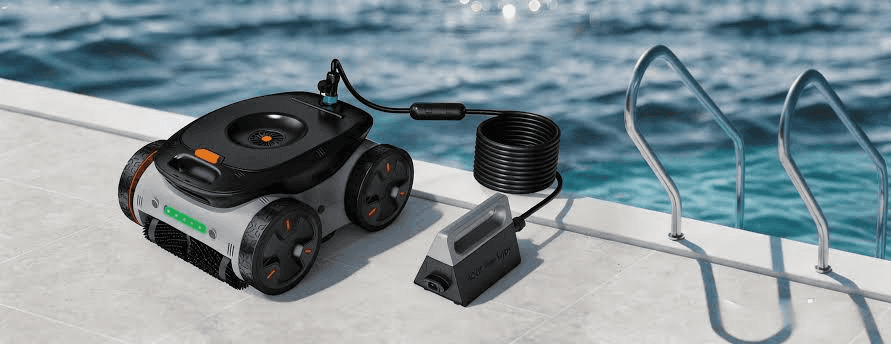
How We Compared Cordless Robotic Pool Cleaners
A pool robot should not be judged by one specification alone.
A high-capacity battery does not guarantee effective cleaning. Strong suction does not automatically mean complete pool coverage. AI navigation can be valuable in a complex pool, but it may provide limited additional value for a simple rectangular pool.
For this comparison, the most important criteria are the following.
Cleaning Coverage
The first question is simple: What parts of the pool can the robot actually clean?
Basic robotic pool cleaners may focus primarily on the floor. More capable models can clean floors and walls. Premium models can add waterline cleaning, steps, ledges, or even the water surface.
For most in-ground pool owners, floor-and-wall cleaning is a reasonable minimum. Waterline cleaning is particularly valuable because oils, sunscreen, dust, and other contaminants can accumulate where the water meets the pool wall.
Surface cleaning is a separate capability. A robot that can collect leaves and debris floating on the water can reduce the amount of manual skimming required.
Battery Runtime
Cordless operation introduces a fundamental limitation: the robot needs stored electrical energy.
The important question is not simply "How many hours does the battery last?" You need to know under what operating mode that runtime is measured.
Surface skimming generally requires different power consumption than climbing walls or operating a high-output suction system. Manufacturers therefore often publish different runtime figures for different cleaning modes.
For example, Aiper states that its Scuba X1 Pro Max can operate for up to 5 hours when cleaning the floor and up to 10 hours in surface-cleaning mode.
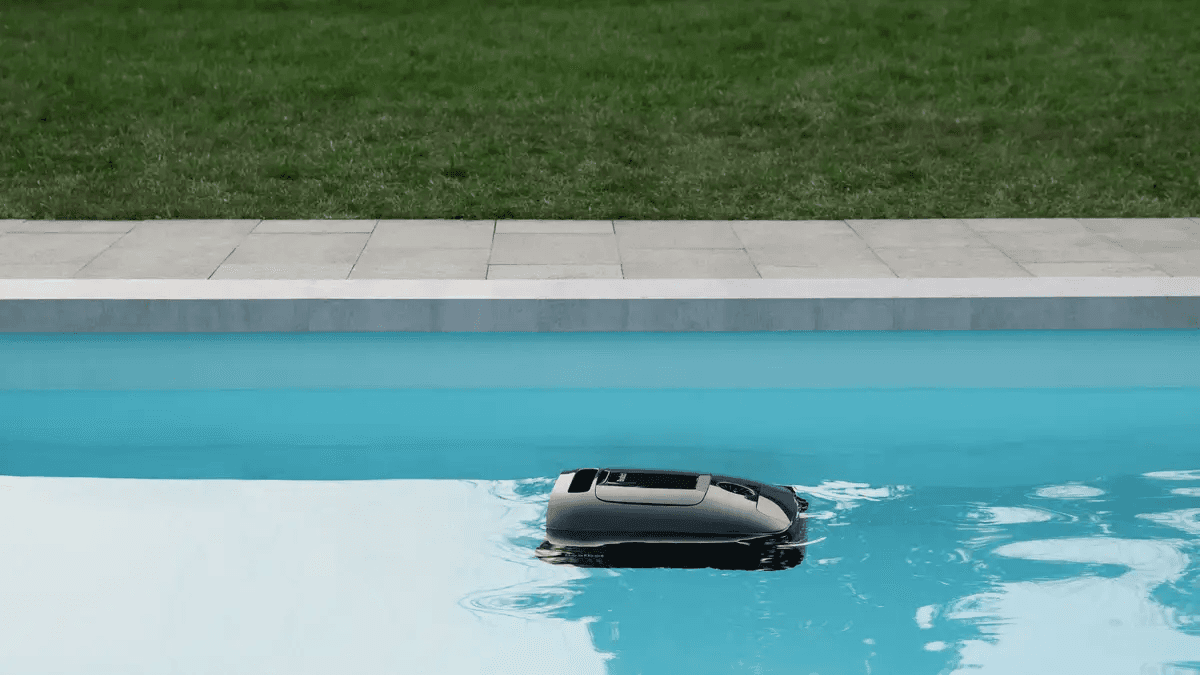
Beatbot likewise publishes different operating times for different cleaning functions, while its AquaSense 2 Ultra uses a 13,400mAh battery and can run for up to 10 hours in surface-cleaning mode, up to 5 hours for floor cleaning, and up to 4.5 hours for wall and waterline cleaning.
The lesson is simple: always compare runtime by cleaning mode, not just battery capacity.
Navigation
Navigation is one of the biggest differences between entry-level and premium robotic pool cleaners.
Older or simpler robots may rely heavily on predetermined movement patterns, directional changes, sensors, and contact with pool surfaces.
More advanced systems use combinations of:
Gyroscopes
Ultrasonic sensors
Cameras
Infrared sensors
AI-based object detection
Mapping algorithms
Adaptive path planning
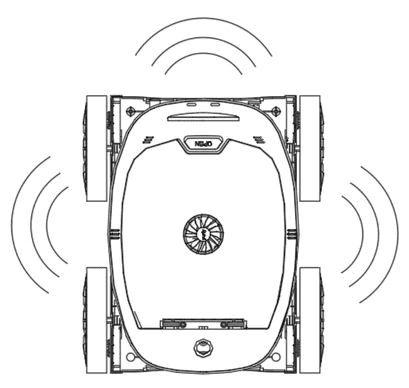
Beatbot's AquaSense 2 Ultra, for example, combines AI camera technology with infrared and ultrasonic sensors through its HybridSense navigation system. Beatbot says the system is designed for precise mapping, obstacle handling, and optimized coverage.
Aiper's Scuba X1 Pro Max uses its OmniSense+ 2.0 ultrasonic sensor system and adaptive path planning, with the manufacturer listing 40 sensors for the model.
PURILY Hydro uses self-developed underwater ultrasonic technology and an S-shaped cleaning path intended to reduce repeated passes and improve cleaning efficiency.
Suction and Filtration
Navigation gets the robot to the right place. Filtration and suction determine how effectively it removes debris.
Consider what your pool usually collects:
Leaves
Sand
Dust
Pollen
Fine particles
Hair
Algae
Small insects
A large debris basket is useful for leaves and other bulky material. Fine filtration is more important when your pool experiences dust, pollen, algae particles, or other small contaminants.
Aiper's Scuba X1 Pro Max, for example, lists 8,500 GPH flow and a replaceable MicroMesh filtration system capable of capturing particles as small as 3 microns.
Dolphin's LIBERTY 600 uses a multi-layer filtration system and includes an ultra-fine filter kit.
Wall and Waterline Cleaning
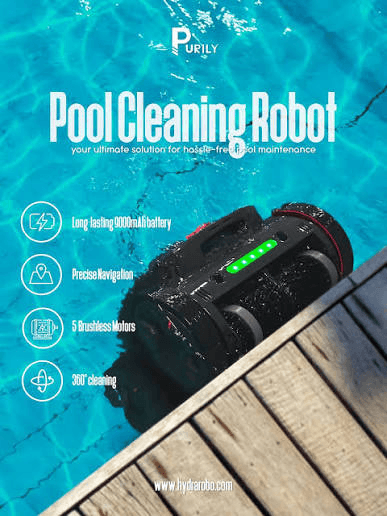
A robot that only cleans the floor can leave a significant amount of manual work behind.
Wall climbing requires enough traction and drive force to maintain contact with a vertical surface. Waterline cleaning requires the robot to transition between horizontal and vertical movement while maintaining effective brushing and suction.
The Dolphin LIBERTY 600 is rated for floor, walls, and waterline cleaning.
Polaris FREEDOM provides modes for floor/wall/waterline cleaning as well as dedicated floor, waterline, and SMART modes.
PURILY Hydro is designed for floor, wall, waterline, and surface cleaning.
Controls and Connectivity
Smart controls can be useful when you want to:
Select cleaning modes
Monitor battery status
Schedule cleaning
Receive completion notifications
Control the robot remotely
Check filter status
However, app functionality should be treated as a convenience feature rather than a substitute for effective mechanical cleaning.
A robot with an excellent app but poor coverage is still a poor pool cleaner.
Why So Many Cordless Pool Robots?
Cordless robotic pool cleaners have become popular because they solve one of the most obvious inconveniences of traditional robotic cleaners: the cable.
A conventional corded robot needs a power connection outside the pool and a floating cable running from the power supply to the cleaner. That cable needs to be managed carefully to reduce tangling and ensure that the robot can move freely.
A cordless robot removes that connection.
You charge the robot, place it into the pool, select a cleaning mode, and let it operate.
That sounds like a relatively small change, but it affects the entire user experience.
No Power Cable in the Pool
The most obvious advantage is the elimination of a long floating power cable during cleaning.
There is less cable management around the pool deck and less concern about the cable wrapping around itself or becoming an obstacle.
For many residential pool owners, this is the main reason to choose cordless.
Easier Setup
Cordless robots generally require fewer steps before each cleaning cycle.
There is no need to position a power supply near the pool and manage the cable length. The basic workflow becomes:
Charge the robot.
Select the cleaning mode.
Place it in the pool.
Start the cleaning cycle.
Remove and recharge it when finished.
Better Mobility
A cordless robot can move without a physical power cable limiting its range.
This can be particularly useful for pools with irregular shapes or layouts where cable management becomes inconvenient.
Maytronics describes the LIBERTY line as a cordless solution designed for different pool shapes, while the LIBERTY 600 is listed for rectangular, round, free-form, and kidney-shaped pools.
Smart Technology Fits Naturally With Cordless Design
Cordless cleaning has also developed alongside smarter navigation.
Once a robot is operating without a cable, autonomous navigation becomes even more important. The machine needs to understand where it is, determine where it should go, and return or park in a convenient location.
That is why many premium cordless models now emphasize mapping, sensors, obstacle avoidance, and intelligent path planning.
The Market Is Moving Beyond Floor Cleaning
Another reason cordless pool robots are gaining attention is that manufacturers are expanding what these robots can do.
The current generation is no longer limited to simply driving across the pool floor.
Depending on the model, a robot may clean:
Floor
Walls
Waterline
Steps
Ledges
Water surface
Beatbot's AquaSense 2 Ultra is a clear example of this trend, with five-in-one cleaning covering the surface, floor, walls, waterline, and water clarification.
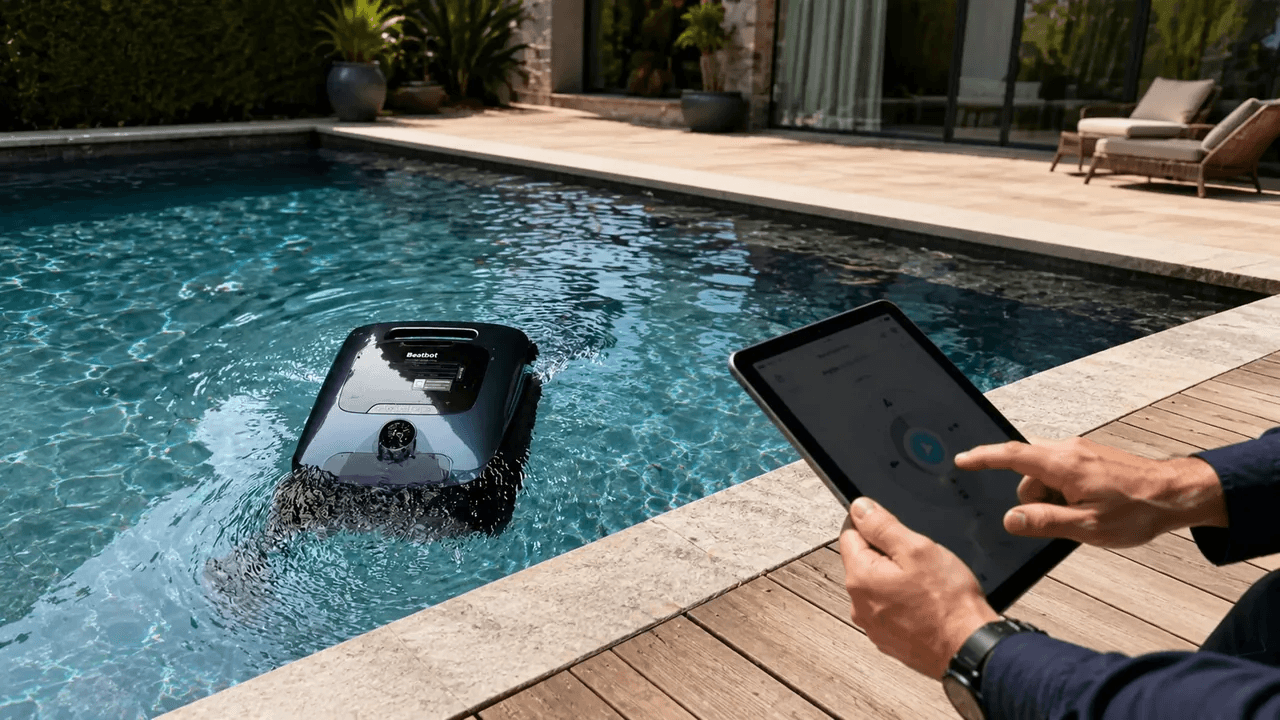
Aiper's Scuba X1 Pro Max similarly combines surface, floor, wall, and waterline cleaning.
This means the cordless category is increasingly becoming a competition between complete cleaning systems, not just battery-powered pool vacuums.
Why You Might Regret Going Cordless
Cordless sounds better because it is more convenient.
But convenience comes with a trade-off: the robot has to carry its own energy source.
That creates several limitations that should be considered before purchasing.
Battery Runtime Is Finite
A corded cleaner can continue receiving power as long as it remains connected to its power source.
A cordless robot cannot.
Once the battery is depleted, the cleaning cycle stops.
This may not matter for a small pool that can be cleaned within a single cycle. It becomes more important for large pools, pools with heavy debris, or owners who prefer long cleaning sessions.
Published Runtime Does Not Tell the Whole Story
A manufacturer's maximum runtime should never be interpreted as a universal cleaning time.
Runtime can vary according to:
Cleaning mode
Motor load
Wall climbing
Water resistance
Debris load
Navigation activity
Battery condition
Pool configuration
A robot may run much longer when skimming the surface than when continuously climbing walls and operating a powerful suction system.
Aiper explicitly illustrates this difference with the Scuba X1 Pro Max: up to 10 hours for surface cleaning but up to 5 hours for floor cleaning.
Charging Takes Time
Once a cordless robot finishes a cleaning cycle, it needs to be recharged.
That means owners should consider both runtime and recharge time.
Polaris FREEDOM, for example, states a cleaning time of 2.5 hours or less and a recharge time of less than 5 hours.
For many residential pools, that is perfectly practical.
But if you want several long cleaning cycles in a single day, the charging interval becomes part of the ownership experience.
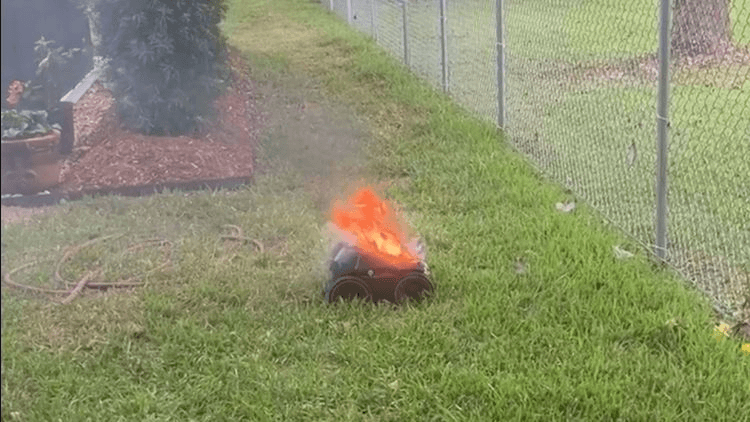
Battery Aging Matters
Rechargeable batteries have a finite service life.
Over time, repeated charge and discharge cycles can reduce the battery's effective capacity.
That does not mean cordless robots are inherently unreliable. It means buyers should consider:
Battery replacement availability
Warranty coverage
Service network
Replacement cost
Long-term support
These factors can be just as important as the robot's initial specifications.
Large Pools Can Change the Equation
For a smaller pool, one complete cleaning cycle may be sufficient.
For a large pool, the calculation is different.
If the robot cannot complete the desired cleaning coverage in one cycle, you may need to recharge it and run another cycle.
This is one reason battery runtime should always be considered together with pool size and cleaning coverage.
Cordless Does Not Automatically Mean Better Cleaning
This is perhaps the most important point.
The absence of a cable is an operational advantage. It is not a measure of cleaning performance.
A corded robot with continuous power can still be a better choice for some users.
A cordless robot with sophisticated navigation may be better for another user.
The right choice depends on the application.
Why Corded Pool Cleaners Are Better
Corded robotic pool cleaners still have an important advantage: continuous access to power.
For users who prioritize long cleaning cycles and do not want to think about battery capacity, corded operation remains compelling.
Continuous Power
The most obvious benefit is that the robot does not need to stop because its internal battery is empty.
As long as the electrical connection is maintained correctly, the robot can continue operating.
This is particularly useful for:
Large pools
Heavy debris
Long cleaning cycles
Commercial or demanding residential applications
Users who prefer predictable operating time
No Battery Charging Between Cycles
With a corded robot, there is no need to wait for the internal battery to recharge before another cleaning cycle.
This makes the operating workflow simpler for users who clean frequently.
Consistent Power Availability
A corded design separates the robot's operating time from battery capacity.
The manufacturer can design the motor, pump, and cleaning system around a continuous external power source.
That does not automatically make every corded robot more powerful, but it eliminates battery runtime as the primary operating constraint.
Better for Some Large-Pool Applications
A large pool can demand longer cleaning time.
If the robot needs several hours to cover the entire pool, continuous power can be more convenient than stopping for a recharge.
This is where the theoretical advantages of cordless operation can become less important than practical cleaning requirements.
The Disadvantage Is Still the Cable
Corded robots have not disappeared because they have one major disadvantage: the cable.
The cable needs to be stored, positioned, and managed.
It can become tangled, restrict movement, or create additional work when preparing the cleaner.
So the real choice is not:
Cordless is modern, corded is old.
It is:
Do you prioritize cable-free convenience or continuous power?
Cordless vs. Corded Pool Cleaners
The following comparison summarizes the fundamental difference.
Feature | Cordless | Corded |
|---|---|---|
Cable management | Excellent | Requires attention |
Setup convenience | Excellent | Good |
Mobility | Excellent | Cable-dependent |
Operating time | Battery-dependent | Continuous |
Charging | Required | Not required |
Long cleaning cycles | Model-dependent | Excellent |
Large-pool applications | Model-dependent | Strong option |
Storage | Simple | Cable management required |
Flexibility | High | Moderate |
Best advantage | Convenience | Continuous operation |
Neither technology wins every category.
Cordless is generally better when convenience, mobility, and easy setup are the priorities.
Corded can be better when continuous operation and long cleaning cycles matter most.
But there is another approach.
Are Hybrid Cordless Pool Cleaners the Best of Both Worlds?
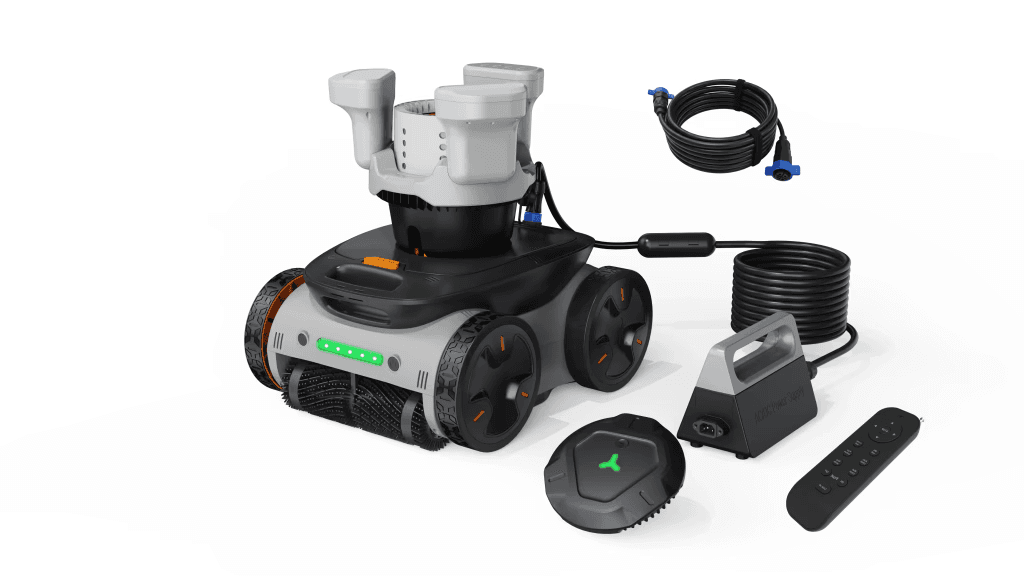
A hybrid robotic pool cleaner attempts to combine the advantages of both technologies.
Instead of forcing the user to choose between cordless convenience and corded runtime, a hybrid system can provide both operating modes.
This is the approach used by PURILY Hydro.
The Hydro is marketed as a smart cordless pool cleaning robot with a switchable wired and wireless mode. It is designed for floor, wall, waterline, and surface cleaning and includes app and remote control, ultrasonic navigation, four-wheel drive, and an anti-tangle cable.
Cordless Mode for Convenience
When the pool is suitable for a normal battery-powered cleaning cycle, cordless mode eliminates the need to manage a power cable.
This gives the user the same basic convenience expected from a modern cordless pool robot.
Corded Mode for Extended Operation
When a longer cleaning session is needed, the ability to use wired power changes the equation.
Instead of being limited entirely by battery runtime, the user can choose continuous power.
This can be particularly useful for larger pools or cleaning sessions where extended operation is more important than complete cable-free operation.
One Robot, Two Power Strategies
The main benefit of a hybrid system is flexibility.
You do not necessarily have to decide at the time of purchase that your pool will always be better suited to cordless operation.
Your needs can change.
For everyday maintenance, you may prefer cordless.
For a major cleaning cycle after a storm, you may prefer continuous power.
For a large pool, corded operation may be more practical.
That flexibility is the central argument for a hybrid robotic pool cleaner.
Best Cordless Robotic Pool Cleaners in 2026
The following models represent different approaches to premium cordless pool cleaning.
Rather than claiming that one robot is objectively superior to every other model, each is evaluated according to its strengths and intended use.
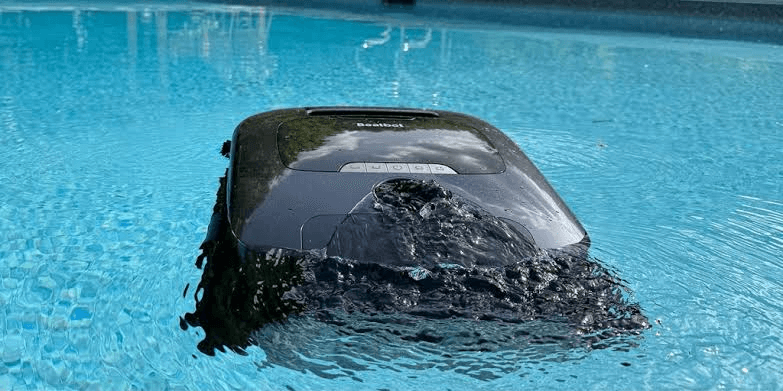
Beatbot AquaSense 2 Ultra — Best Premium AI Pool Cleaner
The Beatbot AquaSense 2 Ultra represents the high end of the current cordless robotic pool cleaner market.
It is designed for users who want advanced navigation, broad cleaning coverage, surface cleaning, and extensive automation in one system.
Beatbot describes the AquaSense 2 Ultra as an AI-powered 5-in-1 robotic pool cleaner. Its published features include HybridSense AI mapping, AI debris detection, surface cleaning, floor cleaning, wall cleaning, waterline cleaning, and water clarification.
Why It Stands Out
The biggest differentiator is the emphasis on AI and navigation.
The AquaSense 2 Ultra combines AI camera technology with infrared and ultrasonic sensing. Beatbot says HybridSense is designed to create precise pool maps, optimize cleaning paths, handle obstacles, and support complex pool environments.
That becomes particularly useful when the pool is not simply a rectangular box.
Steps, ledges, irregular shapes, and different pool levels can create navigation challenges that a simple random-path cleaner may struggle with.
Cleaning Coverage
The AquaSense 2 Ultra is designed for five-in-one cleaning:
Water surface
Floor
Walls
Waterline
Water clarification
Beatbot states that the model can clean pools up to 320 square meters, or approximately 3,444 square feet, in a single cycle.
Battery and Runtime
Beatbot lists a 13,400mAh battery and different maximum runtime figures depending on the cleaning function.
According to its support information, the AquaSense 2 Ultra can run for up to 10 hours for surface cleaning, 5 hours for floor cleaning, and 4.5 hours for walls and waterline cleaning.
Best For
The AquaSense 2 Ultra is a strong choice for users who prioritize:
Premium AI navigation
Complex pool coverage
Multi-surface cleaning
Surface cleaning
App-based control
Advanced automation
Potential Trade-Offs
The main issue is that advanced technology comes at a premium.
If your pool is small, simple, and easy to clean, you may not need every AI and mapping capability offered by a flagship robot.
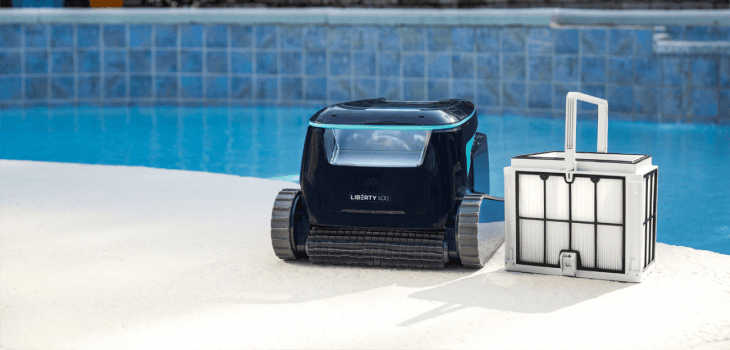
Dolphin LIBERTY 600 — Best Established Cordless Pool Cleaner
Dolphin is one of the most established names in robotic pool cleaning, and the LIBERTY series represents Maytronics' cordless approach.
The LIBERTY 600 is positioned as the most advanced model in the current LIBERTY line and is designed to clean floors, walls, and waterline areas.
Cleaning Coverage
The LIBERTY 600 is designed for:
Pool floor
Pool walls
Waterline
Maytronics lists a maximum pool length of 50 feet for the model.
It is also designed for both in-ground and above-ground pools and multiple pool shapes, including rectangular, round, free-form, and kidney-shaped pools.
Filtration
One of the LIBERTY 600's strengths is filtration.
Maytronics lists a multi-layer filtration system and includes an ultra-fine filter kit. The company says the robot is designed to capture both coarse dirt and fine particles.
Smart Controls
The LIBERTY 600 connects with the Maytronics One app.
According to Maytronics, users can view filter status, select customized cleaning programs, and activate Eco Mode. The robot also features Click-Up and homing functions to make retrieval easier.
Best For
The Dolphin LIBERTY 600 makes sense for buyers who value:
A mature robotic pool-cleaner brand
Floor, wall, and waterline cleaning
Multi-layer filtration
App connectivity
Cordless operation
Established after-sales support
Potential Trade-Offs
The LIBERTY 600 is a fully cordless system.
That means its operating strategy remains battery-dependent. For buyers who specifically want the option of continuous corded operation, a hybrid model offers something the LIBERTY line does not.
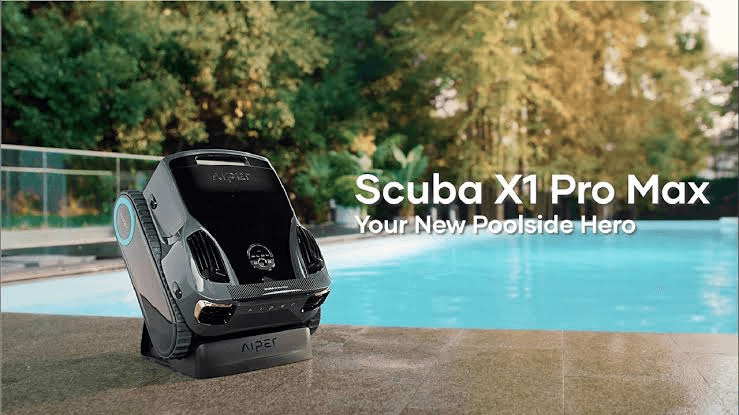
Aiper Scuba X1 Pro Max — Best for High-Performance Cordless Cleaning
Aiper has become a major player in cordless robotic pool cleaning, and the Scuba X1 Pro Max demonstrates how far the category has moved beyond simple battery-powered floor cleaners.
The manufacturer's current specifications emphasize high suction, multiple brush systems, extensive sensing, long battery life, and all-area cleaning.
High Output Cleaning System
Aiper lists:
9 brushless motors
8,500 GPH suction/flow rate
Dual front and rear brushes
A wide suction inlet
Ultra-short flow path
The system is designed to handle debris ranging from large leaves to fine particles.
Fine Filtration
The Scuba X1 Pro Max uses MicroMesh ultra-fine filtration and is specified to capture particles as small as 3 microns.
This is an important distinction because strong suction alone does not determine how clean the water becomes after debris passes through the system.
Navigation
The robot uses OmniSense+ 2.0 ultrasonic sensing and adaptive path planning.
Aiper lists 40 sensors and multiple path patterns, including S-shaped, grid, Y-shaped, edge/random, and descending S-shaped paths.
The system is also designed to handle obstacles, ladders, and different pool structures.
Runtime
One of the model's most impressive published specifications is its battery endurance.
Aiper states:
Up to 5 hours for floor cleaning
Up to 10 hours for surface cleaning
The manufacturer also lists support for pools up to approximately 3,230 square feet and 100 feet in length for the specified application.
Best For
The Scuba X1 Pro Max is particularly interesting for users who prioritize:
Long cordless runtime
High suction
Large-pool capability
Surface cleaning
Advanced navigation
Fine filtration
Fully cordless operation
Potential Trade-Offs
It is a highly sophisticated system, so it may be more technology than a small or simple pool requires.
It is also fully cordless, so its long runtime does not eliminate the fundamental battery dependency of the category.

PURILY Hydro — Best Hybrid Cordless + Corded Pool Cleaner
PURILY takes a different position in the market.
Instead of treating cordless operation as the only solution, the Hydro is designed to support both wireless and wired operation.
That distinction is important because it addresses one of the central limitations of cordless robotic pool cleaners: battery dependency.
Full-Surface Cleaning
PURILY lists the Hydro as capable of 360-degree cleaning across:
Floor
Walls
Waterline
Surface
The product also uses remote control and app control.
This puts the Hydro in the same broader category as premium multi-surface robotic cleaners rather than simple floor-only cordless vacuums.
Ultrasonic Navigation
PURILY describes its underwater ultrasonic technology as a high-precision navigation system and combines it with an S-shaped cleaning path.
The objective is to reduce repeated passes and improve coverage efficiency.
This is important because a robot's cleaning efficiency depends not only on how powerful its motor is, but also on how intelligently it moves through the pool.
Four-Wheel Drive
The Hydro uses four-wheel drive.
This provides the mechanical traction required for more demanding movement, particularly when transitioning between different surfaces and climbing walls.
Strong Suction and Dual Water Inlets
PURILY specifies two large water inlets designed to provide strong cleaning performance.
The combination of suction, brushes, drive motors, and navigation determines the actual cleaning result, so these components should be evaluated as a system rather than individually.
Anti-Tangle Cable
A hybrid cleaner still needs a cable when operating in wired mode.
PURILY therefore incorporates an anti-tangle cable design.
This does not eliminate cable management completely, but it is intended to reduce one of the traditional disadvantages associated with corded operation.
Low-Battery Return
PURILY also states that the Hydro can automatically stop by the pool side when its battery is low.
This is a practical feature because retrieving a robot from the middle or deepest section of a pool can be inconvenient.
Best For
PURILY Hydro is particularly interesting for users who want:
Cordless convenience
Corded continuous operation
Floor, wall, waterline, and surface cleaning
Smart navigation
Four-wheel drive
App and remote control
Flexible power options
Potential Trade-Offs
The hybrid architecture is more flexible, but users should understand that the wired mode still involves cable management.
If a pool owner wants a completely cable-free experience under every circumstance, a fully cordless model may be preferable.
If the owner wants the flexibility to switch between convenience and continuous operation, hybrid power becomes much more attractive.
PURILY Hydro SU — A Hybrid Option for Larger Pools
PURILY's Hydro SU is positioned toward larger-pool applications and combines AI-powered cleaning with corded or cordless operation, four-dimensional cleaning, hybrid power, and smart Wi-Fi control.
This model is particularly relevant to the discussion because large pools are where the limitations of battery-only cleaning become more noticeable.
Why Hybrid Power Matters for Larger Pools
A large pool may require:
Longer cleaning cycles
More wall climbing
More navigation
More debris collection
More energy consumption
A fully cordless robot may still handle the pool effectively, especially with a high-capacity battery.
But a hybrid model gives the owner another option when continuous operation is more convenient.
This is why hybrid power should not be viewed merely as a technical specification. It is a use-case feature.
Cordless Robotic Pool Cleaner Comparison
The leading products in this category have different strengths.
Model | Primary Strength | Cleaning Coverage | Navigation Focus | Power Strategy | Best For |
|---|---|---|---|---|---|
Beatbot AquaSense 2 Ultra | AI and automation | Surface, floor, walls, waterline | AI camera + sensors | Cordless | Premium smart pools |
Dolphin LIBERTY 600 | Established robotic cleaning | Floor, walls, waterline | Smart navigation | Cordless | Brand-focused buyers |
Aiper Scuba X1 Pro Max | Power and endurance | Surface, floor, walls, waterline | Ultrasonic + adaptive planning | Cordless | Large/high-debris pools |
Polaris FREEDOM | Practical multi-mode cleaning | Floor, walls, waterline | SMART mode | Cordless | Convenient daily cleaning |
PURILY Hydro | Power flexibility | Floor, walls, waterline, surface | Ultrasonic + smart path | Hybrid | Cordless + continuous power |
PURILY Hydro SU | Large-pool hybrid cleaning | Multi-surface | AI / smart navigation | Hybrid | Larger pools |
The comparison demonstrates why a simple ranking can be misleading.
Beatbot has a strong position in AI and advanced automation.
Dolphin has an established robotic-cleaning ecosystem and mature product line.
Aiper is particularly aggressive in motor power, battery endurance, sensing, and all-area cleaning.
Polaris emphasizes practical operation, multiple cleaning modes, app connectivity, and retrieval.
PURILY differentiates itself through the combination of cordless and corded power.
What Makes a Cordless Robotic Pool Cleaner Actually Good?
The most important lesson from comparing these products is that there is no single specification that determines whether a robot is good.
A high-quality robotic pool cleaner needs several systems to work together.
Navigation Must Be Efficient
The robot should not spend most of its battery repeatedly cleaning the same area.
Intelligent path planning can help reduce unnecessary movement.
Traction Must Match the Pool
Wall climbing requires adequate traction.
A robot may have strong suction but still struggle with vertical surfaces if its drive system cannot maintain contact.
Filtration Must Match the Debris
A pool surrounded by trees may need a large debris basket.
A pool exposed to dust and pollen may benefit more from fine filtration.
Runtime Must Match Pool Size
A small pool does not necessarily need a five-hour cleaning cycle.
A large pool may benefit from extended runtime or hybrid power.
Retrieval Should Be Easy
A robot is not truly convenient if removing it from the pool is difficult.
Modern models increasingly use:
Waterline parking
Automatic return
Click-up systems
Retrieval hooks
App-controlled retrieval
Poolside parking
These features reduce the physical effort involved after cleaning.
Cordless Pool Cleaner vs. Hybrid Pool Cleaner
The distinction between a conventional cordless robot and a hybrid robot deserves more attention.
Choose Cordless If Convenience Is Your Priority
A fully cordless robot is ideal when you want:
No cable
Fast setup
Easy storage
Simple daily maintenance
Flexible movement
If your pool can be cleaned comfortably within one battery cycle, there may be little reason to add a corded operating option.
Choose Hybrid If Flexibility Is More Important
A hybrid system becomes more compelling when you want:
Cordless operation for normal cleaning
Continuous power for extended cleaning
Greater flexibility for large pools
Less dependence on battery runtime
This is the category where PURILY has a clear differentiator.
How to Choose the Best Cordless Robotic Pool Cleaner for Your Pool
Before choosing a model, start with the pool rather than the robot.
Consider Pool Size
The larger the pool, the more important runtime and coverage become.
A robot rated for a smaller pool may technically operate in a larger pool but require multiple cycles.
Always check the manufacturer's recommended pool dimensions.
Consider Pool Shape
Simple rectangular pools are generally easier for autonomous robots to navigate.
Free-form pools, kidney-shaped pools, steps, tanning ledges, benches, and multiple depths create additional challenges.
If your pool is complex, navigation technology becomes more important.
Consider Pool Surface
Pool surfaces can include:
Concrete
Plaster
Fiberglass
Vinyl
Ceramic tile
Stone
The robot must be compatible with the surface and have adequate traction.
Maytronics, for example, lists the LIBERTY 600 for PVC, fiberglass, stone, mosaic, and ceramic-tile surfaces.
Consider Wall and Waterline Cleaning
If you want the robot to replace as much manual cleaning as possible, look for floor, wall, and waterline coverage.
A floor-only robot may still require manual brushing of walls and the waterline.
Consider Surface Cleaning
If your pool frequently collects:
Leaves
Insects
Pollen
Seeds
a surface-cleaning robot can provide additional value.
This feature is increasingly common in premium models.
Consider Battery Runtime
Do not compare only battery capacity.
Instead, ask:
How long can the robot clean my pool in the mode I actually use?
This is a much more useful question.
Consider Charging Time
A long runtime with a very long charging time may be less convenient than a shorter runtime with faster charging.
The two numbers should always be evaluated together.
Consider Filtration
Think about the debris in your pool.
Large leaves require capacity.
Fine dust requires fine filtration.
A mixed environment may benefit from multi-layer filtration and a sufficiently large debris basket.
Consider App Features
App connectivity can provide:
Cleaning mode selection
Battery monitoring
Scheduling
Notifications
Remote control
Cleaning status
But app quality should not outweigh fundamental cleaning performance.
Are Cordless Robotic Pool Cleaners Worth It?
For many pool owners, yes.
The biggest benefit is convenience.
You do not need to manage a long cable every time you clean the pool. Modern cordless robots can also offer sophisticated navigation, wall climbing, waterline cleaning, filtration, and app control.
However, cordless is not automatically the best solution for every application.
A cordless robot makes the most sense when:
The pool can be cleaned within the available battery runtime.
Convenience is a major priority.
You want to eliminate cable management.
The robot supports the surfaces you need cleaned.
You are comfortable with regular charging.
A corded robot may be better when:
Long cleaning cycles are required.
The pool is very large.
You do not want to wait for charging.
Continuous power is more important than cable-free operation.
A hybrid robot may be the better fit when you want both.
What Is the Best Cordless Robotic Pool Cleaner for a Large Pool?
There is no universal answer because "large pool" can mean different things.
For example, Aiper's Scuba X1 Pro Max is specified for pools up to approximately 3,230 square feet and combines long floor runtime with extensive surface-cleaning endurance.
Beatbot's AquaSense 2 Ultra is specified for pools up to approximately 3,444 square feet per cycle and provides advanced mapping and multi-surface cleaning.
The Dolphin LIBERTY 600 is listed for pools up to 50 feet in length and provides floor, wall, and waterline cleaning.
PURILY Hydro SU is positioned specifically as a hybrid cordless/corded option for larger pools.
For large pools, the important question is therefore not simply:
Which robot has the largest battery?
It is:
Which combination of coverage, runtime, navigation, debris capacity, and power strategy best matches the pool?
What Is the Best Cordless Robotic Pool Cleaner for Leaves and Large Debris?
If your pool is surrounded by trees, debris management becomes one of the most important considerations.
Look for:
Large filter capacity
Wide suction inlet
Strong water flow
Efficient brush design
Easy filter removal
Surface cleaning if floating debris is a major issue
Aiper's Scuba X1 Pro Max, for example, lists a 3 cm-wide suction inlet, 8,500 GPH flow, dual front and rear brushes, and a 5-liter top-load filter basket.
Beatbot's AquaSense 2 Ultra also offers surface cleaning and AI debris detection, which can be useful for pools with significant floating debris.
What Is the Best Cordless Robotic Pool Cleaner for Waterline Cleaning?
Waterline cleaning is one of the most valuable premium features because the waterline is where oils, sunscreen, dust, and other contaminants often accumulate.
The Dolphin LIBERTY 600 explicitly includes waterline scrubbing.
Polaris FREEDOM includes a dedicated waterline mode in addition to its combined floor/wall/waterline mode.
Aiper's Scuba X1 Pro Max includes waterline cleaning as part of its all-area cleaning system.
PURILY Hydro also lists waterline cleaning among its four-area cleaning coverage.
If waterline cleaning is important to you, do not assume that every cordless pool robot can do it. Always verify the specific model.
What Is the Best Cordless Robotic Pool Cleaner for Smart Navigation?
For highly complex pools, navigation can be more important than raw suction power.
Beatbot's AquaSense 2 Ultra has one of the most elaborate navigation systems in this comparison, combining AI camera, infrared, ultrasonic sensing, and HybridSense mapping.
Aiper's Scuba X1 Pro Max uses 40 sensors and OmniSense+ 2.0 ultrasonic sensing with adaptive path planning.
PURILY Hydro uses underwater ultrasonic technology combined with an S-shaped path strategy.
The best choice depends on how complex your pool is.
For a simple rectangular pool, extremely sophisticated AI may not be necessary.
For a pool with multiple levels, steps, ledges, or irregular geometry, advanced navigation can provide more meaningful benefits.
What Is the Difference Between a Cordless Pool Robot and a Cordless Pool Vacuum?
A cordless pool vacuum is generally designed around manual or semi-manual cleaning.
The user controls where it goes.
A cordless robotic pool cleaner is designed to automate movement and cleaning.
The robot can:
Navigate independently
Follow a cleaning path
Scrub surfaces
Collect debris
Return or park
Complete a programmed cycle
This distinction matters when comparing products online because "cordless pool cleaner" can refer to very different types of equipment.
If you want automation, look specifically for a cordless robotic pool cleaner rather than simply a cordless pool vacuum.
Do You Need AI in a Robotic Pool Cleaner?
Not necessarily.
AI is useful when it solves a real problem.
Advanced AI navigation can help with:
Irregular pool shapes
Obstacle detection
Path optimization
Debris recognition
Complex pool geometry
Multi-level surfaces
But if your pool is small and rectangular, a simpler navigation system may already provide excellent results.
The best buying decision is therefore not:
More AI = better.
It is:
Does the navigation technology solve a problem that exists in my pool?
Final Verdict: Which Cordless Robotic Pool Cleaner Should You Choose?
The best cordless robotic pool cleaner in 2026 depends on what you value most.
If you want the most advanced AI-focused experience, Beatbot AquaSense 2 Ultra is one of the strongest premium options. Its combination of AI mapping, advanced sensing, five-in-one cleaning, surface cleaning, and adaptive navigation makes it particularly attractive for complex pools.
If you prefer an established robotic pool-cleaning brand with a mature cordless product line, Dolphin LIBERTY 600 is a strong choice. It offers floor, wall, and waterline cleaning, multi-layer filtration, app connectivity, and a maximum pool length of 50 feet.
If your priorities are high suction, long cordless runtime, extensive sensing, and large-pool capability, Aiper Scuba X1 Pro Max deserves serious consideration. Its published specifications include 8,500 GPH flow, nine motors, 40 sensors, up to five hours of floor cleaning, and up to ten hours of surface cleaning.
If you want practical cordless cleaning with multiple operating modes and app-based control, Polaris FREEDOM offers a straightforward alternative with floor, wall, waterline, and SMART modes.
But if your priority is different—if you want cordless convenience without giving up the option of continuous power—then PURILY's hybrid approach deserves a closer look.
PURILY Hydro combines floor, wall, waterline, and surface cleaning with smart navigation, four-wheel drive, app and remote control, and switchable wired and wireless operation.
That does not make PURILY universally better than Beatbot, Dolphin, Aiper, or Polaris.
Instead, it gives PURILY a different position in the market:
You do not always have to choose between cordless convenience and corded endurance.
For everyday cleaning, cordless operation can provide the simple, cable-free experience most pool owners want.
For extended cleaning, larger pools, or situations where battery runtime is a concern, corded operation provides another option.
That flexibility is the main reason hybrid robotic pool cleaners deserve a place in the 2026 conversation.
Cordless Robotic Pool Cleaner FAQ
Are cordless robotic pool cleaners better than corded models?
Not universally. Cordless models are more convenient because they eliminate the power cable, while corded models provide continuous power without battery limitations. The better option depends on pool size, cleaning duration, cable-management preferences, and maintenance requirements.
How long does a cordless robotic pool cleaner run?
Runtime varies substantially by model and cleaning mode. For example, Aiper lists up to five hours of floor cleaning and ten hours of surface cleaning for the Scuba X1 Pro Max, while Beatbot lists different maximum runtimes for surface, floor, and wall/waterline cleaning on the AquaSense 2 Ultra.
Can cordless robotic pool cleaners clean walls?
Yes, many premium cordless robotic pool cleaners can climb walls. However, wall-cleaning performance depends on the robot's drive system, traction, pool surface, battery level, and debris load.
Can a cordless robotic pool cleaner clean the waterline?
Many advanced models can. Dolphin LIBERTY 600, Polaris FREEDOM, Aiper Scuba X1 Pro Max, and PURILY Hydro all list waterline-related cleaning capabilities.
Can cordless pool robots clean the surface of the water?
Some can, but this is not universal. Surface cleaning is an advanced feature available on models such as Beatbot AquaSense 2 Ultra, Aiper Scuba X1 Pro Max, and PURILY Hydro.
How often should I run a robotic pool cleaner?
The ideal frequency depends on pool usage, weather, surrounding vegetation, debris levels, and filtration performance. A lightly used pool may need less frequent robotic cleaning, while pools exposed to leaves, pollen, and heavy debris may benefit from more frequent cycles.
Can a robotic pool cleaner replace a pool pump and filter?
No. A robotic pool cleaner is designed primarily to remove debris and contaminants from pool surfaces and, depending on the model, the water surface. It does not replace the pool's circulation, filtration, sanitation, or chemical-management system.
Is a hybrid robotic pool cleaner worth considering?
A hybrid robotic pool cleaner can be especially useful if you want both cordless convenience and continuous corded operation. It allows you to use battery power for routine cleaning while retaining the option of wired power for longer cleaning sessions.
Is PURILY a cordless pool cleaner brand?
PURILY offers several robotic pool cleaners, including cordless and hybrid models. The Hydro, for example, supports both wired and wireless operation and is designed for floor, wall, waterline, and surface cleaning.
What should I look for in a cordless robotic pool cleaner?
At minimum, evaluate:
Pool size compatibility
Floor and wall coverage
Waterline cleaning
Surface cleaning
Battery runtime
Charging time
Navigation technology
Suction and filtration
Debris basket capacity
App or remote control
Retrieval system
Warranty and service
Cordless versus hybrid power
Is a more expensive robotic pool cleaner always better?
No. Premium models often provide more advanced navigation, larger coverage, stronger motors, more sensors, and additional cleaning modes, but not every pool requires those capabilities. The best value comes from matching the robot's features to your actual pool and cleaning requirements.
Conclusion
The cordless robotic pool cleaner market has changed significantly. Today's leading robots are no longer simple battery-powered pool vacuums. They combine autonomous navigation, powerful motors, advanced filtration, wall climbing, waterline cleaning, app control, and—in some cases—surface cleaning and AI-based mapping.
Beatbot emphasizes AI navigation and comprehensive automation. Dolphin brings decades of robotic pool-cleaning experience to its LIBERTY cordless line. Aiper pushes high-performance cordless cleaning with powerful motors, long runtime, and advanced sensing. Polaris focuses on practical cordless operation, multiple cleaning modes, and smart control. PURILY approaches the problem from another direction by combining cordless convenience with the option of corded power.
For pool owners, that means the best purchase is not necessarily the robot with the most features.
It is the robot whose cleaning coverage, navigation, runtime, filtration, power system, and operating style match the pool.
If convenience is the priority, a fully cordless robotic pool cleaner can be an excellent solution.
If continuous operation is more important, a corded robot may still be the better choice.
And if you want both options, a hybrid cordless-and-corded system can provide a compelling middle ground.
The most important question is therefore not simply "What is the best cordless robotic pool cleaner?"
It is:
"What type of robotic pool cleaner is best for my pool?"
Once you answer that question, comparing Beatbot, Dolphin, Aiper, Polaris, PURILY, and other leading brands becomes much easier—and you can choose based on actual cleaning requirements rather than marketing claims alone.