5 Best Robotic Pool Skimmers in 2026: Features Compared
best pool skimmer cleaner
robotic pool skimmer
automatic pool surface skimmer
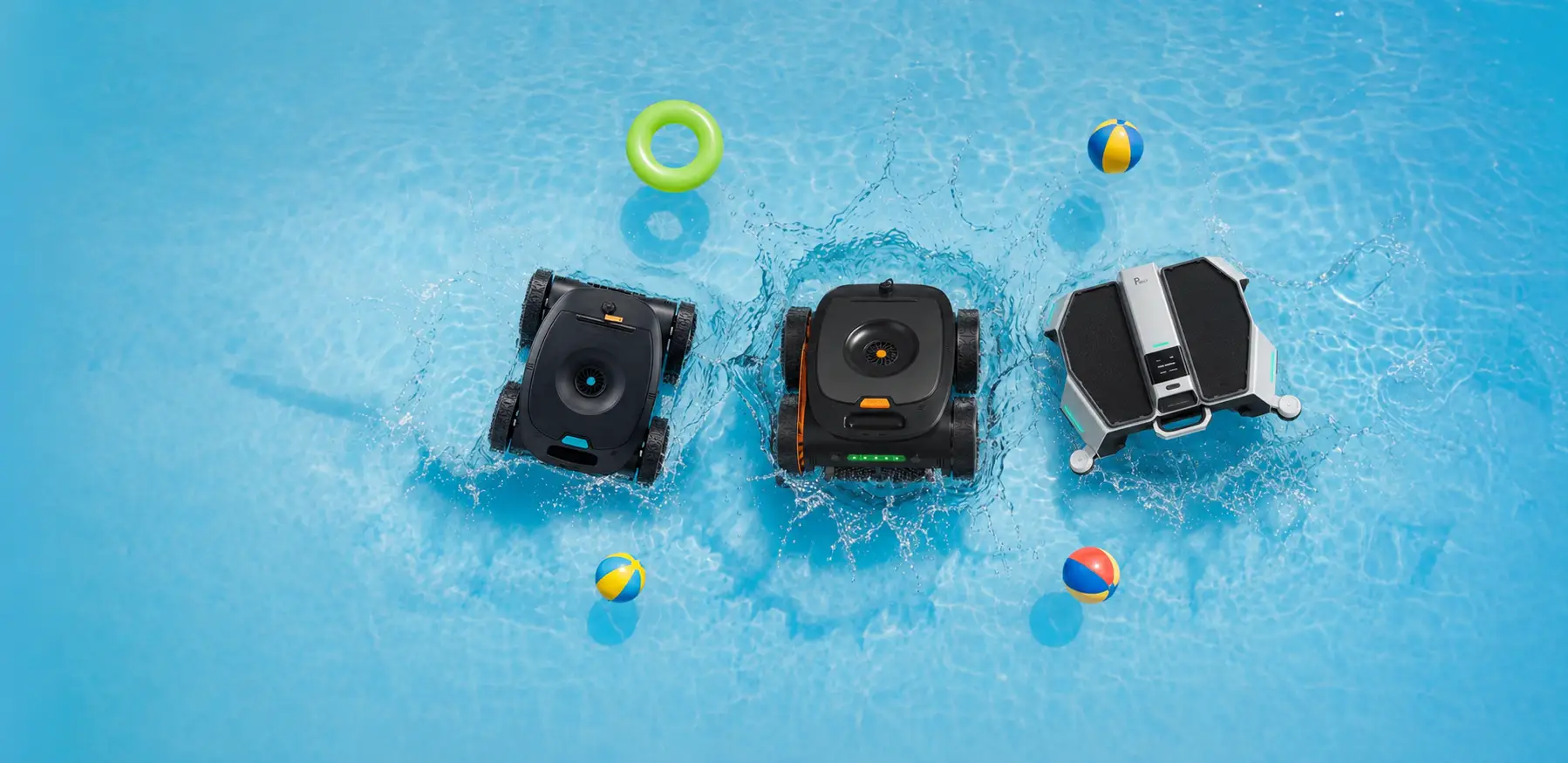
Floating leaves, insects, pollen, and dust can accumulate on a swimming pool's surface surprisingly quickly. Even when the pool floor looks clean, debris may collect along the edges and eventually sink, adding more work to your regular cleaning routine.
A robotic pool skimmer offers a convenient way to manage this problem. Unlike a traditional skimmer that draws water into the pool's circulation system, a robotic surface skimmer moves across the water and collects floating debris in its own basket.
But which model should you choose? The best pool skimmer cleaner for a pool surrounded by trees may not be the best option for someone who prioritizes app control, solar charging, or minimal maintenance.
In this guide, we compare five robotic pool skimmers and surface-cleaning options: PURILY Cordless Robotic Pool Skimmer, the Aiper EcoSurfer M2, Betta SE Plus, and WYBOT F1, Polaris Skimbot.
One important distinction: PURILY currently lists its cordless robotic pool skimmer as a forthcoming product. It is included as an upcoming model to watch, not as a product that has already undergone independent hands-on testing or is confirmed available for purchase. The comparisons below use published manufacturer specifications and product information rather than claiming firsthand testing.
Quick Comparison: Which Robotic Pool Skimmer Is Best for You?
The following comparison highlights the main differences between the five options.
Product | Main Strength | Power and Charging | Debris Collection | Control |
|---|---|---|---|---|
Upcoming dual-charging and smart-control design | Planned solar and adapter charging | Large basket; capacity not published | App and remote control listed | |
Aiper EcoSurfer M2 | Extended surface-cleaning operation | Battery with solar-assisted operation | 4 L basket, 150 μm filtration | App control |
Betta SE Plus | Dual charging flexibility | Solar and AC adapter | Fine-mesh basket, 200 μm | Wireless remote |
WYBOT F1 | Large debris basket and smart controls | Solar-powered, optional charging accessory | 7 L basket, 180 μm | Mobile app |
Polaris Skimbot | Simple, autonomous surface skimming | Solar-powered, rechargeable battery | Approximately 2 L debris tray | One-button operation |
Specifications are based on the respective manufacturers' published product information. Features and availability may change, so confirm current details before purchasing.

1. PURILY Cordless Robotic Pool Skimmer: An Upcoming Model to Watch
PURILY is developing a cordless robotic pool skimmer intended to automate surface-debris collection.
Unlike PURILY's existing underwater robotic pool cleaners, which focus on submerged surfaces, this product is designed specifically for surface cleaning.
PURILY's official product page lists the model as Coming Soon. It is therefore best treated as an upcoming option to monitor rather than a currently available product with independently verified performance.
Planned Features Listed by PURILY
According to PURILY's product information, the planned design includes:
Dual charging: Solar charging and an adapter are listed as charging options.
Smart navigation: The specification lists three ultrasonic sensors, a gyroscope, and a water-level sensor.
App and remote control: Both control methods are listed.
Automatic and manual modes: The product page describes two operating modes.
Large debris basket: A basket is included in the product description, although a numerical capacity has not been published.
LED display and alerts: The listed features include operating information and notifications.
Obstacle protection: The product page describes anti-collision features and a shallow-water safeguard.
Water-temperature monitoring: This function is included in the listed specifications.
Water-treatment feature: PURILY describes an integrated purification module; its exact treatment mechanism and performance should be confirmed in the final product documentation.
Saltwater and chlorine compatibility: These are listed as intended product capabilities.
What Could Make PURILY Interesting?
The combination of solar and adapter charging, app and remote control, and onboard sensors could make PURILY worth watching for pool owners who prefer an automated surface skimmer with multiple control options.
The proposed dual-charging design may be particularly relevant to users who do not want to depend entirely on sunlight.
For distributors, retailers, and pool-care brands, the product may also be worth monitoring for its stated smart-control features and potential fit within a broader pool-cleaning product range.
What Should Buyers Confirm Before Purchasing?
Because the product is listed as upcoming, several purchase-critical details still need confirmation.
Before treating PURILY as a direct alternative to currently available models, look for the final published specifications, including:
Retail availability and price
Basket capacity and filter specification
Confirmed operating time
Charging performance
Supported pool types and dimensions
Warranty and after-sales arrangements
Final operating and maintenance instructions
Independent performance testing and user feedback
Until these details are confirmed, a feature comparison can indicate what PURILY plans to offer, but it cannot establish that the model outperforms the other products in this article.
Best for: Readers interested in upcoming cordless pool-skimming technology with planned dual charging and smart-control features.
Official product information: PURILY Cordless Robotic Pool Skimmer
2. Aiper EcoSurfer M2: Best for Extended Surface-Cleaning Operation
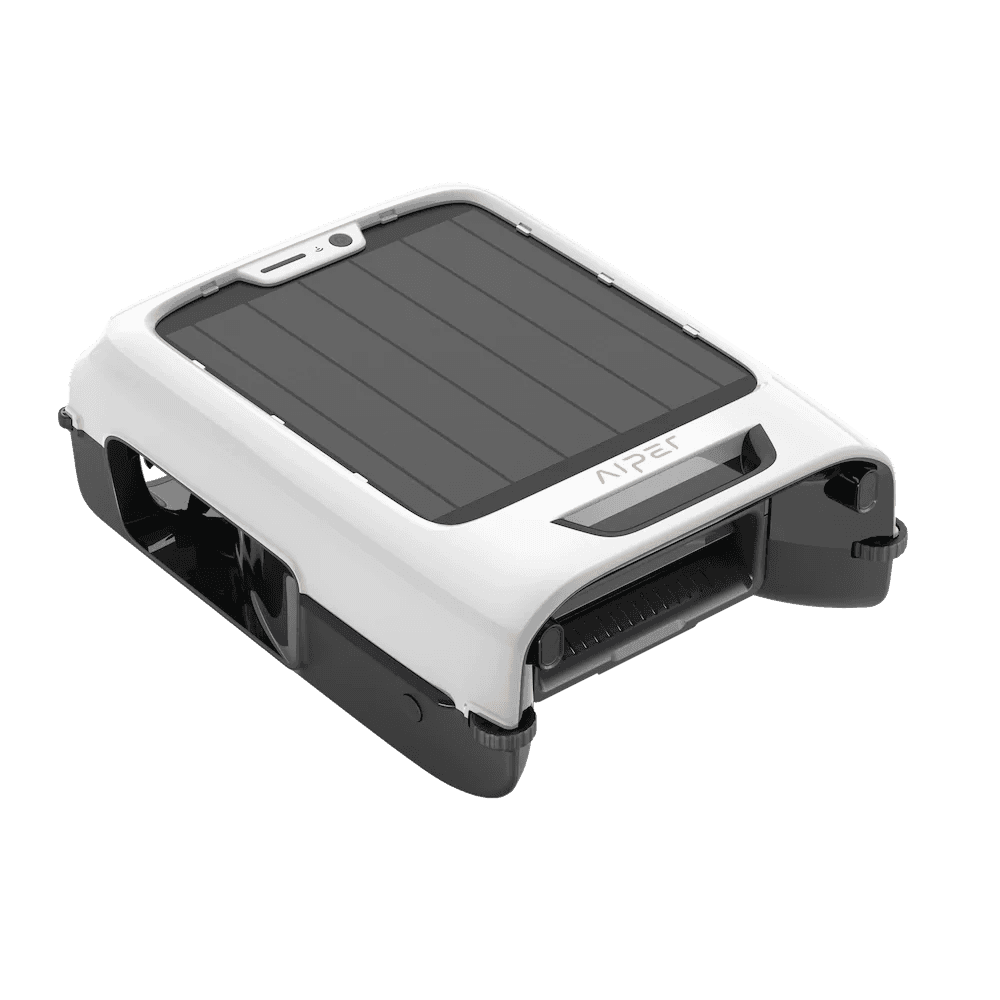
The Aiper EcoSurfer M2 is a cordless robotic pool skimmer designed to remove floating debris before it sinks to the pool floor.
Its main attraction is the combination of battery operation and solar-assisted charging. Aiper states that the device can run for more than 35 hours on a single charge and uses its SolarSeeker technology to resume cleaning after additional solar charging when battery power becomes low.
For pool owners who want to reduce how often they manually skim the water, this type of charging strategy is worth considering.
Key Features
Extended operation: Aiper specifies more than 35 hours of operation from a single battery charge.
Solar-assisted charging: SolarSeeker technology is designed to supplement battery power.
4 L debris basket: The top-loading basket provides space for collected floating debris.
150 μm filtration: The fine-filter basket is designed to capture small debris.
App control: The product supports mobile-app operation.
Obstacle avoidance: Ultrasonic obstacle avoidance is listed among the product features.
Saltwater compatibility: Aiper identifies saltwater-safe materials and salt-chlorine-tolerant motors.
What Are the Advantages?
The EcoSurfer M2 is particularly interesting for owners who want extended surface skimming with less frequent manual charging.
Its 4 L basket and fine filtration specification also provide useful comparison points for evaluating debris collection and maintenance requirements.
The solar-assisted design can help reduce reliance on conventional charging, although actual performance will depend on sunlight, operating conditions, and pool use.
What Should You Consider Before Buying?
Aiper lists the EcoSurfer M2 for inground pools. Owners of above-ground pools should confirm compatibility rather than assume the model suits every pool configuration.
Also consider the device's weight, basket access, spare-part availability, and local service options.
Best for: Pool owners looking for a cordless surface skimmer with extended operating capability and solar-assisted charging.

3. Betta SE Plus: Best for Dual Charging Flexibility
The Betta SE Plus is a solar-powered robotic pool skimmer that also supports charging through an AC adapter.
This dual-charging approach is useful because solar charging depends on available sunlight. When weather conditions are unfavorable or solar charging cannot keep up with operating demands, an alternative charging method provides additional flexibility.
Betta positions the SE Plus as a surface-cleaning device designed to collect leaves, dust, pollen, insects, pet hair, and other floating debris.
Key Features
Solar and adapter charging: Two charging options provide flexibility.
Long operating capability: Betta specifies more than 30 hours of continuous cleaning on a single charge.
Salt-chlorine-tolerant motors: The twin motors are designed for pool environments.
Fine-mesh basket: The manufacturer specifies a 200 μm debris basket.
Wireless remote: Users can switch operating modes remotely.
Top-handle basket: The basket is designed for convenient removal and emptying.
All-weather operation: The product is designed to operate in varied outdoor conditions, although weather can still affect solar charging.
What Are the Advantages?
The main benefit is charging flexibility.
A solar-only device may need more time to recover battery power during periods of limited sunlight. With the SE Plus, owners have the option of using an adapter when additional charging is required.
The removable basket also matters in everyday use. If a pool collects leaves or pollen frequently, easy basket access can be just as important as the headline operating time.
What Should You Consider Before Buying?
Solar performance still depends on environmental conditions, and the basket must be checked and emptied according to the debris load.
Check the latest product documentation for the included accessories, charging requirements, warranty, and pool compatibility.
Best for: Owners who value solar-powered skimming but also want an alternative charging option.

4. WYBOT F1: Best for App Control and a Large Debris Basket
The WYBOT F1 combines solar-powered surface cleaning with app-based control and a comparatively large debris basket.
WYBOT specifies a 7 L basket with 180 μm filtration. Basket capacity matters because a larger collection area may allow the device to collect more debris before the owner needs to empty it, although the actual interval depends on how much material enters the pool.
The F1 also offers two operating modes, giving users a choice between scheduled cleaning cycles and a more continuous cleaning approach.
Key Features
Solar power: The manufacturer specifies a 33 W solar panel.
7 L debris basket: A large basket is designed to reduce the frequency of emptying.
180 μm filtration: The basket includes a fine-filter element.
App control: Users can monitor and control the device through the WYBOT app.
Smart cleaning mode: The manufacturer describes a 24-hour operating schedule with alternating work and pause periods.
Standard mode: The product specifies up to eight hours of continuous operation in this mode.
Obstacle management: Anti-stuck and obstacle-avoidance functions are included.
What Are the Advantages?
The F1 is worth considering if you prefer managing pool equipment through a mobile app.
Its 7 L basket is another practical feature. Pools exposed to leaves and other floating debris can fill a collection basket quickly, so capacity can influence how frequently maintenance is required.
The two cleaning modes also allow users to choose an operating pattern that better matches their routine.
What Should You Consider Before Buying?
The F1's full feature set may not be necessary for someone who simply wants a basic surface skimmer.
Review the app requirements, charging accessories, operating-temperature limits, and current warranty conditions. WYBOT also notes that its skimmer is intended for debris cleaning, not complete water-quality management or ultra-fine filtration.
Best for: Pool owners who prioritize app control, a large debris basket, and adjustable cleaning modes.
5. Polaris Skimbot: Best for Simple Solar Surface Skimming
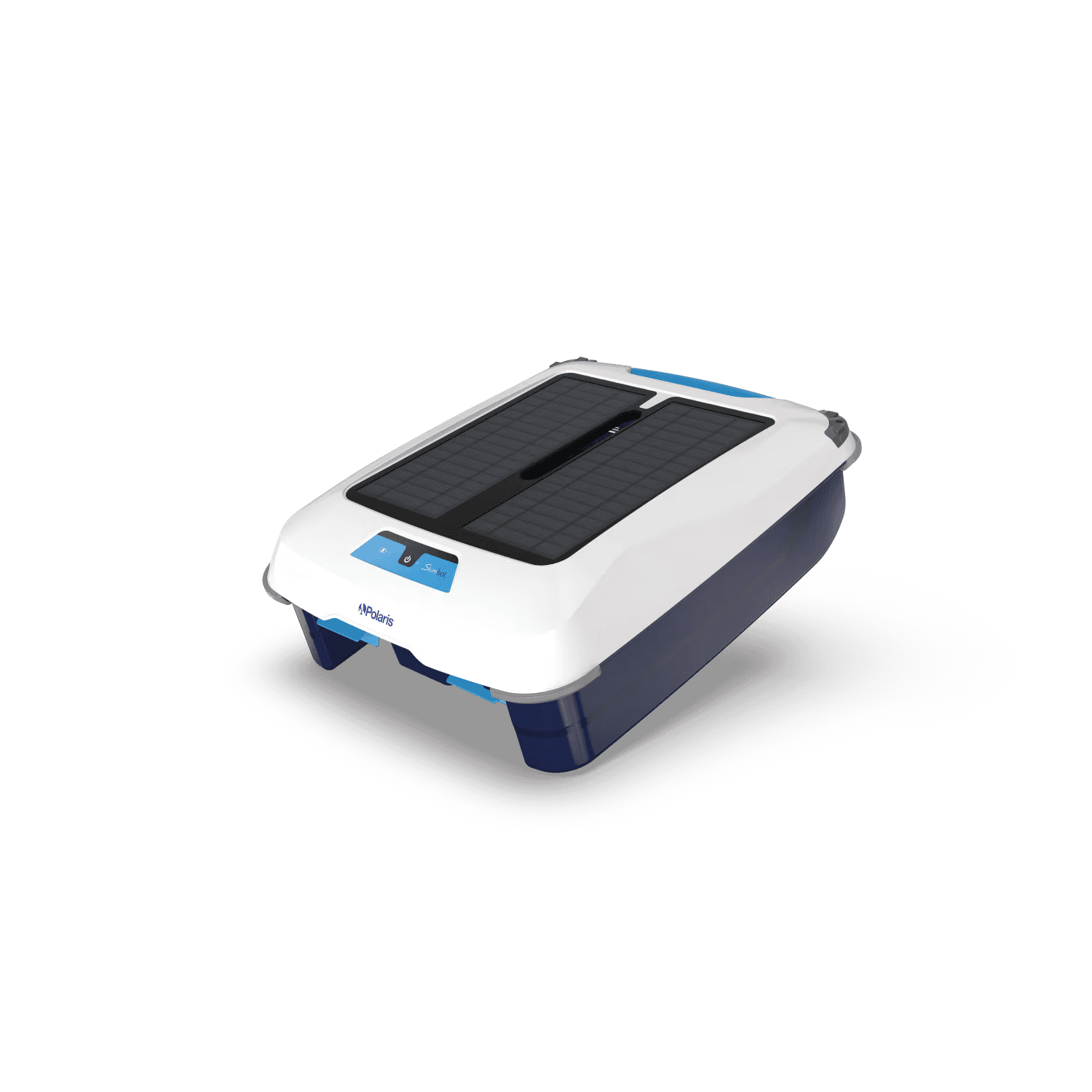
The Polaris Skimbot Solar Surface Cleaner is designed to collect floating debris without requiring a conventional power cord or hose.
Its relatively straightforward operation makes it an option for owners who want a dedicated surface-cleaning device without relying on a mobile app for everyday operation.
Polaris describes the device as using solar power, stored battery energy, and onboard sensors to move across the pool surface and avoid obstacles.
Key Features
Solar charging: The unit collects solar energy during operation and stores energy for later use.
Cordless operation: No power cord or hose is required for normal surface cleaning.
Approximately 2 L collection capacity: The debris tray is designed to hold floating material.
Multidirectional navigation: Sensors help the device change direction around obstacles.
Front paddle wheel: The mechanism moves floating debris into the collection tray.
Simple operation: The manufacturer describes a straightforward power-on-and-deploy process.
What Are the Advantages?
The Skimbot focuses on a relatively simple task: collecting floating debris before it sinks.
It does not require the user to connect a standard pool hose or position a power cable across the deck. The visible collection tray also makes it easier to see when debris needs to be removed.
For owners who prefer simple operation over advanced controls, this can be an attractive design approach.
What Should You Consider Before Buying?
Polaris lists the Skimbot for inground pools. If you have an above-ground pool, verify suitability before purchasing.
Its approximately 2 L debris tray is smaller than the baskets specified for some competitors in this comparison. For pools with heavy leaf fall, this may mean more frequent emptying.
As with other solar-powered models, available sunlight and weather conditions can affect charging performance.
Best for: Owners of compatible inground pools who want straightforward, cordless, solar-powered surface skimming.
How to Choose the Best Pool Skimmer Cleaner for Your Pool
The right robotic pool skimmer depends on your pool environment, debris load, maintenance preferences, and equipment requirements.
Instead of choosing solely by brand or headline features, compare the functions that will make the greatest difference in your daily routine.
Consider How Much Debris Your Pool Collects
A pool beneath trees may collect leaves, seeds, insects, and pollen throughout the day. A pool in a relatively open area may accumulate much less material.
For pools with heavy floating debris, prioritize:
Basket capacity
Easy basket access
Reliable movement around pool edges
Availability of replacement parts
Basket capacity alone does not determine cleaning performance, but it is a useful indicator of how much debris the device can collect before emptying.
Compare Solar Charging and Alternative Charging Options
Solar-powered pool skimmers can reduce the need for manual charging, but solar energy depends on the available light.
If your pool receives plenty of direct sunlight, a solar-focused device may fit your routine well. If the pool is shaded or your location experiences frequent cloudy weather, consider whether the product supports alternative charging.
A dual-charging design can provide more flexibility, but confirm how the charging methods work on the particular model.
Check App Control and Navigation Features
App control can be useful when you want to direct a skimmer toward a particular area or monitor its status.
However, not every pool owner needs a connected device. A simpler model may be sufficient if automatic surface cleaning is your main priority.
Navigation and obstacle avoidance also deserve attention. Pool steps, ladders, corners, floating toys, and irregular shapes may affect how smoothly a device moves around the surface.
Review the manufacturer's compatibility and operating instructions for your pool.
Evaluate the Collection Basket and Filter
The debris basket determines what the skimmer can physically collect and how often you may need to empty it.
Useful details include:
Basket capacity
Filter-mesh specification
Ease of removal
Whether the basket can be rinsed easily
Availability of replacement baskets or filters
A finer mesh can capture smaller particles, but it does not mean the device can manage the pool's entire water-quality requirements.
The pool's main circulation and filtration equipment must continue operating as intended.
Check Warranty, Support, and Replacement Parts
A pool-cleaning device is exposed to water, sunlight, debris, and pool chemicals. Long-term ownership depends on more than its advertised features.
Before buying, check:
Warranty coverage
Return policy
Availability of replacement parts
Battery replacement arrangements
Service support in your country
Compatibility with your pool's water conditions
For an upcoming product such as PURILY's skimmer, wait for final sales and support terms before making a purchase decision.
Robotic Pool Skimmer vs. Robotic Pool Cleaner: What Is the Difference?
The terms sound similar, but the devices do different jobs.
A robotic pool skimmer travels along the water surface to collect floating material. A conventional underwater robotic pool cleaner moves through the pool and collects debris from submerged surfaces, depending on its design.
Feature | Robotic Pool Skimmer | Underwater Robotic Pool Cleaner |
|---|---|---|
Main cleaning area | Water surface | Pool floor and, depending on model, walls and waterline |
Typical debris | Leaves, insects, pollen, floating material | Dirt, sand, leaves, and debris on submerged surfaces |
Collection system | Surface debris basket or tray | Internal filter basket or filtration compartment |
Pool circulation | Does not replace the pool's circulation system | Does not replace the pool's circulation system |
Water chemistry | Does not replace chemical treatment | Does not replace chemical treatment |
This distinction matters when choosing equipment.
A surface skimmer can remove leaves before they sink, while an underwater cleaner deals with material already in the pool. Neither automatically replaces the other, and neither replaces the pool's main filtration and chemical-treatment systems.
Can a Robotic Pool Skimmer Replace the Pool's Traditional Skimmer?
Generally, no.
A traditional pool skimmer is integrated into the pool's hydraulic circulation system, drawing surface water toward the pump and filter. A robotic surface skimmer collects debris in its own basket as it moves across the water.
Their mechanisms are different, so a robotic surface cleaner should not be treated as a substitute for the pool's required circulation and filtration equipment.
If you already own a pool with a functioning wall skimmer, an automatic surface-cleaning robot can serve as an additional layer of debris management.
Should You Use Both a Surface Skimmer and an Underwater Pool Cleaner?
For many pool owners, using both makes sense because each addresses a different cleaning area.
A surface skimmer helps prevent floating debris from accumulating, while an underwater robotic cleaner helps collect debris that reaches the floor or other supported surfaces.
For example, a pool surrounded by trees may benefit from frequent surface skimming as well as scheduled floor cleaning.
PURILY's existing robotic pool cleaners are designed for underwater cleaning tasks, while its separate cordless robotic pool skimmer is listed as an upcoming product. You can review the current product range on the PURILY product page.
Frequently Asked Questions
What is the best robotic pool skimmer in 2026?
There is no single best robotic pool skimmer for every pool. The Aiper EcoSurfer M2 emphasizes extended operation and solar-assisted charging, Betta SE Plus offers solar and adapter charging, WYBOT F1 provides app control and a large collection basket, and Polaris Skimbot focuses on simple solar-powered surface skimming. PURILY's cordless robotic pool skimmer is an upcoming option whose final availability and performance need to be confirmed.
Are robotic pool skimmers worth it?
They can be useful if your pool regularly collects leaves, insects, pollen, or other floating debris. By automating surface collection, a robotic skimmer can reduce the time spent manually skimming the pool. Its value depends on the pool's debris load, the device's maintenance requirements, and how often you currently clean the surface.
Do solar-powered pool skimmers work on cloudy days?
Solar charging becomes less effective when direct sunlight is limited. The device may continue operating from stored battery energy, depending on the model and remaining charge. If performance during cloudy weather is important, check whether the skimmer supports adapter charging or another supplementary charging method.
Can robotic pool skimmers clean the pool floor?
A standard robotic surface skimmer is designed primarily for floating debris. It should not be assumed to clean the pool floor, walls, or waterline. Those tasks usually require an underwater robotic pool cleaner or another suitable physical cleaning method.
How often should you empty a robotic pool skimmer basket?
The cleaning interval depends on basket capacity and how much debris enters the pool. A pool beneath trees may require frequent emptying, while a pool with little floating debris may require less attention. Inspect the basket regularly and empty it before accumulated material begins affecting normal operation.
Do robotic pool skimmers replace water filtration?
No. A robotic surface skimmer collects floating debris but does not replace the pool's main circulation filter or chemical-treatment system. Proper water maintenance still requires effective circulation, filtration, and water-chemistry management.
Is PURILY's cordless robotic pool skimmer available to buy?
PURILY currently lists the product as Coming Soon. Its product page describes planned features, including dual solar-and-adapter charging, app and remote control, ultrasonic sensors, and a debris basket. Check PURILY's official product page for confirmed release details and final specifications before purchasing.
What should you compare when buying an automatic pool skimmer?
Prioritize pool compatibility, debris capacity, charging method, operating time, navigation, maintenance access, warranty, and replacement-part availability. Match these factors to your pool's environment instead of selecting a device based only on its advertised feature count.
Conclusion: Which Pool Skimmer Cleaner Should You Choose?
The best pool skimmer cleaner is the one that fits your pool's debris load, operating environment, and maintenance preferences.
The Aiper EcoSurfer M2 is worth considering for its published extended operating capability and solar-assisted charging. The Betta SE Plus offers dual charging flexibility. WYBOT F1 stands out for its large debris basket and app control, while Polaris Skimbot focuses on straightforward, cordless solar skimming.
PURILY's cordless robotic pool skimmer is an upcoming option to watch. Its published feature list includes dual charging, smart controls, sensors, and an integrated purification feature, but final specifications, availability, and independently verified performance should be confirmed before treating it as a purchase-ready alternative.
Ultimately, choosing a pool skimmer is not just about collecting leaves. It is about finding a reliable way to reduce repetitive maintenance while keeping the pool's circulation, filtration, and cleaning equipment working together.
Build a More Efficient Pool Cleaning Routine With PURILY
PURILY develops robotic pool-cleaning solutions for different maintenance needs. Its existing underwater cleaners focus on submerged cleaning, while its upcoming cordless robotic pool skimmer is intended to address surface debris.
Explore PURILY's product range to learn more about the available robotic cleaners and follow the upcoming surface-skimming product as its final specifications and availability are confirmed.
The most practical pool-cleaning setup is one where surface skimming, underwater cleaning, filtration, and water treatment each perform the job they are designed to do.