2026 Robotic Pool Cleaner Buying Guide: 8 Key Features to Understand Before You Buy
Robotic Pool Cleaner
Robotic Pool Cleaner Buying Guide
8 Key Features
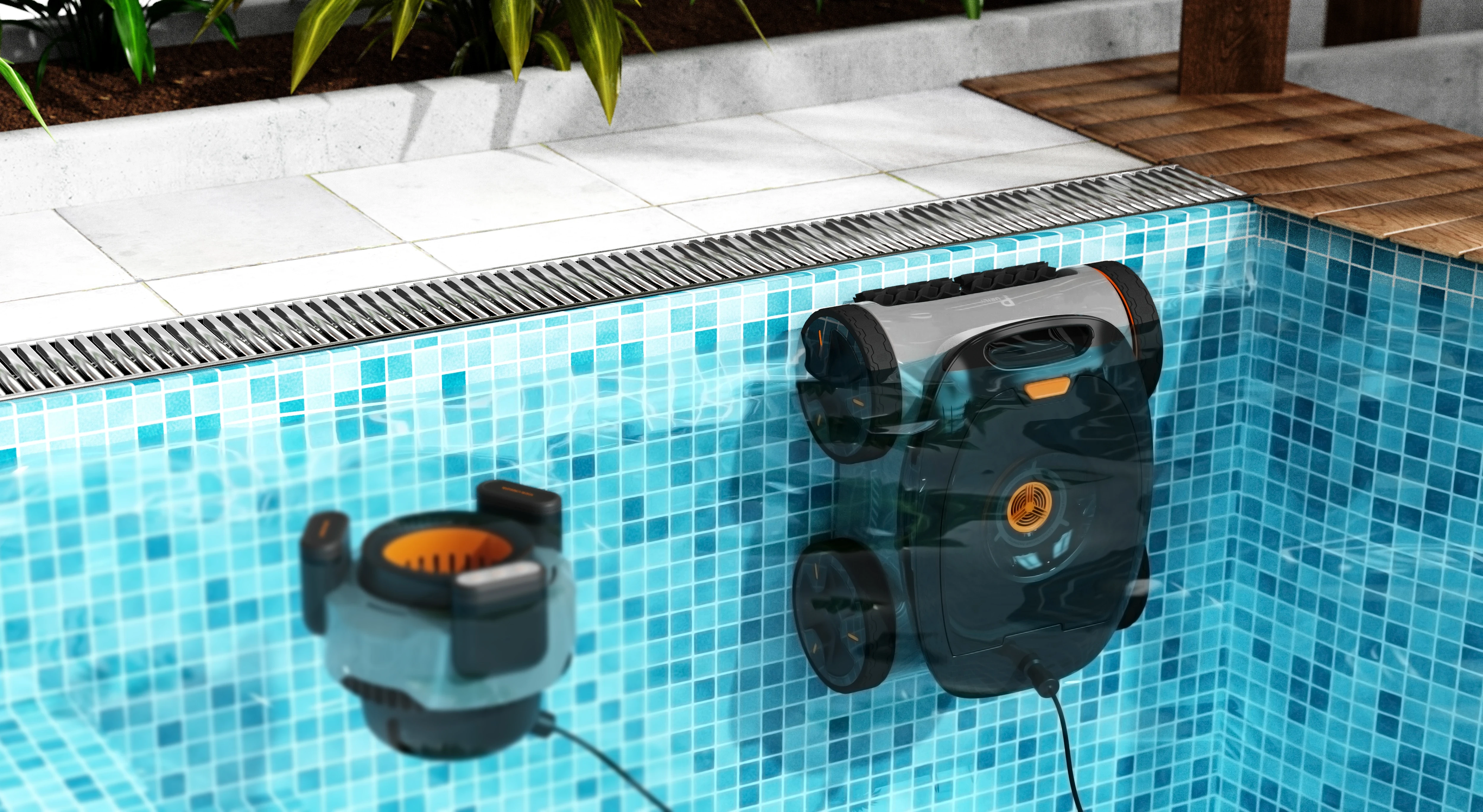
A robotic pool cleaner can save time, reduce manual brushing, and make routine maintenance far easier—but only if you choose the right one. The best way to buy in 2026 is not to chase the longest feature list. It is to match the cleaner to your pool type, cleaning needs, and ownership habits. In practical terms, that means focusing on eight things: cleaning coverage, filtration, navigation, power type, pool compatibility, scrubbing and climbing performance, app control, and everyday usability. Manufacturers now clearly differentiate models by these features, including floor-only vs wall-and-waterline coverage, app connectivity, filter style, and maximum pool size.
Why Most Robotic Pool Cleaner Buying Advice Falls Short
Most buyer guides make the same mistake: they treat robotic pool cleaners as if they all solve the same problem equally well. They do not.
A floor-only cleaner for a 30-foot above-ground pool is a very different product from a wall-and-waterline robot designed for a 50-foot inground pool. Even within the same brand family, models differ on coverage, cycle time, app support, filter type, and warranty. Maytronics’ product pages, for example, separate floor-only units from models that clean floors, walls, and waterlines, while Polaris distinguishes corded and cordless products with different cleaning modes and charging workflows.
That is why a good robotic pool cleaner buying guide should do more than recommend products. It should help you read the category correctly.
Key Takeaways
Start with your pool, not the product page. Pool length, shape, surface, debris type, and whether you care about wall or waterline cleaning should drive the decision.
Cleaning coverage is one of the biggest separators. Some robots clean only the floor, while others clean the floor, walls, and waterline.
Filtration matters as much as suction. Fine filters, multi-layer filtration, and easy-access baskets all affect real-world cleanup and maintenance.
Navigation is not a throwaway spec. Brands now emphasize intelligent navigation, path planning, and targeted cleaning because they affect efficiency and missed spots.
Corded vs cordless is a lifestyle and performance choice, not just a convenience choice. Cordless models remove cable management but add battery runtime and charging considerations.
App control is useful when it gives you scheduling, remote control, battery status, or troubleshooting—not just because it exists.
What a Robotic Pool Cleaner Actually Does
A robotic pool cleaner is a self-contained cleaning machine that moves through the pool using onboard motors, draws in debris through its own filtration system, and often scrubs surfaces with brushes. Modern models are sold around specific capabilities such as active scrubbing, wall climbing, waterline cleaning, top-load filter access, scheduled cleaning, and app-based controls.
That matters because “robotic pool cleaner” is a broad category. You are not just buying a cleaner. You are buying a bundle of decisions about what gets cleaned, how intelligently it moves, how much effort it saves, and how annoying it is to own.
1. Cleaning Coverage: Floor-Only vs Walls vs Waterline
This is the first feature to get right because it changes both performance and price.
Some models are clearly built for floor-only cleaning. The Dolphin E10, for example, is positioned as a floor-cleaning unit for pools up to 30 feet. Other models, such as the Dolphin LIBERTY 400 and Polaris FREEDOM, are explicitly marketed for floor, walls, and waterline cleaning.
For many buyers, this is the biggest decision point. If your main issue is settled debris on the floor, a simpler cleaner may be enough. If you regularly fight wall film, pollen, sunscreen residue, or a visible scum line, full-coverage cleaning is worth prioritizing.
What to ask before you buy
Does it clean floor only, or also walls and waterline?
Does your pool actually need waterline scrubbing?
Do you have ledges, benches, or a sun shelf that require specific support?
Some models now even call out sunledge compatibility in their spec pages, which shows how detailed the category has become.
2. Filtration System: Fine Debris, Leaves, and Real-World Maintenance
A robotic pool cleaner does not just move dirt around. Its filtration system determines what it can actually capture and how annoying cleanup will be after each cycle.
Manufacturers increasingly highlight fine or ultra-fine filtration, interchangeable cartridges, multi-layer systems, and top-access filter baskets. Maytronics describes “fine filtration” and “easy-access top load” on some models, while Aiper emphasizes multi-layer ultra-fine filtration on higher-end cordless units.
For buyers, the practical question is simple: what kind of debris do you actually get?
Fine dust, pollen, and small particles favor finer filtration.
Leaves and larger organic debris require baskets that do not clog too quickly.
Mixed debris loads benefit from multi-stage or interchangeable filter options.
The best robotic pool cleaner buying guide should say this plainly: easy filter cleaning is part of performance. A great cleaner that is frustrating to empty becomes a worse product over time.
3. Navigation System: Random Cleaning vs Intelligent Pathing
Navigation is one of the most underappreciated specifications.
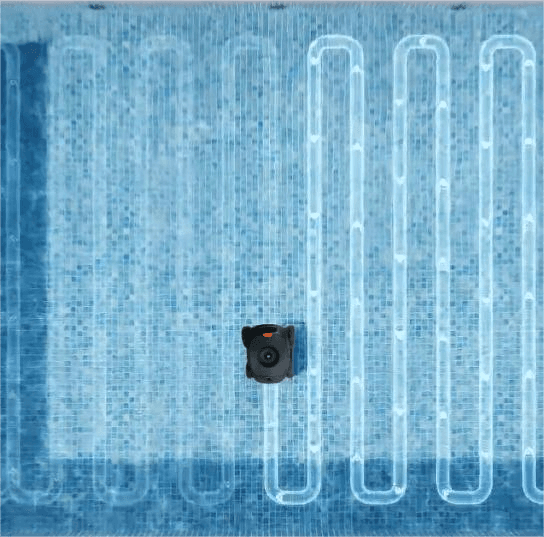
Brands now market “Smart Navigation,” “CleverClean,” app-guided spot cleaning, and intelligent routing because coverage efficiency matters. The Dolphin E10 highlights Smart Navigation, Maytronics cordless pages mention advanced navigation, and Polaris promotes app-enabled targeted spot cleaning and smart cleaning modes on connected models.
That does not mean every buyer needs the most advanced pathing system. It means you should not treat navigation as a buzzword. In a simple rectangular pool, basic navigation may be enough. In a larger or freeform pool with obstacles, ledges, or more complex contours, better pathing can mean fewer missed areas and less wasted runtime.
Featured snippet block: What is a navigation system in a robotic pool cleaner?
A robotic pool cleaner’s navigation system is the combination of sensors, programming, and movement logic that determines how it travels through the pool. Better navigation usually improves cleaning efficiency, coverage consistency, and the robot’s ability to handle complex pool shapes.
4. Power Type: Corded vs Cordless
Corded and cordless cleaners both have a place in the market, and 2026 shoppers should think about this as a tradeoff, not a winner-take-all comparison.
Cordless models are explicitly sold on freedom from tangled cords, rechargeable batteries, and easier handling. Maytronics and Polaris both position cordless cleaners around hassle-free operation, while Polaris also highlights charging time and battery status via app on certain models.
Corded models, on the other hand, often remain attractive for buyers who want long-established plug-and-play cleaning without managing charge cycles. Some corded models also include anti-tangling features like swivels, depending on the model tier.
A good rule of thumb
Choose cordless if convenience, lighter handling, and no cable management matter most.
Choose corded if you prefer a more traditional setup and do not want battery charging to shape your cleaning routine.
The right answer depends on how you use your pool, not on whichever feature sounds newer.
5. Pool Compatibility: Size, Shape, Surface, and Features
This is where many buyers make their first expensive mistake.
Manufacturers publish maximum pool length, supported pool shapes, and compatible surfaces for a reason. For example, the Dolphin E10 is listed for pools up to 30 feet, while higher-tier models extend to 33 feet or 50 feet and add compatibility with shapes like rectangular, round, kidney, and freeform pools. The LIBERTY 400 also lists liner, gunite, and fiberglass compatibility.
A cleaner that looks impressive on paper can still be wrong for your pool if:
the pool is larger than the robot’s supported range,
the shape is more complex than the cleaner is designed to handle,
the surface or features create traction or access challenges,
your pool includes walls, ledges, or waterline needs the cleaner cannot reach.
Always shop backward from the pool.
6. Scrubbing and Climbing Performance
Not every robotic pool cleaner scrubs equally well, and not every one climbs equally well.
Manufacturers distinguish their models with terms like active scrubbing, all-surface climbing, caterpillar treads, wall climbing, and constant-contact waterline scrubbing. Maytronics emphasizes active brushing and all-surface climbing in its documentation, while Aiper and Polaris highlight wall and waterline performance on selected models.
This is one of the most practical specification areas because it affects what manual work remains after the cleaning cycle. If your pool regularly develops film on the walls or grime at the waterline, climbing and scrubbing performance should move up your priority list.
7. App Control and Scheduling: Useful Feature or Marketing Extra?
App control is no longer a fringe feature. Major brands now offer mobile apps for scheduling, remote control, status updates, and troubleshooting on selected models. Maytronics’ MyDolphin Plus supports remote capabilities, while Polaris promotes iAquaLink access for scheduling, real-time programming, and app-based notifications on certain cleaners.
But here is the more useful editorial point: app control is only valuable if it changes your ownership experience.
A good app can help with:
scheduling recurring cleanings,
checking battery or status,
retrieving the cleaner at the end of a cycle,
selecting cleaning modes,
basic troubleshooting.
A weak app, by contrast, is just a spec badge. So do not ask, “Does it have an app?” Ask, “What can the app actually do?”
8. Retrieval, Charging, and Day-to-Day Ease of Use
This is the feature category buyers underestimate most.
Once you own the cleaner, the small friction points start to matter: how heavy it feels when wet, how easy it is to lift out, whether end-of-cycle retrieval is simple, how the charger works, how often you need to clean filters, and whether the robot can be stored without hassle.
Recent products make this increasingly visible. Polaris highlights waterline retrieval and app notifications on the FREEDOM. Maytronics highlights sound-activated pickup and magnetic charging on the LIBERTY 400. These are not headline specs in the old sense, but they directly affect day-to-day satisfaction.
In other words: the best robotic pool cleaner is not only the one that cleans well. It is the one you will actually want to use regularly.
A Simple Framework for Comparing Robotic Pool Cleaner Specifications
If you are doing a robotic pool cleaner specification comparison, use this order:
1. Coverage
Floor only, or floor + walls + waterline?
2. Pool fit
What pool size, shape, and surface is it designed for?
3. Filtration
Fine, ultra-fine, multi-layer, or interchangeable?
4. Navigation
Basic movement, smart pathing, or app-assisted cleaning modes?
5. Power type
Corded or cordless?
6. Scrubbing and climbing
Will it actually reduce your manual brushing?
7. Control layer
App, scheduling, notifications, or manual only?
8. Ownership friction
Charging, retrieval, filter access, warranty, and handling?
This framework is better than comparing by price alone because it forces you to judge the cleaner by fit, not hype.
Common Buying Mistakes to Avoid
Buying by brand alone
Strong brands matter, but model differences inside the same brand can be substantial. Coverage, app support, pool length, and filter design vary widely.
Paying for waterline cleaning when you do not need it
If your main problem is floor debris, a floor-focused cleaner may be enough.
Underestimating filtration
If your pool gets fine sediment, ultra-fine or multi-layer filtration may matter more than headline suction claims.
Ignoring everyday usability
Charging, lifting, basket cleaning, and scheduling all affect whether the cleaner remains convenient over time.
Shopping by “smart features” first
App control is helpful, but it should come after coverage, filtration, and pool fit.
Conclusion
The best robotic pool cleaner in 2026 is not the model with the most features. It is the one that fits your pool and removes the most cleaning friction from your life.
If you remember only one thing from this buying guide, let it be this: start with coverage, filtration, and compatibility. Then compare navigation, power type, app features, and ease of ownership. That is the sequence that leads to better decisions—and fewer expensive disappointments.
For a buyer in the U.S. market, this is the smarter way to choose: not by flashy claims, but by a clear specification comparison grounded in how the robot will actually be used.
FAQ
1. How do I choose a robotic pool cleaner?
Start with your pool’s size, shape, surface, and debris type. Then compare cleaning coverage, filtration, navigation, power type, and ease of use.
2. What is the most important feature in a robotic pool cleaner?
For most buyers, cleaning coverage is the first key feature—whether the cleaner handles only the floor or also cleans walls and the waterline.
3. Are app-controlled robotic pool cleaners worth it?
They can be worth it when the app enables scheduling, remote control, battery monitoring, or troubleshooting. An app is useful when it improves ownership, not just when it exists.
4. Is cordless better than corded for robotic pool cleaners?
Not always. Cordless models improve convenience and remove cable management, while corded models may suit buyers who prefer a plug-in workflow without battery charging.
5. Do I need wall and waterline cleaning?
You need it if your pool regularly develops buildup on walls or a visible scum line at the surface. If your main issue is floor debris, floor-only cleaning may be enough.
6. What should I compare in a robotic pool cleaner specification chart?
Compare coverage, pool compatibility, filtration, navigation, power type, scrubbing, control options, and daily usability. Those are the specs that most directly affect ownership.