Why Cleaning Only the Pool Floor Is No Longer Enough: The Rise of Surface-Cleaning Robotics for Commercial Pools
pool skimmer robot
cleaning pool surface
commercial pool maintenance
Introduction
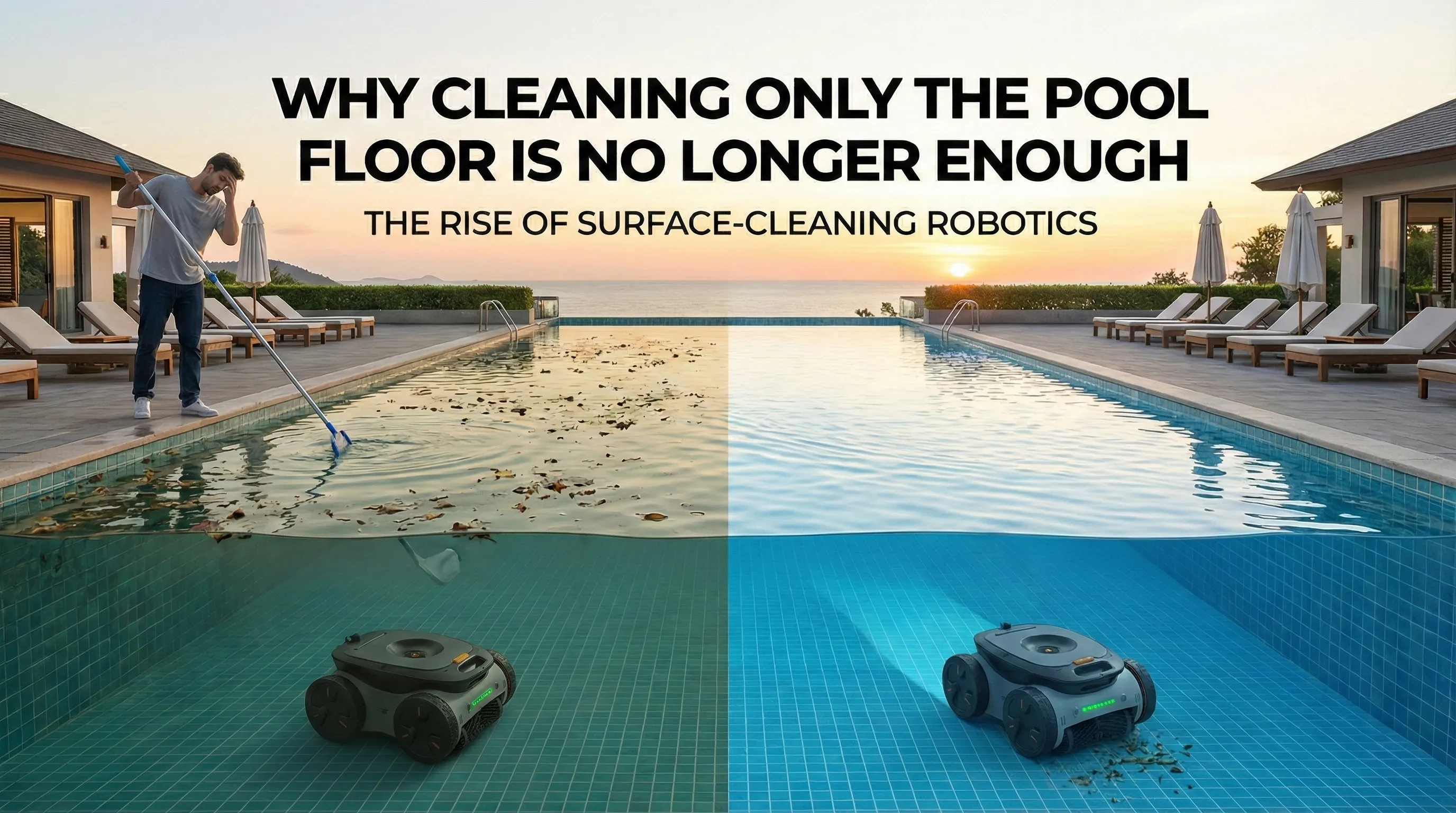
For decades, most robotic pool cleaners have focused solely on the pool floor. While bottom-cleaning remains essential, today’s pool operators—especially hotels, resorts, sports centers, and property management firms—face new challenges. Floating debris, leaves, body oils, pollen, and surface contaminants now account for a significant portion of a pool’s visible dirt. This growing demand for spotless water has led to a shift in the commercial market: pool skimmer robot technology and cleaning pool surface automation are becoming core expectations rather than optional features.
Commercial clients today expect consistent, visually clean water at all times. This is why businesses are moving toward all-in-one robotic solutions like Purily’s HydroRobot, designed to clean both the pool floor and the water surface in one integrated cycle.
This article explains why surface cleaning matters, how the market is evolving, and why distributors and dealers should consider stocking modern dual-action pool robots.
1. Why Cleaning Only the Pool Floor Is No Longer Enough
1.1 The surface collects the most visible contaminants
While dirt and sand settle at the bottom, the pool’s surface is where debris is immediately noticeable. Leaves, insects, hair, sunscreen residue, and pollen accumulate on top, making the water look dirty even if the floor is spotless. For commercial pools, appearance is everything—guests judge a pool within seconds based on what they see on the surface.
1.2 Floating debris reduces customer satisfaction
In hotels and resorts, guests regularly take photos, swim casually, and observe the water up close. Even a thin layer of floating debris can lead to complaints or poor reviews. Clean floors alone cannot maintain that crystal-clear, premium look that modern travelers expect.
1.3 Surface contaminants impact water quality
Organic matter on the pool surface decomposes quickly under sunlight. When left uncleaned, it contributes to cloudy water, oily films, and higher chemical consumption. This leads to more maintenance time—and more operational cost for commercial facilities.
1.4 Manual skimming is unrealistic for large or busy pools
Commercial pools often rely on staff with handheld skimmers. But this is:
labor-intensive
inconsistent
time-consuming
inefficient during peak hours
Automating this process ensures 24/7 cleanliness without increasing labor cost.
2. Market Trends: Why Surface-Cleaning Robots Are Dominating 2025
2.1 Hotels and resorts demand “visible cleanliness”
Global surveys show that consumers rank swimming-pool cleanliness among the top five factors influencing hotel satisfaction. This has pushed facility managers to upgrade to equipment that guarantees perfect water appearance.
2.2 Growth of multi-function pool robots
B2B buyers increasingly prefer multi-functional robots over single-purpose cleaning machines. Instead of buying a robot for the floor and another for the surface, distributors want one machine that does it all. The pool skimmer robot category is therefore experiencing rapid expansion.
2.3 The shift toward automation and labor reduction
With rising labor costs and staffing shortages, commercial clients seek robotic solutions that reduce dependence on manual cleaning. Autonomous surface cleaning has become a priority feature.
2.4 Wireless and AI navigation becoming standard
New-generation pool robots, including Purily’s HydroRobot, combine wall-to-wall navigation, self-route planning, and high-efficiency filtration. Wireless freedom and longer battery life are now baseline expectations for premium pool cleaning equipment.
2.5 Distributors prefer high-value products with wide appeal
A robot that only cleans the pool floor addresses only half of the customer need. In contrast, full-coverage cleaning robots appeal to:
hotels
fitness centers
luxury villas
community pools
service contractors
This means higher sales volume and better margins for distributors.
3. The Importance of Surface Cleaning for Commercial Pools
3.1 The first impression comes from the surface
No matter how clean the pool floor is, guests always see the surface first. A pool skimmer robot keeps floating debris continuously removed, ensuring the pool always appears fresh and well-maintained.
3.2 Reduces chemical interaction and improves clarity
Surface debris such as body oils, leaves, or pollen affect chlorine efficiency. When contaminants remain on the top layer, they react with disinfectants and increase chemical usage, raising operational expenses.
3.3 Essential for outdoor pools
Outdoor commercial pools face constant exposure to:
tree leaves
insects
dust
bird feathers
airborne pollutants
These issues cannot be solved by a floor-only robot. A surface-cleaning solution is mandatory.
3.4 Important for pools with high bather load
Hotels, water parks, and gyms experience heavy swimmer traffic. This results in a significant buildup of sunscreen, body oils, and hair at the surface. A pool skimmer robot can remove these impurities faster than traditional filtration systems.
4. Introducing HydroRobot (Purily): Full-Surface + Pool-Floor Cleaning in One Device
Purily’s HydroRobot was designed specifically to meet the new expectations of the commercial pool industry. Without highlighting specific models, the HydroRobot series provides a complete cleaning approach—from surface to floor—in a single automated cycle.
4.1 Dual-action cleaning: surface + floor
Unlike traditional pool robots, HydroRobot integrates:
a powerful surface-skimming system
deep-scrubbing bottom brushes
high-capacity filtration
This means operators no longer need separate tools to keep the pool visually clean.
4.2 Ideal for commercial facilities
HydroRobot is engineered for high-performance B2B usage such as:
hotels & resorts
apartment complexes
training centers
large residential pools managed by service providers
For environments where guests demand perfect water appearance every day, dual-action cleaning offers a major advantage.
4.3 Autonomous navigation for full-coverage cleaning
HydroRobot’s intelligent routing ensures it covers every corner of the pool. It independently transitions between the floor and surface modes, ensuring continuous cleaning without supervision.
4.4 Reduces labor cost and boosts operational efficiency
Hotels and commercial pool operators no longer need to assign staff to manually skim the surface multiple times per day. With HydroRobot, the workload decreases significantly. The result is better cleanliness with less human labor.
4.5 Wireless operation and long runtime
HydroRobot supports cordless operation with robust battery life. This is especially attractive for commercial pools seeking simplicity, safety, and uninterrupted cleaning performance.
5. Why Distributors Should Consider HydroRobot Today
5.1 The demand for pool skimmer robots is rapidly increasing
Dealers report that more customers ask for robots that can handle both surface and pool floor cleaning. HydroRobot’s dual performance makes it attractive to a wider market segment.
5.2 Large commercial buyers prefer full-function systems
Hotel engineering teams are tired of purchasing multiple machines for different cleaning tasks. A product like HydroRobot simplifies procurement and reduces maintenance cost for their facility.
5.3 Strong value proposition for B2B sales
HydroRobot aligns with the industry’s top demands:
wireless design
full-surface cleaning
smart navigation
versatile applications
higher satisfaction rates
These features make the product easier for distributors to pitch and sell.
5.4 Growing replacement demand
Many hotels and facilities currently use outdated bottom-only robots purchased before 2020. These older devices cannot meet current guest expectations. This creates a strong replacement market for upgraded full-surface cleaning models like HydroRobot.
5.5 Higher customer satisfaction = more repeat business
When commercial clients see improved water clarity and reduced maintenance effort, they return to the same distributor for future equipment and accessories.
6. How Dual-Action Cleaning Improves Hotel and Resort Pool Management
6.1 Enhances brand image
A spotless pool increases guest satisfaction, brand reputation, and online reviews. Hotels with five-star service standards now treat surface cleaning as mandatory.
6.2 Reduces downtime
Traditional cleaning requires staff to close the pool temporarily. HydroRobot allows cleaning during off-hours with automation, ensuring continuous availability.
6.3 Prevents the formation of surface oil films
Body oils and sunscreen form a cloudy layer if not removed quickly. Surface cleaning prevents these issues and keeps water sparkling.
6.4 Boosts water circulation efficiency
By clearing the surface layer, chemicals and filtration systems operate more effectively. This extends equipment life and reduces maintenance frequency.
6.5 Reduces health and contamination risks
A clean surface minimizes bacteria growth and maintains safer swimming conditions for guests.
7. The Future of Pool Cleaning Technology
7.1 Full-coverage robots becoming the norm
In the next few years, most pool robots sold for commercial use will include surface-cleaning functions. Bottom-only robots will gradually become obsolete.
7.2 Higher levels of autonomy
Robots will be expected to self-navigate, auto-dock, and self-charge. HydroRobot’s current capabilities already align with this future trend.
7.3 Sustainability & energy efficiency
Modern robots are designed to reduce chemical usage, save electricity, and improve filtration cycles. This aligns with eco-friendly hotel management standards.
7.4 Growth of the premium robot segment
Commercial pools increasingly prefer high-end robots with strong performance and low labor dependency—making HydroRobot ideal for distributors targeting premium markets.
FAQ
1. Why is cleaning the pool surface necessary?
Because debris accumulates first on the surface. It affects water clarity, chemical efficiency, and the pool’s appearance. Surface cleaning is essential for hotels and commercial pools.
2. What is a pool skimmer robot?
A pool skimmer robot is an automated device that removes floating debris such as leaves, insects, and oils directly from the water surface.
3. Can a floor-only pool robot maintain a commercial pool?
Not effectively. Floor-only robots leave the surface dirty, which is the most visible area for guests. This is why commercial pools prefer dual-action cleaners.
4. What makes HydroRobot different?
Purily’s HydroRobot can clean both the pool surface and the pool floor, offering complete automation and high-performance cleaning for commercial facilities.
5. Is HydroRobot suitable for hotels and resorts?
Yes. It is designed for large pools, consistent daily cleaning, and environments that require perfect visual water quality.
Conclusion
In today’s hospitality and commercial pool industry, cleaning only the pool floor is no longer enough. Guests expect crystal-clear water with no floating debris, no oily surface film, and no visible imperfections. This shift has made pool skimmer robot technology and full-coverage cleaning essential—not optional.
Purily’s HydroRobot represents the new standard of pool-cleaning automation. With advanced surface and floor cleaning capabilities, cordless operation, and intelligent navigation, it offers the all-in-one solution commercial clients are demanding.
For distributors and dealers, investing in full-surface cleaning robots is a strategic move that captures growing market demand, increases customer satisfaction, and strengthens long-term business relationships.