The Ultimate Guide to Starting a Pool Cleaning Business in 2025: Essential Equipment List
Pool Cleaning Business
Robotic Pool Cleaner Manufacturer
Pool Service Equipment Guide
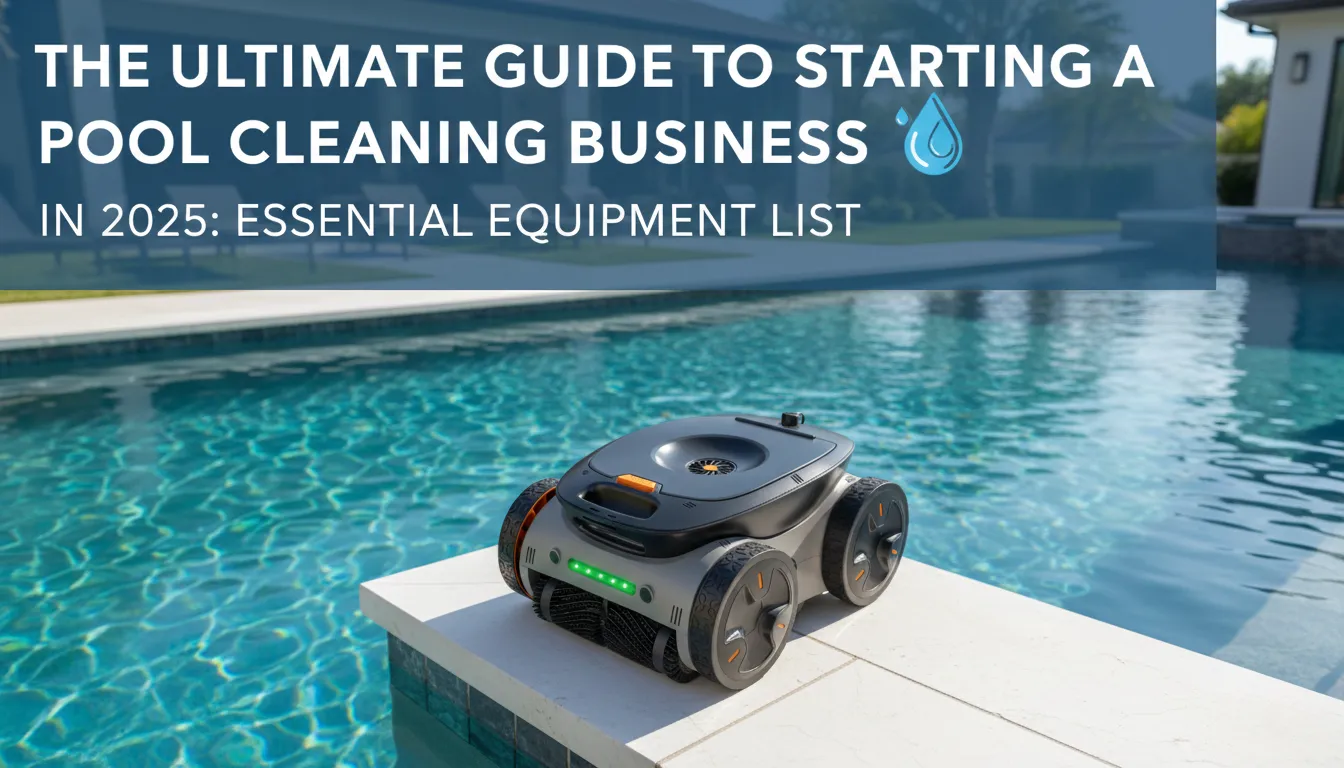
Starting a pool cleaning business in 2025 is a lucrative opportunity for entrepreneurs, service contractors, and facility managers looking to build a scalable, profitable venture. With rising residential pool ownership, increased hygiene requirements, and an expanding number of commercial pools, demand for professional cleaning services continues to grow worldwide. However, modern pool cleaning is no longer based solely on manual labor—it is increasingly shaped by automation, AI-powered tools, and robotic cleaning technology.
This guide explains everything you need to successfully start a pool cleaning business in 2025, including market insights, required tools, pricing strategies, operational planning, and how integrating advanced robotic cleaners from Purily, a professional manufacturer of AI pool-cleaning robots, can significantly reduce labor costs and increase business efficiency.
1. Why Start a Pool Cleaning Business in 2025?
The pool service industry is shifting rapidly, creating new opportunities for B2B operators and service providers.
1.1 Growing demand in residential and commercial sectors
Millions of new pools are built each year across North America, Europe, and Asia. Commercial facilities—hotels, gyms, resorts, schools, community centers, and apartment complexes—now outsource most pool maintenance to professional contractors.
1.2 Increased focus on hygiene and water safety
After global health awareness grew significantly, pool owners and facility managers demand:
More frequent maintenance
Higher cleaning standards
Faster, more consistent service
Predictable cleaning schedules
This creates a stable and recurring revenue model.
1.3 Automation reduces dependence on labor
With rising labor costs and workforce shortages, businesses adopting robotic cleaners can:
Reduce labor hours by 30–60%
Increase daily service capacity
Deliver more consistent results
Minimize human error
This is a major competitive advantage—and where Purily robotic cleaners fit in naturally.
2. Building a Clear Business Model
Before investing in equipment, define your service structure and target customers.
2.1 Service categories
Your business may offer:
Routine pool cleaning
Wall, floor, and waterline maintenance
Seasonal opening/closing
Water treatment & chemical balancing
Robotic cleaning service packages
Commercial facility full-service contracts
Offering a mix helps secure both residential and commercial clients.
2.2 Target segments
Homeowners
Hotels, resorts, clubs
Schools and universities
Gyms and sports complexes
Property management companies
Waterparks and recreational centers
Commercial customers offer long-term, high-value contracts.
2.3 Business differentiation
Modern pool cleaning companies differentiate themselves through:
Rapid service response
App-connected robotic cleaners
AI-powered cleaning reports
Safe, chemical-optimized treatment
Subscription-based monthly packages
Using Purily robots enables you to offer premium, high-efficiency service models.
3. Legal Requirements and Certifications
Before operating, ensure compliance with local regulations.
3.1 Licenses
Most countries require:
A cleaning service license
A general business registration
Contractor or service operator permits
3.2 Insurance
Essential for protecting your business:
Liability insurance
Property damage coverage
Employee safety insurance
3.3 Technical certifications
Optional but beneficial:
Water chemistry certification
Pool operator certification
Robotic equipment training (Purily provides operator guidance for B2B clients)
4. Essential Equipment: Your 2025 Starter Kit
This is the most important part of the blog—and where your B2B strategy and Purily’s robotic product line integrate naturally.
4.1 Basic Manual Cleaning Tools (Required for All Businesses)
Even with automation, every pool cleaning technician needs fundamental tools:
Telescopic poles
Leaf skimmers and nets
Manual vacuums
Pool brushes (nylon & stainless steel)
Leaf rakes
Water testing kits
Chemical dosing tools
pH balancers, chlorine, stabilizers, algaecides
These remain essential for quick checks, corners, and emergency clean-ups.
4.2 Safety and Protective Equipment
Safety is critical, especially for commercial facilities.
Protective gloves
Chemical-resistant masks
Non-slip shoes
Eye protection
Proper ventilation equipment for chemical work
4.3 Transport and Storage Tools
To run a mobile service:
Service vehicle or van
Chemical-safe storage boxes
Portable tool bags
Hose reels
Waterproof equipment cases
4.4 Essential Automation Tools (2025 Must-Have Equipment)
This is where Purily’s robotic cleaners naturally fit in.
Automation is becoming the new standard in pool cleaning businesses, helping contractors reduce human labor, improve cleaning consistency, and serve more customers every day.
Why automation is essential:
Cuts manual scrubbing time by 50%+
Allows one technician to handle multiple pools
Ensures consistent cleaning paths
Reduces employee fatigue
Supports premium “robotic cleaning package” pricing
Now, let’s integrate your products:
4.5 Purily Robotic Pool Cleaners — The Smart Investment for New Pool Business Owners
Purily’s Hydro Series and Cordless Robotic Pool Skimmer are designed for service providers who want reliable automation and reduced operational costs.
Below is the business-focused positioning:
Hydro – Smart Cordless AI Pool Cleaning Robot
Ideal for residential service routes
Automates floor cleaning
Lightweight and fast
Reduces manual vacuuming time significantly
Hydro S – Smart Robot with Signal Buoy (WiFi + Bluetooth)
Perfect for mid-size pools
Remote control + App monitoring
Great for technicians managing multiple pools remotely
Ensures accurate coverage with advanced AI
Hydro SU – Full 4D Cleaning with Cleaning Buoy
Handles floor, wall, waterline, and surface cleaning
Replaces manual brushing, vacuuming, and surface skimming
Great for premium home customers and small commercial pools
Hydro SP – AC/DC Hybrid Power Model for Long Cycles
Built for large pools that require continuous cleaning
Perfect for hotels, community centers, and gyms
Deep cleaning with commercial-grade durability
Hydro Pro – Commercial Robotic Cleaner
High-efficiency cleaning for large commercial facilities
Hybrid corded/cordless power
Precise AI mapping guarantees full coverage
Hydro Puls – Full 4D AI Robot with Dual Buoys
Combines signal buoy + cleaning buoy + hybrid power
Covers floor, wall, surface, and waterline in one cycle
Designed for high-end residential and commercial usage
Cordless Robotic Pool Skimmer
Ultrasonic sensors for precise surface cleaning
Large debris basket
UV-resistant body
Shallow water safe
Eliminates daily manual skimming tasks
For a new pool cleaning business, adding even one Purily robot can reduce labor hours dramatically and increase daily job capacity.
5. Pricing Your Pool Cleaning Services
5.1 Residential Pricing
Weekly cleaning: $80–$150
Bi-weekly: $100–$180
Deep cleaning: $250–$400
Seasonal services: $300–$700
5.2 Commercial Pricing
Commercial facilities require more frequent and complex cleaning:
Monthly contracts: $600–$3,500 per pool
Robotic cleaning packages: $250–$600 per visit
Routine maintenance add-ons
5.3 Automation-based pricing model
By using Purily robots, you can offer:
“Automated Cleaning Package”
Premium Deep-Cleaning + Robotic Vacuuming
Subscription-based weekly robotic cleaning
This increases your revenue per pool.
6. Marketing Your Pool Cleaning Business
6.1 B2B SEO and local SEO
Optimize keywords like:
Pool cleaning service
Commercial pool maintenance company
Automated pool cleaning
Pool cleaning business startup
Smart pool cleaning solutions
6.2 Partnerships
Build relationships with:
Property management companies
Hotels and resorts
Universities
Gym chains
Real estate developers
6.3 Digital marketing
Before/after cleaning videos
Robot operation demonstrations
Customer testimonials
6.4 Offering free robotic cleaning demos
One of the strongest B2B sales strategies.
7. Hiring and Scaling Your Team
7.1 Initial staff setup
1–2 technicians
1 operations coordinator
1 part-time admin or accountant
7.2 Training
Purily provides:
Robotic equipment guidance
Technical support
Maintenance documentation
Your team must be trained in:
Water chemistry
Safety handling
Robotic cleaning operation
7.3 Scaling strategy
Expand by:
Adding more robotic units
Increasing service area
Targeting more commercial clients
Robots replace manual labor, letting you scale without hiring a large workforce.
FAQ
1. What tools do I need to start a pool cleaning business?
You’ll need basic manual tools, chemical kits, safety gear, and robotic cleaners like Purily’s Hydro Series to reduce labor time.
2. Are robotic pool cleaners worth the investment for startups?
Yes. They significantly reduce manual labor, allowing businesses to service more pools per day with fewer staff.
3. Can robots clean commercial pools effectively?
Models like Hydro SP, Hydro Pro, and Hydro Puls are specifically designed for commercial pools, offering full 4D cleaning and hybrid power systems.
4. How do I attract commercial pool clients?
Offer robotic cleaning demonstrations, emphasize faster performance, and highlight long-term cost savings.
5. How much can I earn running a pool cleaning business?
Established businesses often earn $5,000–$20,000+ per month depending on client volume and commercial contracts.
Conclusion
Starting a pool cleaning business in 2025 is a strong, future-proof opportunity—especially for entrepreneurs and service providers willing to embrace automation. With the right tools, clear service packages, and efficient robotic cleaning solutions like Purily’s Hydro Series and Cordless Robotic Pool Skimmer, your business can deliver faster, more consistent cleaning while reducing labor hours significantly.
By combining traditional tools with smart robotic equipment, you can build a scalable, profitable, and competitive pool cleaning business that meets the growing needs of both residential and commercial clients.