Everything You Should Know About Cordless Pool Cleaner
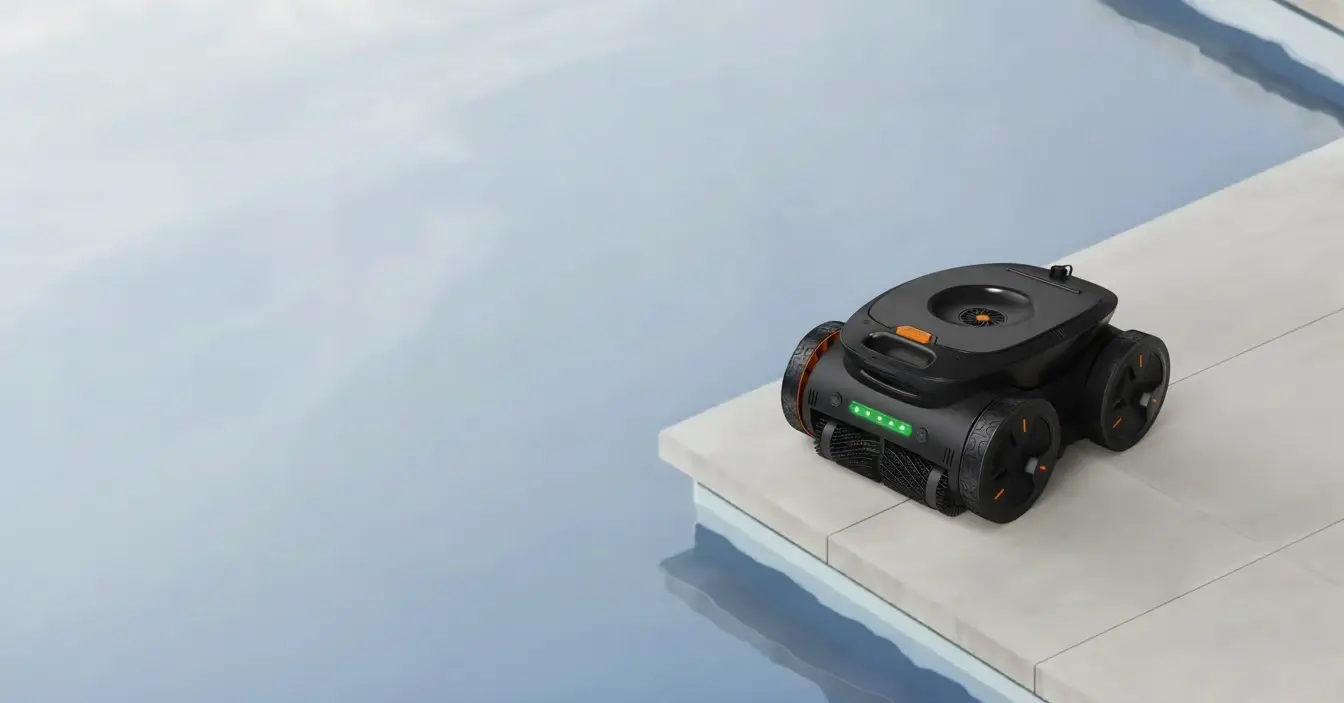
A cordless pool cleaner is a rechargeable, battery-powered device that cleans your pool without a floating power cable. Most modern options are cordless robotic pool cleaners that drive themselves around the pool, vacuum debris, and trap it in an internal filter basket. The best ones reduce day-to-day maintenance and make routine cleaning easier—especially if you dislike cords or don’t have a convenient outlet setup. The trade-off is that cordless models must balance runtime, charging time, and suction/drive power within a battery budget, so choosing the right unit depends on your pool size, debris type, and whether you need features like wall climbing or waterline cleaning.
Key Takeaways
A battery powered pool cleaner is ideal if you want simpler setup and no cord management—but you must plan around cordless pool cleaner runtime and cordless pool cleaner charging time.
For most homeowners, the “right” cleaner is the one that matches pool size + debris type + surface—not the one with the most aggressive marketing claims.
If your pool gets lots of leaves, prioritize debris handling design; not every cordless pool vacuum for leaves performs the same.
If you have an inground pool and care about walls and the waterline, pay attention to cordless pool cleaner wall climbing capability and traction design.
Good ownership is 80% routine: rinse the filter, clear hair/strings, and store the battery properly.
What is a cordless pool cleaner?
A rechargeable pool cleaner is any pool-cleaning device that runs on an internal battery instead of being plugged in during use. In today’s market, cordless pool cleaners typically fall into two categories:
Cordless robotic pool cleaner vs cordless pool vacuum
1) Cordless robotic pool cleaner
Drives itself around the pool floor (and sometimes walls).
Vacuums debris and filters water through an internal basket or cartridge.
Often includes smart navigation, timers, and self-parking.
2) Cordless pool vacuum (handheld/manual)
You guide it like a vacuum head; it doesn’t navigate by itself.
Usually cheaper and useful for spot-cleaning steps, corners, and quick touch-ups.
Typically less “set-and-forget” than a robot.
If your goal is “daily or weekly automated cleaning,” you’re usually looking for a cordless robotic pool cleaner, not a handheld.
How a battery powered pool cleaner works
Cordless cleaners do three jobs at once: move, pull water/debris in, and filter. Understanding these basics makes product descriptions easier to evaluate.
Lithium-ion battery basics
Most modern units use a lithium-ion battery because it offers good energy density and recharge cycles. What matters to you as a buyer:
Capacity and power delivery affect how long the unit can maintain performance (not just how long it stays on).
Batteries perform differently in heat/cold, and aging reduces runtime over time.
Charging systems vary—some are simple plug-in chargers; others use docks.
If a brand doesn’t clearly explain battery care and storage, that’s a sign the ownership experience may be rough.
Brushless motor, suction power, and water flow path
Inside a robot, a motor drives an impeller (fan) to create water flow. Many higher-quality units use a brushless motor, which generally improves efficiency and longevity compared to brushed designs.
Two critical, often overlooked realities:
Suction power is not the whole story. Debris pickup depends on the intake design, brush agitation, and the ability to keep flow high as the filter loads.
The water flow path must resist clogging. A design that jams on leaves will feel “weak” even if the motor is strong.
Filter basket and fine filtration
Cordless robots typically trap debris in a filter basket or cartridge.
Coarser filtration captures leaves and larger debris with less clogging.
Fine filtration (micron rating) captures sand/silt but may clog faster and require more frequent rinsing.
The best setup depends on your pool environment: leafy yard, dusty area, or heavy swimmer load.
Cordless pool cleaner vs corded: what you gain and what you trade off
This is the comparison most shoppers should make early.
Cordless advantages
No floating cable to manage, tangle, or store
Faster setup and easier “quick runs”
Often simpler for irregular pool shapes and around obstacles
Cordless trade-offs
Limited by battery: runtime and sustained power are finite
You must plan charging and storage
Some premium corded units may offer longer continuous operation and stable power for large pools
If you’re choosing between cordless pool cleaner vs corded, ask one question: Do I value convenience more than unlimited runtime? For many homeowners, convenience wins.
Choosing the right cordless pool cleaner for your pool type
Cordless pool cleaner for above ground pools
Above-ground pools tend to be smaller and simpler, so you can often prioritize convenience and straightforward floor cleaning. Key considerations:
Ensure the robot is designed for your pool’s depth and wall type (some above-ground walls and liners need gentler traction).
Look for stable floor coverage and easy retrieval, especially if the pool has a ladder area that can trap robots.
For vinyl liners, confirm pool surface compatibility (vinyl, fiberglass, tile) and avoid overly aggressive brush materials.
Best fit: A floor-focused robot with easy filter access and reliable self-parking is often enough.
Cordless pool cleaner for inground pools
Inground pools vary more: slopes, deep ends, steps, and multiple surfaces. Prioritize:
Smart navigation that reduces missed areas
Strong traction design if you want wall coverage
Self-parking that consistently brings the unit to an accessible area
If you care about the waterline ring, you’ll want a model that supports wall climbing and possibly waterline cleaning (more on that below).
Cordless pool cleaner for large pools
A cordless pool cleaner for large pools needs enough runtime and effective coverage to avoid “it ran, but the pool is still dirty.”
What changes in large pools:
Coverage efficiency matters more than raw suction
Battery budgeting becomes critical
Retrieval and cleaning frequency affect overall labor savings
Practical tip: For very large pools, some owners run shorter, more frequent cycles rather than expecting one long run to do everything—especially during heavy debris season.
Performance features that matter
Cordless pool cleaner runtime and real-world expectations
Cordless pool cleaner runtime is the headline spec—but treat it like “estimated range” on an electric car. Real runtime can change based on:
debris load (a clogged filter increases resistance and may reduce performance)
water temperature and battery condition
whether the robot climbs walls, scrubs aggressively, or uses higher flow
What to look for in a trustworthy product description:
runtime range (not a single perfect number)
guidance on what mode the runtime is based on
clear instructions for filter cleaning frequency (which affects performance)
Cordless pool cleaner charging time and charging habits
Cordless pool cleaner charging time affects your routine more than you think. Consider:
Can it recharge fast enough for your schedule (e.g., same-day second run)?
Is the charging connector robust and water-resistant in real handling?
Are there safe storage guidelines for off-season?
Avoid leaving batteries fully depleted for long periods. For long storage, follow the manufacturer’s recommendation (often a partial charge is preferred). If guidance isn’t provided, request it.
Smart navigation and coverage patterns
Smart navigation is an umbrella term. In practice, the question is: Does it cover the pool efficiently, or does it wander and miss spots?
Buyer-friendly evaluation:
Look for descriptions of coverage logic (patterned vs more random)
Check whether it handles slopes and deep ends without repeated stalls
Prefer units that can maintain consistent movement even as the filter loads
Self-parking and retrieval design
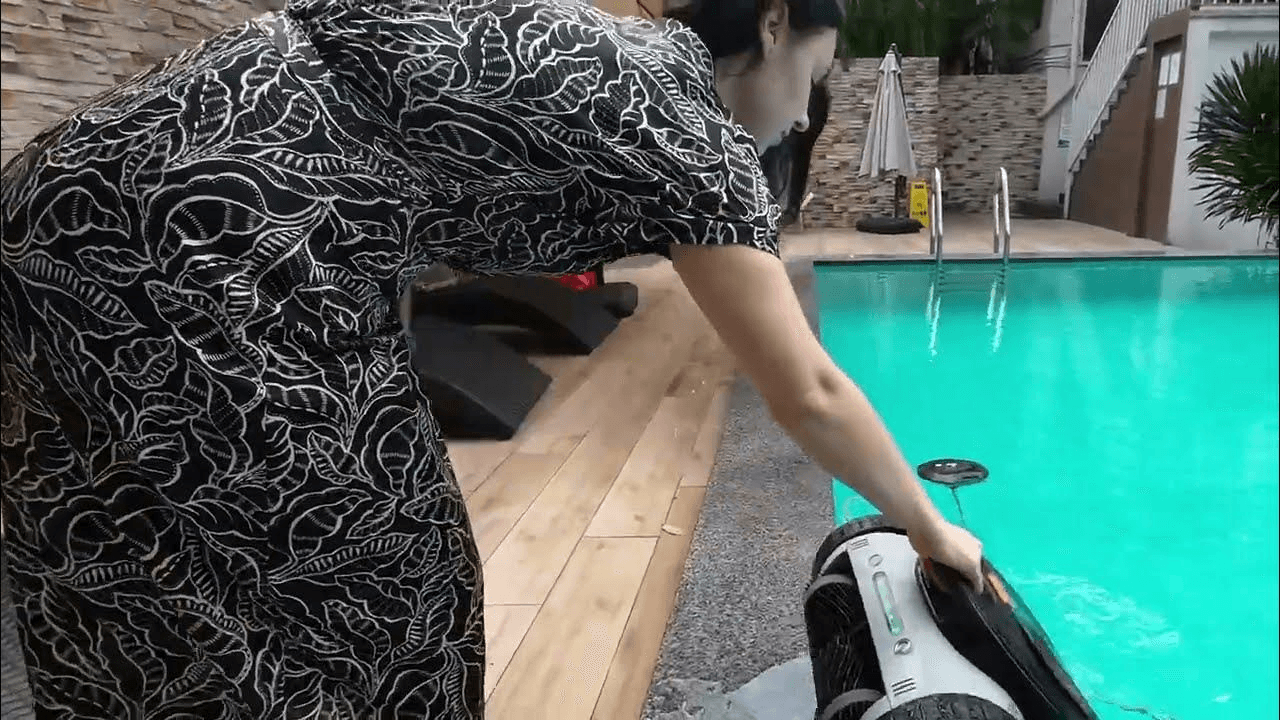
Self-parking means the robot ends the cycle in an accessible location (often near a wall). This matters because retrieval is part of the “convenience promise.”
Ask:
Does it park consistently—or only sometimes?
Is there a hook or retrieval accessory?
Is the robot easy to lift when full of water and debris?
Wall climbing and waterline cleaning
Cordless pool cleaner wall climbing capability is valuable if:
you get algae/film on the walls
you want better overall aesthetics
you’re trying to reduce manual brushing
Waterline cleaning is an even higher bar. Not all “wall climbers” actually scrub the waterline effectively, because maintaining traction at the water’s edge requires strong control and buoyancy balance.
Pay for wall/waterline features when:
you care about the visible ring and sidewall dust
you have an inground pool where walls matter
you want less manual brushing
Skip it when:
your pool stays clean on walls with routine chemistry and occasional brushing
you mainly need floor pickup of sand/leaves
Cordless pool vacuum for leaves
If you’re shopping for a cordless pool vacuum for leaves, your success depends on intake design and debris capacity—not just runtime.
What to prioritize:
a wider intake path that doesn’t choke on larger debris
filter design that can hold leaves without blocking flow immediately
easy, frequent emptying (because leaves fill baskets fast)
Reality check: After storms, even the best cordless pool cleaner may need multiple runs or manual leaf removal first. That’s normal.
Pool surface compatibility
A unit that performs well on tile may be too aggressive on a vinyl liner, and a unit tuned for vinyl may struggle on slippery surfaces.
Look for clear compatibility claims for:
vinyl liners (gentler traction, non-abrasive brushes)
fiberglass (often smooth; traction matters)
tile/plaster (may tolerate stronger scrubbing)
When in doubt, choose a robot explicitly designed for your surface type.
Maintenance and cleaning: how to keep performance consistent
Cordless robots feel “amazing” when maintained and “disappointing” when neglected. Maintenance is simple, but it must be regular.
Filter rinse and debris canister cleaning
After each cycle (or every few cycles for light debris):
Remove the filter basket / cartridge.
Empty debris into a bin (avoid washing leaves into drains).
Rinse thoroughly until water runs clear.
Inspect for hair/string wrapped around rotating parts (if applicable).
Reinstall fully seated to prevent bypass.
If you use fine filtration (micron rating) baskets, expect more frequent rinsing.
Battery care, storage, and off-season checklist
To protect a lithium battery and electronics:
Store the unit clean and dry, out of direct sun
Avoid freezing temperatures (battery and seals can suffer)
Follow the brand’s recommended storage charge state (if provided)
Recharge periodically during long storage if instructed
For shipping and battery documentation in commercial contexts, consult current guidance: [source placeholder: UN 38.3 / lithium battery transport guidance].
Featured snippet: Cordless pool cleaner buying checklist (10-point)
Use this checklist to choose a cordless pool cleaner confidently:
Pool type: above-ground or inground compatibility stated clearly
Pool size fit: recommended square footage/gallons and cycle coverage claims
Runtime: realistic range and what mode it’s based on
Charging time: fits your schedule; charger durability
Filtration: basket type, ease of cleaning, optional fine filters
Debris match: designed for your main debris (leaves vs sand/silt)
Navigation: coverage logic explained; doesn’t stall on slopes
Wall/waterline: only pay if you’ll use it; check traction design
Self-parking: consistent retrieval and safe lifting method
Maintenance + parts: brushes/filters availability, warranty clarity, support responsiveness
Common problems and troubleshooting
Problem: It runs but doesn’t pick up debris well
Rinse the filter basket; fine filters clog quickly.
Check for blocked intake or wrapped hair.
Confirm you’re not asking a “sand filter” to handle heavy leaves without pre-skimming.
Problem: It misses areas or seems random
Clean brushes and filter (traction and flow can affect movement).
Run an extra cycle; many robots improve coverage over multiple runs.
Ensure the pool is free of obstructions that trap it repeatedly.
Problem: It won’t climb walls
Confirm the model is designed for wall climbing and your surface type.
Check brush wear and traction parts.
Remove heavy debris and clean filters—reduced flow can reduce climbing stability.
Problem: Battery life feels shorter over time
Battery aging is normal. Improve storage habits and avoid deep depletion.
Confirm charging is completing properly and connectors are clean/dry.
Conclusion: how to pick the best cordless pool cleaner for your needs
The best cordless pool cleaner is the one that fits your pool’s reality: size, surface, and debris pattern. Start by choosing the right category (robotic vs handheld), then evaluate the non-negotiables—runtime, charging time, filtration, navigation, and whether wall/waterline cleaning is truly worth paying for. With routine filter rinsing and basic battery care, a rechargeable pool cleaner can meaningfully reduce manual vacuuming and make weekly pool upkeep far easier.
If you’re comparing options for your pool, a simple next step is to write down: pool type (above-ground/inground), surface (vinyl/fiberglass/tile), and your #1 debris (leaves vs sand). That one-minute checklist usually narrows the field faster than reading endless cordless pool cleaner reviews.
FAQ
1) Are cordless pool cleaners as powerful as corded models?
Some are, but “powerful” depends on debris type, filter design, and sustained flow—not only motor claims. Corded models have continuous power; cordless models trade that for convenience and must manage battery budget.
2) What’s the best cordless pool cleaner for above ground pools?
Typically, a floor-focused cordless robotic model with easy filter access and reliable self-parking is ideal. Above-ground pools often don’t require advanced wall/waterline performance.
3) Can a cordless pool vacuum handle leaves?
Yes, but results vary. For heavy leaf loads, choose a design marketed for leaves with a wider intake and larger debris capacity. After storms, you may still need pre-skimming or multiple cycles.
4) How long should a cordless pool cleaner run per cycle?
It depends on pool size and debris. Many owners find that 1–2 cycles per week is enough in low-debris conditions, while daily cycles may be helpful during heavy season. Use runtime as a planning tool, not a promise.
5) How long does a cordless pool cleaner take to charge?
Charging time varies by model and battery capacity. Ensure the charging time fits your schedule if you expect back-to-back cycles on the same day.
6) Do cordless robotic pool cleaners climb walls and clean the waterline?
Some do. Wall climbing is more common than true waterline scrubbing. If waterline cleaning is a priority, look for explicit design and testing claims, not just “wall capable.”