AI Pool Cleaner Certifications: UL and NSF Standards Explained
AI Pool Cleaner Certifications
What Are UL and NSF Certifications for Pool Equipment?
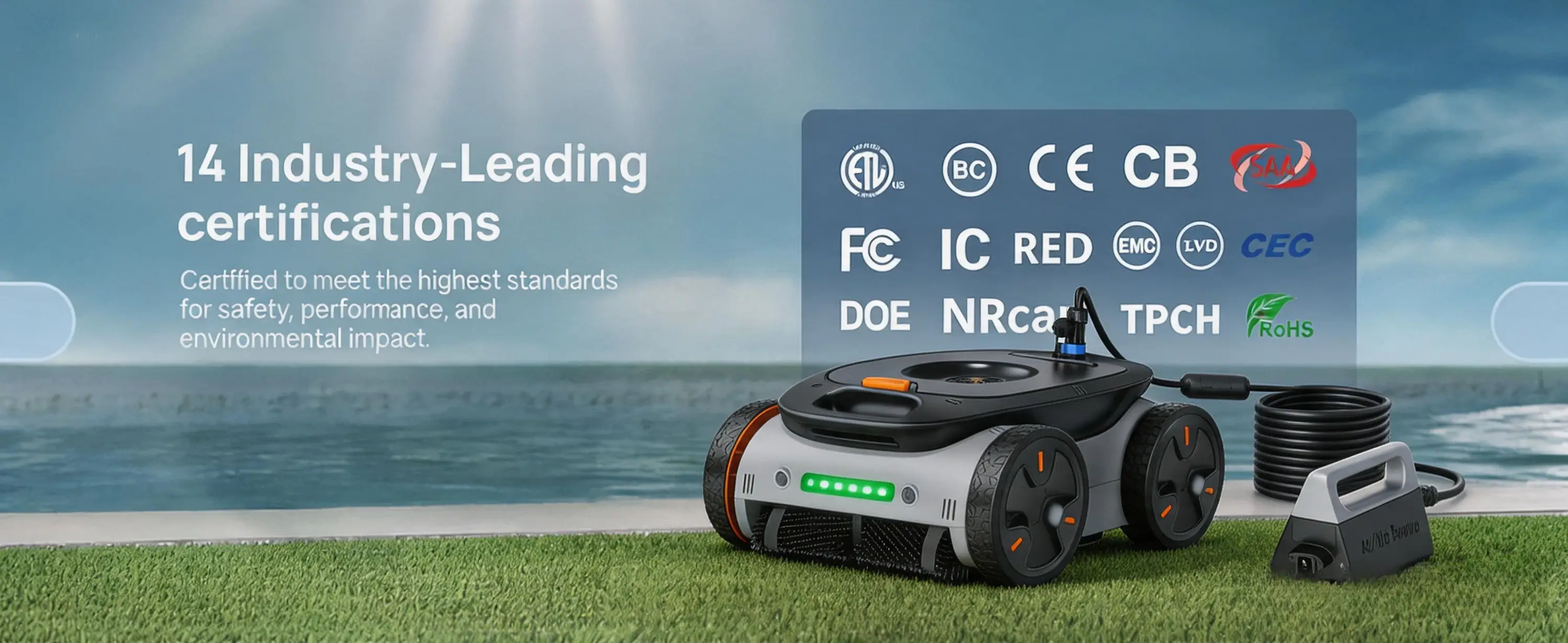
For commercial pool operators and facility managers, navigating equipment safety standards is paramount. Two names dominate this landscape: Underwriters Laboratories (UL) and the National Sanitation Foundation (NSF). These independent organizations set the critical benchmarks for electrical safety and water quality, respectively. Purily Manufacturer emphasizes that understanding these certifications is the first step in selecting reliable and compliant equipment for any aquatic facility.
1. The Role of UL in Pool Equipment Safety
1.1 Core Mission and Focus
Underwriters Laboratories (UL) is a global safety science company focused on electrical and fire hazard prevention. For pool equipment, UL certification verifies that products like pumps, heaters, lights, and control systems meet stringent safety standards. Their testing ensures components are properly insulated, grounded, and constructed to prevent shock or fire risks in wet environments.
UL standards, such as UL 1081 for swimming pool pumps, are often incorporated into local building and electrical codes, making them a de facto legal requirement.
1.2 Key Testing Areas
UL evaluates equipment against rigorous real-world scenarios to ensure long-term safety. Primary testing focuses on electrical insulation integrity, corrosion resistance of enclosures, and the durability of components exposed to pool chemicals and moisture.
A critical test involves submerging energized components to check for leakage current, ensuring it remains below the 5-milliamp safety threshold to prevent electrocution.
2. The Role of NSF in Water Quality and Health
2.1 Core Mission and Focus
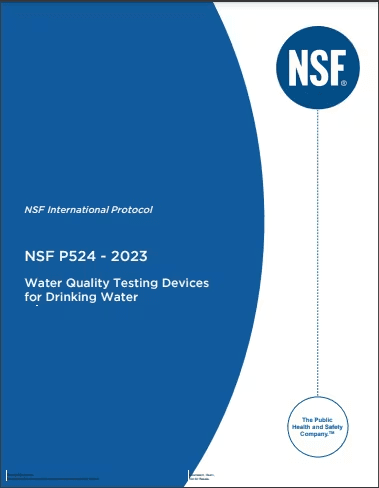
The National Sanitation Foundation (NSF) develops public health standards and certification programs related to water quality and food safety. In the pool industry, NSF certification applies to equipment and materials that contact pool water, ensuring they do not leach harmful contaminants.
This includes filters, chemical feeders, pipes, gaskets, and even the plastics used in pool toys or automatic cleaners. Certification confirms materials are non-toxic and won't degrade water chemistry.
2.2 Relevant Standards and Impact
The most relevant standard for pools is NSF/ANSI 50: Equipment for Swimming Pools, Spas, Hot Tubs. This standard has specific criteria for materials, structural integrity, and performance claims of circulation equipment. It ensures that a filter, for example, performs as advertised in removing particulates without adding unwanted substances to the water.
Pro Tip: Purily's compliance experts advise always checking for the specific NSF standard number on a product. NSF 50 for equipment is different from NSF 61 for drinking water components, and using the wrong certified product can lead to compliance issues.
3. UL vs. NSF: A Direct Comparison
While both are crucial, UL and NSF address fundamentally different aspects of pool safety. The table below clarifies their distinct roles.
Aspect | UL Certification | NSF Certification |
|---|---|---|
Primary Focus | Electrical & Fire Safety | Water Quality & Public Health |
Governs Equipment Like | Pumps, Heaters, Lighting, Control Panels | Filters, Piping, Chemical Feeders, Gaskets |
Key Concern | Preventing Shock, Fire, Mechanical Failure | Preventing Chemical Leaching & Contamination |
Common Standard | UL 1081 (Pumps), UL 1563 (Spas) | NSF/ANSI 50 (Pool Equipment) |
3.1 Why Both Certifications Are Non-Negotiable
For a complete safety profile, pool equipment often requires both UL and NSF marks. A circulation pump, for instance, needs UL certification for its electrical safety and NSF certification for its wet-end materials. Relying on only one leaves a critical gap in your facility's risk management.
Ultimately, these certifications are not just stickers on a box; they are a foundational element of professional pool management and liability protection.
UL 1081 vs. NSF 50: Key Differences for AI Pool Cleaners
For manufacturers and consumers of AI pool cleaners, understanding the distinction between UL 1081 and NSF/ANSI 50 is crucial. While both are North American safety standards for swimming pool equipment, their focus and testing parameters differ significantly, impacting product design and performance. This comparative analysis breaks down the key differences to inform your selection process.
1. Primary Focus and Scope
1.1 UL 1081: Electrical Safety First
UL 1081, the Standard for Swimming Pool Pumps, Filters, and Chlorinators, is fundamentally an electrical safety standard. Its primary mandate is to evaluate the risk of electric shock, fire, and personal injury from electrical components. For an AI cleaner, this means rigorous testing of its motor, wiring, power supply, and any onboard electronics under various fault conditions.
The standard simulates real-world hazards like water ingress and insulation failure to ensure user safety is never compromised.
1.2 NSF 50: Material and Sanitary Integrity
NSF/ANSI 50, the Standard for Circulation System Components and Related Materials, focuses on the product's material safety and its impact on pool water quality. It ensures that plastics, seals, and lubricants do not leach harmful contaminants into the water. For AI cleaners, this covers the durability of the housing, drive tracks, and brushes against chlorine and UV degradation.
Compliance verifies that the cleaner won't introduce toxins or become a breeding ground for biofilm, which is vital for maintaining a healthy swimming environment.
2. Critical Test Parameter Comparison
2.1 Electrical and Durability Testing
The testing divergence is most apparent in electrical and mechanical evaluations. UL 1081 mandates tests like dielectric voltage-withstand, leakage current, and ground continuity. NSF 50, conversely, emphasizes material immersion, stress cracking, and accelerated aging tests to assess long-term durability in chemically aggressive pool water.
An AI cleaner must pass both sets of tests to be fully certified, addressing both immediate electrical hazards and long-term material failure.
2.2 Performance and Reliability Metrics
While not a performance rating, UL 1081's endurance tests indirectly relate to reliability. NSF 50 includes more direct performance evaluations for components like filters. Data from certification bodies indicates that products failing initial certification often do so due to material degradation (NSF 50) or insulation breakdown (UL 1081).
Pro Tip: When evaluating an AI pool cleaner's long-term reliability, Purily engineers recommend scrutinizing both the UL mark for electrical safety and the NSF certification for material integrity, as a failure in either domain can lead to operational downtime.
3. Certification Implications for AI Cleaners
3.1 Design and Manufacturing Impact
Meeting both standards influences the entire product lifecycle. UL 1081 compliance dictates choices in motor sealing, cable gland design, and PCB conformal coating. NSF 50 compliance drives the selection of UV-stabilized polymers and non-toxic, hydrolysis-resistant elastomers for seals and tires.
This dual requirement ensures the AI cleaner is safe to operate and built to last in a harsh chemical environment.
3.2 Market Access and Consumer Trust
In the US market, UL 1081 is often a baseline regulatory requirement for electrical pool equipment. NSF 50 certification, while sometimes voluntary, is a powerful mark of quality and health safety sought by consumers and recommended by pool professionals. A product bearing both certifications communicates a comprehensive commitment to safety and durability.
The table below summarizes the core differences:
Aspect | UL 1081 | NSF/ANSI 50 |
|---|---|---|
Primary Focus | Electrical & Fire Safety | Material Safety & Water Quality |
Key Tests | Dielectric Strength, Leakage Current | Material Extraction, Accelerated Aging |
Relevance to AI Cleaner | Motor, wiring, and electronics safety | Housing, brush, and seal durability |
Common Failure Points | Insulation breakdown, ingress protection | Plastic cracking, contaminant leaching |
Ultimately, the most reliable AI pool cleaners are engineered to excel under the scrutiny of both standards, ensuring they are as safe and durable as they are intelligent.
Why Certification Matters for Commercial Pool Operators
For commercial pool operators, certification is far more than a framed document on the wall. It's a foundational element of risk management and operational integrity. In my experience, facilities that prioritize certified staff and equipment, such as Purily's AI-driven systems, consistently demonstrate lower incident rates and more efficient operations.
1. Mitigating Liability and Insurance Implications
1.1 The Direct Link to Insurance Premiums
Insurance providers assess risk based on documented safety protocols. A certified operation provides concrete evidence of due diligence, directly influencing policy terms and premiums. Facilities with certified operators can see premium reductions of 10-20% compared to uncertified counterparts.
This is because certification aligns with industry standards like those from the International Risk Management Institute (IRMI), which underwriters use to evaluate aquatic facility risk profiles.
1.2 Shifting Liability in Incident Response
In the event of an accident, documented certification becomes a critical legal defense. It demonstrates a proactive commitment to safety standards, which can shift liability. Without it, operators may face claims of negligence more easily.
Key benefits of a certified program for liability management include:
Documented proof of standardized training
Adherence to recognized operational protocols (e.g., CPO�)
Regular, verifiable equipment maintenance logs
Established emergency response procedures
2. Driving Operational Reliability and TCO
2.1 Reducing Unplanned Downtime and Costs
Certified operators are trained to perform preventative maintenance and identify issues before they cause failures. This systematic approach minimizes costly emergency repairs and unplanned pool closures. For example, proper water chemistry management alone can extend equipment life by years.
Pro Tip: Purily's service team recommends integrating certified maintenance checks with smart system diagnostics. This creates a data-driven feedback loop that predicts equipment wear, optimizing your total cost of ownership (TCO).
2.2 Enhancing Guest Safety and Trust
A certified operation directly translates to a safer guest experience through consistent water quality and vigilant supervision. This builds public trust and enhances the facility's reputation, which is invaluable for hotels, community centers, and resorts.
This trust is a tangible business asset, leading to higher guest retention, positive reviews, and reduced risk of safety-related incidents that damage brand equity.
How to Verify an AI Pool Cleaner's Certification Status
For procurement managers and facility directors, verifying an AI pool cleaner's safety and performance certifications is a critical due diligence step. This guide provides a clear, step-by-step process to independently confirm UL and NSF certifications, ensuring your investment meets industry standards. Purily emphasizes that proper verification is the first line of defense against non-compliant equipment.
1. Preparation: Gathering Your Information
1.1 Locate Key Product Identifiers
Begin by collecting the specific model number and manufacturer name from the product itself or its sales documentation. These identifiers are essential for searching official certification databases. The UL Listing Mark or NSF logo on the product will also contain a unique control number.
Keep a record of these details, as you will need them for the verification steps. Cross-reference them with the supplier's spec sheet for accuracy.
1.2 Understand the Relevant Standards
Know which standards apply to AI-powered pool cleaners. The primary safety certification is UL 1563, which covers electric swimming pool pumps, filters, and cleaners. For sanitation and material safety, look for NSF/ANSI 50, which certifies equipment related to recreational water.
Understanding these codes allows you to verify not just if a product is certified, but what specific hazards its certification covers.
2. Execution: The Verification Process
2.1 Check the UL Online Certifications Directory
Visit the UL Product iQ online database. Use the manufacturer name and model number you collected to search. A valid listing will show the product's status, the applicable UL standard (e.g., UL 1563), and the listing date.
Pro Tip: Purily's compliance team notes that a common red flag is a product listing that is "Inactive" or shows an expired date. Always check for an active status to ensure ongoing compliance.
2.2 Verify NSF Certification
Navigate to the NSF online listing database. Similar to the UL process, search by manufacturer and model. Confirm the listing is active and specifically references NSF/ANSI 50 for swimming pool equipment.
Be wary of suppliers who claim "NSF-certified materials"; the certification must be for the finished product, not just individual components.
2.3 Conduct a Physical Product Check
Once the unit is received, perform a physical inspection. Look for the embossed UL Mark or NSF logo on the product nameplate or housing. Verify that the model number on the product matches your documentation and the online database listing.
This final step closes the loop, ensuring the delivered product is the exact certified model you verified.
3. Final Verification: Buyer's Checklist
3.1 Pre-Purchase Verification Checklist
Before finalizing a purchase, use this checklist to document your verification. A thorough check mitigates liability and ensures operational safety.
Confirmed active UL listing for the exact model number
Verified NSF/ANSI 50 certification is current
Cross-referenced physical product markings with database info
Obtained and filed certification documentation from the supplier
Keeping this documented process on file is a best practice for facility audits and demonstrates proactive risk management.
FAQs: AI Pool Cleaner Safety and Compliance Standards
For commercial buyers, understanding the safety and compliance landscape for AI pool cleaners is crucial for risk management and operational integrity. This FAQ addresses key questions on certifications, warranties, and the implications of non-compliance, drawing from industry standards and expert insights.
1. Core Safety Certifications for Commercial Use
1.1 What are the Key US Safety Standards?
The primary safety standard in the US is UL 60335-2-60, which specifically covers the safety of swimming pool cleaning appliances. This standard mandates rigorous testing for electrical safety, mechanical hazards, and water ingress protection (IP ratings). Compliance is often verified by a Nationally Recognized Testing Laboratory (NRTL) like UL or ETL.
Key tests include leakage current checks, durability of moving parts, and verification that all accessible parts are safe to touch during operation.
1.2 How Does the European CE Mark Compare?
The CE mark indicates conformity with European directives, primarily the Low Voltage Directive (LVD) 2014/35/EU and the Electromagnetic Compatibility (EMC) Directive 2014/30/EU. While not a US requirement, it's a strong indicator of a product's global safety pedigree. The underlying harmonized standard, EN 60335-2-60, is largely technically equivalent to its UL counterpart.
2. Warranties and Compliance Implications
2.1 Does Certification Affect Warranty Validity?
Absolutely. Manufacturers typically void warranties if a product is modified, used with non-compliant accessories, or operated outside its certified specifications. Using an uncertified AI pool cleaner in a commercial setting is a common cause for warranty denial, as it represents a use case the manufacturer has not validated for safety and performance.
Always review the warranty document for clauses related to compliance with local safety standards and intended use.
2.2 What are the Risks of Using an Uncertified Unit?
Operating an uncertified unit carries significant legal, financial, and safety risks. These include voided insurance coverage, liability in case of injury, and failure to meet local health department or building code inspections. The Consumer Product Safety Commission (CPSC) can also issue recalls for non-compliant products.
Key risks for commercial operators include:
Increased liability exposure for accidents
Potential fines from regulatory bodies
Violation of commercial lease or insurance agreements
Damage to brand reputation and guest trust
3. Verification and Best Practices
3.1 How Do I Verify a Product's Certification?
Do not rely solely on marketing claims. Request the official certification report or certificate number from the supplier. For UL certification, you can verify it directly in the UL Product iQ database. Look for the specific model number and the correct standard (e.g., UL 60335-2-60) listed on the report.
This due diligence is a critical step in the procurement process for any commercial aquatic facility.
3.2 What Should Be in a Compliance File?
Maintain a dedicated file for each piece of equipment. This should include the certification report, user manual, warranty documentation, and records of any maintenance. This file is your first line of defense during an audit or insurance review, proving you procured and operated equipment responsibly.
Ensuring your AI pool cleaner meets recognized safety standards is not just about compliance it's a fundamental component of operational excellence and duty of care.